K. Ullas Karanth – författare
Visar alla böcker från författaren K. Ullas Karanth. Handla med fri frakt och snabb leverans.
15 produkter
Among Tigers
Fighting to Bring Back Asia''s Big Cats
E-bok, 2022
172 kr
Lägg i varukorg
Today ten times more tigers live in captivity than survive in the wild. For over five decades, K. Ullas Karanth has been engaged in the struggle to bring wild tigers back from the brink in India, their last remaining wild stronghold. He tells the story of the tiger itself—its incredible biology, …
Among Tigers
Fighting to Bring Back Asia''s Big Cats
E-bok, 2022
180 kr
Lägg i varukorg
Today ten times more tigers live in captivity than survive in the wild. For over five decades, K. Ullas Karanth has been engaged in the struggle to bring wild tigers back from the brink in India, their last remaining wild stronghold. He tells the story of the tiger itself—its incredible biology, …
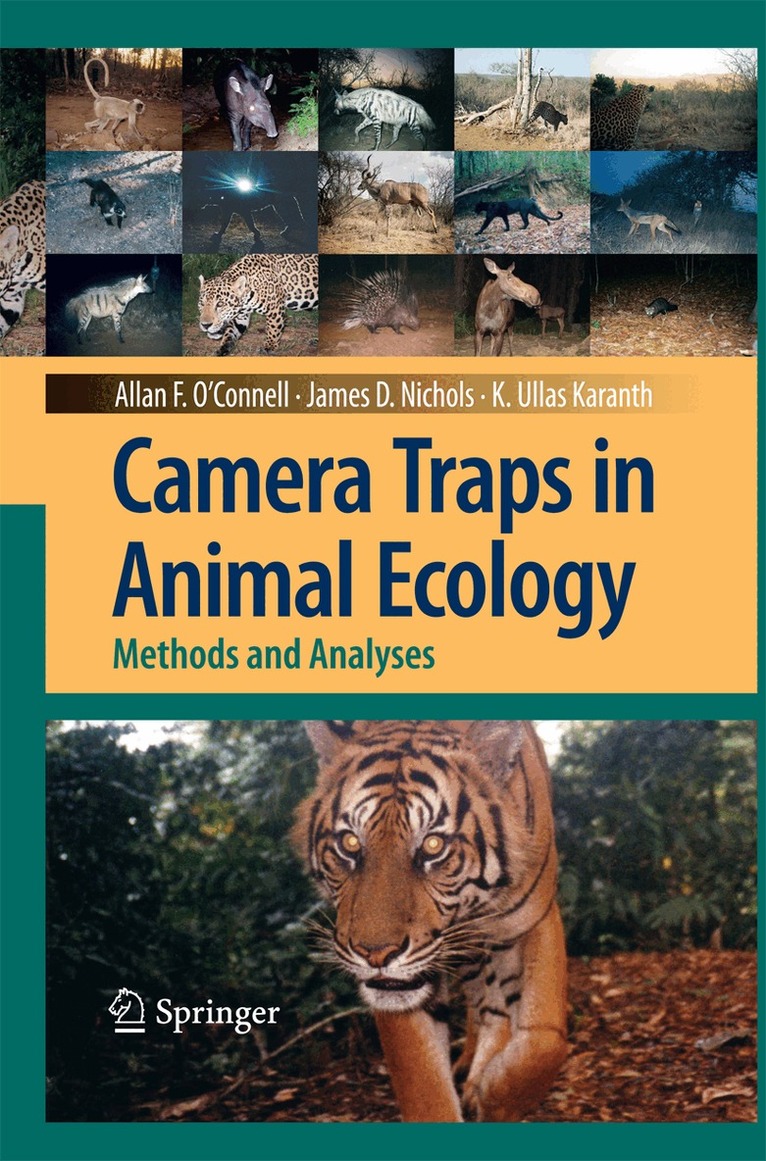
Camera Traps in Animal Ecology
Methods and Analyses
Av Allan F. O'Connell, James D. Nichols m. fl.
Häftad, 2014
1966 kr
Lägg i varukorg
Remote photography and infrared sensors are widely used in the sampling of wildlife populations worldwide, especially for cryptic or elusive species. Guiding the practitioner through the entire process of using camera traps, this book is the first to compile state-of-the-art sampling techniques for …
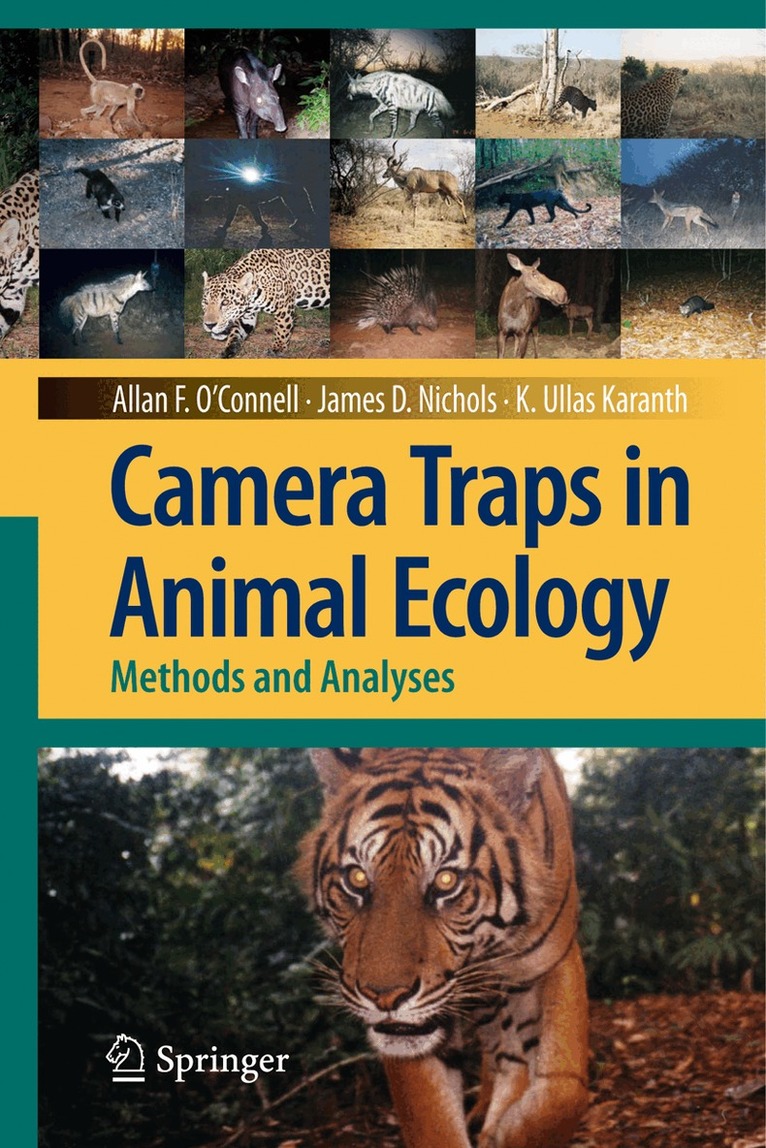
Camera Traps in Animal Ecology
Methods and Analyses
Av Allan F. O'Connell, James D. Nichols m. fl.
Inbunden, 2010
2727 kr
Lägg i varukorg
Remote photography and infrared sensors are widely used in the sampling of wildlife populations worldwide, especially for cryptic or elusive species. Guiding the practitioner through the entire process of using camera traps, this book is the first to compile state-of-the-art sampling techniques for …
Camera Traps in Animal Ecology
Methods and Analyses
Av K. Ullas Karanth, James D. Nichols m. fl.
E-bok, 2010
2599 kr
Lägg i varukorg
Remote photography and infrared sensors are widely used in the sampling of wildlife populations worldwide, especially for cryptic or elusive species. Guiding the practitioner through the entire process of using camera traps, this book is the first to compile state-of-the-art sampling techniques for …
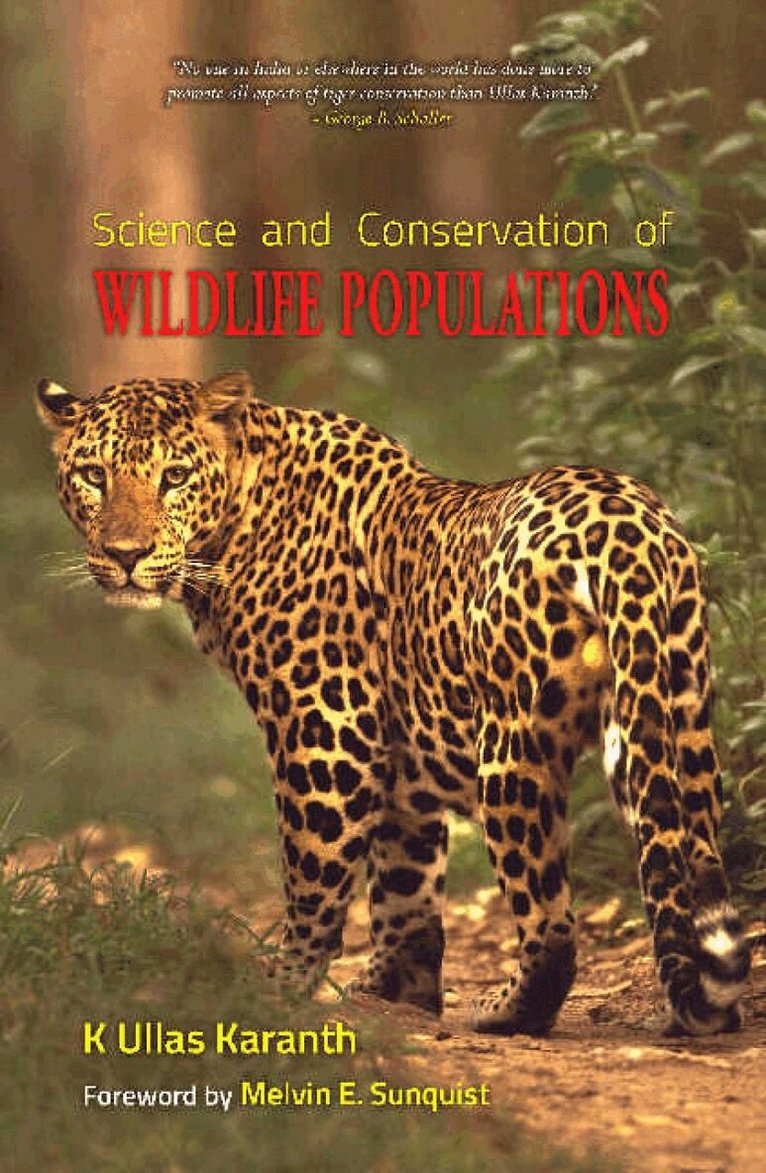
Science & Conservation of Wildlife Populations
Inbunden, 2017
338 kr
Lägg i varukorg
Conservationists might set out with very different objectives: preservation and recovery of rare and threatened species -- as with rhinos or bustards, sustaining a steady supply of useful products for human use -- as with fisheries, or even eliminating threats to human life or livelihoods as in the …
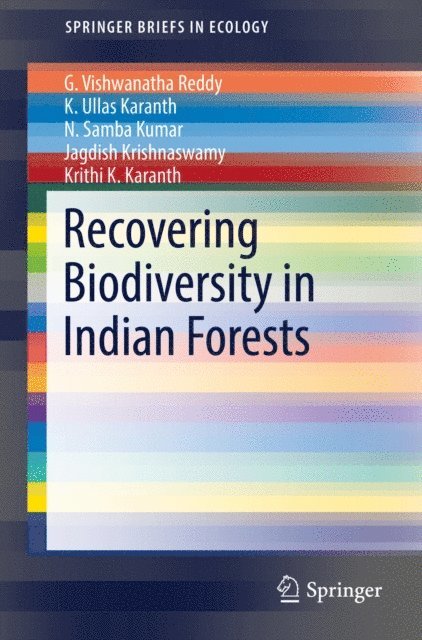
Recovering Biodiversity in Indian Forests
Av G. Vishwanatha Reddy, K. Ullas Karanth m. fl.
Häftad, 2016
551 kr
Lägg i varukorg
This book demonstrates how varying levels of human disturbance manifested through different management regimes influence composition, richness, diversity and abundance of key mammal, bird and plant species, even within ecologically similar habitats. Based on our results, we show the critical …
Recovering Biodiversity in Indian Forests
Av Krithi K. Karanth, Jagdish Krishnaswamy m. fl.
E-bok, 2016
734 kr
Lägg i varukorg
This book demonstrates how varying levels of human disturbance manifested through different management regimes influence composition, richness, diversity and abundance of key mammal, bird and plant species, even within ecologically similar habitats. Based on our results, we show the critical …
Methods For Monitoring Tiger And Prey Populations
Av K. Ullas Karanth, James D. Nichols
Inbunden, 2017
1857 kr
Lägg i varukorg
This book addresses issues of monitoring populations of tigers, ungulate prey species and habitat occupancy, with relevance to similar assessments of large mammal species and general biodiversity. It covers issues of rigorous sampling, modeling, estimation and adaptive management of animal …
Methods For Monitoring Tiger And Prey Populations
Av James D. Nichols, K. Ullas Karanth
E-bok, 2017
2437 kr
Lägg i varukorg
This book addresses issues of monitoring populations of tigers, ungulate prey species and habitat occupancy, with relevance to similar assessments of large mammal species and general biodiversity. It covers issues of rigorous sampling, modeling, estimation and adaptive management of animal …
Methods For Monitoring Tiger And Prey Populations
Av K. Ullas Karanth, James D. Nichols
Häftad, 2018
1857 kr
Lägg i varukorg
This book addresses issues of monitoring populations of tigers, ungulate prey species and habitat occupancy, with relevance to similar assessments of large mammal species and general biodiversity. It covers issues of rigorous sampling, modeling, estimation and adaptive management of animal …
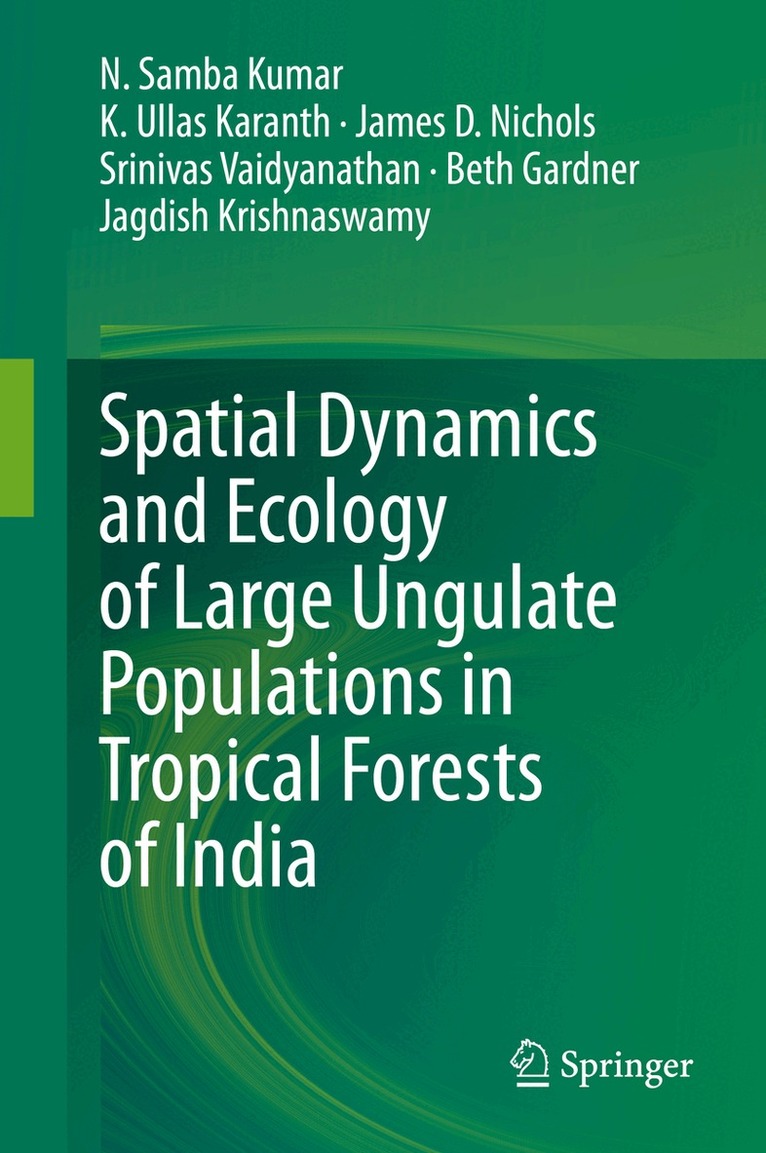
Spatial Dynamics and Ecology of Large Ungulate Populations in Tropical Forests of India
Av N. Samba Kumar, K. Ullas Karanth m. fl.
Inbunden, 2020
1098 kr
Lägg i varukorg
Large ungulates in tropical forests are among the most threatened taxa of mammals. Excessive hunting, degradation of and encroachments on their natural habitats by humans have contributed to drastic reductions in wild ungulate populations in recent decades. As such, reliable assessments of …
Spatial Dynamics and Ecology of Large Ungulate Populations in Tropical Forests of India
Av Jagdish Krishnaswamy, Beth Gardner m. fl.
E-bok, 2020
1459 kr
Lägg i varukorg
Large ungulates in tropical forests are among the most threatened taxa of mammals. Excessive hunting, degradation of and encroachments on their natural habitats by humans have contributed to drastic reductions in wild ungulate populations in recent decades. As such, reliable assessments of …
Spatial Dynamics and Ecology of Large Ungulate Populations in Tropical Forests of India
Av N. Samba Kumar, K. Ullas Karanth m. fl.
Häftad, 2021
1098 kr
Lägg i varukorg
Large ungulates in tropical forests are among the most threatened taxa of mammals. Excessive hunting, degradation of and encroachments on their natural habitats by humans have contributed to drastic reductions in wild ungulate populations in recent decades. As such, reliable assessments of …
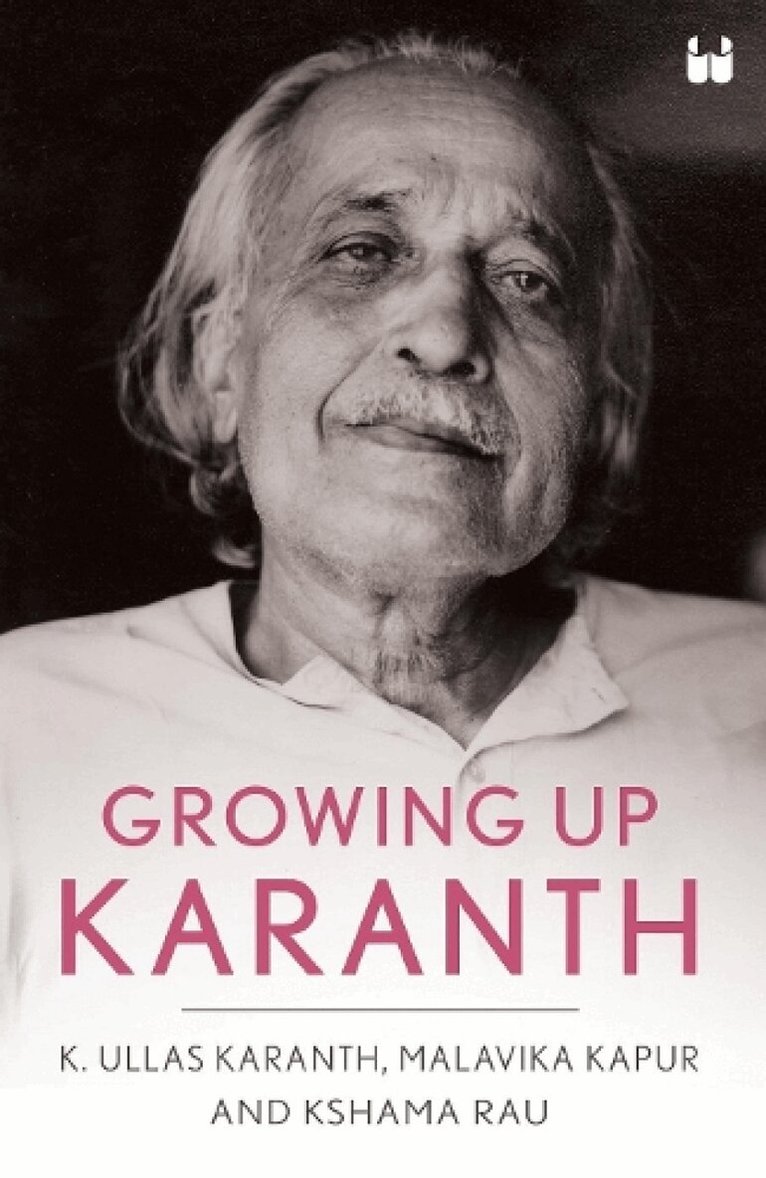
Growing Up Karanth
Inbunden, 2021
388 kr
Tillfälligt slut
THE PUBLIC AND PRIVATE KARANTH, REVEALED FOR THE VERY FIRST TIME! Karanth, Kuvempu, Bendre the trinity of modern Kannada literature; the pride of Kannadigas; It was Shivarama Karanth who took the culture of Karnataka beyond the shores of India with his dance and music. After Rabindranath Tagore, no …