Kaibin Huang – författare
Visar alla böcker från författaren Kaibin Huang. Handla med fri frakt och snabb leverans.
4 produkter
4 produkter
Inbunden, Engelska, 2026
1 619 kr
Skickas inom 10-15 vardagar
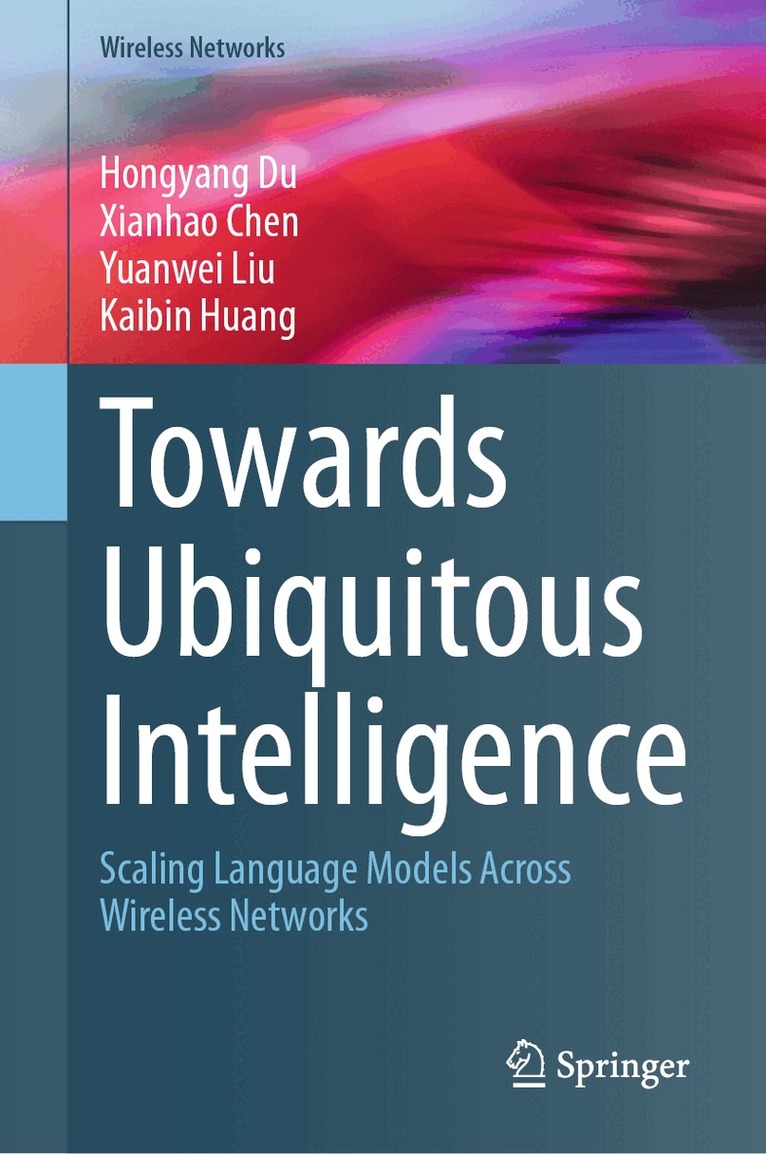
This book systematically examines the integration of language models with wireless networks from both architectural and algorithmic perspectives. It begins with the evolution of language models and wireless network requirements, followed by core concepts such as model scaling, training, inference, and the resource constraints shaping their deployment. Building on this foundation, the book investigates LLMs in cloud environments and SLMs for edge computing, focusing on compression, distillation, and efficiency under constrained conditions. The central part of the book is structured around two complementary directions. The first, network-aided collaborative language models, explores how cloud and edge language models can jointly support distributed inference through model partitioning, collaborative training, and adaptive coordination, considering synchronization and communication constraints in wireless networks. The second, language model-aided network optimization, focuses on using language models as decision-making agents to improve network performance, covering protocol optimization, expert routing, and cross-layer integration. These technical developments are grounded through detailed application scenarios and case studies, analyzing trade-offs between accuracy, latency, and resource consumption. The book concludes with forward-looking discussions on architecture, deployment strategies, and research challenges, serving as a comprehensive reference for researchers and practitioners at the intersection of wireless networks and artificial intelligence.
1 977 kr
Läs direkt efter köp
This book systematically examines the integration of language models with wireless networks from both architectural and algorithmic perspectives. It begins with the evolution of language models and wireless network requirements, followed by core concepts such as model scaling, training, inference, and the resource constraints shaping their deployment. Building on this foundation, the book investigates LLMs in cloud environments and SLMs for edge computing, focusing on compression, distillation, and efficiency under constrained conditions. The central part of the book is structured around two complementary directions. The first, network-aided collaborative language models, explores how cloud and edge language models can jointly support distributed inference through model partitioning, collaborative training, and adaptive coordination, considering synchronization and communication constraints in wireless networks. The second, language model-aided network optimization, focuses on using language models as decision-making agents to improve network performance, covering protocol optimization, expert routing, and cross-layer integration. These technical developments are grounded through detailed application scenarios and case studies, analyzing trade-offs between accuracy, latency, and resource consumption. The book concludes with forward-looking discussions on architecture, deployment strategies, and research challenges, serving as a comprehensive reference for researchers and practitioners at the intersection of wireless networks and artificial intelligence.
Inbunden, Engelska, 2026
1 825 kr
Skickas inom 5-8 vardagar
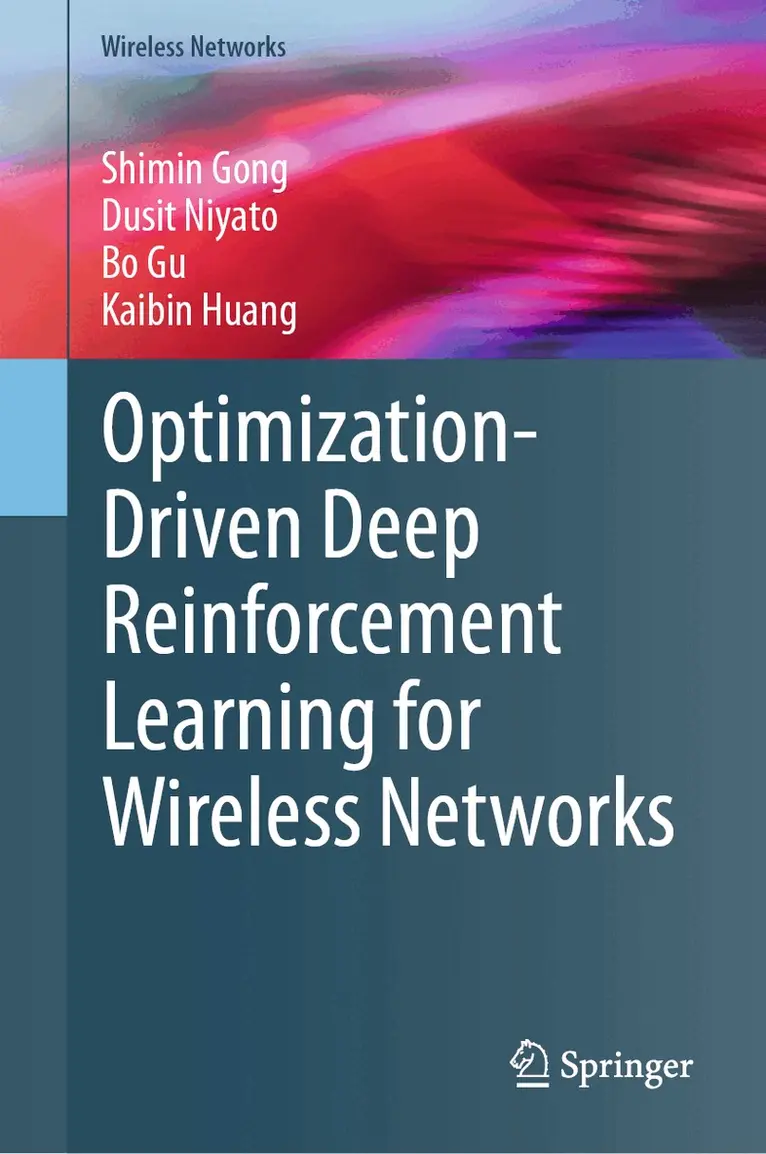
This book explores the integration and interplay of model-based optimization and model-free deep reinforcement learning (DRL). It addresses the growing complexity of future wireless networks. This book begins with a concise overview of foundational DRL algorithms and then delves into advanced frameworks, including optimization-driven DRL, hierarchical DRL, multi-agent DRL, Bayesian-enhanced DRL, and Lyapunov-guided DRL. Each framework is illustrated through case studies in emerging scenarios such as intelligent reflecting surface (IRS)-assisted wireless communications, UAV-assisted wireless networks, backscatter-assisted relay communications, and mobile edge computing.Each chapter of this book demonstrates how partial system knowledge, inherent structural properties, and problem decomposition can dramatically accelerate learning convergence. It also improves sample efficiency, and enhance robustness in decentralized, dynamic, and large-scale wireless networks.Tailored for researchers and graduate students focused on wireless communications and AI-driven networking, it bridges theoretical innovation with practical implementation challenges. It provides a roadmap for designing intelligent, autonomous, and resource-efficient next-generation wireless systems. Engineers and professional specializing in AI and machine learning for wireless systems will also find this book useful as a reference.
E-bok
Engelska, 20262 283 kr
Läs direkt efter köp
This book explores the integration and interplay of model-based optimization and model-free deep reinforcement learning (DRL). It addresses the growing complexity of future wireless networks. This book begins with a concise overview of foundational DRL algorithms and then delves into advanced frameworks, including optimization-driven DRL, hierarchical DRL, multi-agent DRL, Bayesian-enhanced DRL, and Lyapunov-guided DRL. Each framework is illustrated through case studies in emerging scenarios such as intelligent reflecting surface (IRS)-assisted wireless communications, UAV-assisted wireless networks, backscatter-assisted relay communications, and mobile edge computing.Each chapter of this book demonstrates how partial system knowledge, inherent structural properties, and problem decomposition can dramatically accelerate learning convergence. It also improves sample efficiency, and enhance robustness in decentralized, dynamic, and large-scale wireless networks.Tailored for researchers and graduate students focused on wireless communications and AI-driven networking, it bridges theoretical innovation with practical implementation challenges. It provides a roadmap for designing intelligent, autonomous, and resource-efficient next-generation wireless systems. Engineers and professional specializing in AI and machine learning for wireless systems will also find this book useful as a reference.