Kali dasa - Böcker
Visar alla böcker från författaren Kali dasa. Handla med fri frakt och snabb leverans.
4 produkter
4 produkter
295 kr
Skickas inom 7-10 vardagar
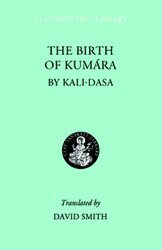
This court epic describes events leading up to the birth of Kumára, the war god who will defeat the demon Táraka. The gods try to use Kama, the Indian Cupid, to make the ascetic god Shiva fall in love with the daughter of the Himalaya mountain. Kama fails, and is burnt to ashes by the angry Shiva. Then Parvati, the daughter of the mountain, herself turns to asceticism to win the husband she longs for. She is successful, and the climax of the poem is the marriage and lovemaking of Shiva and Parvati, parents of the universe.The greatest long poem in classical Sanskrit, by the greatest poet of the language, Kali·dasa's The Birth of Kumára is not exactly a love story but a paradigm of inevitable union between male and female, played out on the immense scale of supreme divinity. In this court-epic, the events are described leading up to but not including the birth of Kumára, the war god destined to defeat the demon Táraka.Co-published by New York University Press and the JJC FoundationFor more on this title and other titles in the Clay Sanskrit series, please visit http://www.claysanskritlibrary.org
295 kr
Skickas inom 7-10 vardagar
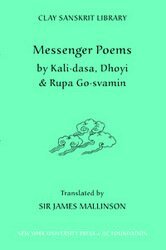
Sanskrit Messenger poems evoke the pain of separated sweethearts through the formula of an estranged lover pleading with a messenger to take a message to his or her beloved. The plea includes a lyrical description of the route the messenger will take and the message itself. The first was the Cloud Messenger, composed by Sanskrit's finest poet, Kali·dasa, in the fifth century CE. This inspired the next, the Wind Messenger, composed in praise of King Lákshmana·sena of Gauda (Bengal) in the twelfth century by Dhoyi, one of his court poets. Numerous more followed, including the third in the CSL selection, the sixteenth-century Swan Messenger, composed in Bengal by Rupa Go·svamin, a devotee of Krishna.Co-published by New York University Press and the JJC FoundationFor more on this title and other titles in the Clay Sanskrit series, please visit http://www.claysanskritlibrary.org
295 kr
Skickas inom 7-10 vardagar
Its frivolous subject may have been the reason why Malavika and Agni mitra is sometimes considered to be the least significant of the three dramas of Kali dasa, the poet laureate of Indian antiquity who probably lived in the fifth century CE. Yet the play's lively and playful plot more than makes up for its lack of deities, heroic prowess and pathos. The machinations of King Agni mitra's jester to help him add a dancing girl to his harem in spite of the subtle intrigues of the two jealous queens carry the gallant hero through hope and despair to the happy ending.
295 kr
Skickas inom 7-10 vardagar
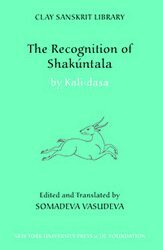
This play was one of the first examples of Indian literature to be seen in Europe; it attracted considerable attention (among others, from Goethe), and indeed pained surprise that such a sophisticated art-form could have developed without the rest of the world noticing. A good deal of that surprise will be revived by the hitherto untranslated Kashmirian recension.Kali·dasa's The Recognition of Shakúntala is a play that scarcely needs introduction. Among the first works of Sanskrit literature translated into European languages, its skilful plot of thwarted love and eventual redemption has long charmed audiences around the world. Shakúntala's story is a leitmotiv that recurs in many works of Indian literature and culminates in the master Kali·dasa's drama for the stage.Co-published by New York University Press and the JJC FoundationFor more on this title and other titles in the Clay Sanskrit series, please visit http://www.claysanskritlibrary.org