Karen A. Winstead - Böcker
Visar alla böcker från författaren Karen A. Winstead. Handla med fri frakt och snabb leverans.
9 produkter
9 produkter
757 kr
Skickas inom 7-10 vardagar
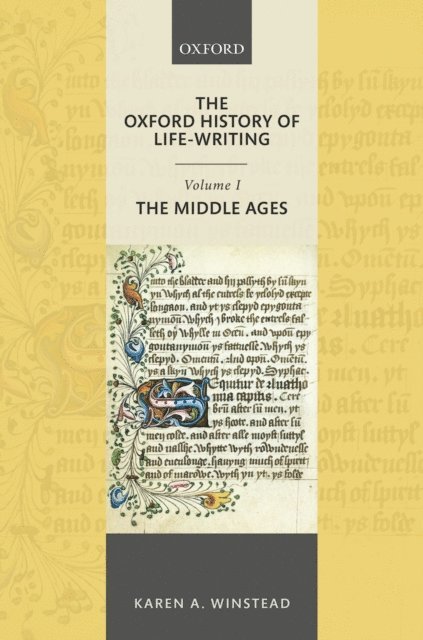
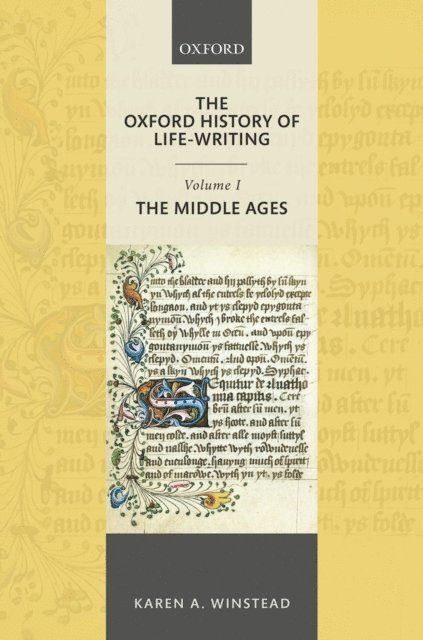
The Oxford History of Life-Writing: Volume 1: The Middle Ages explores the richness and variety of life-writing from late Antiquity to the threshold of the Renaissance. During the Middle Ages, writers from Bede to Chaucer were thinking about life and experimenting with ways to translate lives, their own and others', into literature. Their subjects included career religious, saints, celebrities, visionaries, pilgrims, princes, philosophers, poets, and even a few 'ordinary people.' They relay life stories not only in chronological narratives, but also in debates, dialogues, visions, and letters. Many medieval biographers relied on the reader's trust in their authority, but some espoused standards of evidence that seem distinctly modern, drawing on reliable written sources, interviewing eyewitnesses, and cross-checking their facts wherever possible. Others still professed allegiance to evidence but nonetheless freely embellished and invented not only events and dialogue but the sources to support them.The first book devoted to life-writing in medieval England, The Oxford History of Life-Writing: Volume 1: The Middle Ages covers major life stories in Old and Middle English, Latin, and French, along with such Continental classics as the letters of Abelard and Heloise and the autobiographical Vision of Christine de Pizan. In addition to the life stories of historical figures, it treats accounts of fictional heroes, from Beowulf to King Arthur to Queen Katherine of Alexandria, which show medieval authors experimenting with, adapting, and expanding the conventions of life writing. Though Medieval life writings can be challenging to read, we encounter in them the antecedents of many of our own diverse biographical forms-tabloid lives, literary lives, brief lives, revisionist lives; lives of political figures, memoirs, fictional lives, and psychologically-oriented accounts that register the inner lives of their subjects.
375 kr
Skickas inom 5-8 vardagar
The Oxford History of Life-Writing: Volume 1: The Middle Ages explores the richness and variety of life-writing from late Antiquity to the threshold of the Renaissance. During the Middle Ages, writers from Bede to Chaucer were thinking about life and experimenting with ways to translate lives, their own and others', into literature. Their subjects included career religious, saints, celebrities, visionaries, pilgrims, princes, philosophers, poets, and even a few 'ordinary people.' They relay life stories not only in chronological narratives, but also in debates, dialogues, visions, and letters. Many medieval biographers relied on the reader's trust in their authority, but some espoused standards of evidence that seem distinctly modern, drawing on reliable written sources, interviewing eyewitnesses, and cross-checking their facts wherever possible. Others still professed allegiance to evidence but nonetheless freely embellished and invented not only events and dialogue but the sources to support them.The first book devoted to life-writing in medieval England, The Oxford History of Life-Writing: Volume 1: The Middle Ages covers major life stories in Old and Middle English, Latin, and French, along with such Continental classics as the letters of Abelard and Heloise and the autobiographical Vision of Christine de Pizan. In addition to the life stories of historical figures, it treats accounts of fictional heroes, from Beowulf to King Arthur to Queen Katherine of Alexandria, which show medieval authors experimenting with, adapting, and expanding the conventions of life writing. Though Medieval life writings can be challenging to read, we encounter in them the antecedents of many of our own diverse biographical forms-tabloid lives, literary lives, brief lives, revisionist lives; lives of political figures, memoirs, fictional lives, and psychologically-oriented accounts that register the inner lives of their subjects.
1 235 kr
Skickas inom 10-15 vardagar
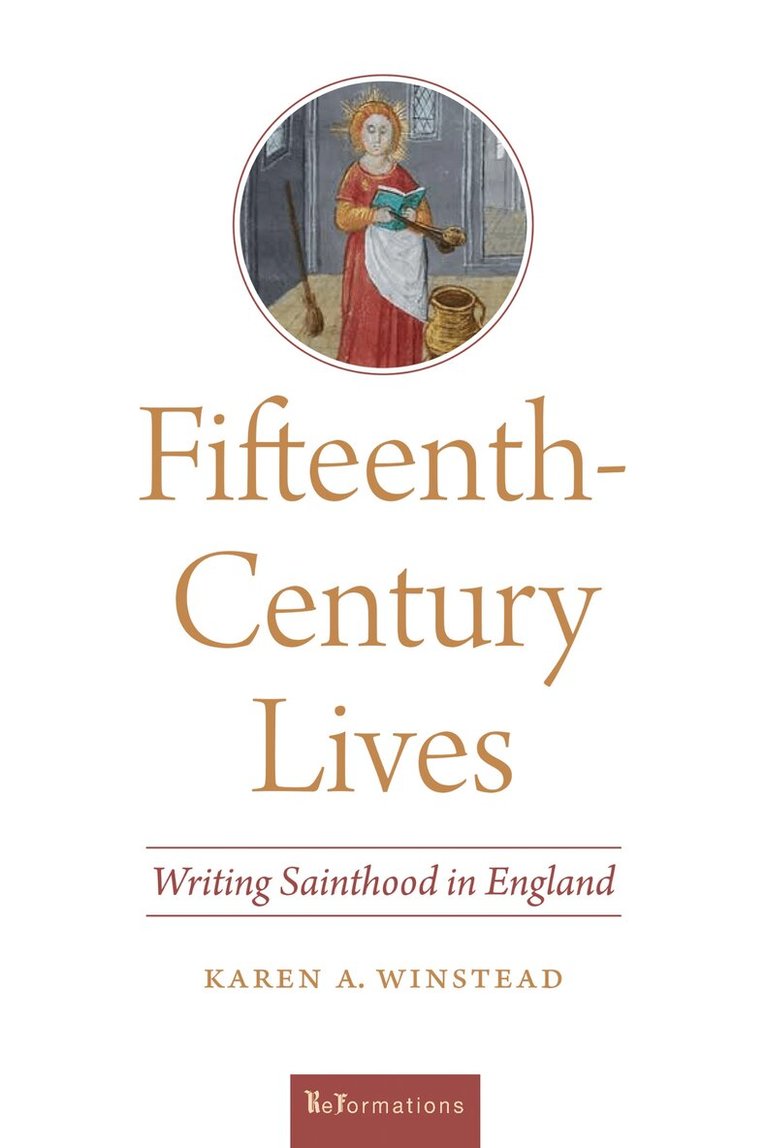
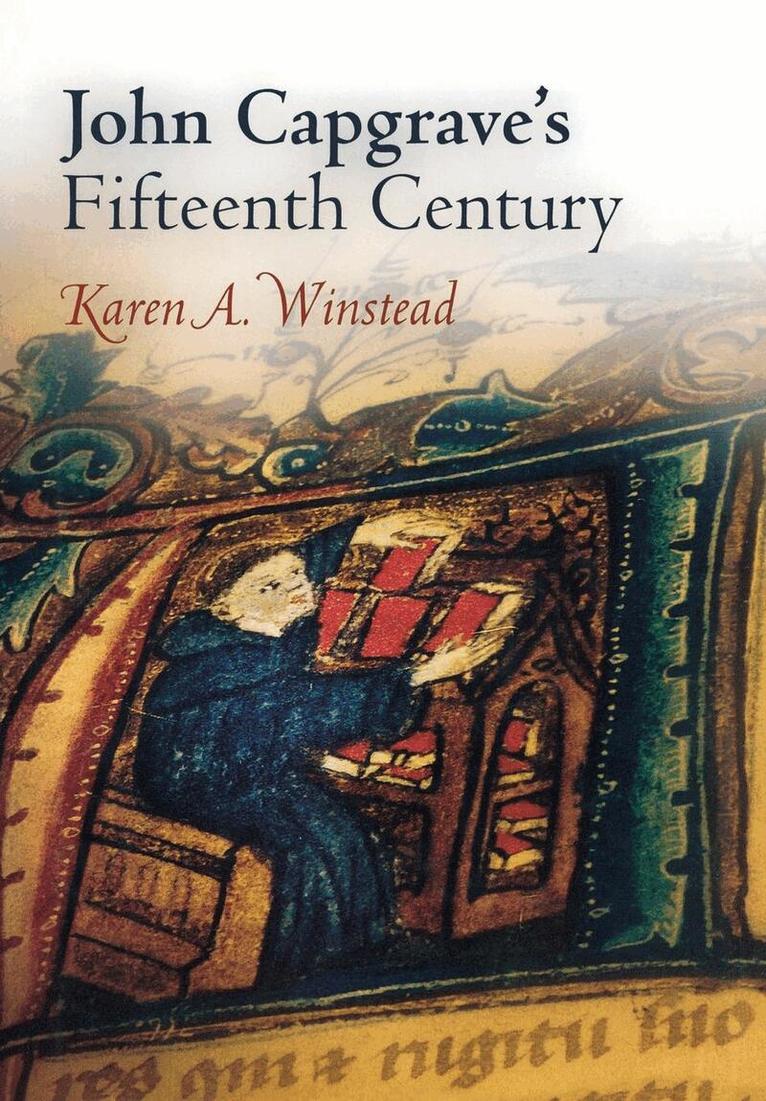
In Fifteenth-Century Lives, Karen A. Winstead identifies and explores a major shift in the writing of Middle English saints' lives. As she demonstrates, starting in the 1410s and '20s, hagiography became more character-oriented, more morally complex, more deeply embedded in history, and more politically and socially engaged. Further, it became more self-consciously literary and began to feature women more prominently—and not only traditional virgin martyrs but also matrons and contemporary holy women. Winstead shows that this literature placed a premium on scholarship and teaching. Hagiography celebrated educators and scholars to a greater extent than ever before and became a vehicle for educating readers about Christian dogma. Focusing both on authors well known, such as John Lydgate and Margery Kempe, and on others less known, such as Osbern Bokenham and John Capgrave, Winstead argues that the values promoted by fifteenth-century hagiography helped to shape the reformist impulses that eventually produced the Reformation. Moreover, these values continued to influence post-Reformation hagiography, both Protestant and Catholic, well into the seventeenth century.In exploring these trends in fifteenth-century hagiography, identifying the factors that contributed to their emergence, and tracing their influence in later periods, Fifteenth-Century Lives marks an important contribution to revisionary scholarship on fifteenth-century literature. It will appeal to students and scholars of late medieval English literature and late medieval religion.
545 kr
Skickas inom 10-15 vardagar
In Fifteenth-Century Lives, Karen A. Winstead identifies and explores a major shift in the writing of Middle English saints' lives. As she demonstrates, starting in the 1410s and '20s, hagiography became more character-oriented, more morally complex, more deeply embedded in history, and more politically and socially engaged. Further, it became more self-consciously literary and began to feature women more prominently—and not only traditional virgin martyrs but also matrons and contemporary holy women. Winstead shows that this literature placed a premium on scholarship and teaching. Hagiography celebrated educators and scholars to a greater extent than ever before and became a vehicle for educating readers about Christian dogma. Focusing both on authors well known, such as John Lydgate and Margery Kempe, and on others less known, such as Osbern Bokenham and John Capgrave, Winstead argues that the values promoted by fifteenth-century hagiography helped to shape the reformist impulses that eventually produced the Reformation. Moreover, these values continued to influence post-Reformation hagiography, both Protestant and Catholic, well into the seventeenth century.In exploring these trends in fifteenth-century hagiography, identifying the factors that contributed to their emergence, and tracing their influence in later periods, Fifteenth-Century Lives marks an important contribution to revisionary scholarship on fifteenth-century literature. It will appeal to students and scholars of late medieval English literature and late medieval religion.
1 036 kr
Skickas inom 10-15 vardagar
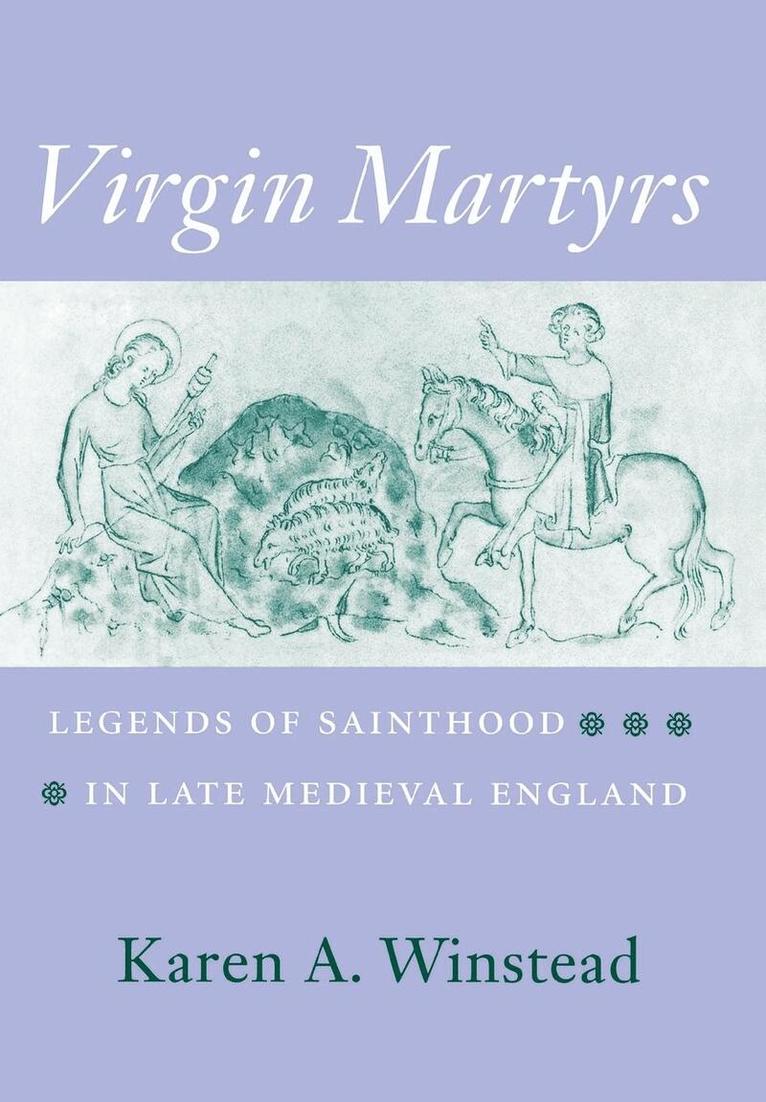
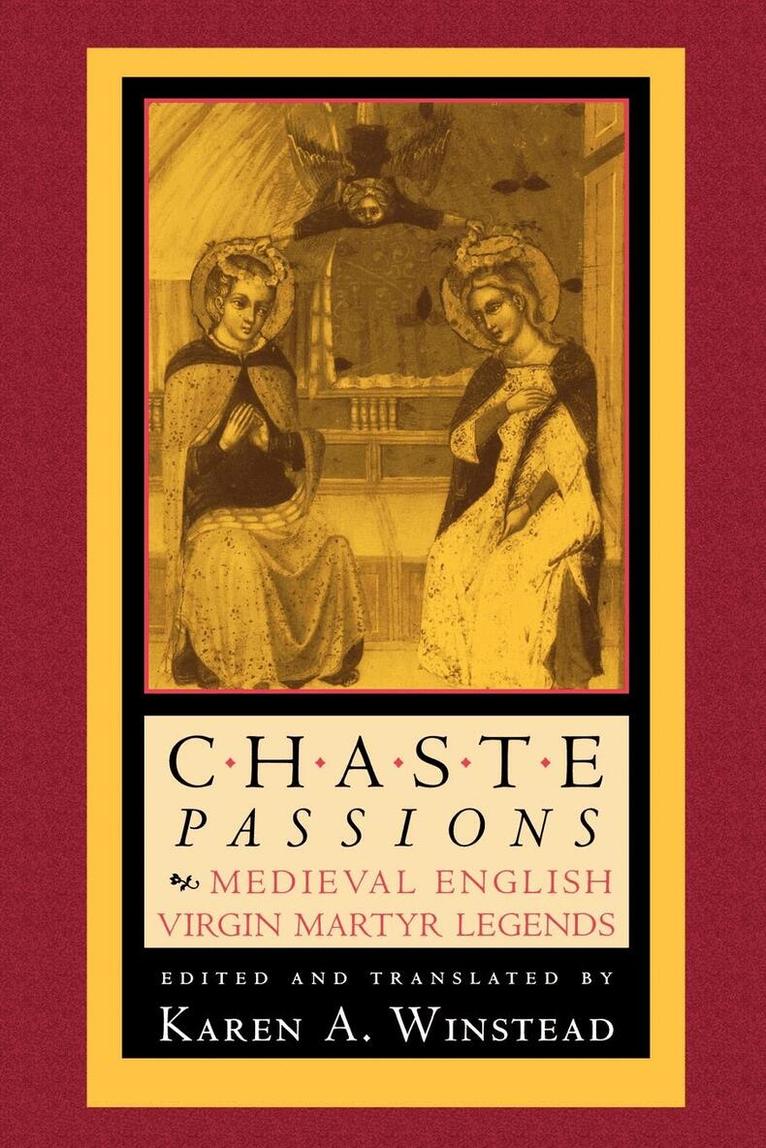
Stories of the torture and execution of beautiful Christian women first appeared in late antiquity and proliferated during the early Middle Ages. A thousand years later, virgin martyrs were still the most popular female saints. Their legends, in countless retellings through the centuries, preserved a standard plot—the heroine resists a pagan suitor, endures cruelties inflicted by her rejected lover or outraged family, works miracles, and dies for Christ. That sequence was embellished by incidents emblematic of the specific saint: Juliana's battle with the devil, Barbara's immurement in the tower, Katherine's encounter with spiked wheels. Karen A. Winstead examines this seemingly static story form and discovers subtle shifts in the representation of the virgin martyrs, as their legends were adapted for changing audiences in late medieval England.
1 746 kr
Skickas inom 10-15 vardagar
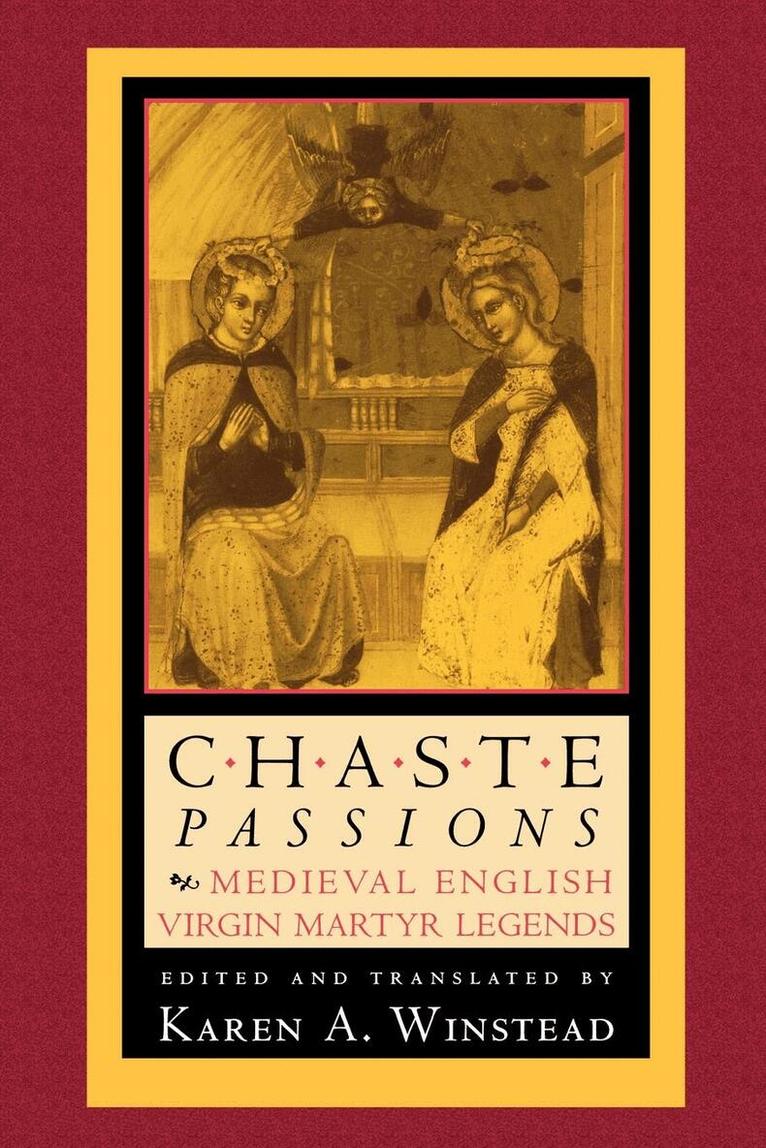
I must again emphasise how impressive, overall, this collection truly is, and how Winstead's translations will open up possible classroom discussions.... This is a fine anthology, and an important, and―it must be said―fun addtion to any bookshelf. — Jacqueline Jenkins, University of Calgary ― ArthurianaVirgin martyrs make up one of the largest categories of medieval saints. To judge by their frequent appearances in art and literature, they also figure among the most venerated. The legends of virgin martyrs, retold in various ways through the centuries, illuminate trends in popular piety, values, and literary tastes. Chaste Passions contains sixteen English virgin martyr legends, each of a different saint and each translated into colloquial, modern English prose. Faithful in tone and meaning to the originals, Karen Winstead's lively translations allow contemporary readers to appreciate why virgin martyr legends thrived for hundreds of years. Winstead presents the tales in chronological order, tracing the effects of the composition and tastes of the audience on the development of the genre.The virgin martyr, Winstead tells us, escapes the confining female stereotypes-demure maiden or disruptive shrew-prevalent in writings of the period. Because nearly all of the texts were written by men but addressed to women, they exhibit a fascinating interplay between male views of so-called women's literature and the demands of their intended audience. Familiarity with this widely read genre is essential to a full understanding of medieval culture, and Chaste Passions is an excellent introduction to these often racy, sometimes comic, tales
545 kr
Skickas inom 10-15 vardagar
I must again emphasise how impressive, overall, this collection truly is, and how Winstead's translations will open up possible classroom discussions.... This is a fine anthology, and an important, and―it must be said―fun addtion to any bookshelf. — Jacqueline Jenkins, University of Calgary ― ArthurianaVirgin martyrs make up one of the largest categories of medieval saints. To judge by their frequent appearances in art and literature, they also figure among the most venerated. The legends of virgin martyrs, retold in various ways through the centuries, illuminate trends in popular piety, values, and literary tastes. Chaste Passions contains sixteen English virgin martyr legends, each of a different saint and each translated into colloquial, modern English prose. Faithful in tone and meaning to the originals, Karen Winstead's lively translations allow contemporary readers to appreciate why virgin martyr legends thrived for hundreds of years. Winstead presents the tales in chronological order, tracing the effects of the composition and tastes of the audience on the development of the genre.The virgin martyr, Winstead tells us, escapes the confining female stereotypes-demure maiden or disruptive shrew-prevalent in writings of the period. Because nearly all of the texts were written by men but addressed to women, they exhibit a fascinating interplay between male views of so-called women's literature and the demands of their intended audience. Familiarity with this widely read genre is essential to a full understanding of medieval culture, and Chaste Passions is an excellent introduction to these often racy, sometimes comic, tales
777 kr
Skickas inom 10-15 vardagar
Britain of the fifteenth century was rife with social change, religious dissent, and political upheaval. Amid this ferment lived John Capgrave-Austin friar, doctor of theology, leading figure in East Anglian society, and noted author. Nowhere are the tensions and anxieties of this critical period, spanning the close of the medieval and the dawn of early modern eras, more eloquently conveyed than in Capgrave's works.John Capgrave's Fifteenth Century is the first book to explore the major themes of Capgrave's writings and to relate those themes to fifteenth-century political and cultural debates. Focusing on Capgrave's later works, especially those in English and addressed to lay audiences, it teases out thematic threads that are closely interwoven in Capgrave's Middle English oeuvre: piety, intellectualism, gender, and social responsibility. It refutes the still-prevalent view of Capgrave as a religious and political reactionary and shows, rather, that he used traditional genres to promote his own independent viewpoint on some of the most pressing controversies of his day, including debates over vernacular theology, orthodoxy and dissent, lay (and particularly female) spirituality, and the state of the kingdom under Henry VI.The book situates Capgrave as a figure both in the vibrant literary culture of East Anglia and in European intellectual history. John Capgrave's Fifteenth Century offers a fresh view of orthodoxy and dissent in late medieval England and will interest students of hagiography, religious and cultural history, and Lancastrian politics and society.
286 kr
Skickas inom 5-8 vardagar
John Capgrave's The Life of Saint Katherine, written c. 1463 in Lynn in Norfolk, is, according to the editor, . . . the longest and most intricate Katherine legend written during the Middle Ages, either in Latin or in any vernacular. In telling the story of the life of the virgin martyr, Katherine, Capgrave uses many of the tropes that mark the enormously popular genre of hagiography as it was written throughout the Middle Ages. Given his learning, however, and his evident acquaintance with the works of Chaucer, Lydgate, and Osburn Bokenham, and his knowledge of medieval drama, and the possibility that he knew of The Book of Margery Kempe, this saint's life should be particularly interesting to students of late Middle English culture, especially literature. In the course of his encyclopedic narrative, in which he evidently sought to appeal to a broad audience in sophisticated, if provincial, Norfolk, Capgrave inserts digressions on Greek and Roman history; on just and unjust rule and justifiable vs. unjustifiable rebellion; on child care; on medieval English feasts, jousts, and pageants; and on the role(s) of women.