Karen Chapple – författare
461 kr
Läs direkt efter köp
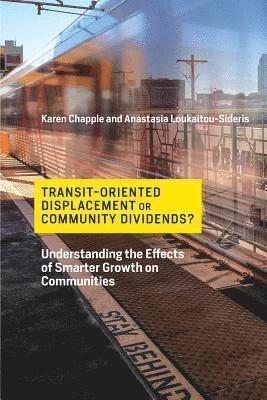
An examination of the neighborhood transformation, gentrification, and displacement that accompany more compact development around transit.
Cities and regions throughout the world are encouraging smarter growth patterns and expanding their transit systems to accommodate this growth, reduce greenhouse gas emissions, and satisfy new demands for mobility and accessibility. Yet despite a burgeoning literature and various policy interventions in recent decades, we still understand little about what happens to neighborhoods and residents with the development of transit systems and the trend toward more compact cities. Research has failed to determine why some neighborhoods change both physically and socially while others do not, and how race and class shape change in the twenty-first-century context of growing inequality.
Drawing on novel methodological approaches, this book sheds new light on the question of who benefits and who loses from more compact development around new transit stations. Building on data at multiple levels, it connects quantitative analysis on regional patterns with qualitative research through interviews, field observations, and photographic documentation in twelve different California neighborhoods. From the local to the regional to the global, Chapple and Loukaitou-Sideris examine the phenomena of neighborhood transformation, gentrification, and displacement not only through an empirical lens but also from theoretical and historical perspectives.
Growing out of an in-depth research process that involved close collaboration with dozens of community groups, the book aims to respond to the needs of both advocates and policymakers for ideas that work in the trenches.
650 kr
Skickas inom 10-15 vardagar
2 222 kr
Skickas inom 10-15 vardagar
2 297 kr
Skickas inom 10-15 vardagar
826 kr
Skickas inom 10-15 vardagar
986 kr
Läs direkt efter köp
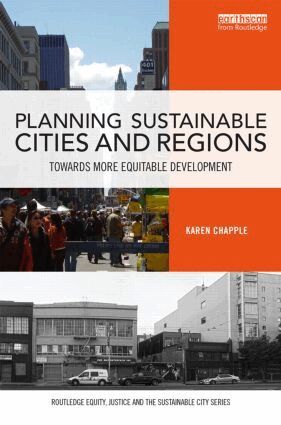
As global warming advances, regions around the world are engaging in revolutionary sustainability planning - but with social equity as an afterthought. California is at the cutting edge of this movement, not only because its regulations actively reduce greenhouse gas emissions, but also because its pioneering environmental regulation, market innovation, and Left Coast politics show how to blend the "three Es" of sustainability--environment, economy, and equity. Planning Sustainable Cities and Regions is the first book to explain what this grand experiment tells us about the most just path moving forward for cities and regions across the globe.
The book offers chapters about neighbourhoods, the economy, and poverty, using stories from practice to help solve puzzles posed by academic research. Based on the most recent demographic and economic trends, it overturns conventional ideas about how to build more livable places and vibrant economies that offer opportunity to all. This thought-provoking book provides a framework to deal with the new inequities created by the movement for more livable - and expensive - cities, so that our best plans for sustainability are promoting more equitable development as well.
This book will appeal to students of urban studies, urban planning and sustainability as well as policymakers, planning practitioners, and sustainability advocates around the world.
986 kr
Läs direkt efter köp
As global warming advances, regions around the world are engaging in revolutionary sustainability planning - but with social equity as an afterthought. California is at the cutting edge of this movement, not only because its regulations actively reduce greenhouse gas emissions, but also because its pioneering environmental regulation, market innovation, and Left Coast politics show how to blend the "three Es" of sustainability--environment, economy, and equity. Planning Sustainable Cities and Regions is the first book to explain what this grand experiment tells us about the most just path moving forward for cities and regions across the globe.
The book offers chapters about neighbourhoods, the economy, and poverty, using stories from practice to help solve puzzles posed by academic research. Based on the most recent demographic and economic trends, it overturns conventional ideas about how to build more livable places and vibrant economies that offer opportunity to all. This thought-provoking book provides a framework to deal with the new inequities created by the movement for more livable - and expensive - cities, so that our best plans for sustainability are promoting more equitable development as well.
This book will appeal to students of urban studies, urban planning and sustainability as well as policymakers, planning practitioners, and sustainability advocates around the world.
752 kr
Läs direkt efter köp
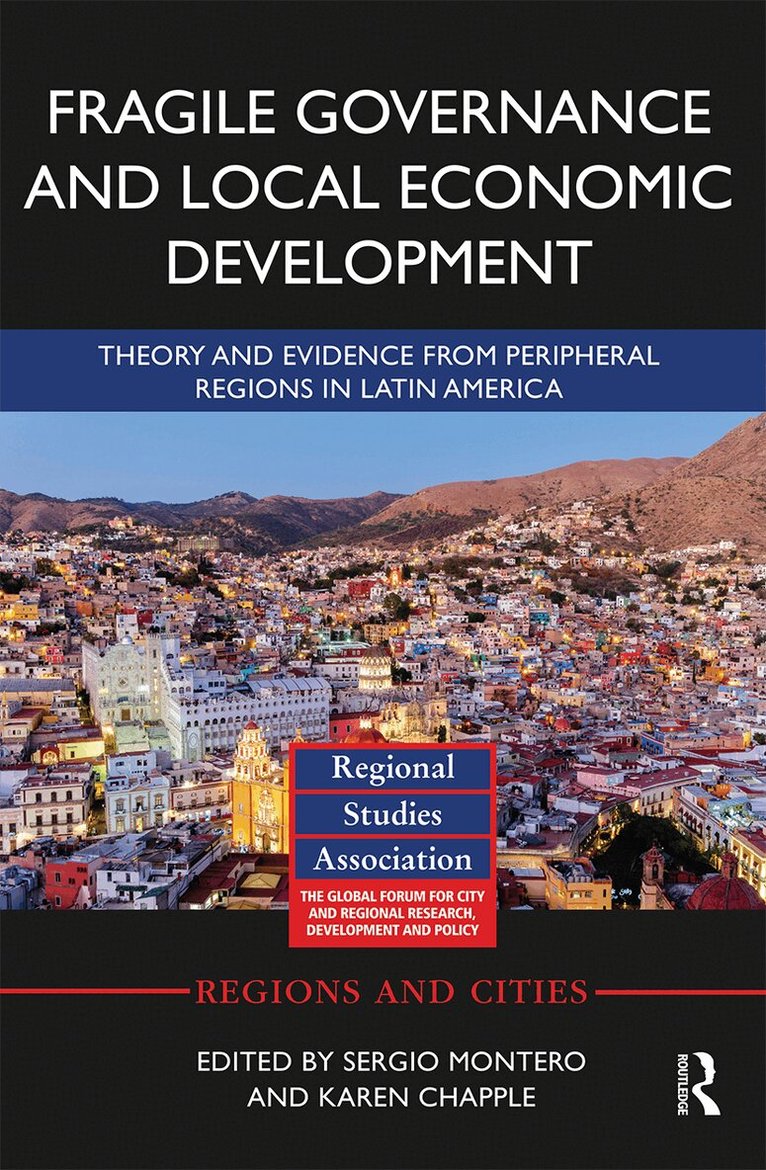
Much of our understanding of local economic development is based on large urban agglomerations as nodes of innovation and competitive advantage, connecting territories to global value chains. However, this framework cannot so easily be applied to peripheral regions and secondary cities in either the Global South or the North.
This book proposes an alternative way of looking at local economic development based on the idea of fragile governance and three variables: associations and networks; learning processes; and leadership and conflict management in six Latin American peripheral regions. The case studies illustrate the challenges of governance in small and intermediate cities in Latin America, and showcase strategies that are being used to achieve a more resilient and territorial vision of local economic development.
This book will be of interest to students and researchers of local economic development, urban and regional studies, and political economy in Latin America as well as to policy-makers and practitioners interested in local and regional economic development policy.
752 kr
Läs direkt efter köp
Much of our understanding of local economic development is based on large urban agglomerations as nodes of innovation and competitive advantage, connecting territories to global value chains. However, this framework cannot so easily be applied to peripheral regions and secondary cities in either the Global South or the North.
This book proposes an alternative way of looking at local economic development based on the idea of fragile governance and three variables: associations and networks; learning processes; and leadership and conflict management in six Latin American peripheral regions. The case studies illustrate the challenges of governance in small and intermediate cities in Latin America, and showcase strategies that are being used to achieve a more resilient and territorial vision of local economic development.
This book will be of interest to students and researchers of local economic development, urban and regional studies, and political economy in Latin America as well as to policy-makers and practitioners interested in local and regional economic development policy.
45 kr
Läs direkt efter köp
934 kr
Tillfälligt slut
368 kr
Tillfälligt slut