Anastasia Loukaitou-Sideris – författare
461 kr
Läs direkt efter köp
An examination of the neighborhood transformation, gentrification, and displacement that accompany more compact development around transit.
Cities and regions throughout the world are encouraging smarter growth patterns and expanding their transit systems to accommodate this growth, reduce greenhouse gas emissions, and satisfy new demands for mobility and accessibility. Yet despite a burgeoning literature and various policy interventions in recent decades, we still understand little about what happens to neighborhoods and residents with the development of transit systems and the trend toward more compact cities. Research has failed to determine why some neighborhoods change both physically and socially while others do not, and how race and class shape change in the twenty-first-century context of growing inequality.
Drawing on novel methodological approaches, this book sheds new light on the question of who benefits and who loses from more compact development around new transit stations. Building on data at multiple levels, it connects quantitative analysis on regional patterns with qualitative research through interviews, field observations, and photographic documentation in twelve different California neighborhoods. From the local to the regional to the global, Chapple and Loukaitou-Sideris examine the phenomena of neighborhood transformation, gentrification, and displacement not only through an empirical lens but also from theoretical and historical perspectives.
Growing out of an in-depth research process that involved close collaboration with dozens of community groups, the book aims to respond to the needs of both advocates and policymakers for ideas that work in the trenches.
356 kr
Läs direkt efter köp
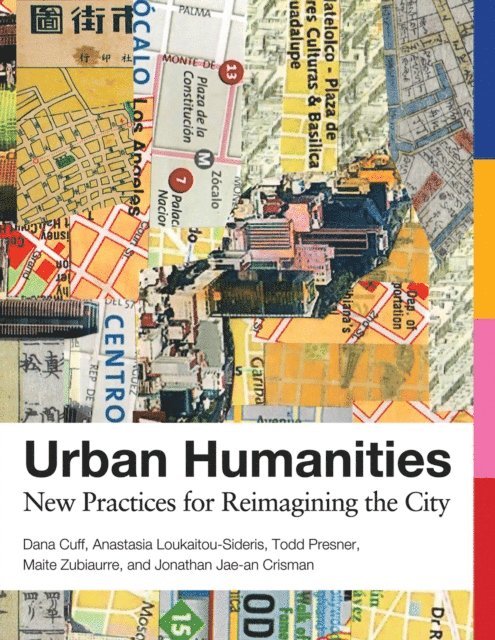
Original, action-oriented humanist practices for interpreting and intervening in the city: a new methodology at the intersection of the humanities, design, and urban studies.
Urban humanities is an emerging field at the intersection of the humanities, urban planning, and design. It offers a new approach not only for understanding cities in a global context but for intervening in them, interpreting their histories, engaging with them in the present, and speculating about their futures. This book introduces both the theory and practice of urban humanities, tracing the evolution of the concept, presenting methods and practices with a wide range of research applications, describing changes in teaching and curricula, and offering case studies of urban humanities practices in the field.
Urban humanities views the city through a lens of spatial justice, and its inquiries are centered on the microsettings of everyday life. The book''s case studies report on real-world projects in mega-cities in the Pacific Rim—Tokyo, Shanghai, Mexico City, and Los Angeles—with several projects described in detail, including playful spaces for children in car-oriented Mexico City, a commons in a Tokyo neighborhood, and a rolling story-telling box to promote “literary justice” in Los Angeles.
482 kr
Läs direkt efter köp
366 kr
Skickas
562 kr
Skickas inom 10-15 vardagar
2 158 kr
Skickas inom 10-15 vardagar
2 222 kr
Skickas inom 10-15 vardagar
650 kr
Skickas inom 10-15 vardagar
3 407 kr
Skickas inom 10-15 vardagar
790 kr
Skickas inom 5-8 vardagar
649 kr
Läs direkt efter köp
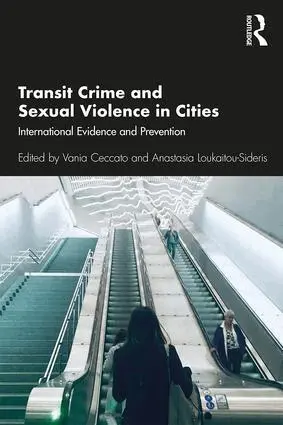
How cities are planned and designed has a major impact on individuals’ mobility and safety. If individuals feel unsafe in public transportation or on the way to it, they may avoid certain routes or particular times of the day. This is problematic, since research has also found that, in some cities, especially those in the Global South, a large percentage of women are "transit captives". Namely, they have relatively less access to non-public forms of transportation and are, therefore, especially reliant on public transport. This issue is important not only because it affects people’s safety but also because it influences the long-term sustainability of a city. In a sustainable city, safety guarantees the ability to move freely for everyone and provides a wider sense of place attachment.
Transit Crime and Sexual Violence in Cities examines the evidence of victimization in transit environments in countries around the world, exploring individuals’ feelings of perceived safety or lack thereof and the necessary improvements that can make transit safer and, hence, cities more sustainable. The book’s contributions are grounded in theories at the crossroads of several disciplines such as environmental criminology, architecture and design, urban planning, geography, psychology, gender and LGBTQI studies, transportation, and law enforcement. International case studies include Los Angeles, Vancouver, Stockholm, London, Paris, São Paulo, Mexico City, Bogotá, Tokyo, Guangzho, Melbourne, and Lagos, among others.
649 kr
Läs direkt efter köp
How cities are planned and designed has a major impact on individuals’ mobility and safety. If individuals feel unsafe in public transportation or on the way to it, they may avoid certain routes or particular times of the day. This is problematic, since research has also found that, in some cities, especially those in the Global South, a large percentage of women are "transit captives". Namely, they have relatively less access to non-public forms of transportation and are, therefore, especially reliant on public transport. This issue is important not only because it affects people’s safety but also because it influences the long-term sustainability of a city. In a sustainable city, safety guarantees the ability to move freely for everyone and provides a wider sense of place attachment.
Transit Crime and Sexual Violence in Cities examines the evidence of victimization in transit environments in countries around the world, exploring individuals’ feelings of perceived safety or lack thereof and the necessary improvements that can make transit safer and, hence, cities more sustainable. The book’s contributions are grounded in theories at the crossroads of several disciplines such as environmental criminology, architecture and design, urban planning, geography, psychology, gender and LGBTQI studies, transportation, and law enforcement. International case studies include Los Angeles, Vancouver, Stockholm, London, Paris, São Paulo, Mexico City, Bogotá, Tokyo, Guangzho, Melbourne, and Lagos, among others.
752 kr
Läs direkt efter köp
Spatial Implications and Planning Criteria for High-speed Rail Cities and Regions evaluates the varied experiences that HSR systems have brought about to different station-cities and their regional territories around the world, with an eye towards better future planning and policy of such systems.
This edited volume draws from examples of high-speed rail operations in different cities in Europe and Asia to depict the various impacts of this major transportation infrastructure. It attempts to distinguish the short- and long-term impacts described in the literature, classifying them into regional and inter-urban effects, urban effects, and wider economic impacts. Planning challenges appear at two major points: 1) during the initial planning stage that includes the route and location of stations; and 2) during the development process that follows.
The case studies in the book concentrate on a variety of topics from the impact of high-speed rail on population growth in some station-cities, to the regional economic impacts that an HSR system can bring about to the larger territories it passes through, to the potential of station-cities to better attract firms, or to experience increases in tourism and commerce. They also assess planning strategies and experiences from station-cities to draw lessons for future HSR planning policies.
The Chapters in this book were originally published in a special issue of European Planning Studies.
752 kr
Läs direkt efter köp
Spatial Implications and Planning Criteria for High-speed Rail Cities and Regions evaluates the varied experiences that HSR systems have brought about to different station-cities and their regional territories around the world, with an eye towards better future planning and policy of such systems.
This edited volume draws from examples of high-speed rail operations in different cities in Europe and Asia to depict the various impacts of this major transportation infrastructure. It attempts to distinguish the short- and long-term impacts described in the literature, classifying them into regional and inter-urban effects, urban effects, and wider economic impacts. Planning challenges appear at two major points: 1) during the initial planning stage that includes the route and location of stations; and 2) during the development process that follows.
The case studies in the book concentrate on a variety of topics from the impact of high-speed rail on population growth in some station-cities, to the regional economic impacts that an HSR system can bring about to the larger territories it passes through, to the potential of station-cities to better attract firms, or to experience increases in tourism and commerce. They also assess planning strategies and experiences from station-cities to draw lessons for future HSR planning policies.
The Chapters in this book were originally published in a special issue of European Planning Studies.
679 kr
Skickas inom 10-15 vardagar
1 541 kr
Läs direkt efter köp
1 541 kr
Läs direkt efter köp
3 365 kr
Skickas inom 10-15 vardagar
1 325 kr
Skickas inom 10-15 vardagar
785 kr
Läs direkt efter köp
The New Companion to Urban Design continues the assemblage of rich and critical ideas about urban form and design that began with the Companion to Urban Design (Routledge, 2011). With chapters from a new set of contributors, this sequel offers a more comparative perspective representing multiple voices and perspectives from the Global South.
The essays in this volume are organized in three parts: Part I: Comparative Urbanism; Part II: Challenges; and Part III: Opportunities. Each part contains distinct sections designed to address specific themes, and includes a list of annotated suggested further readings at the end of each chapter. Part I: Comparative Urbanism examines different variants of urbanism in the Global North and the Global South, produced by a new economic order characterized by the mobility of labor, capital, information, and technology. Part II: Challenges discusses some of the contemporary challenges that cities of the Global North and the Global South are facing and the possible role of urban design. This part discusses spatial claims and conflicts, challenges generated by urban informality, explosive growth or dramatic shrinkage of the urban settlement, gentrification and displacement, and mimesis, simulacra and lack of authenticity. Part III: Aspirations discusses some normative goals that urban design interventions aspire to bring about in cities of the Global North and the Global South. These include resilience and sustainability, health, conservation/restoration, justice, intelligence, access and mobility, and arts and culture.
The New Companion to Urban Design is primarily intended for scholars and graduate students interested in cities and their built environment. It offers an invaluable and up-to-date guide to current thinking across a range of disciplines including urban design, planning, urban studies, and geography.
785 kr
Läs direkt efter köp
The New Companion to Urban Design continues the assemblage of rich and critical ideas about urban form and design that began with the Companion to Urban Design (Routledge, 2011). With chapters from a new set of contributors, this sequel offers a more comparative perspective representing multiple voices and perspectives from the Global South.
The essays in this volume are organized in three parts: Part I: Comparative Urbanism; Part II: Challenges; and Part III: Opportunities. Each part contains distinct sections designed to address specific themes, and includes a list of annotated suggested further readings at the end of each chapter. Part I: Comparative Urbanism examines different variants of urbanism in the Global North and the Global South, produced by a new economic order characterized by the mobility of labor, capital, information, and technology. Part II: Challenges discusses some of the contemporary challenges that cities of the Global North and the Global South are facing and the possible role of urban design. This part discusses spatial claims and conflicts, challenges generated by urban informality, explosive growth or dramatic shrinkage of the urban settlement, gentrification and displacement, and mimesis, simulacra and lack of authenticity. Part III: Aspirations discusses some normative goals that urban design interventions aspire to bring about in cities of the Global North and the Global South. These include resilience and sustainability, health, conservation/restoration, justice, intelligence, access and mobility, and arts and culture.
The New Companion to Urban Design is primarily intended for scholars and graduate students interested in cities and their built environment. It offers an invaluable and up-to-date guide to current thinking across a range of disciplines including urban design, planning, urban studies, and geography.
990 kr
Skickas inom 5-8 vardagar
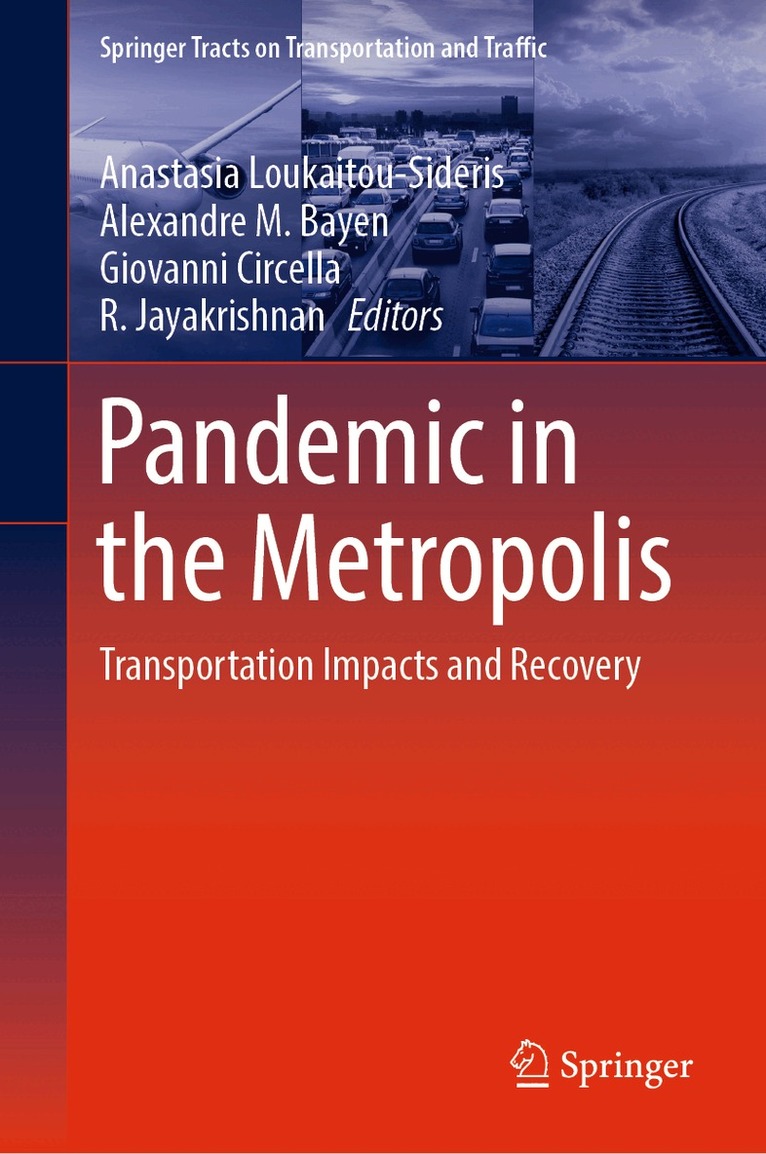
Pandemic in the Metropolis
Transportation Impacts and Recovery
854 kr
Skickas inom 5-8 vardagar
1 722 kr
Läs direkt efter köp
This book brings together reports of original empirical studies which explore the impacts of the COVID-19 pandemic on urban mobility and transportation and the associated policy responses. Focusing on the California region, the book draws on this local experience to formulate general lessons for other regions and metropolitan areas.
The book examines how the COVID-19 pandemic has had different impacts on vulnerable populations in cities. It explores the pandemic''s impacts on the transportation industry, in particular public transit, but also on other industries and economic interests that rely on transportation, such as freight trucking, retail and food industries, and the gig-economy. It investigates the effect of the viral outbreak on automobile traffic and associated air quality and traffic safety, as well as on alternative forms of work, shopping, and travel which have developed to accommodate the conditions it has forced on society.With quantitative data supported with illustrations and graphs, transportation professionals, policymakers and students can use this book to learn about policies and strategies that may instigate positive change in urban transport in the post-pandemic period.
Pandemic in the Metropolis
Transportation Impacts and Recovery
854 kr
Skickas inom 5-8 vardagar
934 kr
Tillfälligt slut
234 kr
Tillfälligt slut
368 kr
Tillfälligt slut