Karen Jacobsen - Böcker
Visar alla böcker från författaren Karen Jacobsen. Handla med fri frakt och snabb leverans.
4 produkter
4 produkter
249 kr
Skickas inom 7-10 vardagar
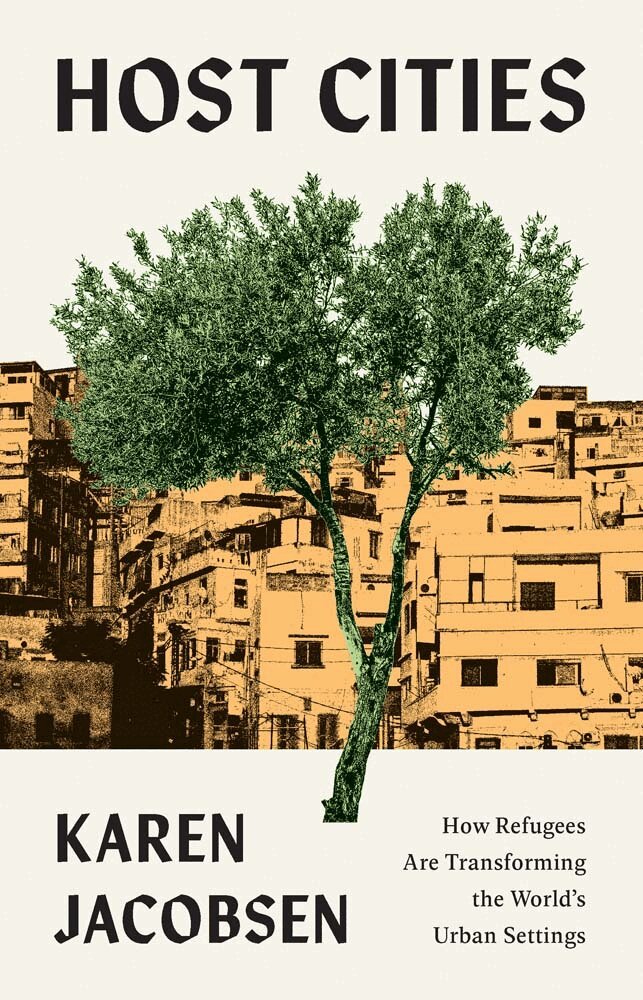
A revealing study of how the arrival of refugees affects and transforms cities Cities all over the world experience large humanitarian influxes, and refugees and citizens alike must navigate the related risks and opportunities. Over the past twenty-five years, Karen Jacobsen has studied the interaction of refugees and cities and has trained scores of graduate students, many of whom now work with United Nations agencies or humanitarian nongovernmental organizations. Her research team at Tufts and this global network of aid workers give her firsthand knowledge of the impact of forced migration on cities and the lives of refugees living there. Focusing on cities and refugees in Africa and the Middle East, Jacobsen draws universal lessons, distilling her research findings and wisdom from decades of experience into clear, vivid prose. The book is valuable for researchers, policy analysts, donors, and humanitarian workers in cities around the globe and for all readers trying to understand, beyond the headlines, one of the most troubling and volatile issues of our time.
1 376 kr
Skickas inom 7-10 vardagar
Increasing numbers of researchers are working in regions experiencing high levels of conflict or crisis, or among populations that have fled violent conflict to become refugees or internally displaced persons. Understanding these conflicts and their aftermath should be shaped not only by the victors and their elite companions but also by the local people whose daily lives become intertwined with the conflict - this 'view from below' is explored in this volume. Conducting rigorous research in these contexts presents a range of ethical, methodological, logistical and security challenges not usually confronted in non-conflict field contexts. This volume compiles lessons learned by experienced field researchers, many of whom have faced demanding situations characterized by violence, distrust and social fragmentation. The authors offer options for studying the situations of people affected by conflict and, by focusing on ethical and security issues, seek ways to safeguard the interests and integrity of the research 'subjects' and of the researchers and their teams.
428 kr
Skickas inom 7-10 vardagar
Increasing numbers of researchers are working in regions experiencing high levels of conflict or crisis, or among populations that have fled violent conflict to become refugees or internally displaced persons. Understanding these conflicts and their aftermath should be shaped not only by the victors and their elite companions but also by the local people whose daily lives become intertwined with the conflict - this 'view from below' is explored in this volume. Conducting rigorous research in these contexts presents a range of ethical, methodological, logistical and security challenges not usually confronted in non-conflict field contexts. This volume compiles lessons learned by experienced field researchers, many of whom have faced demanding situations characterized by violence, distrust and social fragmentation. The authors offer options for studying the situations of people affected by conflict and, by focusing on ethical and security issues, seek ways to safeguard the interests and integrity of the research 'subjects' and of the researchers and their teams.
3 659 kr
Skickas inom 7-10 vardagar
Forced migration in the 21st century is closely linked to three global developments: climate change, rapid urbanization and the lack of solutions faced by millions of displaced people. The Handbook on Forced Migration brings a critical lens to the study of these issues. By adding the often overlooked disciplines of history and philosophy, this Handbook challenges narratives on forced migration, explains contemporary challenges, and provides a call for action.Each section of the Handbook presents diverse perspectives and a range of case studies on the interaction between forced migration and climate change, urbanization and solutions. The Introduction challenges different forced migration narratives, and the Conclusion makes new arguments for standards in forced migration research. A final chapter explores potential problems for forced migrants around digital technology,This fascinating Handbook will be an important read for human rights, humanitarian and development practitioners, and for urban studies and migration scholars and students. The research-centred approach will benefit academics and policymakers undertaking new investigations.