Karen L. Mapp – författare
Visar alla böcker från författaren Karen L. Mapp. Handla med fri frakt och snabb leverans.
9 produkter
9 produkter
Häftad, Engelska, 2011
348 kr
Skickas inom 5-8 vardagar
The persistent failure of public schools in low-income neighborhoods, where fully half of black and Latino students fail to graduate with their peers, has vexed educators for decades. A Match on Dry Grass argues that community organizing represents a fresh and promising antidote to educational failure. Based on a comprehensive national study, the book presents rich and compelling case studies of prominent efforts in Chicago, New York City, Los Angeles, Denver, San Jose, and the Mississippi Delta. The authors show how organizing groups work to build the participation and leadership of parents and students so they can hold school systems accountable for real improvements. But organizing groups do not just demand change. They also collaborate with educators and other community residents to contribute to efforts to improve schooling. Out of these six case studies, Warren, Mapp, and their collaborators identify the central processes common to dynamic organizing efforts for school reform, outlining how community organizing builds the kinds of relationships that can transform schools and communities.
Inbunden, Engelska, 2011
1 850 kr
Skickas inom 5-8 vardagar
The persistent failure of public schools in low-income neighborhoods, where fully half of black and Latino students fail to graduate with their peers, has vexed educators for decades. A Match on Dry Grass argues that community organizing represents a fresh and promising antidote to educational failure. Based on a comprehensive national study, the book presents rich and compelling case studies of prominent efforts in Chicago, New York City, Los Angeles, Denver, San Jose, and the Mississippi Delta. The authors show how organizing groups work to build the participation and leadership of parents and students so they can hold school systems accountable for real improvements. But organizing groups do not just demand change. They also collaborate with educators and other community residents to contribute to efforts to improve schooling. Out of these six case studies, Warren, Mapp, and their collaborators identify the central processes common to dynamic organizing efforts for school reform, outlining how community organizing builds the kinds of relationships that can transform schools and communities.
E-bok
PDF, Engelska, 2011356 kr
Läs direkt efter köp
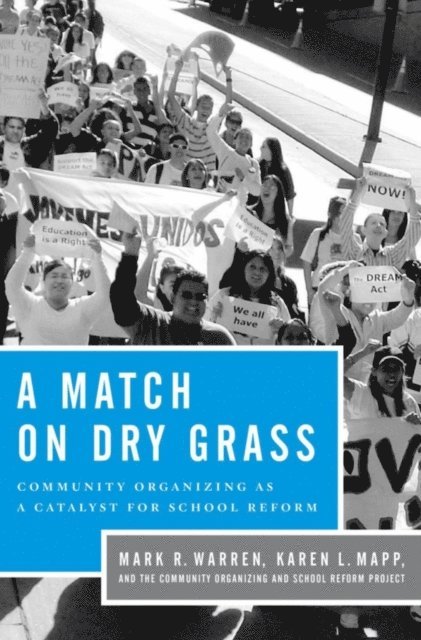
The persistent failure of public schooling in low-income communities constitutes one of our nation''s most pressing civil rights and social justice issues. Many school reformers recognize that poverty, racism, and a lack of power held by these communities undermine children''s education and development, but few know what to do about it. A Match on Dry Grass argues that community organizing represents a fresh and promising approach to school reform as part of a broader agenda to build power for low-income communities and address the profound social inequalities that affect the education of children. Based on a comprehensive national study, the book presents rich and compelling case studies of prominent organizing efforts in Chicago, New York City, Los Angeles, Denver, San Jose, and the Mississippi Delta. The authors show how organizing groups build the participation and leadership of parents and students so they can become powerful actors in school improvement efforts. They also identify promising ways to overcome divisions and create the collaborations between educators and community residents required for deep and sustainable school reform. Identifying the key processes that create strong connections between schools and communities, Warren, Mapp, and their collaborators show how community organizing builds powerful relationships that lead to the transformational change necessary to advance educational equity and a robust democracy.
E-bok
Engelska, 2011356 kr
Läs direkt efter köp
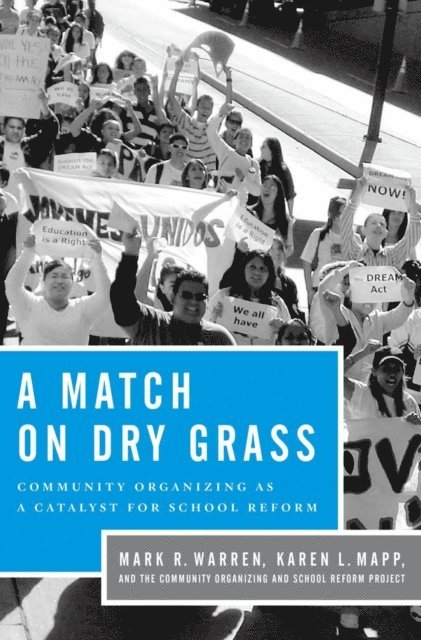
The persistent failure of public schooling in low-income communities constitutes one of our nation''s most pressing civil rights and social justice issues. Many school reformers recognize that poverty, racism, and a lack of power held by these communities undermine children''s education and development, but few know what to do about it. A Match on Dry Grass argues that community organizing represents a fresh and promising approach to school reform as part of a broader agenda to build power for low-income communities and address the profound social inequalities that affect the education of children. Based on a comprehensive national study, the book presents rich and compelling case studies of prominent organizing efforts in Chicago, New York City, Los Angeles, Denver, San Jose, and the Mississippi Delta. The authors show how organizing groups build the participation and leadership of parents and students so they can become powerful actors in school improvement efforts. They also identify promising ways to overcome divisions and create the collaborations between educators and community residents required for deep and sustainable school reform. Identifying the key processes that create strong connections between schools and communities, Warren, Mapp, and their collaborators show how community organizing builds powerful relationships that lead to the transformational change necessary to advance educational equity and a robust democracy.
Häftad, Engelska, 2017
391 kr
Skickas inom 3-6 vardagar
Häftad, Engelska, 2022
375 kr
Skickas inom 3-6 vardagar
Häftad, Engelska, 2014
364 kr
Skickas inom 5-8 vardagar
Achieving Coherence in District Improvement focuses on a problem of practice faced by educational leaders across the nation: how to effectively manage the relationship between the central office and schools. The book is based on a study of five large urban districts that have demonstrated improvement in student achievement. The authors—all members of Harvard University’s Public Education Leadership Project (PELP)—argue that there is no “one best way” to structure the central offi ce-school relationship. Instead, they say, what matters is whether district leaders eff ectively select and implement their strategy by achieving coherence among key elementsand actors—the district’s environment, resources, systems, structures, stakeholders, and culture.The authors examine the fi ve districts’ approaches in detail and point to a number of important findings. First, they emphasize that a clear, shared understanding of decision rights in key areas—academic programming, budgeting, and staffing—is essential to developing an eff ective central office-school relationship. Second, they stress the importance of building mutually supportive and trusting relationships between district leaders and principals. Third, they highlight the ways that culture and the external environment infl uence the relationship between the central office and schools. Each chapter also provides relevant “Lessons for Practice”—actionable takeaways—that educational leaders from any district can use to improve the central office-school relationship.
E-bok
Engelska, 2014552 kr
Läs direkt efter köp
Achieving Coherence in District Improvement focuses on a problem of practice faced by educational leaders across the nation: how to effectively manage the relationship between the central office and schools. The book is based on a study of five large urban districts that have demonstrated improvement in student achievement. The authors—all members of Harvard University’s Public Education Leadership Project (PELP)—argue that there is no “one best way” to structure the central office-school relationship. Instead, they say, what matters is whether district leaders effectively select and implement their strategy by achieving coherence among key elements and actors—the district’s environment, resources, systems, structures, stakeholders, and culture. The authors examine the five districts’ approaches in detail and point to a number of important findings. First, they emphasize that a clear, shared understanding of decision rights in key areas—academic programming, budgeting, and staffing—is essential to developing an effective central office-school relationship. Second, they stress the importance of building mutually supportive and trusting relationships between district leaders and principals. Third, they highlight the ways that culture and the external environment influence the relationship between the central office and schools. Each chapter also provides relevant “Lessons for Practice”—actionable takeaways—that educational leaders from any district can use successfully to improve the central office-school relationship.
E-bok
PDF, Engelska, 2014552 kr
Läs direkt efter köp
Achieving Coherence in District Improvement focuses on a problem of practice faced by educational leaders across the nation: how to effectively manage the relationship between the central office and schools. The book is based on a study of five large urban districts that have demonstrated improvement in student achievement. The authors—all members of Harvard University’s Public Education Leadership Project (PELP)—argue that there is no “one best way” to structure the central office-school relationship. Instead, they say, what matters is whether district leaders effectively select and implement their strategy by achieving coherence among key elements and actors—the district’s environment, resources, systems, structures, stakeholders, and culture. The authors examine the five districts’ approaches in detail and point to a number of important findings. First, they emphasize that a clear, shared understanding of decision rights in key areas—academic programming, budgeting, and staffing—is essential to developing an effective central office-school relationship. Second, they stress the importance of building mutually supportive and trusting relationships between district leaders and principals. Third, they highlight the ways that culture and the external environment influence the relationship between the central office and schools. Each chapter also provides relevant “Lessons for Practice”—actionable takeaways—that educational leaders from any district can use successfully to improve the central office-school relationship.