Karen Valentin – författare
689 kr
Skickas inom 5-8 vardagar
1 670 kr
Skickas inom 5-8 vardagar
1 157 kr
Läs direkt efter köp
1 154 kr
Läs direkt efter köp
481 kr
Skickas inom 10-15 vardagar
703 kr
Läs direkt efter köp
This edited volume offers new analytical and methodological approaches to the study of education in the post-pandemic educational context, through case studies from countries in South Asia such as Bhutan, India, Nepal, Pakistan and Sri Lanka.
Crossing disciplinary and national boundaries to advance collaborative knowledge production in South Asian education, the book explores how different colonial legacies, religious orientations, and positions in the global economy are played out in regional education systems. In doing so, this volume focuses on the educational challenges faced by the region to better understand South Asian society and the existing societal inequalities in the wake of COVID-19. The book highlights how the pandemic invites a re-thinking of current ways of approaching educational research in hybrid forms, and also opens up new areas of research ranging from pedagogical innovations to the well-being of teachers and students.
Offering interdisciplinary perspectives on education in this unique context, this timely book will be highly relevant to students, researchers, and academics in the fields of international and comparative education, South Asian studies, teacher education, and education policy and politics.
703 kr
Läs direkt efter köp
This edited volume offers new analytical and methodological approaches to the study of education in the post-pandemic educational context, through case studies from countries in South Asia such as Bhutan, India, Nepal, Pakistan and Sri Lanka.
Crossing disciplinary and national boundaries to advance collaborative knowledge production in South Asian education, the book explores how different colonial legacies, religious orientations, and positions in the global economy are played out in regional education systems. In doing so, this volume focuses on the educational challenges faced by the region to better understand South Asian society and the existing societal inequalities in the wake of COVID-19. The book highlights how the pandemic invites a re-thinking of current ways of approaching educational research in hybrid forms, and also opens up new areas of research ranging from pedagogical innovations to the well-being of teachers and students.
Offering interdisciplinary perspectives on education in this unique context, this timely book will be highly relevant to students, researchers, and academics in the fields of international and comparative education, South Asian studies, teacher education, and education policy and politics.
2 336 kr
Skickas inom 10-15 vardagar
589 kr
Skickas inom 10-15 vardagar
1 415 kr
Skickas inom 10-15 vardagar
556 kr
Läs direkt efter köp
Migration for educational purposes, once the privilege of the upper class, has become a global mass phenomenon in recent years. This volume examines, within different cultural and historical contexts, the close relationship between migration, education, and social mobility. Adopting the perspective that education includes a broad range of formative experiences, the chapters explore different educational trajectories and the local, regional, and transnational relations in which they are embedded. Three key issues emerge from the analyses: firstly, the central role of temporal aspects in terms of both the overall historical conditions and the specific biographical circumstances shaping educational opportunities; secondly, the complex agendas informing individuals’ migration and the adjustment of these agendas in the light of the vagaries of migrant life; and thirdly, the importance of migrants’ self-perception as ‘educated persons’, and the invention of new identities, and the maintaining of old identities that this involves. This book was originally published as a special issue of Identities: Global Studies in Culture and Power.
556 kr
Läs direkt efter köp
Migration for educational purposes, once the privilege of the upper class, has become a global mass phenomenon in recent years. This volume examines, within different cultural and historical contexts, the close relationship between migration, education, and social mobility. Adopting the perspective that education includes a broad range of formative experiences, the chapters explore different educational trajectories and the local, regional, and transnational relations in which they are embedded. Three key issues emerge from the analyses: firstly, the central role of temporal aspects in terms of both the overall historical conditions and the specific biographical circumstances shaping educational opportunities; secondly, the complex agendas informing individuals’ migration and the adjustment of these agendas in the light of the vagaries of migrant life; and thirdly, the importance of migrants’ self-perception as ‘educated persons’, and the invention of new identities, and the maintaining of old identities that this involves. This book was originally published as a special issue of Identities: Global Studies in Culture and Power.
184 kr
Skickas inom 5-8 vardagar
997 kr
Skickas inom 5-8 vardagar
385 kr
Läs direkt efter köp
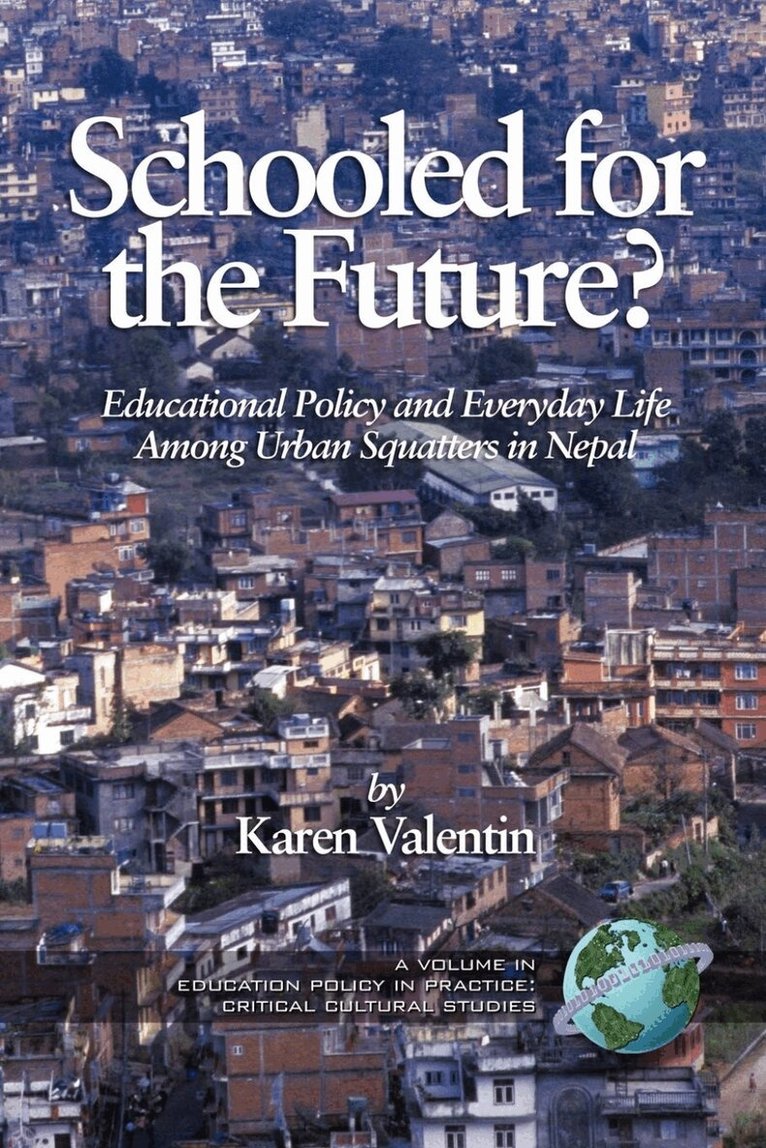
“Schooled for the future?” offers an ethnographically rich account about squatter families in Kathmandu and their struggles to improve their living conditions and create a better future through education. Examining how people – children and adults - experience and respond to policy initiatives aimed at improving their life the book discusses the paradoxes inherent in modern schooling. Firstly, schooling promises social justice and equal opportunities, yet it also contributes to the reproduction of social inequalities by strengthening existing class divisions and by producing a new category of unschooled people. Secondly, within the context of the family, schooling is attributed an economic and symbolic value, but it is also considered a potential threat to family values based on generational hierarchy and caste identity. Through detailed ethnographic accounts the author demonstrates how urban poor families experience the schooling process ambivalently, both as a source of alienation and inferiority as well as a source of self-esteem and sense of progress. Acknowledging the interconnect-edness between global, national and local forces framing and informing processes of education the book, thus, sheds light on the complex relationship between educational policy and everyday life experiences of the urban poor in Kathmandu, a hitherto understudied segment of the Nepalese society.
577 kr
Läs direkt efter köp
202 kr
Tillfälligt slut