Karen Yeung - Böcker
Visar alla böcker från författaren Karen Yeung. Handla med fri frakt och snabb leverans.
7 produkter
7 produkter
1 601 kr
Skickas inom 5-8 vardagar
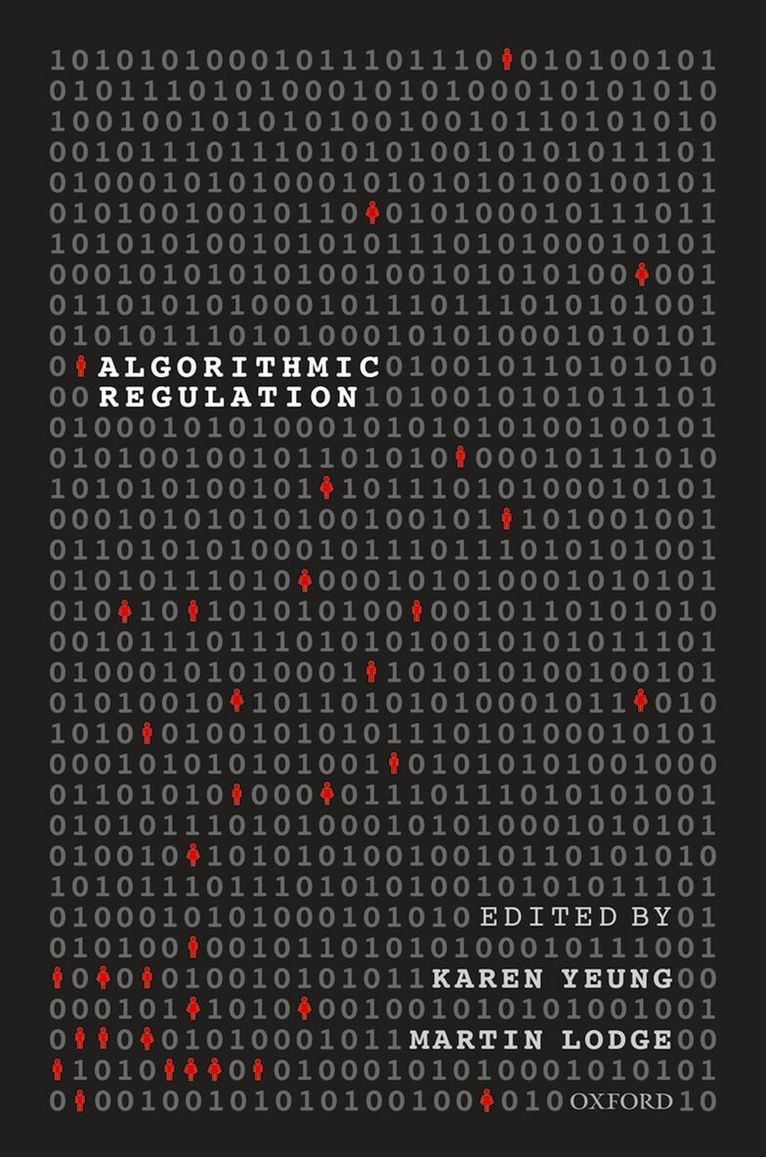
As the power and sophistication of of 'big data' and predictive analytics has continued to expand, so too has policy and public concern about the use of algorithms in contemporary life. This is hardly surprising given our increasing reliance on algorithms in daily life, touching policy sectors from healthcare, transport, finance, consumer retail, manufacturing education, and employment through to public service provision and the operation of the criminal justice system. This has prompted concerns about the need and importance of holding algorithmic power to account, yet it is far from clear that existing legal and other oversight mechanisms are up to the task. This collection of essays, edited by two leading regulatory governance scholars, offers a critical exploration of 'algorithmic regulation', understood both as a means for co-ordinating and regulating social action and decision-making, as well as the need for institutional mechanisms through which the power of algorithms and algorithmic systems might themselves be regulated. It offers a unique perspective that is likely to become a significant reference point for the ever-growing debates about the power of algorithms in daily life in the worlds of research, policy and practice. The range of contributors are drawn from a broad range of disciplinary perspectives including law, public administration, applied philosophy, data science and artificial intelligence. Taken together, they highlight the rise of algorithmic power, the potential benefits and risks associated with this power, the way in which Sheila Jasanoff's long-standing claim that 'technology is politics' has been thrown into sharp relief by the speed and scale at which algorithmic systems are proliferating, and the urgent need for wider public debate and engagement of their underlying values and value trade-offs, the way in which they affect individual and collective decision-making and action, and effective and legitimate mechanisms by and through which algorithmic power is held to account.
2 999 kr
Skickas inom 7-10 vardagar
The variety, pace, and power of technological innovations that have emerged in the 21st Century have been breathtaking. These technological developments, which include advances in networked information and communications, biotechnology, neurotechnology, nanotechnology, robotics, and environmental engineering technology, have raised a number of vital and complex questions. Although these technologies have the potential to generate positive transformation and help address 'grand societal challenges', the novelty associated with technological innovation has also been accompanied by anxieties about their risks and destabilizing effects. Is there a potential harm to human health or the environment? What are the ethical implications? Do this innovations erode of antagonize values such as human dignity, privacy, democracy, or other norms underpinning existing bodies of law and regulation? These technological developments have therefore spawned a nascent but growing body of 'law and technology' scholarship, broadly concerned with exploring the legal, social and ethical dimensions of technological innovation.This handbook collates the many and varied strands of this scholarship, focusing broadly across a range of new and emerging technology and a vast array of social and policy sectors, through which leading scholars in the field interrogate the interfaces between law, emerging technology, and regulation. Structured in five parts, the handbook (I) establishes the collection of essays within existing scholarship concerned with law and technology as well as regulatory governance; (II) explores the relationship between technology development by focusing on core concepts and values which technological developments implicate; (III) studies the challenges for law in responding to the emergence of new technologies, examining how legal norms, doctrine and institutions have been shaped, challenged and destabilized by technology, and even how technologies have been shaped by legal regimes; (IV) provides a critical exploration of the implications of technological innovation, examining the ways in which technological innovation has generated challenges for regulators in the governance of technological development, and the implications of employing new technologies as an instrument of regulatory governance; (V) explores various interfaces between law, regulatory governance, and new technologies across a range of key social domains.
576 kr
Kommande
The variety, pace, and power of technological innovations that have emerged in the 21st Century have been breathtaking. These technological developments, which include advances in networked information and communications, biotechnology, neurotechnology, nanotechnology, robotics, and environmental engineering technology, have raised a number of vital and complex questions. Although these technologies have the potential to generate positive transformation and help address 'grand societal challenges', the novelty associated with technological innovation has also been accompanied by anxieties about their risks and destabilizing effects. Is there a potential harm to human health or the environment? What are the ethical implications? Do this innovations erode of antagonize values such as human dignity, privacy, democracy, or other norms underpinning existing bodies of law and regulation? These technological developments have therefore spawned a nascent but growing body of 'law and technology' scholarship, broadly concerned with exploring the legal, social and ethical dimensions of technological innovation.This handbook collates the many and varied strands of this scholarship, focusing broadly across a range of new and emerging technology and a vast array of social and policy sectors, through which leading scholars in the field interrogate the interfaces between law, emerging technology, and regulation. Structured in five parts, the handbook (I) establishes the collection of essays within existing scholarship concerned with law and technology as well as regulatory governance; (II) explores the relationship between technology development by focusing on core concepts and values which technological developments implicate; (III) studies the challenges for law in responding to the emergence of new technologies, examining how legal norms, doctrine and institutions have been shaped, challenged and destabilized by technology, and even how technologies have been shaped by legal regimes; (IV) provides a critical exploration of the implications of technological innovation, examining the ways in which technological innovation has generated challenges for regulators in the governance of technological development, and the implications of employing new technologies as an instrument of regulatory governance; (V) explores various interfaces between law, regulatory governance, and new technologies across a range of key social domains.
1 521 kr
Skickas inom 7-10 vardagar
Contemporary life relies on regulation. The quality and safety of the water we drink, the food we eat, and the social media applications we use are all governed by multiple regulatory regimes. Although rooted in law, regulation is a multidisciplinary endeavour. Debates about regulation, particularly in the face of rapid change and the emergence of new 'risks', are now commonplace. Despite extensive scholarship, regulation is often poorly understood, even by policy-makers, with unintended and even disastrous consequences. This book offers a critical introduction to core theories, concepts, methods, tools, and techniques of regulation, including regulatory policy, instruments, enforcement, compliance, accountability and legitimacy. Weaving extracts from texts drawn from many disciplines with accessible commentary, it introduces this important field to students, scholars, and practitioners in a scholarly yet accessible and engaging manner with discussion questions and additional readings for those seeking to deepen their knowledge.
493 kr
Skickas inom 7-10 vardagar
Contemporary life relies on regulation. The quality and safety of the water we drink, the food we eat, and the social media applications we use are all governed by multiple regulatory regimes. Although rooted in law, regulation is a multidisciplinary endeavour. Debates about regulation, particularly in the face of rapid change and the emergence of new 'risks', are now commonplace. Despite extensive scholarship, regulation is often poorly understood, even by policy-makers, with unintended and even disastrous consequences. This book offers a critical introduction to core theories, concepts, methods, tools, and techniques of regulation, including regulatory policy, instruments, enforcement, compliance, accountability and legitimacy. Weaving extracts from texts drawn from many disciplines with accessible commentary, it introduces this important field to students, scholars, and practitioners in a scholarly yet accessible and engaging manner with discussion questions and additional readings for those seeking to deepen their knowledge.
1 174 kr
Skickas inom 10-15 vardagar
Bargaining, negotiation and civil penalty sanctions together constitute central techniques used by regulators in securing compliance with the law. This book is a timely exploration of these practices, constructing a principled framework for evaluating their legitimacy and thereby drawing into sharper focus the importance of the constitutional principles in regulatory compliance. Although Australian competition law provides the focal point of the book, its analysis and critique is equally applicable to other competition law regimes and to other areas of business regulation. While there are numerous empirical studies of regulatory enforcement, this book introduces a normative dimension to the debate by seeking to identify whether there are certain principled and ethical limits that inform and circumscribe the limits of legitimate enforcement practice. It is likely to be of interest to scholars in the fields of public law, criminology, economics, and regulation, and may also be of considerable assistance to legal practitioners in providing a principled, legal foundation from which to draw in their dealings with regulators.
Regulating Technologies
Legal Futures, Regulatory Frames and Technological Fixes
Häftad, Engelska, 2008
498 kr
Skickas inom 10-15 vardagar
While it is a truism that emerging technologies present both opportunities for and challenges to their host communities, the legal community has only recently begun to consider their significance. On the one hand, emerging information, bio, nano, and neurotechnologies challenge policy-makers who aspire to put in place a regulatory environment that is legitimate, effective, and sustainable; on the other hand, these same technologies offer new opportunities as potentially powerful regulatory instruments. In this unique volume, a team of leading international scholars address many of the key difficulties surrounding the regulation of emerging technological targets as well as the implications of adopting technology as a regulatory tool. How should we rise to the challenge of regulating technologies? How are the regulatory lines to be drawn in the right places and how is the public to be properly engaged? How is precaution to be accommodated, and how can the law keep pace with technologies that develop ahead of the regulatory environment? How readily should we avail ourselves of the opportunity to use technology as a regulative strategy?How are we to understand these strategies and the challenges which they raise? To what extent do they give rise to similar policy problems accompanying more 'traditional' regulatory instruments or generate distinctive challenges? While the criminal justice system increasingly relies on technological assistance and the development of a 'surveillance society', is a regulatory regime that rules by technology compatible with rule of law values?