Karl Claxton – författare
Visar alla böcker från författaren Karl Claxton. Handla med fri frakt och snabb leverans.
5 produkter
5 produkter
E-bok
Engelska, 2006655 kr
Läs direkt efter köp
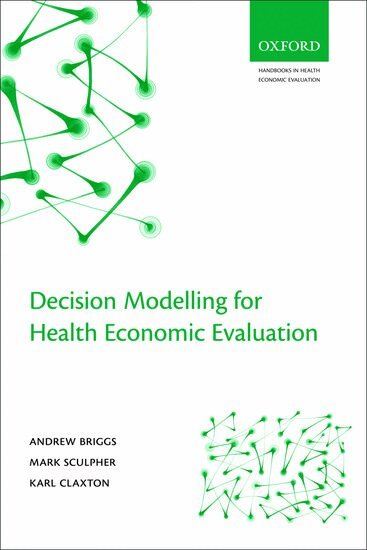
In financially constrained health systems across the world, increasing emphasis is being placed on the ability to demonstrate that health care interventions are not only effective, but also cost-effective. This book deals with decision modelling techniques that can be used to estimate the value for money of various interventions including medical devices, surgical procedures, diagnostic technologies, and pharmaceuticals. Particular emphasis is placed on the importance of the appropriate representation of uncertainty in the evaluative process and the implication this uncertainty has for decision making and the need for future research. This highly practical guide takes the reader through the key principles and approaches of modelling techniques. It begins with the basics of constructing different forms of the model, the population of the model with input parameter estimates, analysis of the results, and progression to the holistic view of models as a valuable tool for informing future research exercises. Case studies and exercises are supported with online templates and solutions. This book will help analysts understand the contribution of decision-analytic modelling to the evaluation of health care programmes. ABOUT THE SERIES: Economic evaluation of health interventions is a growing specialist field, and this series of practical handbooks will tackle, in-depth, topics superficially addressed in more general health economics books. Each volume will include illustrative material, case histories and worked examples to encourage the reader to apply the methods discussed, with supporting material provided online. This series is aimed at health economists in academia, the pharmaceutical industry and the health sector, those on advanced health economics courses, and health researchers in associated fields.
E-bok
PDF, Engelska, 2006712 kr
Läs direkt efter köp
In financially constrained health systems across the world, increasing emphasis is being placed on the ability to demonstrate that health care interventions are not only effective, but also cost-effective. This book deals with decision modelling techniques that can be used to estimate the value for money of various interventions including medical devices, surgical procedures, diagnostic technologies, and pharmaceuticals. Particular emphasis is placed on the importance of the appropriate representation of uncertainty in the evaluative process and the implication this uncertainty has for decision making and the need for future research. This highly practical guide takes the reader through the key principles and approaches of modelling techniques. It begins with the basics of constructing different forms of the model, the population of the model with input parameter estimates, analysis of the results, and progression to the holistic view of models as a valuable tool for informing future research exercises. Case studies and exercises are supported with online templates and solutions. This book will help analysts understand the contribution of decision-analytic modelling to the evaluation of health care programmes. ABOUT THE SERIES: Economic evaluation of health interventions is a growing specialist field, and this series of practical handbooks will tackle, in-depth, topics superficially addressed in more general health economics books. Each volume will include illustrative material, case histories and worked examples to encourage the reader to apply the methods discussed, with supporting material provided online. This series is aimed at health economists in academia, the pharmaceutical industry and the health sector, those on advanced health economics courses, and health researchers in associated fields.
E-bok
PDF, Engelska, 2015708 kr
Läs direkt efter köp
The purpose of economic evaluation is to inform decisions intended to improve healthcare. The new edition of Methods for the Economic Evaluation of Health Care Programmes equips the reader with the necessary tools and understanding required to undertake evaluations by providing an outline of key principles and a ''tool kit'' based on the authors'' own experiences of undertaking economic evaluations. Building on the strength of the previous edition, the accessible writing style ensures the text is key reading for the non-expert reader, as no prior knowledge of economics is required. The book employs a critical appraisal framework, which is useful both to researchers conducting studies and to decision-makers assessing them. Practical examples are provided throughout to aid learning and understanding. The book discusses the analytical and policy challenges that face health systems in seeking to allocate resources efficiently and fairly. New chapters include ''Principles of economic evaluation'' and ''Making decisions in healthcare'' which introduces the reader to core issues and questions about resource allocation, and provides an understanding of the fundamental principles which guide decision making. A key part of evidence-based decision making is the analysis of all the relevant evidence to make informed decisions and policy. The new chapter ''Identifying, synthesising and analysing evidence'' highlights the importance of systematic review, and how and why these methods are used. As methods of analysis continue to develop, the chapter on ''Characterising, reporting and interpreting uncertainty'' introduces the reader to recent methods of analysis and why characterizing uncertainty matters for health care decisions. The fourth edition of Methods for the Economic Evaluation of Health Care Programmes has been thoroughly revised and updated, making it essential reading for anyone commissioning, undertaking, or using economic evaluations in health care, including health service professionals, health economists, and health care decision makers.
Häftad, Engelska, 2006
1 037 kr
Skickas inom 7-10 vardagar
In financially constrained health systems across the world, increasing emphasis is being placed on the ability to demonstrate that health care interventions are not only effective, but also cost-effective. This book deals with decision modelling techniques that can be used to estimate the value for money of various interventions including medical devices, surgical procedures, diagnostic technologies, and pharmaceuticals. Particular emphasis is placed on the importance of the appropriate representation of uncertainty in the evaluative process and the implication this uncertainty has for decision making and the need for future research.This highly practical guide takes the reader through the key principles and approaches of modelling techniques. It begins with the basics of constructing different forms of the model, the population of the model with input parameter estimates, analysis of the results, and progression to the holistic view of models as a valuable tool for informing future research exercises. Case studies and exercises are supported with online templates and solutions.This book will help analysts understand the contribution of decision-analytic modelling to the evaluation of health care programmes.ABOUT THE SERIES: Economic evaluation of health interventions is a growing specialist field, and this series of practical handbooks will tackle, in-depth, topics superficially addressed in more general health economics books. Each volume will include illustrative material, case histories and worked examples to encourage the reader to apply the methods discussed, with supporting material provided online. This series is aimed at health economists in academia, the pharmaceutical industry and the health sector, those on advanced health economics courses, and health researchers in associated fields.
Häftad, Engelska, 2015
1 006 kr
Skickas inom 3-6 vardagar
The purpose of economic evaluation is to inform decisions intended to improve healthcare. The new edition of Methods for the Economic Evaluation of Health Care Programmes equips the reader with the necessary tools and understanding required to undertake evaluations by providing an outline of key principles and a 'tool kit' based on the authors' own experiences of undertaking economic evaluations.Building on the strength of the previous edition, the accessible writing style ensures the text is key reading for the non-expert reader, as no prior knowledge of economics is required. The book employs a critical appraisal framework, which is useful both to researchers conducting studies and to decision-makers assessing them. Practical examples are provided throughout to aid learning and understanding.The book discusses the analytical and policy challenges that face health systems in seeking to allocate resources efficiently and fairly. New chapters include 'Principles of economic evaluation' and 'Making decisions in healthcare' which introduces the reader to core issues and questions about resource allocation, and provides an understanding of the fundamental principles which guide decision making.A key part of evidence-based decision making is the analysis of all the relevant evidence to make informed decisions and policy. The new chapter 'Identifying, synthesising and analysing evidence' highlights the importance of systematic review, and how and why these methods are used. As methods of analysis continue to develop, the chapter on 'Characterising, reporting and interpreting uncertainty' introduces the reader to recent methods of analysis and why characterizing uncertainty matters for health care decisions.The fourth edition of Methods for the Economic Evaluation of Health Care Programmes has been thoroughly revised and updated, making it essential reading for anyone commissioning, undertaking, or using economic evaluations in health care, including health service professionals, health economists, and health care decision makers.