Karl Pinggéra – författare
Visar alla böcker från författaren Karl Pinggéra. Handla med fri frakt och snabb leverans.
6 produkter
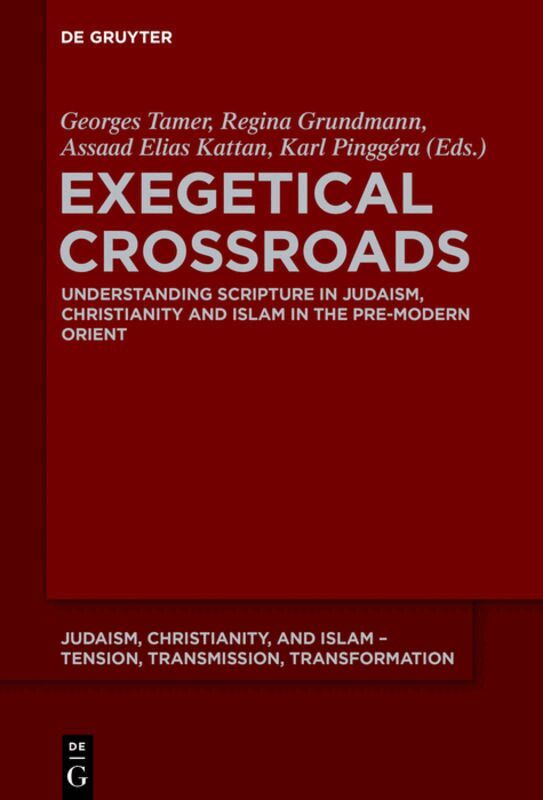
Exegetical Crossroads
Understanding Scripture in Judaism, Christianity and Islam in the Pre-Modern Orient
Av Georges Tamer, Regina Grundmann m. fl.
Inbunden, 2017
1563 kr
Lägg i varukorg
The art of interpreting Holy Scriptures flourished throughout the culturally heterogeneous pre-modern Orient among Jews, Christians and Muslims. Different ways of interpretation developed within each religion not without considering the others. How were the interactions and how productive were they …
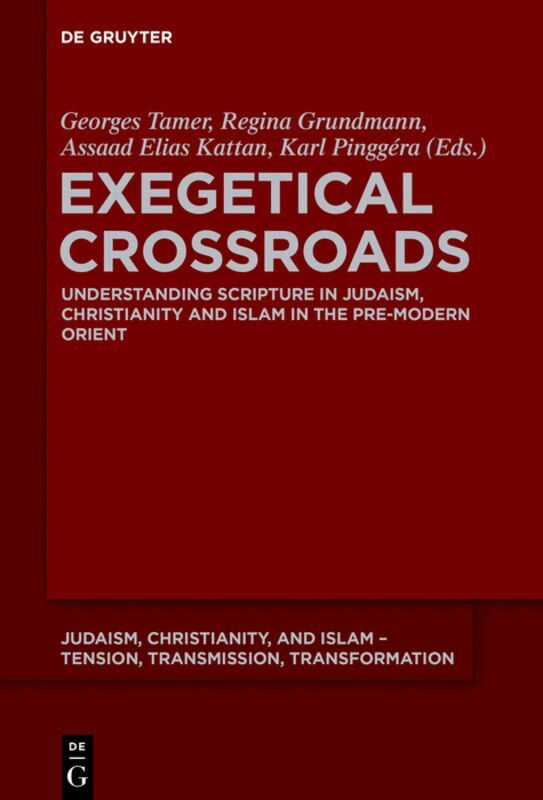
Exegetical Crossroads
Understanding Scripture in Judaism, Christianity and Islam in the Pre-Modern Orient
Av Georges Tamer, Regina Grundmann m. fl.
Häftad, 2019
405 kr
Lägg i varukorg
The art of interpreting Holy Scriptures flourished throughout the culturally heterogeneous pre-modern Orient among Jews, Christians and Muslims. Different ways of interpretation developed within each religion not without considering the others. How were the interactions and how productive were they …
Exegetical Crossroads
Understanding Scripture in Judaism, Christianity and Islam in the Pre-Modern Orient
Av Karl Pinggera, Assaad Elias Kattan m. fl.
E-bok, 2017
1576 kr
Lägg i varukorg
The art of interpreting Holy Scriptures flourished throughout the culturally heterogeneous pre-modern Orient among Jews, Christians and Muslims. Different ways of interpretation developed within each religion not without considering the others. How were the interactions and how productive were they …
Exegetical Crossroads
Understanding Scripture in Judaism, Christianity and Islam in the Pre-Modern Orient
Av Karl Pinggera, Assaad Elias Kattan m. fl.
E-bok, 2017
1576 kr
Lägg i varukorg
The art of interpreting Holy Scriptures flourished throughout the culturally heterogeneous pre-modern Orient among Jews, Christians and Muslims. Different ways of interpretation developed within each religion not without considering the others. How were the interactions and how productive were they …
Kirchengeschichte in ökumenischer Verantwortung
Ausgewählte Studien. E-BOOK
Av Wolfgang A. Bienert, Karl Pinggera m. fl.
E-bok, 2009
934 kr
Lägg i varukorg
Im Gespräch zwischen evangelischen und orthodoxen Kirchen spielen die Väter der Kirche als gemeinsame Bezugsgröße eine besondere Rolle. Evangelische entdecken dabei die ökumenische Bedeutung der kirchlichen Tradition, Orthodoxe begegnen der reformatorischen Theologie. Wolfgang Bienert hat dem …