Karol Edward Soltan - Böcker
Visar alla böcker från författaren Karol Edward Soltan. Handla med fri frakt och snabb leverans.
7 produkter
7 produkter
321 kr
Skickas inom 7-10 vardagar
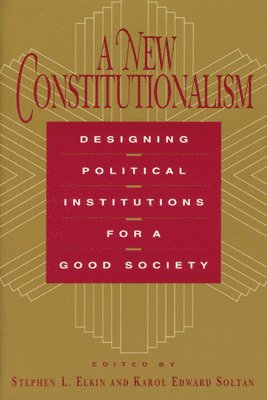
In The New Constitutionalism, seven distinguished scholars develop an innovative perspective on the power of institutions to shape politics and political life. Believing that constitutionalism needs to go beyond the classical goal of limiting the arbitrary exercise of political power, the contributors argue that it should—and can—be designed to achieve economic efficiency, informed democratic control, and other valued political ends. More broadly, they believe that political and social theory needs to turn away from the negativism of critical theory to consider how a good society should be "constituted" and to direct the work of designing institutions that can constitute a "good polity," in both the economic and civic senses. Stephen L. Elkin and Karol Edward Soltan begin with an overview of constitutionalist theory and a discussion of the new constitutionalism within the broader intellectual and historical context of political and social thought. Charles Anderson, James Ceaser, and the editors then offer different interpretations of the central issues regarding institutional design in a constitutionalist social science, consider various ways of performing the task, and discuss the inadequacy of recent political science to the job it ought to be doing. The book concludes with essays by Ted Lowi, Cass Sunstein and Edwin Haefele which apply these themes to the American regime.
572 kr
Skickas inom 5-8 vardagar
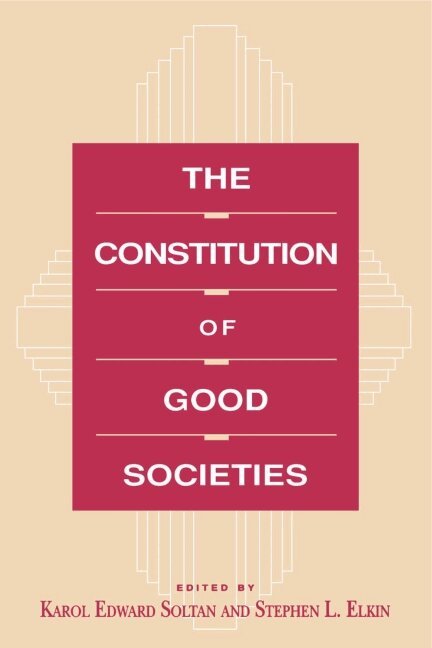
The purpose of this volume is to help develop, through a variety of exploratory essays, the art and science of institutional design. The authors look at a variety of good societies as artifacts, as products—at least partly—of design, and consider how such societies can be crafted. They identify themselves with the New Constitutionalism movement, which aims to develop and promote the knowledge necessary for institutional reform and institutional creation through understanding the designer's, creator's, founder's, or reformer's perspective. The first part of the volume considers some of the boundaries of what is humanly possible in politico-economic designs and the role in them of deliberation and the processes of adapting to limits. The second part considers different ways of exercising constitutionalist judgment analyzing a variety of cases, including general visions of the good society. Looking at whole societies, and at complexes of institutions, complements and informs the picture of the institutional microscale. Understanding the microscale, on the other hand, often makes the difference between empty slogans and realistic political proposals. Contributors are Karol Edward Soltan, Elinor Ostrorn, Viktor J. Vanberg, James lvi. Buchanan, John S. Dryzek, Charles 'X". Anderson, Stephen U. Elkin, Car Alperovirz, and Philip Green.
517 kr
Skickas inom 5-8 vardagar
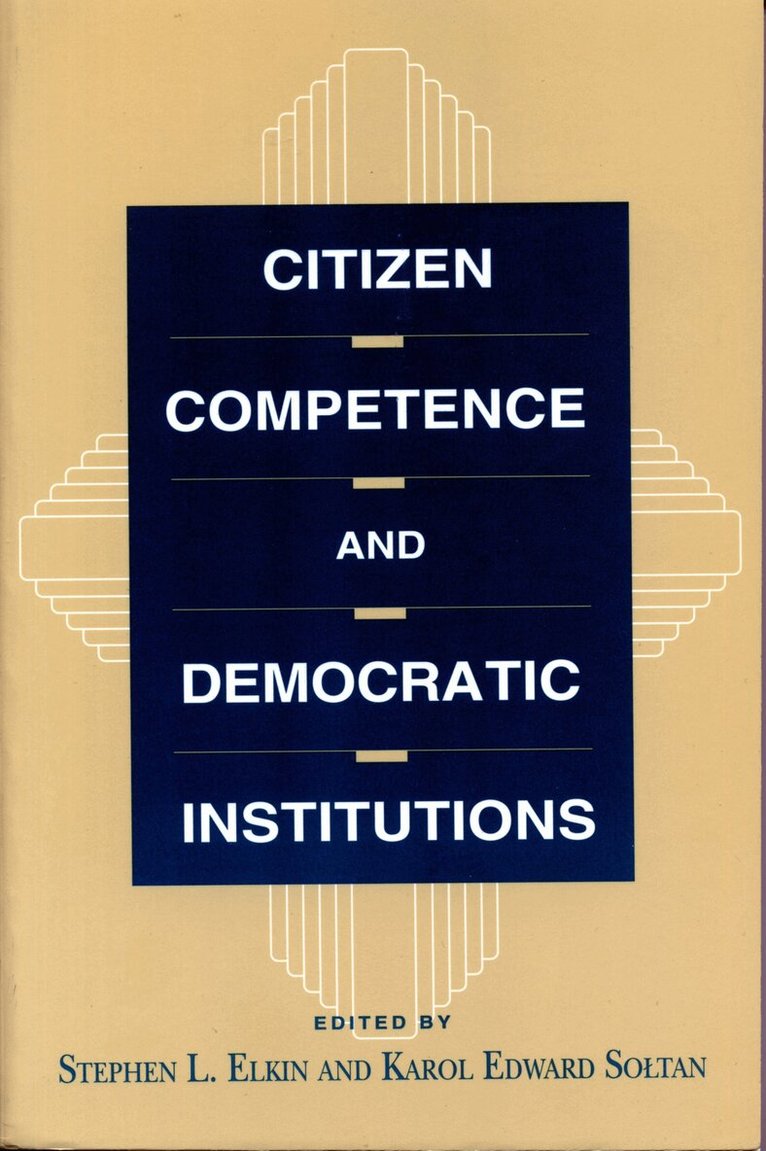
Bringing together new work from many of the leading experts on democratic citizenship, this volume presents both normative argument and empirical analysis to help deepen our understanding of the various competences that citizens require if there is to be a flourishing democratic political order in our present age.The essays explore the following themes: (1) the essential components of democratic citizenship and how these can be fostered; (2) the state of citizen competence in various democratic regimes; (3) civil society as a crucial site for the exercise and development of democratic citizenship; (4) new findings that show democratic citizens to have more political information and behave more rationally than hitherto supposed; and (5) the theory and practice of new institutional forms for democratic deliberation and democratic control.The final section of the book explores new and revitalized forms of democratic participation as well as the kind of participation that is likely to foster a wide variety of citizen competences. The discussion runs from what we know and can expect from town meetings, to the value of public work in fostering a democratic citizenry, to entirely new forms for expressing citizen judgment.The Contributors are Benjamin Barber, Harry C. Boyte, Frank M. Bryan, Michael A. Dimock, Stephen L. Elkin, James S. Fishkin, Norman Frohlich, John Gaventa, Elizabeth Gerber, Alan Kay, Robert E. Lane, Arthur Lupia, Jane Mansbridge, Joe A. Oppenheimer, Benjamin Page, Samuel Popkin, Nancy Rosenblum, Robert Shapiro, Karol Edward Soltan, Marion Smiley, and David Steiner.
2 290 kr
Skickas inom 10-15 vardagar
The political project of extending democracy to the global level is seen as the next major challenge for proponents of democracy. This volume considers some of the difficulties which need to be overcome for this extension to take place. The issues discussed include: Philosophical and theoretical questions about the nature of democracy and the justification of its valuesPressing political considerations, such as the crucial role of elections in democracy promotionLegal developments, such as the role of international law and judicial networksThe nature of the global political space as democratization brings challenges to the ways in which systems have traditionally been organizedGlobal Democracy and its Difficulties will appeal to a range of academics, scholars and students who work across fields such a political theory, international law, comparative politics and political economy. It will be of particular interest to those with an interest in the political, economic, legal and moral aspects of democratization.
1 251 kr
Skickas inom 10-15 vardagar
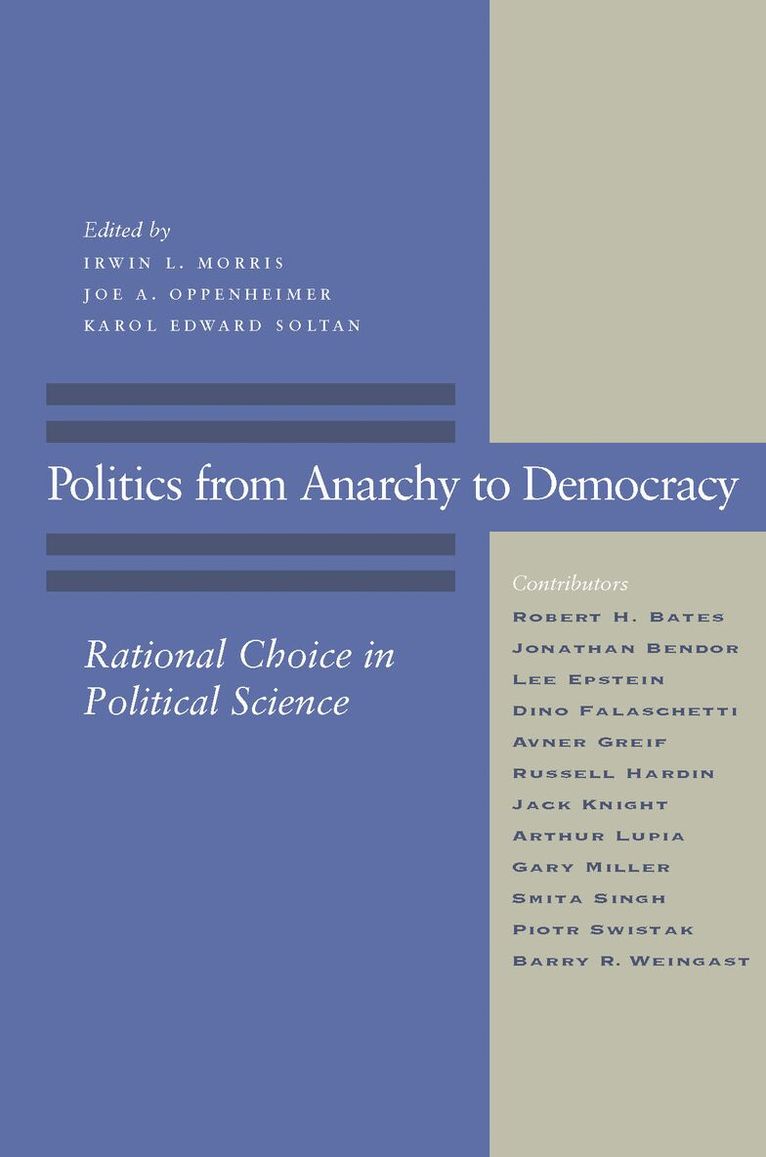
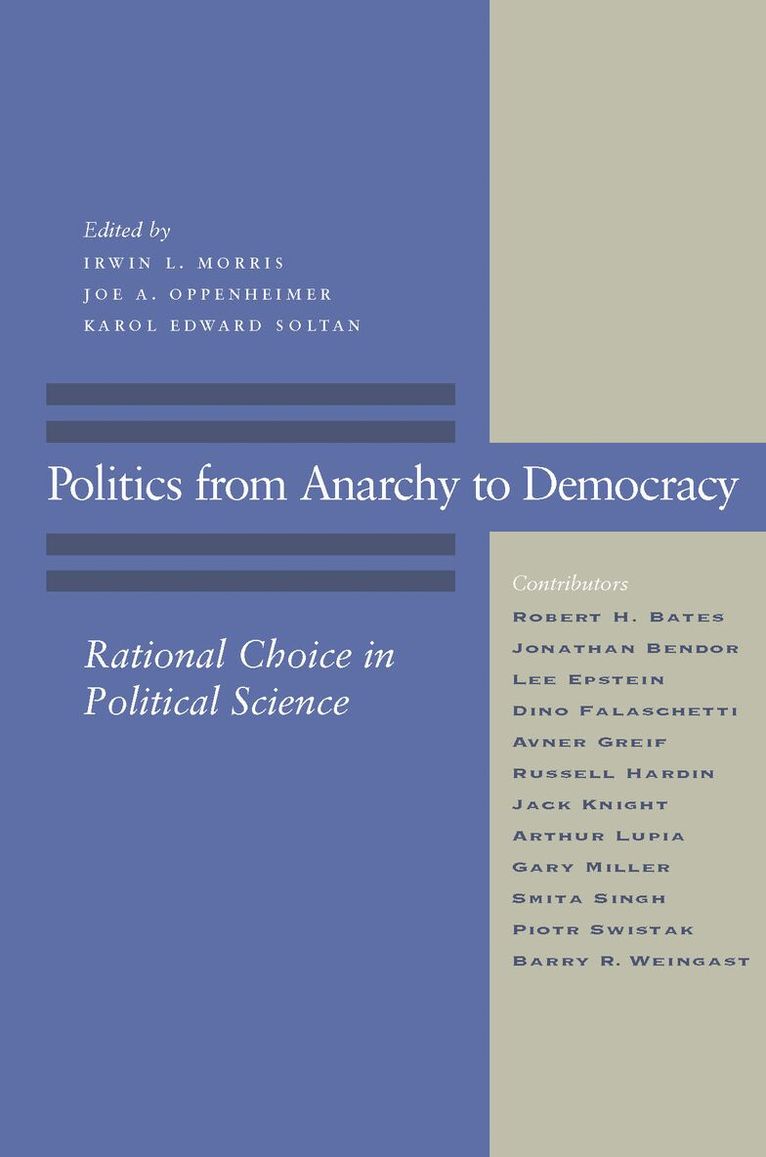
Although the study of politics dates to ancient Greece, the basic questions that interested those earliest political scientists still linger with us today: What are the origins of government? What should government do? What conditions foster effective governance? Rational choice theory offers a new means for developing correctable answers to these questions.This volume illustrates the promise of rational choice theory and demonstrates how theory can help us develop interesting, fresh conclusions about the fundamental processes of politics. Each of the book's three sections begins with a pedagogical overview that is accessible to those with little knowledge of rational choice theory. The first group of essays then discusses various ways in which rational choice contributes to our understanding of the foundations of government. The second set focuses on the contributions of rational choice theory to institutional analysis. The final group demonstrates ways in which rational choice theory helps to understand the character of popular government.
301 kr
Skickas inom 7-10 vardagar
Although the study of politics dates to ancient Greece, the basic questions that interested those earliest political scientists still linger with us today: What are the origins of government? What should government do? What conditions foster effective governance? Rational choice theory offers a new means for developing correctable answers to these questions.This volume illustrates the promise of rational choice theory and demonstrates how theory can help us develop interesting, fresh conclusions about the fundamental processes of politics. Each of the book's three sections begins with a pedagogical overview that is accessible to those with little knowledge of rational choice theory. The first group of essays then discusses various ways in which rational choice contributes to our understanding of the foundations of government. The second set focuses on the contributions of rational choice theory to institutional analysis. The final group demonstrates ways in which rational choice theory helps to understand the character of popular government.
671 kr
Skickas inom 10-15 vardagar
The political project of extending democracy to the global level is seen as the next major challenge for proponents of democracy. This volume considers some of the difficulties which need to be overcome for this extension to take place. The issues discussed include: Philosophical and theoretical questions about the nature of democracy and the justification of its valuesPressing political considerations, such as the crucial role of elections in democracy promotionLegal developments, such as the role of international law and judicial networksThe nature of the global political space as democratization brings challenges to the ways in which systems have traditionally been organizedGlobal Democracy and its Difficulties will appeal to a range of academics, scholars and students who work across fields such a political theory, international law, comparative politics and political economy. It will be of particular interest to those with an interest in the political, economic, legal and moral aspects of democratization.