Karol Zyczkowski – författare
Visar alla böcker från författaren Karol Zyczkowski. Handla med fri frakt och snabb leverans.
5 produkter
5 produkter
Inbunden, Engelska, 2010
2 004 kr
Skickas inom 10-15 vardagar
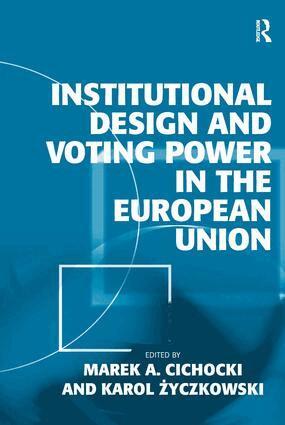
Leading global experts in the field of politics and mathematics bring forth key insights on how voting power should be allocated between EU member states, and what the policy consequences are of any given institutional design. Close attention is paid to the practical implications of decision-making rules, the nature and distribution of power, and the most equitable ways to represent the preoccupations of European citizens both in the Council and European Parliament. Highly theoretical and methodologically advanced, this volume is set to enrich the debate on the future of the EU's institutional design. A valuable source of information to scholars of political science, European studies and law, as well as to people working on game theory, theory of voting and, in general, applications of mathematics to social science.
E-bok
Engelska, 2017878 kr
Läs direkt efter köp
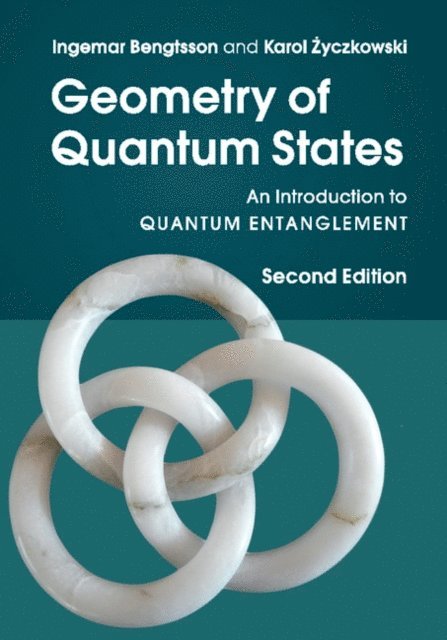
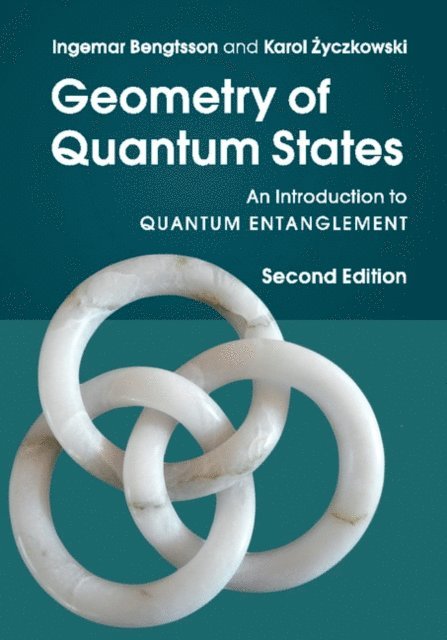
Quantum information theory is a branch of science at the frontier of physics, mathematics, and information science, and offers a variety of solutions that are impossible using classical theory. This book provides a detailed introduction to the key concepts used in processing quantum information and reveals that quantum mechanics is a generalisation of classical probability theory. The second edition contains new sections and entirely new chapters: the hot topic of multipartite entanglement; in-depth discussion of the discrete structures in finite dimensional Hilbert space, including unitary operator bases, mutually unbiased bases, symmetric informationally complete generalized measurements, discrete Wigner function, and unitary designs; the Gleason and Kochen–Specker theorems; the proof of the Lieb conjecture; the measure concentration phenomenon; and the Hastings'' non-additivity theorem. This richly-illustrated book will be useful to a broad audience of graduates and researchers interested in quantum information theory. Exercises follow each chapter, with hints and answers supplied.
E-bok
PDF, Engelska, 2017871 kr
Läs direkt efter köp
Quantum information theory is a branch of science at the frontier of physics, mathematics, and information science, and offers a variety of solutions that are impossible using classical theory. This book provides a detailed introduction to the key concepts used in processing quantum information and reveals that quantum mechanics is a generalisation of classical probability theory. The second edition contains new sections and entirely new chapters: the hot topic of multipartite entanglement; in-depth discussion of the discrete structures in finite dimensional Hilbert space, including unitary operator bases, mutually unbiased bases, symmetric informationally complete generalized measurements, discrete Wigner function, and unitary designs; the Gleason and Kochen–Specker theorems; the proof of the Lieb conjecture; the measure concentration phenomenon; and the Hastings'' non-additivity theorem. This richly-illustrated book will be useful to a broad audience of graduates and researchers interested in quantum information theory. Exercises follow each chapter, with hints and answers supplied.
E-bok
Engelska, 2016836 kr
Läs direkt efter köp
Leading global experts in the field of politics and mathematics bring forth key insights on how voting power should be allocated between EU member states, and what the policy consequences are of any given institutional design. Close attention is paid to the practical implications of decision-making rules, the nature and distribution of power, and the most equitable ways to represent the preoccupations of European citizens both in the Council and European Parliament. Highly theoretical and methodologically advanced, this volume is set to enrich the debate on the future of the EU''s institutional design. A valuable source of information to scholars of political science, European studies and law, as well as to people working on game theory, theory of voting and, in general, applications of mathematics to social science.
E-bok
PDF, Engelska, 2016836 kr
Läs direkt efter köp
Leading global experts in the field of politics and mathematics bring forth key insights on how voting power should be allocated between EU member states, and what the policy consequences are of any given institutional design. Close attention is paid to the practical implications of decision-making rules, the nature and distribution of power, and the most equitable ways to represent the preoccupations of European citizens both in the Council and European Parliament. Highly theoretical and methodologically advanced, this volume is set to enrich the debate on the future of the EU''s institutional design. A valuable source of information to scholars of political science, European studies and law, as well as to people working on game theory, theory of voting and, in general, applications of mathematics to social science.