Karolina Nikielska-Sekuła – författare
Visar alla böcker från författaren . Handla med fri frakt och snabb leverans.
7 produkter
7 produkter
Inbunden, Engelska, 2024
2 502 kr
Skickas inom 10-15 vardagar
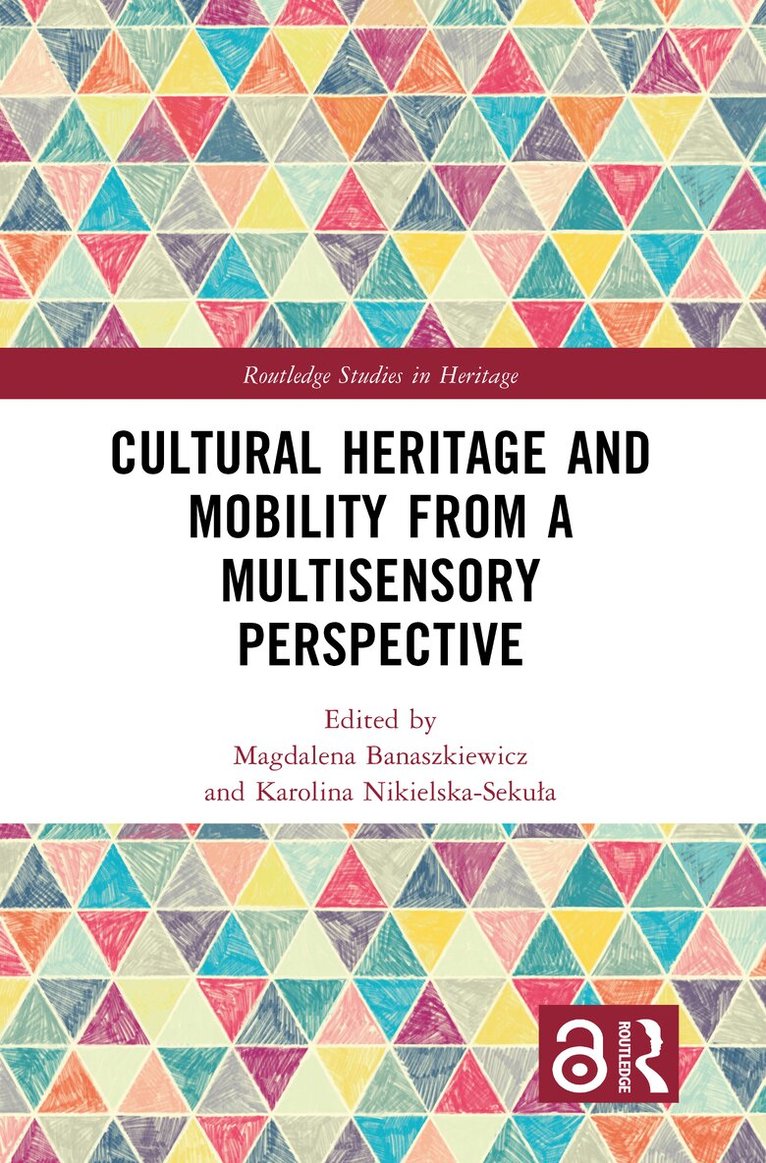
Cultural Heritage and Mobility from a Multisensory Perspective bridges the gap between cultural heritage and mobility studies through the employment of theoretical and methodological multisensory perspectives.An interdisciplinary volume covering a broad range of empirical cases, this book focuses on the engagement with cultural heritage in the context of mobility. The book presents a grassroots perspective of individual heritage performances by mobile and moving actors, analyzing them with close attention to their embodied aspects: bodily experiences, sensory impressions, and the affect and emotions they evoke. As a result, the collection of case studies presented covers empirical, theoretical, and methodological accounts of the embodiment of heritage in the context of mobility on macro, meso, and micro levels, exploring heritage change and mobility from a multisensory perspective. Cultural Heritage and Mobility from a Multisensory Perspective is primarily targeted at scholars, students and practitioners working within and at the intersection of the fields of cultural heritage and mobility. It will also be of interest to those engaged in the study of tourism, migration and integration studies.Chapters 2, 3, 4, 5, 13, 14 and Introduction of this book is freely available as a downloadable Open Access PDF at http://www.taylorfrancis.com under a Creative Commons Attribution-Non Commercial-No Derivatives (CC-BY-NC-ND) 4.0 license.
Häftad, Engelska, 2026
833 kr
Skickas inom 5-8 vardagar
Cultural Heritage and Mobility from a Multisensory Perspective bridges the gap between cultural heritage and mobility studies through the employment of theoretical and methodological multisensory perspectives.An interdisciplinary volume covering a broad range of empirical cases, this book focuses on the engagement with cultural heritage in the context of mobility. The book presents a grassroots perspective of individual heritage performances by mobile and moving actors, analyzing them with close attention to their embodied aspects: bodily experiences, sensory impressions, and the affect and emotions they evoke. As a result, the collection of case studies presented covers empirical, theoretical, and methodological accounts of the embodiment of heritage in the context of mobility on macro, meso, and micro levels, exploring heritage change and mobility from a multisensory perspective. Cultural Heritage and Mobility from a Multisensory Perspective is primarily targeted at scholars, students and practitioners working within and at the intersection of the fields of cultural heritage and mobility. It will also be of interest to those engaged in the study of tourism, migration and integration studies.Chapters 2, 3, 4, 5, 13, 14 and Introduction of this book is freely available as a downloadable Open Access PDF at http://www.taylorfrancis.com under a Creative Commons Attribution-Non Commercial-No Derivatives (CC-BY-NC-ND) 4.0 license.
E-bok
PDF, Engelska, 2026790 kr
Läs direkt efter köp
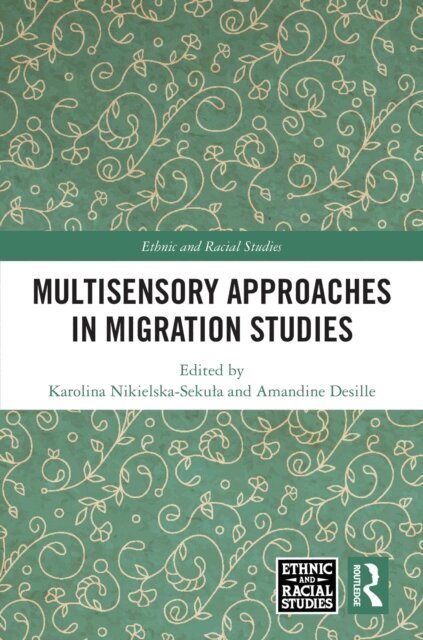
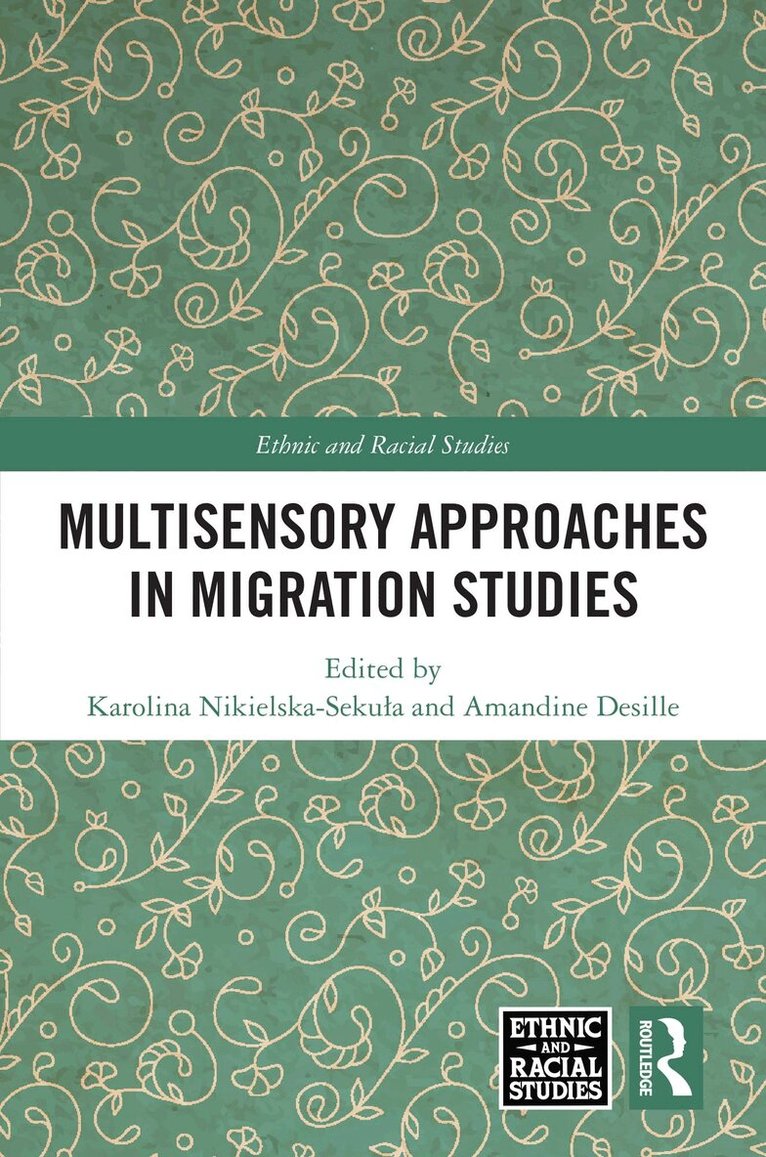
Multisensory Approaches in Migration Studies rethinks how we understand human mobility by placing the sensing, feeling body at the centre of migration research. Challenging decades of scholarship dominated by textual and state-centred perspectives, this volume reveals how people's multisensory experiences, including smell, touch, sound, and taste, shape migrants' journeys and lives as profoundly as borders, policies, and places do.Drawing on developments of the 'sensory turn' across anthropology, geography, and sociology, the book demonstrates how embodied memories, sensorial encounters, and everyday multisensory practices can uncover new dimensions of displacement, belonging, and transnational life. The contributors explore diverse contexts from forests at the EU's eastern frontier to migrant kitchens, urban streets, digital platforms, and cross-border commutes. This collection illustrates how sensory approaches mediate both the intimate, lived textures of migration and the structural forces that impact migrating people. By reconnecting the body to space, time, and movement, it offers an innovative lens for scholars, students, and practitioners seeking to understand migration beyond conventional frameworks.The book is essential reading for migration researchers, anthropologists, geographers, and anyone interested in embodied approaches to understanding human mobility in contemporary society. This book was originally published as a special issue of Ethnic and Racial Studies.
E-bok
Engelska, 2026790 kr
Läs direkt efter köp
Multisensory Approaches in Migration Studies rethinks how we understand human mobility by placing the sensing, feeling body at the centre of migration research. Challenging decades of scholarship dominated by textual and state-centred perspectives, this volume reveals how people's multisensory experiences, including smell, touch, sound, and taste, shape migrants' journeys and lives as profoundly as borders, policies, and places do.Drawing on developments of the 'sensory turn' across anthropology, geography, and sociology, the book demonstrates how embodied memories, sensorial encounters, and everyday multisensory practices can uncover new dimensions of displacement, belonging, and transnational life. The contributors explore diverse contexts from forests at the EU's eastern frontier to migrant kitchens, urban streets, digital platforms, and cross-border commutes. This collection illustrates how sensory approaches mediate both the intimate, lived textures of migration and the structural forces that impact migrating people. By reconnecting the body to space, time, and movement, it offers an innovative lens for scholars, students, and practitioners seeking to understand migration beyond conventional frameworks.The book is essential reading for migration researchers, anthropologists, geographers, and anyone interested in embodied approaches to understanding human mobility in contemporary society. This book was originally published as a special issue of Ethnic and Racial Studies.
Inbunden, Engelska, 2026
2 190 kr
Skickas inom 10-15 vardagar
Multisensory Approaches in Migration Studies rethinks how we understand human mobility by placing the sensing, feeling body at the centre of migration research. Challenging decades of scholarship dominated by textual and state-centred perspectives, this volume reveals how people's multisensory experiences, including smell, touch, sound, and taste, shape migrants' journeys and lives as profoundly as borders, policies, and places do.Drawing on developments of the ‘sensory turn’ across anthropology, geography, and sociology, the book demonstrates how embodied memories, sensorial encounters, and everyday multisensory practices can uncover new dimensions of displacement, belonging, and transnational life. The contributors explore diverse contexts from forests at the EU's eastern frontier to migrant kitchens, urban streets, digital platforms, and cross-border commutes. This collection illustrates how sensory approaches mediate both the intimate, lived textures of migration and the structural forces that impact migrating people. By reconnecting the body to space, time, and movement, it offers an innovative lens for scholars, students, and practitioners seeking to understand migration beyond conventional frameworks.The book is essential reading for migration researchers, anthropologists, geographers, and anyone interested in embodied approaches to understanding human mobility in contemporary society. This book was originally published as a special issue of Ethnic and Racial Studies.
Inbunden, Engelska, 2021
561 kr
Skickas inom 10-15 vardagar
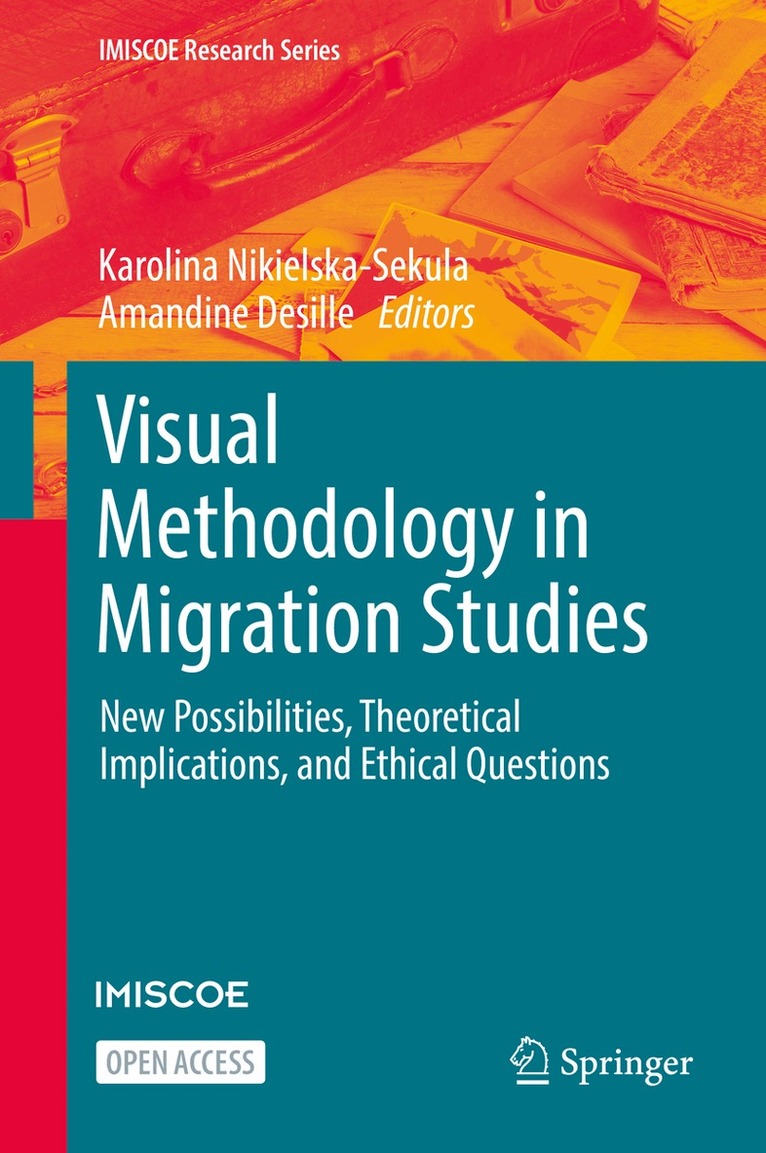
This open access book explores the use of visual methods in migration studies through a combination of theoretical analyses and empirical studies. The first section looks at how various visual methods, including photography, film, and mental maps, may be used to analyse the spatial presence of migrants. The second section addresses the processual building of narratives around migration, thereby using formats such as film and visual essay, and reflecting upon the ways they become carriers and mediators of both story and theory within the subject of migration. Section three focuses on vulnerable communities and discusses how visual methods can empower these communities, thereby also focusing on the theoretical and ethical implications of migration. The fourth section addresses the issue of migrant representation in visual discourses. Based on these contributions, a concluding methodological chapter systematizes the use of visual methods in migration studies across disciplines, with regard to their empirical, theoretical, and ethical implications. Multidisciplinary in character, this book is an interesting read for students and migration scholars who engage with visual methodologies, as well as practitioners, journalists, filmmakers, photographers, curators of exhibitions who address the topic of migration visually.
Häftad, Engelska, 2021
450 kr
Skickas inom 10-15 vardagar
This open access book explores the use of visual methods in migration studies through a combination of theoretical analyses and empirical studies. The first section looks at how various visual methods, including photography, film, and mental maps, may be used to analyse the spatial presence of migrants. The second section addresses the processual building of narratives around migration, thereby using formats such as film and visual essay, and reflecting upon the ways they become carriers and mediators of both story and theory within the subject of migration. Section three focuses on vulnerable communities and discusses how visual methods can empower these communities, thereby also focusing on the theoretical and ethical implications of migration. The fourth section addresses the issue of migrant representation in visual discourses. Based on these contributions, a concluding methodological chapter systematizes the use of visual methods in migration studies across disciplines, with regard to their empirical, theoretical, and ethical implications. Multidisciplinary in character, this book is an interesting read for students and migration scholars who engage with visual methodologies, as well as practitioners, journalists, filmmakers, photographers, curators of exhibitions who address the topic of migration visually.