Kartik Roy – författare
Visar alla böcker från författaren Kartik Roy. Handla med fri frakt och snabb leverans.
15 produkter
Economic Development and Women in the World Community
Av Hans C. Blomqvist, Kartik Roy m. fl.
Inbunden, 1996
1063 kr
Lägg i varukorg
After reviewing theories about how women are likely to fare as a result of economic development, the editors and their contributors focus on the socioeconomic status of women and changes in it as a result of processes of economic development in individual countries in five continents. Economic …
Economic Development and Women in the World Community
Av Hans C. Blomqvist, Kartik Roy m. fl.
Häftad, 1999
514 kr
Lägg i varukorg
After reviewing theories about how women are likely to fare as a result of economic development, the editors and their contributors focus on the socioeconomic status of women and changes in it as a result of processes of economic development in individual countries in five continents. Economic …
Economic Development and Women in the World Community
Av Hans C. Blomqvist, Kartik Roy m. fl.
E-bok, 1996
578 kr
Lägg i varukorg
After reviewing theories about how women are likely to fare as a result of economic development, the editors and their contributors focus on the socioeconomic status of women and changes in it as a result of processes of economic development in individual countries in five continents. Economic …
Poverty, Female-Headed Households, and Sustainable Economic Development
Inbunden, 1998
852 kr
Lägg i varukorg
This book examines female-headed households (FHHs) in the world economy, aspects of their poverty, and the implications of those for sustainable development. Following a general discussion of FHHs in the world community, the work discusses FHHs in two regions of India, one being an example of …
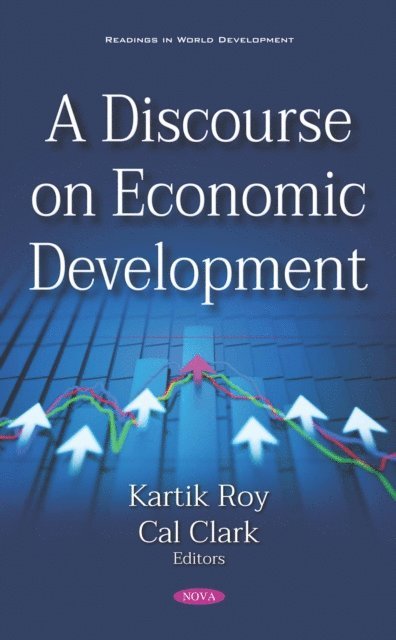
Discourse on Economic Development
Av Kartik Roy
E-bok, 2019
2685 kr
Lägg i varukorg
A Discourse on Economic Development is based on two recently published books by Kartik Roy. Governance Institutions and Economic Development: Emerging China, India, East Asia presented an in-depth analysis of the reasons for successes and failures of these nations’ developmental efforts. Economic, …
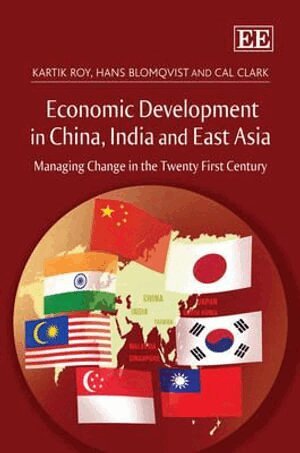
Economic Development in China, India and East Asia
Managing Change in the Twenty First Century
Av Cal Clark, Hans Blomqvist m. fl.
E-bok, 2012
472 kr
Lägg i varukorg
This is a thorough and comprehensive study - both in terms of country coverage and in-depth analysis - covering the economic development of all the major economies in the Asian continent, namely China, India, Japan, South Korea, Taiwan, Malaysia and Singapore. Before embarking on analyses of …
Institutions, Globalisation and Empowerment
Inbunden, 2006
2325 kr
Lägg i varukorg
This book argues that the capacity of a country to develop, and the levels of economic and social development achieved, depend more on the institutional parameters within which the development policies are implemented than on the policies themselves. It contends that forces of globalisation …
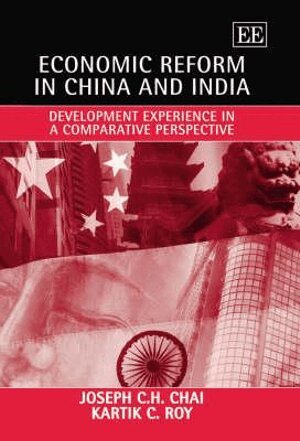
Economic Reform in China and India
Development Experience in a Comparative Perspective
Av Joseph C.H. Chai, Kartik Roy
Inbunden, 2006
2164 kr
Lägg i varukorg
Recent acceleration of the Indian economic growth rate from 6 to 8 per cent has sparked worldwide speculation that India is about to catch up with China and become another Asian miracle economy. Economic Reform in China and India examines this prospect, reviewing the development strategies pursued …
Economic Reform in China and India
Development Experience in a Comparative Perspective
Av Kartik Roy, Joseph C.H. Chai
E-bok, 2006
472 kr
Lägg i varukorg
Recent acceleration of the Indian economic growth rate from 6 to 8 per cent has sparked worldwide speculation that India is about to catch up with China and become another Asian miracle economy. Economic Reform in China and India examines this prospect, reviewing the development strategies pursued …
Economic Development in China, India and East Asia
Managing Change in the Twenty First Century
Av Kartik Roy, Hans Blomqvist m. fl.
Inbunden, 2012
2058 kr
Lägg i varukorg
This is a thorough and comprehensive study - both in terms of country coverage and in-depth analysis - covering the economic development of all the major economies in the Asian continent, namely China, India, Japan, South Korea, Taiwan, Malaysia and Singapore.Before embarking on analyses of …
Global Hegemomy Etc Political Governance, Economic Pursuit
Av Kartik Roy
Häftad, 2023
356 kr
Lägg i varukorg
Political Governance, Economic Pursuit, Global Hegemony, and Environment; China, India, and the World
Av Kartik Roy
E-bok, 2023
52 kr
Lägg i varukorg
This treatise presents a critical discourse on the formulation and implementation of economic development policies as well as on the outcome of the implementation of such policies in terms of the attainment of the (i) rate of economic growth and of the (ii) rise in the size of GDP and of the (iii) …
INSTITUTIONS AND GENDER EMPOWERMENT IN THE GLOBAL ECONOMY
Av ROY KARTIK, Kartik Roy m. fl.
Inbunden, 2008
1806 kr
Lägg i varukorg
Since women account for almost 50 percent of the world's population, the sustainability of development of the global economy can be greatly impaired if the state authorities in individual countries pay less attention to the improvement in the socio-economic status of women relative to men. …
GOVERNANCE INSTITUTIONS AND ECONOMIC DEVELOPMENT: EMERGING CHINA, INDIA, EAST ASIA AND BRAZIL
Av Kartik Roy
Inbunden, 2018
2754 kr
Lägg i varukorg
"Roy's book is a rich and detailed study of various facets of economic and social development in ten countries, both democratic and authoritarian. Researchers and students will find here a wealth of information and statistics that can be mined to explore fundamental questions around state …
DEVELOPMENTAL STATE AND MILLENNIUM DEVELOPMENT GOALS: COUNTRY EXPERIENCES
Av Roy Kartik, Kartik Roy m. fl.
Inbunden, 2018
1902 kr
Lägg i varukorg
Prior to the 2016 Sustainable Development Goals, the United Nations (UN) had eight "global goals" set out to all 191 UN member states at that time, and at least 22 international organizations. Seven out of the eight United National Millennium Development Goals are social goals. The attainment of …