Kathleen M. Carley – författare
Visar alla böcker från författaren Kathleen M. Carley. Handla med fri frakt och snabb leverans.
15 produkter
Communication at A Distance
The Influence of Print on Sociocultural Organization and Change
Av David S. Kaufer, Kathleen M. Carley
Inbunden, 1993
2504 kr
Lägg i varukorg
This book bridges an important gap between two major approaches to mass communication -- historical and social scientific. To do so, it employs a theory of communication that unifies social, cultural and technological concerns into a systematic and formal framework that is then used to examine the …
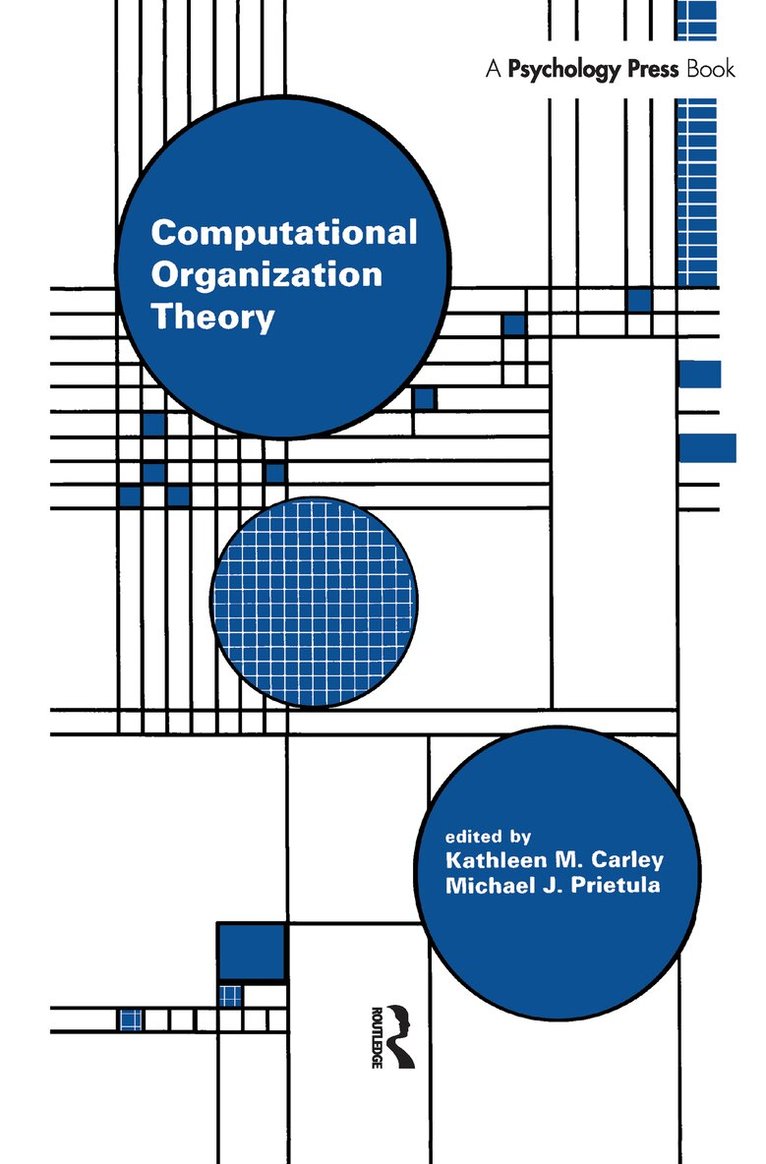
Computational Organization Theory
Av Kathleen M. Carley, Michael J. Prietula
Inbunden, 1994
2433 kr
Lägg i varukorg
This volume represents an advance in our understanding of how to represent and reason about organizational phenomena. Although organizational theorists have long grappled with the complexities of adaptive agents, ecological systems, and non-linear relations among the basic elements of …
Bots, Bias, and Influence
The Hidden Architects of Social Media
Av Lynnette Hui Xian Ng, Kathleen M. Carley
Inbunden, 2026
1643 kr
Kommande
Digital conversations on social media are more than just human voices. Automated agents called Bots now weave themselves into our conversations and our collective beliefs. This book takes readers on an exploration of how Bots span simple automated scripts to complex agents that mirror, magnify and …
Communication at A Distance
The Influence of Print on Sociocultural Organization and Change
Av Kathleen M. Carley, David S. Kaufer
E-bok, 2012
1022 kr
Lägg i varukorg
This book bridges an important gap between two major approaches to mass communication -- historical and social scientific. To do so, it employs a theory of communication that unifies social, cultural and technological concerns into a systematic and formal framework that is then used to examine the …
Communication at A Distance
The Influence of Print on Sociocultural Organization and Change
Av Kathleen M. Carley, David S. Kaufer
E-bok, 2012
1022 kr
Lägg i varukorg
This book bridges an important gap between two major approaches to mass communication -- historical and social scientific. To do so, it employs a theory of communication that unifies social, cultural and technological concerns into a systematic and formal framework that is then used to examine the …
Computational Organization Theory
Av Kathleen M. Carley, Michael J. Prietula
Häftad, 2016
844 kr
Lägg i varukorg
This volume represents an advance in our understanding of how to represent and reason about organizational phenomena. Although organizational theorists have long grappled with the complexities of adaptive agents, ecological systems, and non-linear relations among the basic elements of …
Computational Organization Theory
Av Michael J. Prietula, Kathleen M. Carley
E-bok, 2014
999 kr
Lägg i varukorg
This volume represents an advance in our understanding of how to represent and reason about organizational phenomena. Although organizational theorists have long grappled with the complexities of adaptive agents, ecological systems, and non-linear relations among the basic elements of …
Computational Organization Theory
Av Michael J. Prietula, Kathleen M. Carley
E-bok, 2014
999 kr
Lägg i varukorg
This volume represents an advance in our understanding of how to represent and reason about organizational phenomena. Although organizational theorists have long grappled with the complexities of adaptive agents, ecological systems, and non-linear relations among the basic elements of …
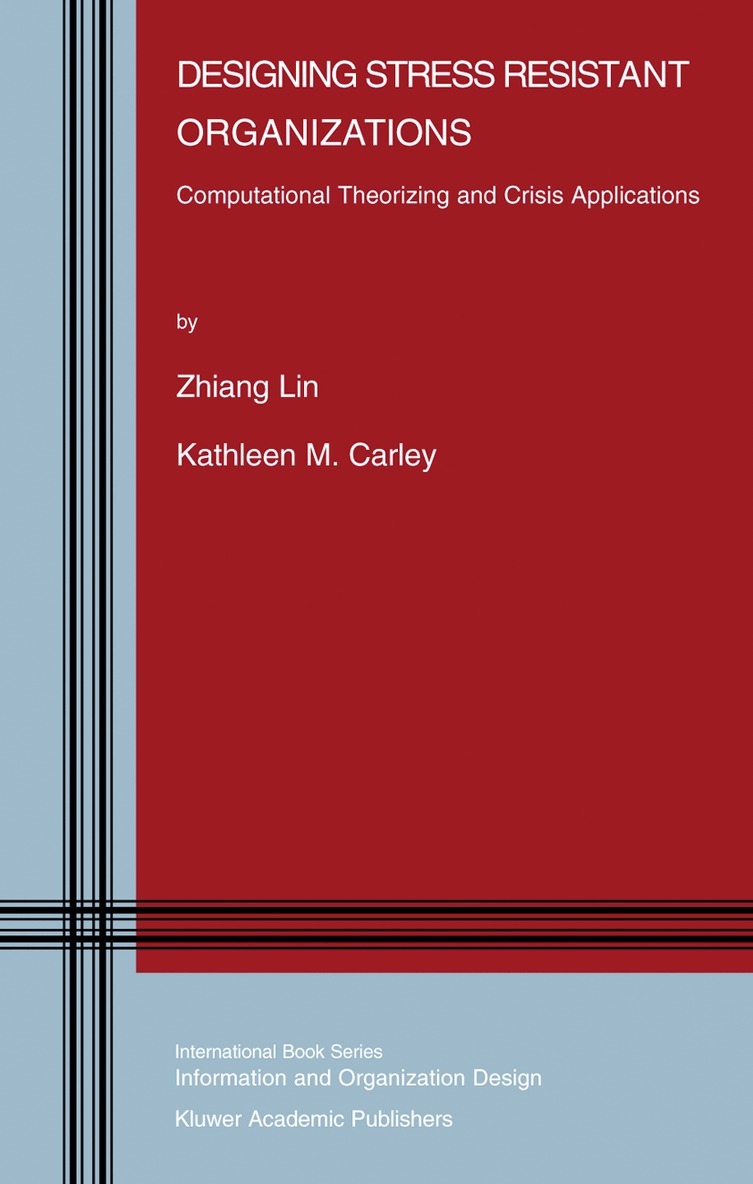
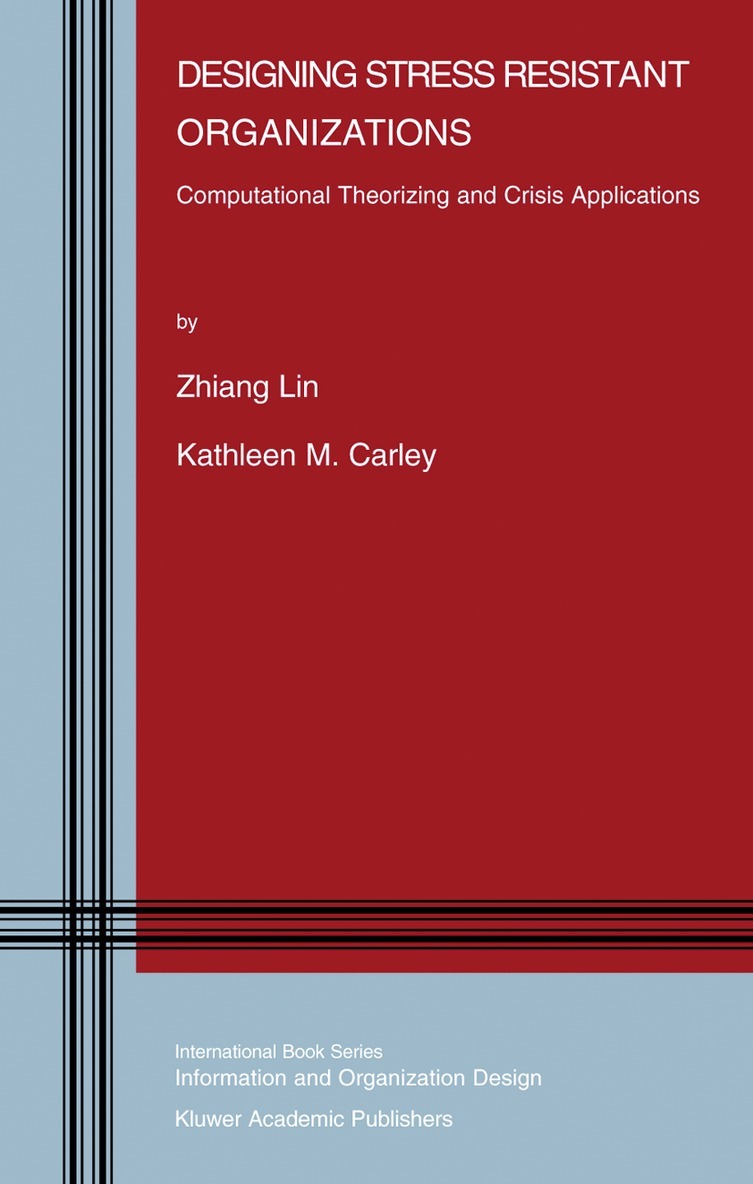
Designing Stress Resistant Organizations
Computational Theorizing and Crisis Applications
Av Zhiang (John) Lin, Kathleen M. Carley
Inbunden, 2003
1128 kr
Lägg i varukorg
This text demonstrates how computational organization theory can be applied to advance the field of management with its successful integration of theory and practice. At the theoretical level, the book contains a comprehensive computational framework called DYCORP, which simulates dynamic and …
Designing Stress Resistant Organizations
Computational Theorizing and Crisis Applications
Av Zhiang (John) Lin, Kathleen M. Carley
Häftad, 2010
1128 kr
Lägg i varukorg
Designing Stress Resistant Organizations demonstrates, in a persuasive way, how computational organization theory can be applied to advance the field of management with its successful integration of theory and practice. At the theoretical level, the book contains a comprehensive computational …
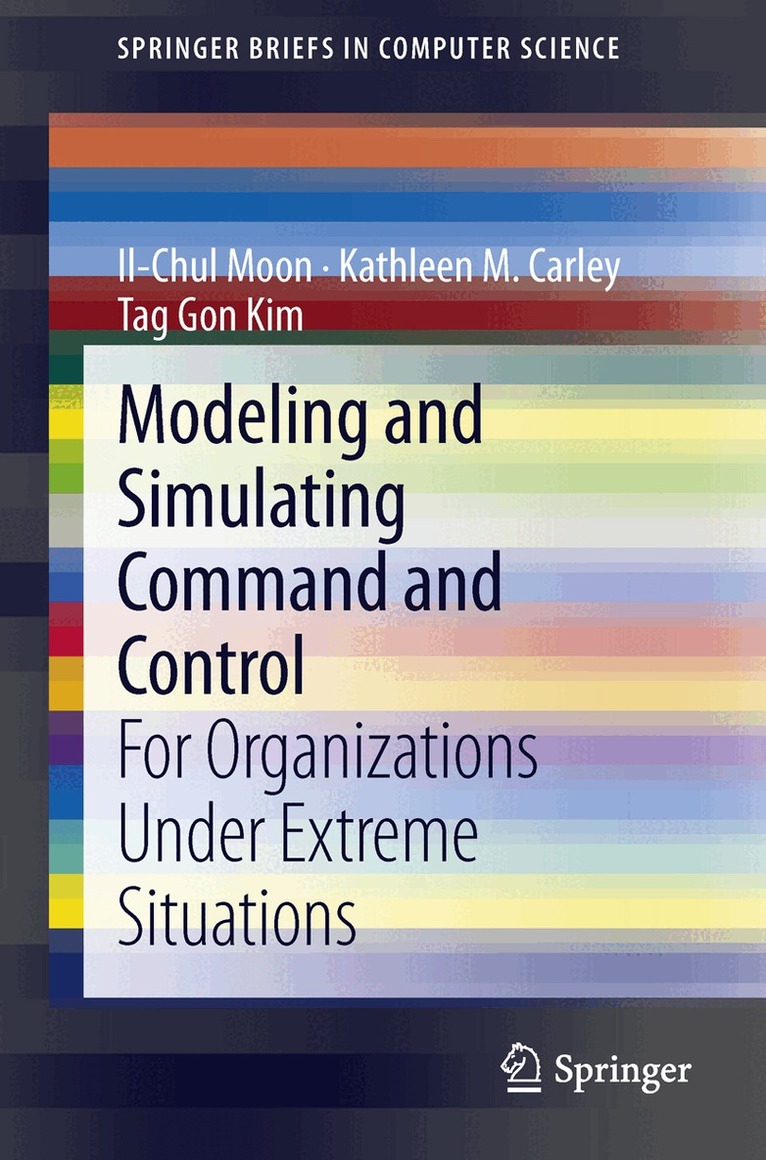
Modeling and Simulating Command and Control
For Organizations Under Extreme Situations
Av Il-Chul Moon, Kathleen M. Carley m. fl.
Häftad, 2013
568 kr
Lägg i varukorg
Commanding and controlling organizations in extreme situations is a challenging task in military, intelligence, and disaster management. Such command and control must be quick, effective, and considerate when dealing with the changing, complex, and risky conditions of the situation. To enable …
Modeling and Simulating Command and Control
For Organizations Under Extreme Situations
Av Tag Gon Kim, Kathleen M. Carley m. fl.
E-bok, 2013
755 kr
Lägg i varukorg
Commanding and controlling organizations in extreme situations is a challenging task in military, intelligence, and disaster management. Such command and control must be quick, effective, and considerate when dealing with the changing, complex, and risky conditions of the situation. To enable …
Designing Stress Resistant Organizations
Computational Theorizing and Crisis Applications
Av Kathleen M. Carley, Zhiang (John) Lin
E-bok, 2013
1470 kr
Lägg i varukorg
Designing Stress Resistant Organizations demonstrates, in a persuasive way, how computational organization theory can be applied to advance the field of management with its successful integration of theory and practice. At the theoretical level, the book contains a comprehensive computational …
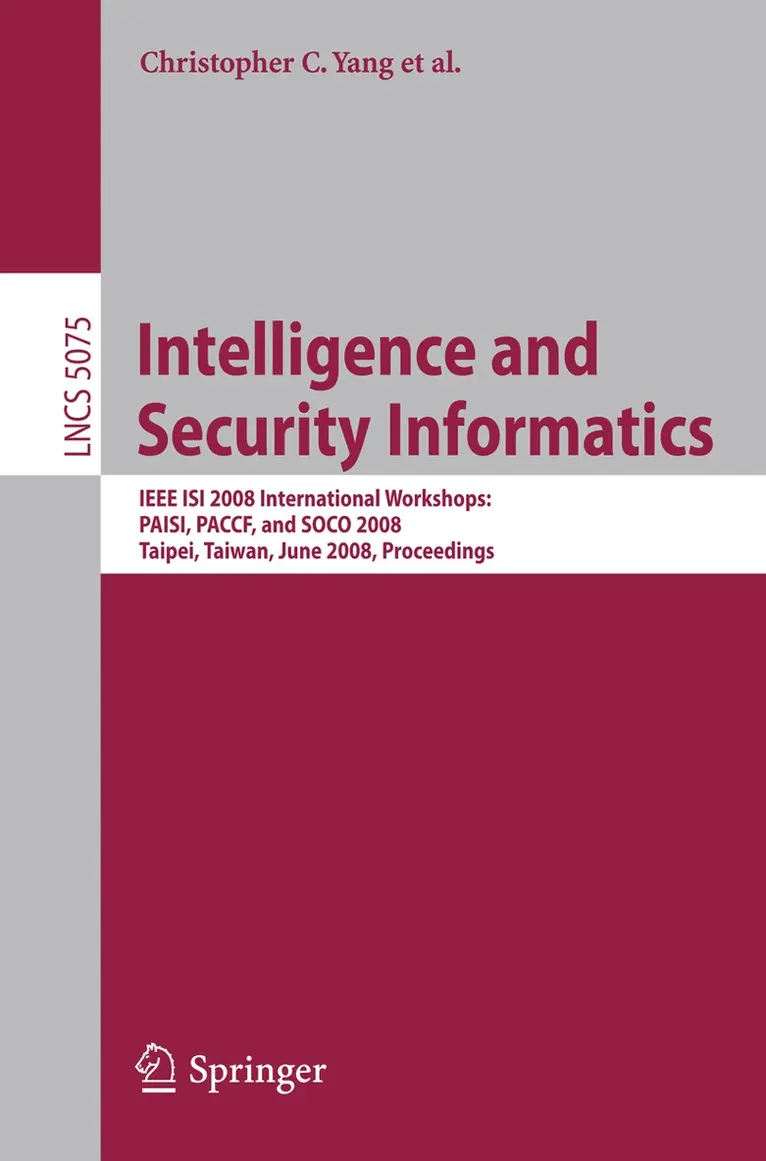
Intelligence and Security Informatics
IEEE ISI 2008 International Workshops: PAISI, PACCF and SOCO 2008, Taipei, Taiwan, June 17, 2008, Proceedings
Av Christopher C. Yang, Hsinchun Chen m. fl.
Häftad, 2008
551 kr
Lägg i varukorg
This book constitutes the refereed proceedings of the three international workshops PAISI 2008, PACCF 2008, and SOCO 2008, held as satellite events of the IEEE International Conference on Intelligence and Security Informatics, ISI 2008, in Taipei, Taiwan, in June 2008.The 55 revised full papers …
Intelligence and Security Informatics
IEEE ISI 2008 International Workshops: PAISI, PACCF and SOCO 2008, Taipei, Taiwan, June 17, 2008, Proceedings
Av Justin Zhan, Wenji Mao m. fl.
E-bok, 2008
734 kr
Lägg i varukorg
This book constitutes the refereed proceedings of the three international workshops PAISI 2008, PACCF 2008, and SOCO 2008, held as satellite events of the IEEE International Conference on Intelligence and Security Informatics, ISI 2008, in Taipei, Taiwan, in June 2008. The 55 revised full papers …