• Fri frakt över 249 kr
  • •
  • Snabba leveranser
  • •
  • Billiga böcker
Kundservice

Du är på sajten för privatpersoner.

Företag, bibliotek eller offentlig verksamhet?

Du handlar på classic.bokus.com, där alla dina funktioner finns intakta.
Till classic.bokus.com
Bokus logotyp. Gå till startsidan.
  • Erbjudanden
  • Nyheter
  • Student
  • Topplistor
  • Barn & ungdom
  • Bokus Play
  • E-böcker
  • Pocketböcker
  • Spel & pussel

10% rabatt på allt med kod NYSTART10 →

Sidfot

Mina sidor

    Hjälp

    • Kundservice
    • Vanliga frågor och svar
    • Frakt och leverans
    • Retur vid ångerrätt
    • Reklamera vara
    • Betalning
    • Köpvillkor
    • Allmänna villkor
    • Information om webbplatsens tillgänglighet

    Om Bokus

    • Om oss
    • Pressrum
    • För studenter
    • För företag
    • För bibliotek och offentlig verksamhet
    • För leverantörer
    • Hållbarhet

    Populärt

    • Aktuella erbjudanden
    • Presentkort
    • Studentlitteratur
    • Nya böcker
    • Topplistor
    • Signerade böcker
    • Engelska böcker

    Inspiration

    • Boktips
    • BookTok
    • Populära bokserier
    • Barnbokskaraktärer
    • Populära författare
    Logotyp för Bokus
    Följ oss på Facebook (extern länk)Följ oss på Instagram (extern länk)Följ oss på YouTube (extern länk)Följ oss på TikTok (extern länk)
    bokus @ CookiesAnpassa cookiesIntegritetspolicyKöpvillkor
    Till Citymail hemsida (extern länk)Till Budbee hemsida (extern länk)Till Postnord hemsida (extern länk)Till Schenker hemsida (extern länk)Till Early Bird hemsida (extern länk)Till Walleys hemsida (extern länk)
    1. Samhälle och politik
    2. Samhälle och kultur
    3. Kultur och medier
    4. Referensverk och tvärvetenskap

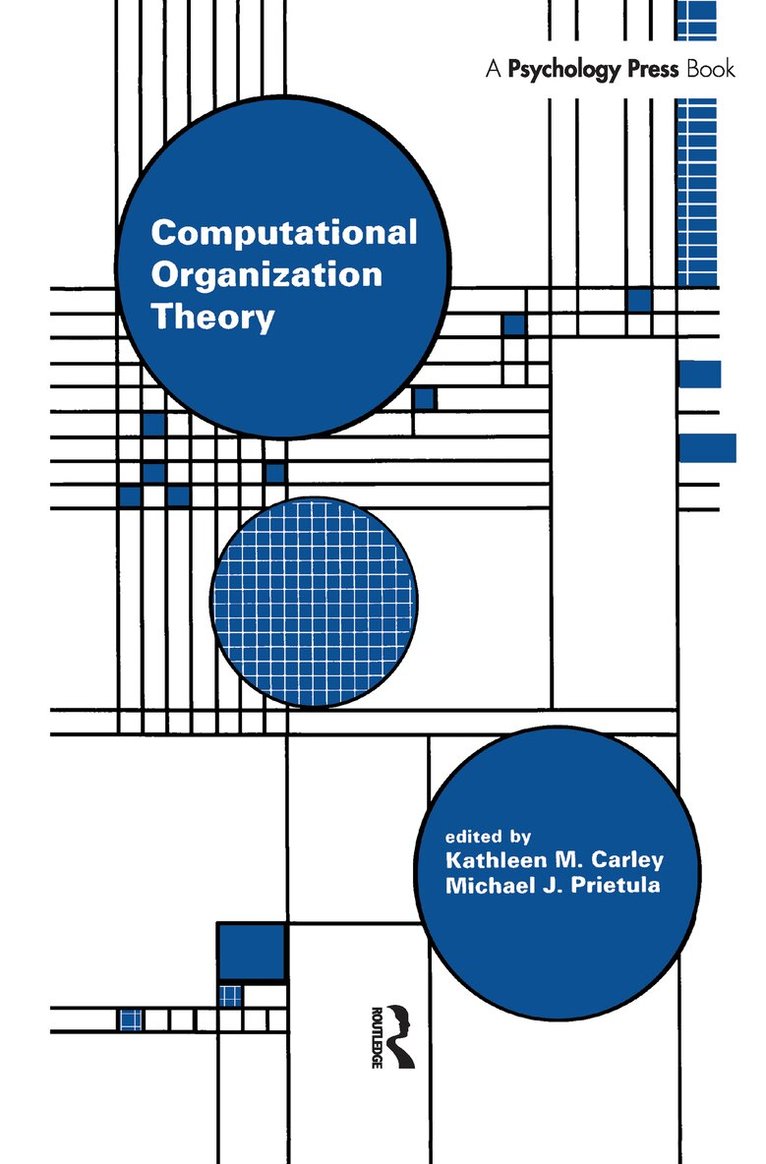
    Computational Organization Theory

    AvKathleen M. Carley,Michael J. Prietula

    Häftad, Engelska, 2016

    817 kr

    Beställningsvara. Skickas inom 10-15 vardagar. Fri frakt över 249 kr.

    Beskrivning

    This volume represents an advance in our understanding of how to represent and reason about organizational phenomena. Although organizational theorists have long grappled with the complexities of adaptive agents, ecological systems, and non-linear relations among the basic elements of organizational design, they have not, until recently, had the tools to grapple with these complex relationships. Recent advances in logic, symbolic programming, network analysis, and computer technology have made possible a series of tools that can be used to understand the complexities of organizational behavior. New computational techniques make it possible to develop and test more realistic models of organizational behavior. This volume offers examples of this new breed of models, and provides insight into how these advances and techniques can be used to extend our theoretical understanding of organizations. Authored by leading researchers in the area of computational organization theory, the various chapters demonstrate the value of computational analysis for organizational theory and advance our understanding of the relationship between organizational design and performance. This book contains both theoretical and methodological contributions that enable organizational theorists to use computational and mathematical techniques to systematically address the complex relationships that underlie organizational life. It also presents new -- or sometimes, renewed -- approaches on how to conduct organizational research from multiple formal perspectives including: simulation, numerical analysis, symbolic logic, mathematical modeling, and graph theory.

    Produktinformation

    • Utgivningsdatum:2016-07-11
    • Mått:152 x 229 x 18 mm
    • Vikt:453 g
    • Format:Häftad
    • Språk:Engelska
    • Antal sidor:336
    • Förlag:Taylor & Francis Ltd
    • ISBN:9781138971400

    Utforska kategorier

    • Referensverk och tvärvetenskap inom Samhälle och politik
    • Organisationsteori inom Ekonomi och Ledarskap
    • Systemvetenskap och AI inom Data och IT

    Mer om författaren

    Kathleen M. Carley, Michael J. Prietula

    Recensioner i media

    "This is a useful contribution. The models are interesting and suggestive of promising further work."—Canadian Artificial Intelligence"Professors Carley and Prietula have done the field of organization theory a great service by putting this selection of chapters together....an excellent summary of the computational approach....In the new approaches represented in this book, the incentive for the simulations comes to a much greater extent from artificial intelligence and its derivative, expert systems....more than a series of chapters on organizational design. A wide range of topics in organizational theory is considered."—Richard M. CyertCarnegie Mellon University, from the Foreword

    Innehållsförteckning

    • Contents: R.M. Cyert, Foreword. K.M. Carley, M.J. Prietula, Introduction: Computational Organization Theory. R.E. Levitt, G.P. Cohen, J.C. Kunz, C.I. Nass, T. Christiansen, Y. Jin, The "Virtual Design Team": Simulating How Organization Structure and Information Processing Tools Affect Team Performance. K. Crowston, Evolving Novel Organizational Forms. H. Verhagen, M. Masuch, TASCCS: A Synthesis of Double-AISS and Plural-Soar. K.M. Carley, M.J. Prietula, ACTS Theory: Extending the Model of Bounded Rationality. D. Krackhardt, Graph Theoretical Dimensions of Informal Organizations. Z. Lin, A Theoretical Evaluation of Measures of Organizational Design: Interrelationship and Performance Predictability. M. Verkama, R.P. Hämäläinen, H. Ehtamo, Modeling and Computational Analysis of Reactive Behavior in Organizations. H.H. Baligh, R.M. Burton, B. Obel, Validating an Expert System That Designs Organizations. T.K. Lant, Computer Simulations of Organizations as Experiential Learning Systems: Implications for Organization Theory. N.S. Glance, B.A. Huberman, Social Dilemmas and Fluid Organizations. D.K. Gode, S. Sunder, Human and Artificially Intelligent Traders in Computer Double Auctions. P. Shi, P.B. Luh, D.L. Kleinman, Team Coordination Under Individual and Team Goals. G.E.G. Beroggi, W.A. Wallace, A Decision Logic for Operational Risk Management.