Kathrin Thiele – författare
2 764 kr
Skickas inom 10-15 vardagar
761 kr
Skickas inom 10-15 vardagar
662 kr
Skickas inom 10-15 vardagar
906 kr
Läs direkt efter köp
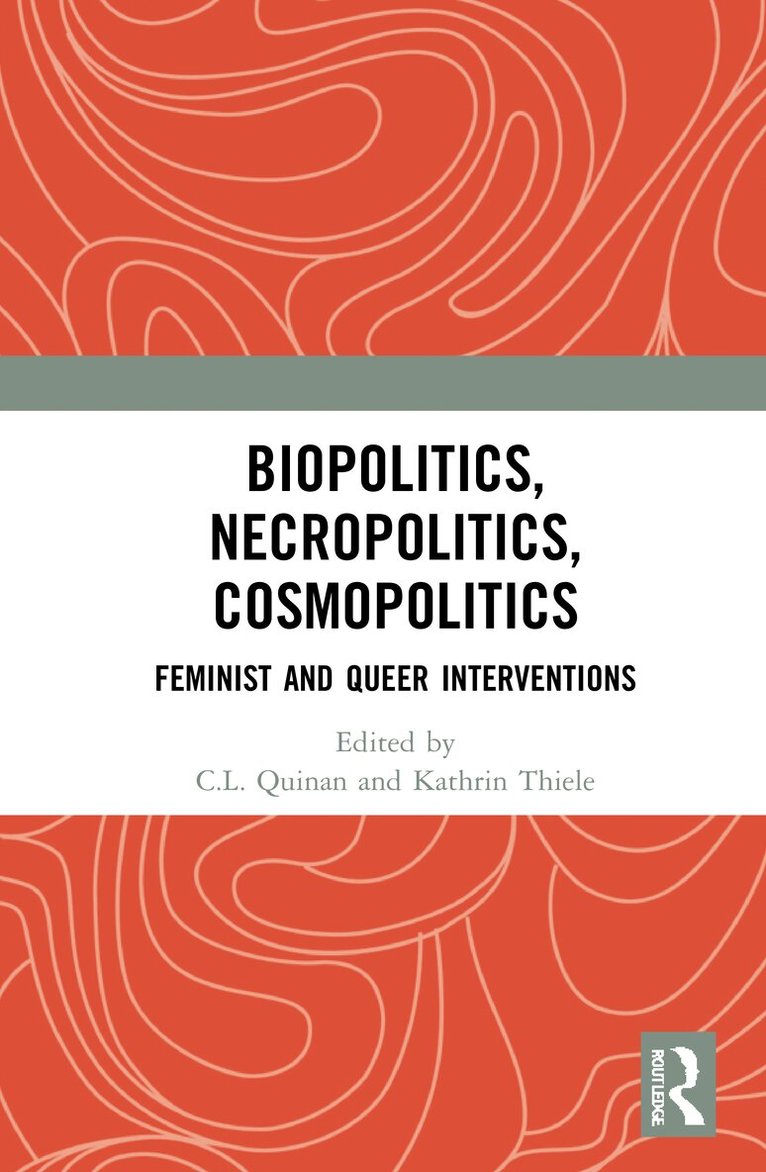
The concepts of biopolitics and necropolitics have increasingly gained scholarly attention, particularly in light of today’s urgent and troubling issues that mark some lives as more – or less – worthy than others, including the migration crisis, rise of populism on a global scale, homonationalist practices, and state-sanctioned targeting of gender, sexual, racial, and ethnic ‘others’. This book aims to nuance this conversation by emphasising feminist and queer investments and interventions and by adding the analytical lens of cosmopolitics to ongoing debates around life/living and death/dying in the current political climate. In this way, we move forward toward envisioning feminist and queer futures that rethink categories such as ‘human’ and ‘subjectivity’ based on classical modern premises.
Informed by feminist/queer studies, postcolonial theory, cultural analysis, and critical posthumanism, Biopolitics, Necropolitics, Cosmopolitics engages with longstanding questions of biopolitics and necropolitics in an era of neoliberalism and late capitalism, but does so by urging for a more inclusive (and less violent) cosmopolitical framework. Taking account of these global dynamics that are shaped by asymmetrical power relations, this fruitful posthuman(ist) and post-/decolonial approach allows for visions of transformation of the matrix of in-/exclusion into feminist/queer futures that work towards planetary social justice.
This book is a significant new contribution to feminist and queer philosophy and politics, and will be of interest to academics, researchers, and advanced students of gender studies, postcolonial studies, sociology, philosophy, politics, and law.
The chapters in this book were originally published as a special issue of the Journal of Gender Studies.
909 kr
Läs direkt efter köp
The concepts of biopolitics and necropolitics have increasingly gained scholarly attention, particularly in light of today’s urgent and troubling issues that mark some lives as more – or less – worthy than others, including the migration crisis, rise of populism on a global scale, homonationalist practices, and state-sanctioned targeting of gender, sexual, racial, and ethnic ‘others’. This book aims to nuance this conversation by emphasising feminist and queer investments and interventions and by adding the analytical lens of cosmopolitics to ongoing debates around life/living and death/dying in the current political climate. In this way, we move forward toward envisioning feminist and queer futures that rethink categories such as ‘human’ and ‘subjectivity’ based on classical modern premises.
Informed by feminist/queer studies, postcolonial theory, cultural analysis, and critical posthumanism, Biopolitics, Necropolitics, Cosmopolitics engages with longstanding questions of biopolitics and necropolitics in an era of neoliberalism and late capitalism, but does so by urging for a more inclusive (and less violent) cosmopolitical framework. Taking account of these global dynamics that are shaped by asymmetrical power relations, this fruitful posthuman(ist) and post-/decolonial approach allows for visions of transformation of the matrix of in-/exclusion into feminist/queer futures that work towards planetary social justice.
This book is a significant new contribution to feminist and queer philosophy and politics, and will be of interest to academics, researchers, and advanced students of gender studies, postcolonial studies, sociology, philosophy, politics, and law.
The chapters in this book were originally published as a special issue of the Journal of Gender Studies.
620 kr
Skickas inom 10-15 vardagar
2 404 kr
Skickas inom 10-15 vardagar
740 kr
Läs direkt efter köp
740 kr
Läs direkt efter köp
740 kr
Skickas
2 404 kr
Skickas inom 10-15 vardagar
909 kr
Läs direkt efter köp
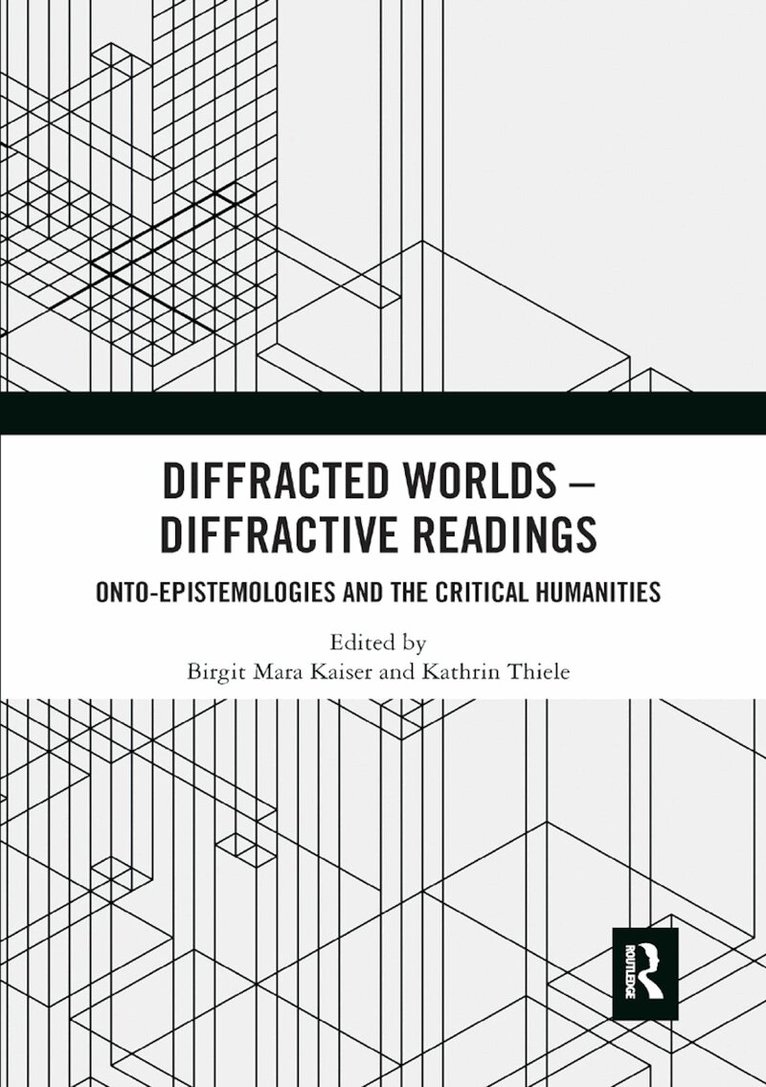
Diffraction patterns in quantum physics evidence the fact that the behavior of matter is the result of its entanglements with measurement, or as Karen Barad suggests, the entanglement of matter and meaning. In this sense, therefore, phenomena (including texts, cultural agents, or life forms) are the results of their relational, onto-epistemological entanglements and not individual entities that separately pre-exist their joint becoming. As such, ‘diffraction’ proposes a new understanding of difference: no longer a dualist understanding, but one going beyond binaries. Diffraction is about patterns, constellations, relationalities.
From this angle, the book explores ‘diffraction’, which has begun to impact critical theories and humanities debates, especially via (new) materialist feminisms, STS and quantum thought, but is often used without further reflection upon its implications or potentials. Doing just that, the book also pursues new routes for the onto-epistemological and ethical challenges that arise from our experience of the world as relational and radically immanent; because if we start from the ideas of immanence and entanglement, our conceptions of self and other, culture and nature, cultural and sexual difference, our epistemological procedures and disciplinary boundaries have to be rethought and adjusted. The book offers an in-depth consideration of ‘diffraction’ as a quantum understanding of difference and as a new critical reading method. It reflects on its import in humanities debates and thereby also on some of the most inspiring work recently done at the crossroads of science studies, feminist studies and the critical humanities. This book was originally published as a special issue of Parallax.
906 kr
Läs direkt efter köp
Diffraction patterns in quantum physics evidence the fact that the behavior of matter is the result of its entanglements with measurement, or as Karen Barad suggests, the entanglement of matter and meaning. In this sense, therefore, phenomena (including texts, cultural agents, or life forms) are the results of their relational, onto-epistemological entanglements and not individual entities that separately pre-exist their joint becoming. As such, ‘diffraction’ proposes a new understanding of difference: no longer a dualist understanding, but one going beyond binaries. Diffraction is about patterns, constellations, relationalities.
From this angle, the book explores ‘diffraction’, which has begun to impact critical theories and humanities debates, especially via (new) materialist feminisms, STS and quantum thought, but is often used without further reflection upon its implications or potentials. Doing just that, the book also pursues new routes for the onto-epistemological and ethical challenges that arise from our experience of the world as relational and radically immanent; because if we start from the ideas of immanence and entanglement, our conceptions of self and other, culture and nature, cultural and sexual difference, our epistemological procedures and disciplinary boundaries have to be rethought and adjusted. The book offers an in-depth consideration of ‘diffraction’ as a quantum understanding of difference and as a new critical reading method. It reflects on its import in humanities debates and thereby also on some of the most inspiring work recently done at the crossroads of science studies, feminist studies and the critical humanities. This book was originally published as a special issue of Parallax.
503 kr
Skickas inom 10-15 vardagar
1 315 kr
Skickas inom 10-15 vardagar
333 kr
Skickas inom 5-8 vardagar
1 570 kr
Tillfälligt slut