Kathryn Kerby-Fulton - Böcker
Visar alla böcker från författaren Kathryn Kerby-Fulton. Handla med fri frakt och snabb leverans.
12 produkter
12 produkter
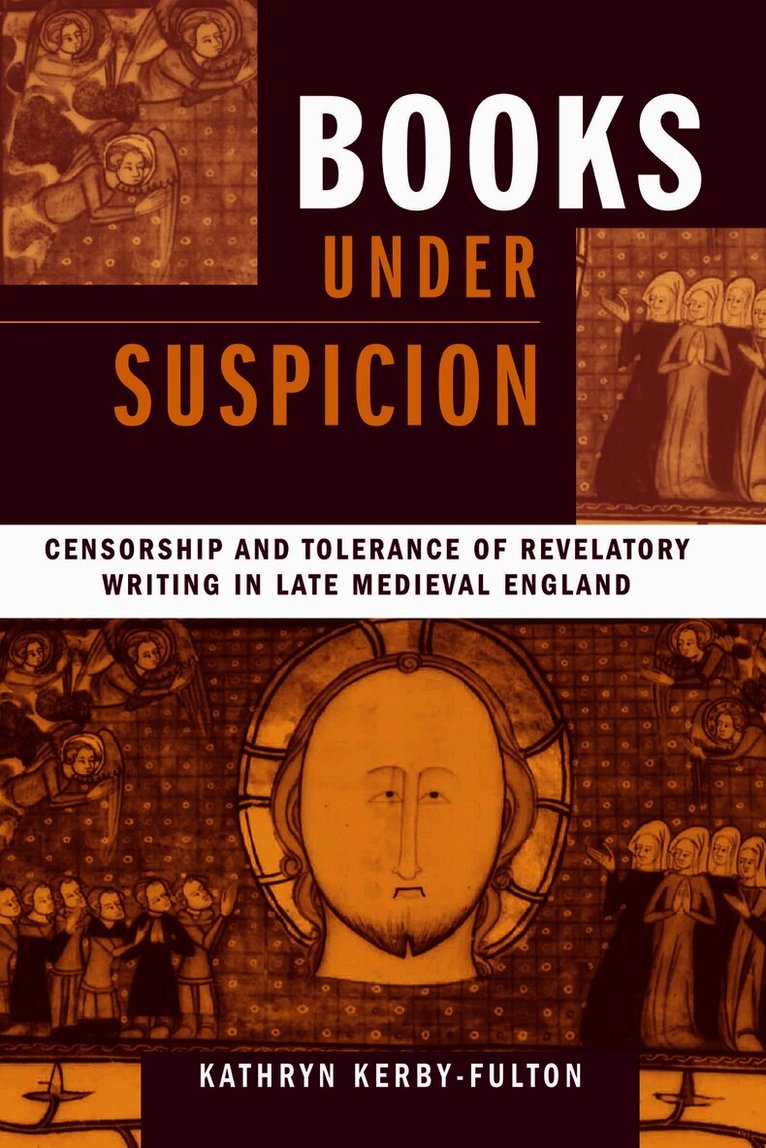
Books Under Suspicion
Censorship and Tolerance of Revelatory Writing in Late Medieval England
Inbunden, Engelska, 2006
1 533 kr
Skickas inom 10-15 vardagar
Books under Suspicion: Censorship and Tolerance of Revelatory Writing in Late Medieval England examines the censorship issues that propelled the major writers of the period toward their massive use of visionary genres. Kathryn Kerby-Fulton suggests that writers and translators as different as Chaucer, Langland, Julian of Norwich, "M.N.," and Margery Kempe positioned their work to take advantage of the tacit toleration that both religious and secular authorities extended to revelatory theology. The book examines controversial ideas as diverse as the early experimental humanism of Chaucer, censured beatific vision theology and the breakdown of Langland's A Text, the English reception of M.N.'s translation of Marguerite Porete's condemned book, Julian's authorial suppression of her gender, and the impact of suspect Continental women's activism on Kempe.Kerby-Fulton also narrates success stories of intellectual freedom, tracing evidence of ecclesiastical tolerance of revelation, the impossibility of official censorship in a manuscript culture, and the powerful, protected reading circles for radical apocalypticism and mysticism, such as those of the Austins and the Carthusians. Until now, Wycliffism has been seen as the only significant unorthodox or radical body of writings in late medieval England. Books under Suspicion is the first comprehensive study of banned non-Wycliffite materials in Insular writing during the period of the Avignon and Great Schism papacies.This weighty, complex, and rewarding book makes use of neglected material in manuscripts and archives to reconstruct new aspects of the history of religious thought and vernacular writing in Ricardian and early Lancastrian England. As such it will interest scholars of late medieval religious history and Middle English literary history.
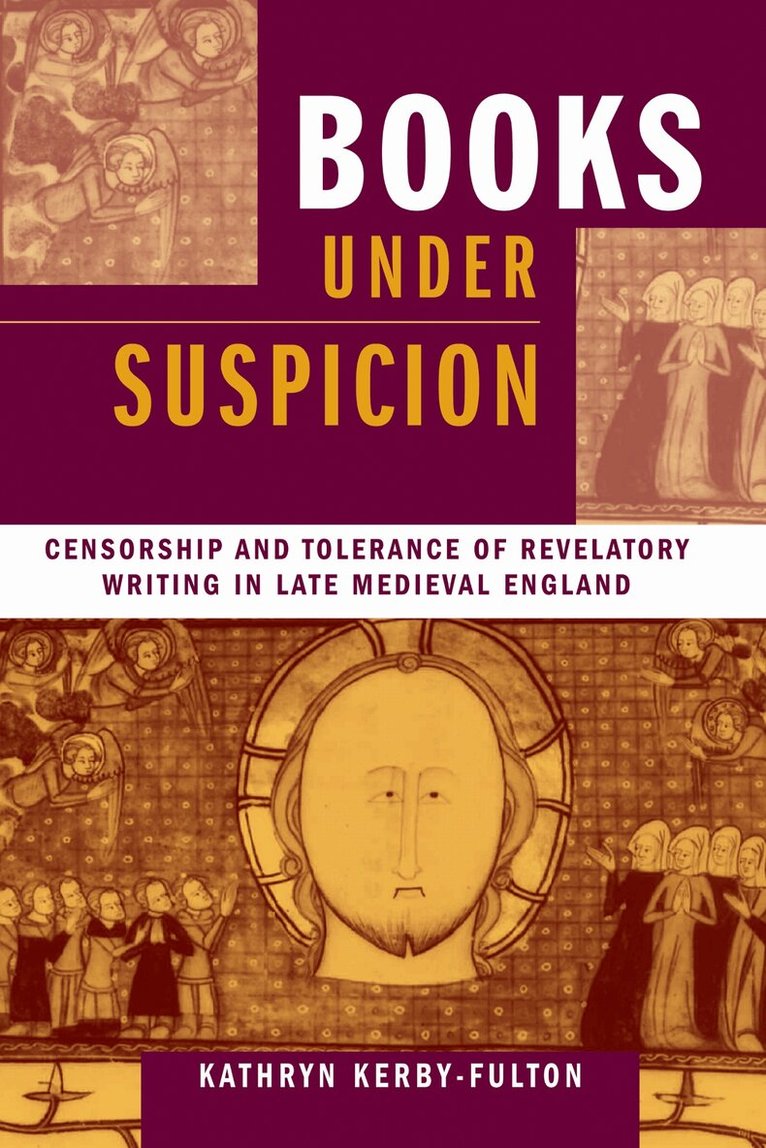
Books Under Suspicion
Censorship and Tolerance of Revelatory Writing in Late Medieval England
Häftad, Engelska, 2011
542 kr
Skickas inom 10-15 vardagar
Books under Suspicion: Censorship and Tolerance of Revelatory Writing in Late Medieval England examines the censorship issues that propelled the major writers of the period toward their massive use of visionary genres. Kathryn Kerby-Fulton suggests that writers and translators as different as Chaucer, Langland, Julian of Norwich, "M.N.," and Margery Kempe positioned their work to take advantage of the tacit toleration that both religious and secular authorities extended to revelatory theology. The book examines controversial ideas as diverse as the early experimental humanism of Chaucer, censured beatific vision theology and the breakdown of Langland's A Text, the English reception of M.N.'s translation of Marguerite Porete's condemned book, Julian's authorial suppression of her gender, and the impact of suspect Continental women's activism on Kempe.Kerby-Fulton also narrates success stories of intellectual freedom, tracing evidence of ecclesiastical tolerance of revelation, the impossibility of official censorship in a manuscript culture, and the powerful, protected reading circles for radical apocalypticism and mysticism, such as those of the Austins and the Carthusians. Until now, Wycliffism has been seen as the only significant unorthodox or radical body of writings in late medieval England. Books under Suspicion is the first comprehensive study of banned non-Wycliffite materials in Insular writing during the period of the Avignon and Great Schism papacies.This weighty, complex, and rewarding book makes use of neglected material in manuscripts and archives to reconstruct new aspects of the history of religious thought and vernacular writing in Ricardian and early Lancastrian England. As such it will interest scholars of late medieval religious history and Middle English literary history.
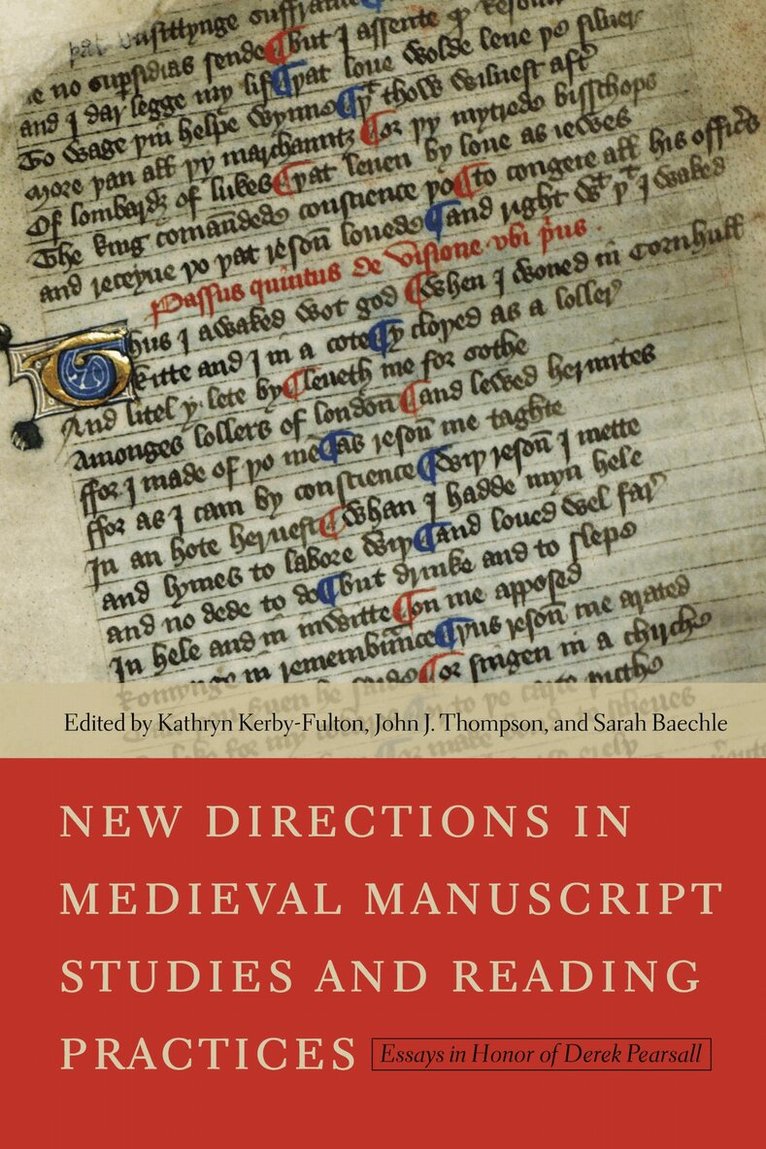
New Directions in Medieval Manuscript Studies and Reading Practices
Essays in Honor of Derek Pearsall
Inbunden, Engelska, 2014
816 kr
Skickas inom 10-15 vardagar
This volume gathers the contributions of senior and junior scholars—all indebted to the pathbreaking work of Derek Pearsall—to showcase new research prompted by his rich and ongoing legacy as a literary critic, editor, and seminal founder of Middle English manuscript studies. The contributors aim both to honor Pearsall's work in the field he established and to introduce the complexities of interdisciplinary manuscript studies to students already familiar with medieval literature.The contributors explore a range of issues, from the study of medieval literary manuscripts to the history of medieval books, libraries, literacy, censorship, and the social classes who used the books and manuscripts—nobles, children, schoolmasters, priests, merchants, and more. In addressing reading practices, essays provide a wealth of information on marginal commentaries, images and interpretive methods, international transmission, and early print and editorial methods. Contributors: Sarah Baechle, Julia Boffey, Peter Brown, Katie Ann-Marie Bugyis, Christopher Cannon, A. I. Doyle, Martha W. Driver, Siân Echard, Nicole Eddy, A. S. G. Edwards, Hilary E. Fox, Karrie Fuller, Maura Giles-Watson, Phillipa Hardman, Kathryn Kerby-Fulton, Jill Mann, William Marx, Sarah McNamer, Carol M. Meale, Linne Mooney, Melinda Nielsen, Theresa O'Byrne, Stephen Partridge, Oliver Pickering, Susan Powell, Elizabeth Scala, A. C. Spearing, John J. Thompson, Edward Wheatley, Jocelyn Wogan-Browne, Hannah Zdansky, Nicolette Zeeman.
399 kr
Skickas
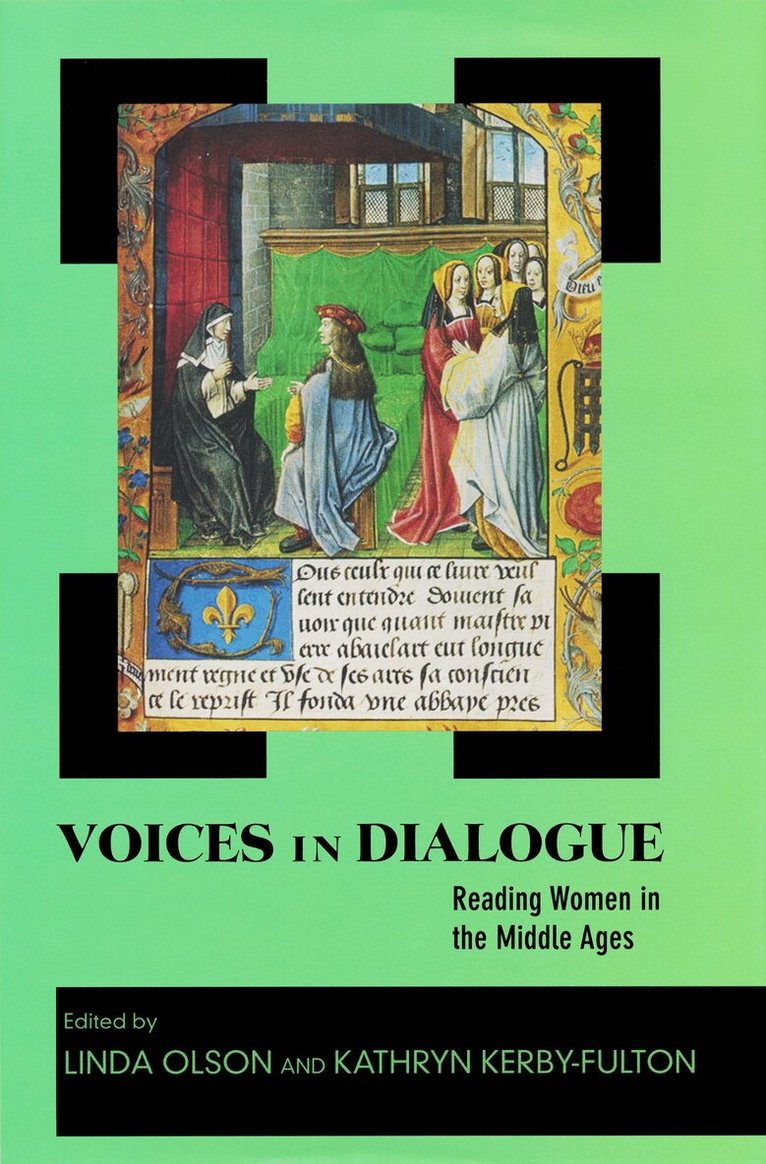
Using a dialogue format, contributors to this collection of essays outline key issues in the cultural history of medieval women. Many of the essays in this volume provide compelling evidence that women in Late Antiquity and the Middle Ages achieved an accomplished form of literacy, and became actively involved in literary networks of textual production and exchange. These essays also present new research on questions of the literacy and authorship of historical women. In so doing they demonstrate that medieval women, like many medieval men, did not read and write in isolation, but were surrounded and assisted by both male and female colleagues.The issue of women's ministry is another key theme addressed in this volume. Contributors examine the conditions under which women's spiritual leadership could extend to male-designated roles and mixed audiences. Several essays also address the ways in which late medieval religious women, though hampered by severe official legislation, managed to appropriate to themselves a surprising range of supposedly forbidden ecclesiastical roles. Voices in Dialogue challenges the historical and literary work of modern medieval scholars by questioning traditionally accepted evidence, methodologies, and conclusions. It will push those engaged in the field of medieval studies to reflect upon the manner in which they conceive, write, and teach history, as it urges them to situate historical women prominently within the intellectual and spiritual culture of the Middle Ages.
Del 7 - Cambridge Studies in Medieval Literature
Reformist Apocalypticism and Piers Plowman
Häftad, Engelska, 2007
614 kr
Skickas inom 7-10 vardagar
This book addresses the need for scholarly attention to the field of alternative, non-Augustinian apocalypticism and its implications for the study of Piers Plowman. Kathryn Kerby-Fulton discusses the major prophets and visionaries of such alternative traditions, who are characterised by their denunciation of clerical abuses, the urging of religious reform, and an ultimate historical optimism. Her book offers a proposal for the importance of such traditions, particularly as represented in the writings of Hildegard of Bingen, to the understanding of Langland's visionary mode and reformist ideology. Dr Kerby-Fulton also explores the relevance of the prophetic mentality fostered by Joachite thought, and the reactionary response which it triggered in antimendicant eschatology. Above all, this book provides a stimulating challenge to assumptions that Langland's views of the course and end of history are wholly conventional, or easily explained by Augustinian eschatology. The outcome of this study of contexts for Piers Plowman suggests that Langland's position in relation to different apocalyptic traditions was at once more sophisticated and more original than scholars have hitherto realised.
685 kr
Skickas inom 7-10 vardagar
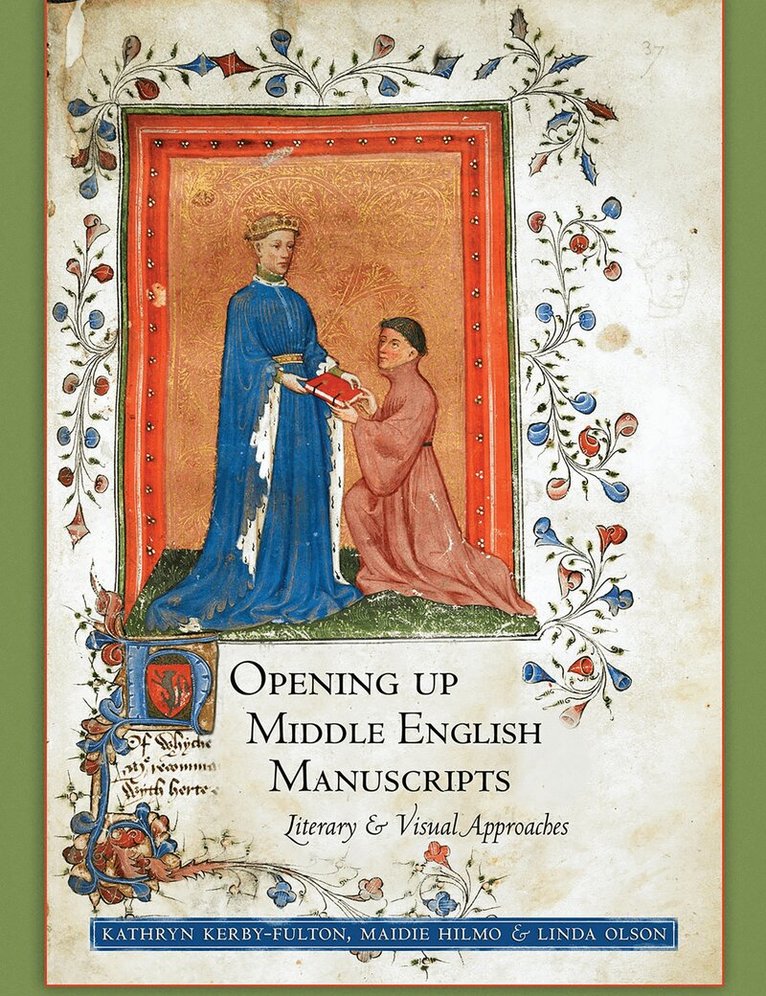
Deeply informed and lavishly illustrated, Opening Up Middle English Manuscripts is a comprehensive introduction to the modern study of Middle English manuscripts. It is intended for students and scholars who are familiar with some of the major Middle English literary works, such as The Canterbury Tales, Gawain and the Green Knight, Piers Plowman, and the romances, mystical works or cycle plays, but who may not know much about the surviving manuscripts. The book approaches these texts in a way that takes into account the whole manuscript or codex—its textual and visual contents, physical state, readership, and cultural history. Opening Up Middle English Manuscripts also explores the function of illustrations in fashioning audience response to particular authors and their texts over the course of the fourteenth and fifteenth centuries.Kathryn Kerby-Fulton, Linda Olson, and Maidie Hilmo—scholars at the forefront of the modern study of Middle English manuscripts—focus on the writers most often taught in Middle English courses, including Geoffrey Chaucer, William Langland, the Gawain Poet, Thomas Hoccleve, Julian of Norwich, and Margery Kempe, highlighting the specific issues that shaped literary production in late medieval England. Among the topics they address are the rise of the English language, literacy, social conditions of authorship, early instances of the "Alliterative Revival," women and book production, nuns' libraries, patronage, household books, religious and political trends, and attempts at revisionism and censorship.As of 2024, Opening Up Middle English Manuscripts is available as an ebook, ideal for instructors teaching the book in courses. The fully-searchable PDF ebook version is available through most digital textbook platforms and library ebook aggregaton platforms.
862 kr
Skickas inom 10-15 vardagar
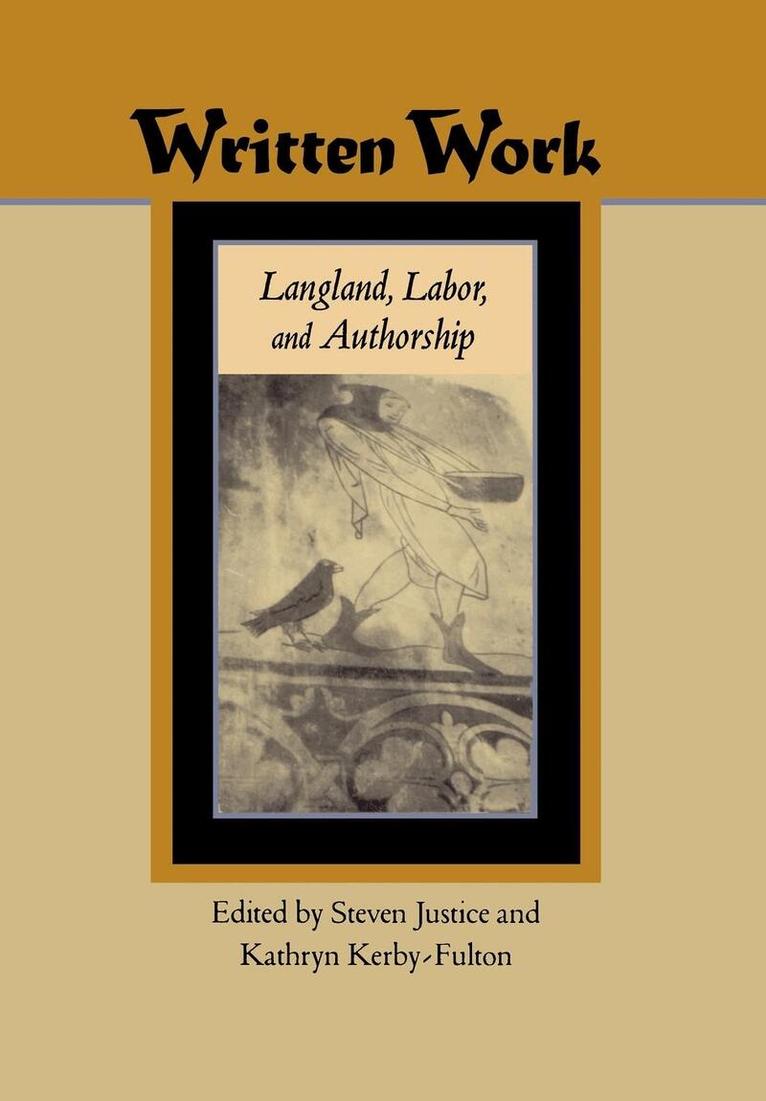
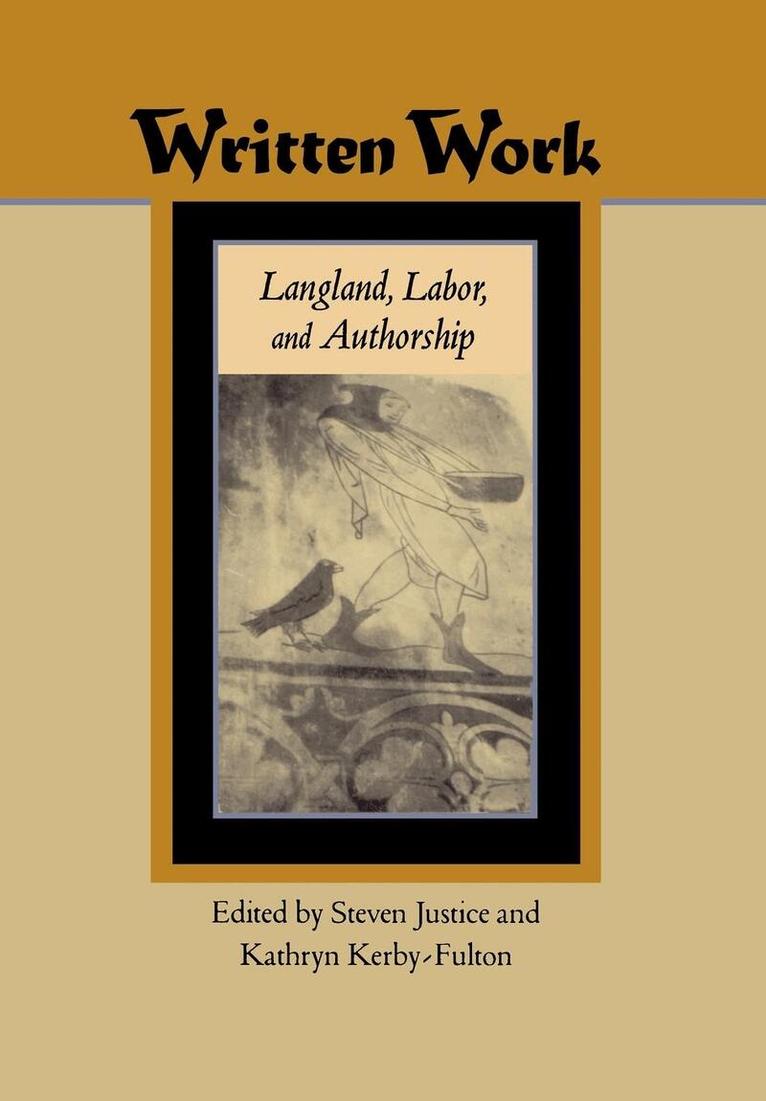
Critics of Piers Plowman have often behaved as if the great fourteenth-century English poem were written by committee, Written Work marks a major shift in orientation by focusing on William Langland instead of Piers Plowman.The five original historicist studies collected here are less concerned with searching for Langland's identity in medieval records than with examining the marks, even scars, left on him by the history he touched. Derek Pearsall studies what Langland knew about London-its geography, economics, and social life-and the way his focus on the city shifted in the course of revising the poem. Kathryn Kerby-Fulton examines the conditions for authorship and publishing in late fourteenth-century England and uncovers evidence of Langland's struggles to attract patronage and maintain control over the text and circulation of Piers.Anne Middleton's stunning chapter explores how the long shadow of fourteenth-century labor laws fell across Langland as he reworked his text. Ralph Hanna III examines the conflicting demands of manual and intellectual labor on the poet, while Lawrence M. Clopper uncovers the deep impressions that contemporary controversies about Franciscan poverty made on Langland and his life-work. Each of the chapters unfolds from Langland's apologia, the extraordinary autobiographical passage unique to the last of the three distinct versions of Piers Plowman that have come down to us.
1 106 kr
Skickas inom 10-15 vardagar
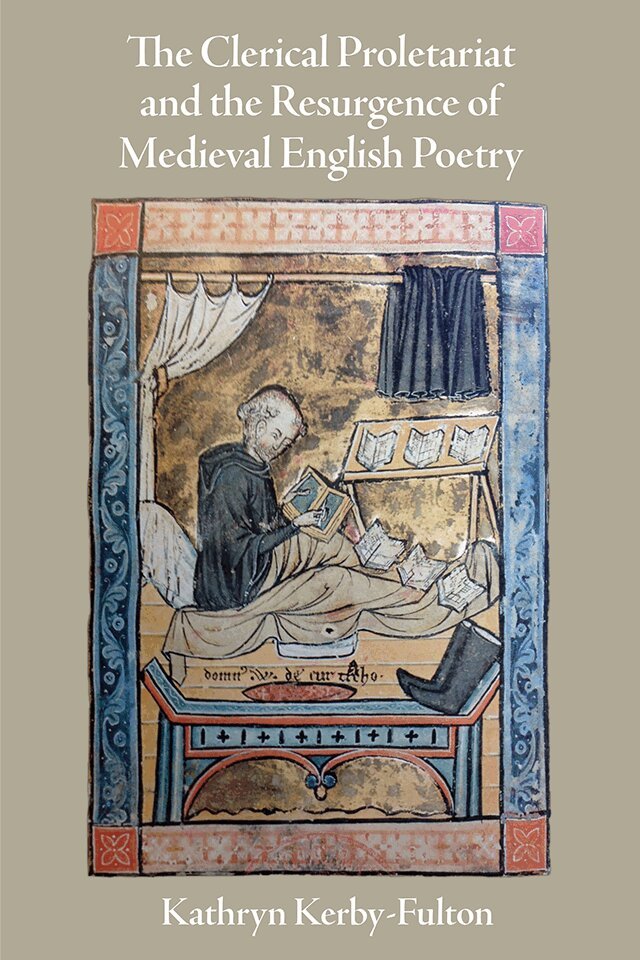
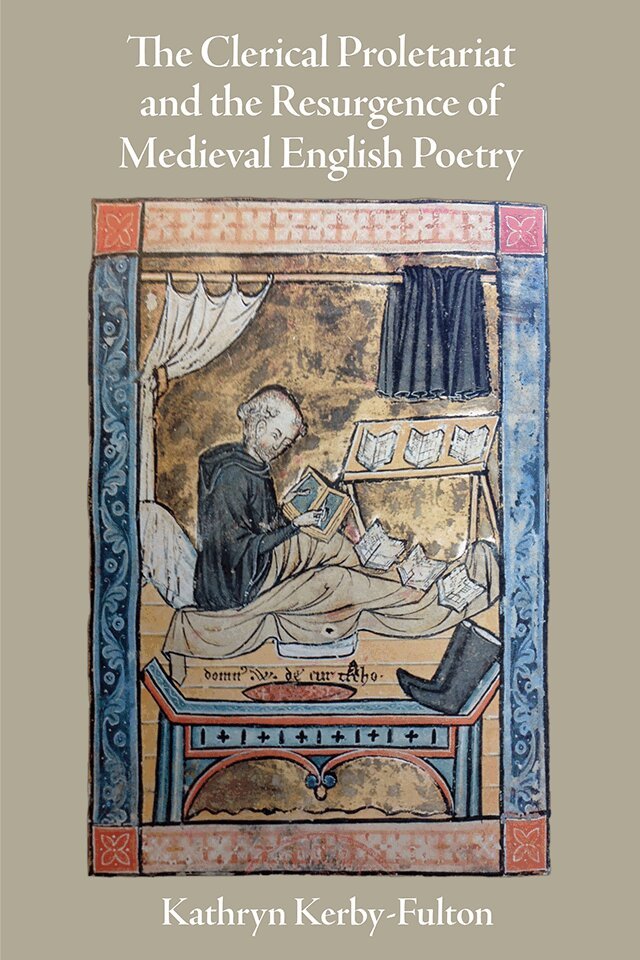
Despite the great literary achievements of Chaucer, Langland, and the Pearl Poet, Ricardian English books were still a niche market in 1400. As Kathryn Kerby-Fulton shows, however, their generation was transformational in nurturing the resurgence of English writing, in part as a result of the mass underemployment of clerks originally trained for the church but unable to find steady positions in it. Surviving instead as ecclesiastical or choral "piece workers," or in secular jobs in government or private households, this "clerical proletariat" lived and worked in liminal spaces between the ecclesiastical and lay world. And there the most enterprising found new material-and new audiences-for poetry in English.Since English book production in London prior to 1380 was rare, Kerby-Fulton's study begins in the prior century with great regional poets, revealing their early experimentation with a new poetics of vocational crisis. Preoccupied with underemployment, patronage, careerist ambition, alienation, and changing literary fashion, these thirteenth-century writers were choosing the more avant garde option of writing in English while feeling backwards to earlier tradition in works such as Laȝamon's Brut and The Owl and the Nightingale. These early experimenters invoked semi-remembered literary forms in a still evolving written vernacular, breaking ground for Ricardian writers, who turned to these conventions during the massive clerical unemployment of the Great Schism era. Kerby-Fulton's is the first study of Langland's legacy of articulating an authorial employment crisis, and its echoes in Hoccleve and Audelay. It also uses new tools for uncovering proletarian writers in unattributed Middle English works, including the famous Harley 2253 lyrics, the "York Realist's" Second Trial from the York Cycle, St. Erkenwald, and Wynnere and Wastour. Taking in proletarian themes, including class, meritocracy, the abuse of children ("Choristers' Lament"), the gig economy, precarity, and the breaking of intellectual elites (Book of Margery Kempe), The Clerical Proletariat and the Resurgence of Medieval English Poetry speaks to both past and present employment urgencies.
Del 85 - Els Monograph Series
The Medieval Professional Reader at Work: Evidence from Manuscripts of Chaucer Langland, Kempe, and Gower
Häftad, Engelska, 2016
370 kr
Skickas inom 3-6 vardagar
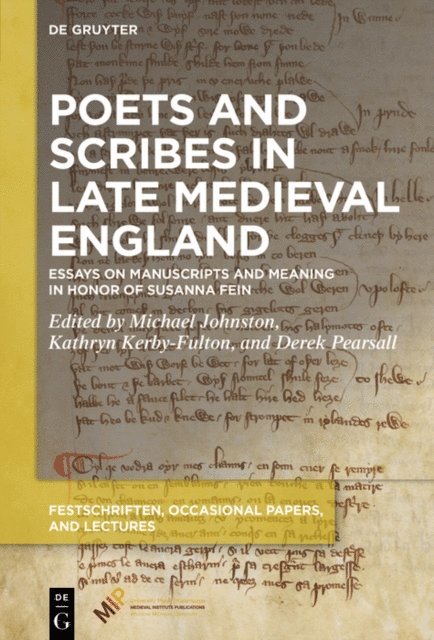
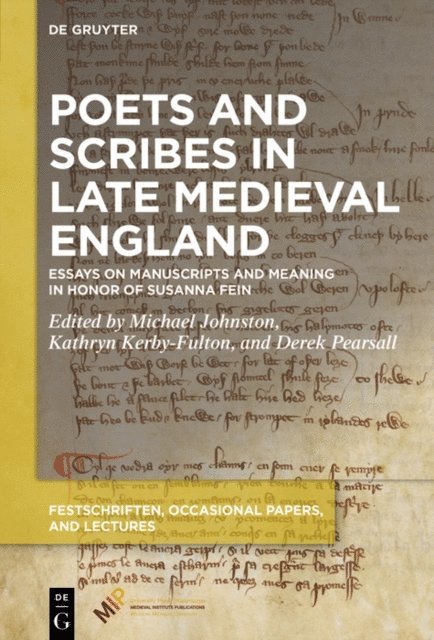
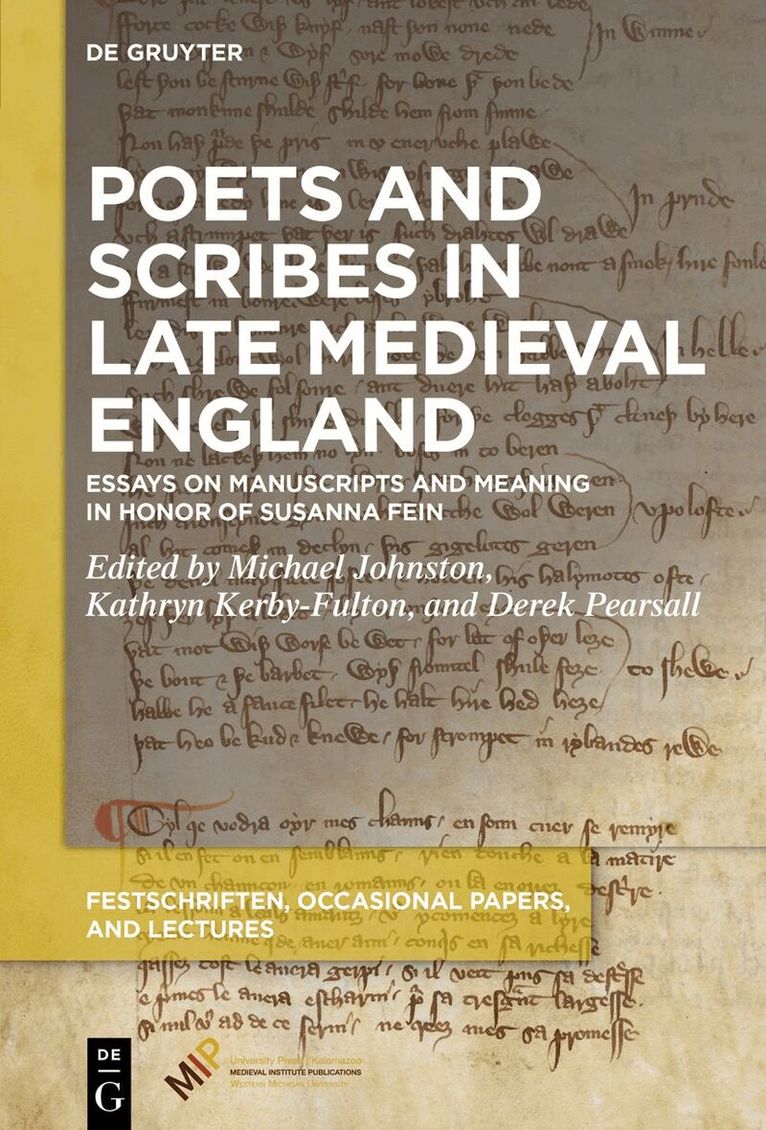
Poets and Scribes in Late Medieval England
Essays on Manuscripts and Meaning in Honor of Susanna Fein
Inbunden, Engelska, 2023
1 771 kr
Skickas inom 5-8 vardagar
Susanna Fein’s long and distinguished scholarly career has helped to redefine how we understand the role of scribes and manuscripts from late medieval England. She has carried out groundbreaking research on seminal manuscripts (e.g., Harley 2253, the Thornton Manuscripts, John Audley’s autograph manuscript, and the Auchinleck Manuscript). She has written extensively on the more complex and challenging metrical forms the period produced. And she has edited foundational primary texts and collections of essays. A wide range of scholars have been influenced by Fein’s work, many of whom present original research—much of it following trails first laid down by Fein—in this volume.
2 622 kr
Skickas inom 5-8 vardagar
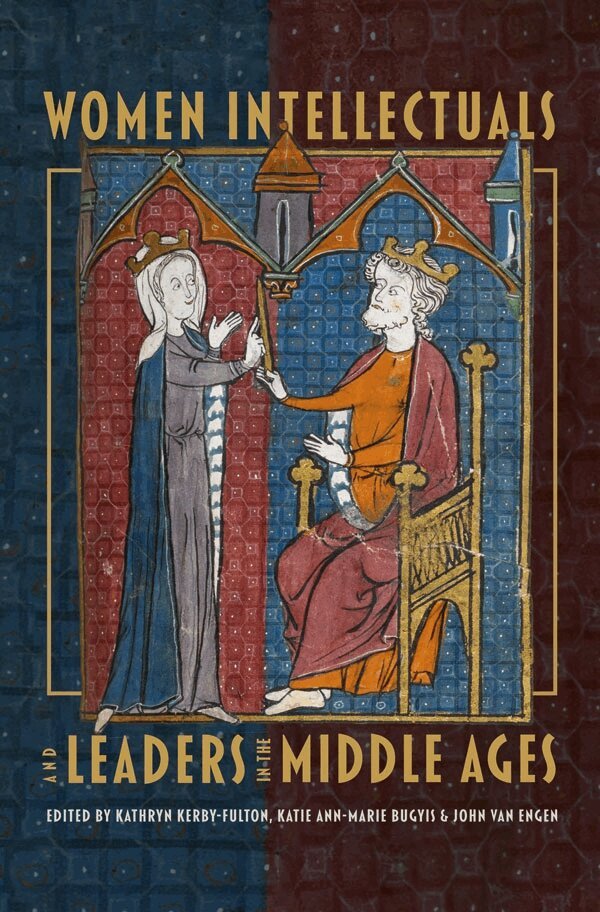
Wide-ranging examination of women's achievements in and influence on many aspects of medieval culture.Medieval women were normally denied access to public educational institutions, and so also denied the gateways to most leadership positions. Modern scholars have therefore tended to study learned medieval women as simply anomalies, and women generally as victims. This volume, however, argues instead for a via media. Drawing upon manuscript and archival sources, scholars here show that more medieval women attained some form of learning than hitherto imagined, and that women with such legal, social or ecclesiastical knowledge also often exercised professional or communal leadership.Bringing together contributors from the disciplines of literature, history and religion, this volume challenges several traditional views: firstly, the still-prevalent idea that women's intellectual accomplishments were limited to the Latin literate. The collection therefore engages heavily with vernacular writings (in Anglo-Saxon, Middle English, French, Dutch, German and Italian), and also with material culture (manuscript illumination, stained glass, fabric and jewelry) for evidence of women's advanced capabilities. But in doing so, the contributors strive to avoid the equally problematic view that women's accomplishments were somehow limited to the vernacular and the material. So several essays examine women at work with the sacred languages of the three Abrahamic traditions (Latin, Arabic and Hebrew). And a third traditional view is also interrogated: that women were somehow more "original" for their lack of learning and and dependence on their mother tongue. Scholars here agree wholeheartedly that women could be daring thinkers in any language; they engage readily with women's learnedness wherever it can be found.
494 kr
Skickas inom 7-10 vardagar
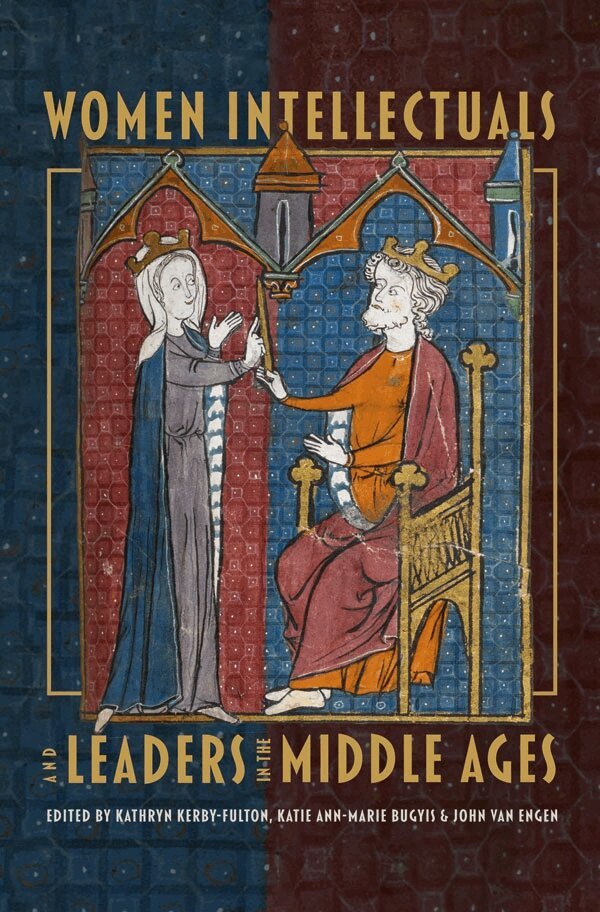
Wide-ranging examination of women's achievements in and influence on many aspects of medieval culture.Medieval women were normally denied access to public educational institutions, and so also denied the gateways to most leadership positions. Modern scholars have therefore tended to study learned medieval women as simply anomalies, and women generally as victims. This volume, however, argues instead for a via media. Drawing upon manuscript and archival sources, scholars here show that more medieval women attained some form of learning than hitherto imagined, and that women with such legal, social or ecclesiastical knowledge also often exercised professional or communal leadership.Bringing together contributors from the disciplines of literature, history and religion, this volume challenges several traditional views: firstly, the still-prevalent idea that women's intellectual accomplishments were limited to the Latin literate. The collection therefore engages heavily with vernacular writings (in Anglo-Saxon, Middle English, French, Dutch, German and Italian), and also with material culture (manuscript illumination, stained glass, fabric and jewelry) for evidence of women's advanced capabilities. But in doing so, the contributors strive to avoid the equally problematic view that women's accomplishments were somehow limited to the vernacular and the material. So several essays examine women at work with the sacred languages of the three Abrahamic traditions (Latin, Arabic and Hebrew). And a third traditional view is also interrogated: that women were somehow more "original" for their lack of learning and and dependence on their mother tongue. Scholars here agree wholeheartedly that women could be daring thinkers in any language; they engage readily with women's learnedness wherever it can be found.