K.B. Agrawal – författare
2 082 kr
Läs direkt efter köp
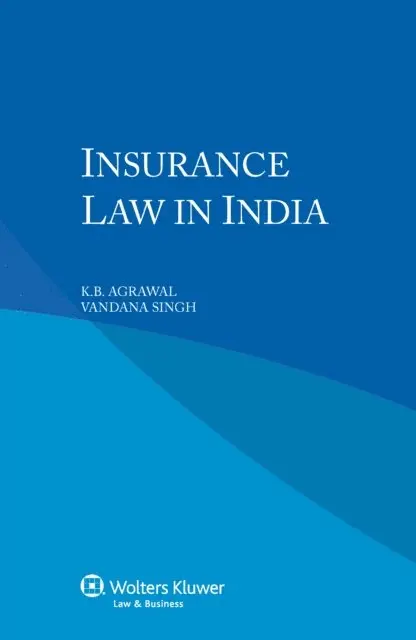
Derived from the renowned multi-volume International Encyclopaedia of Laws, this book provides valuable practical insight into both public supervisory legislation concerning insurance and private insurance contract law in India. An informative general introduction surveying the legal, political, financial, and commercial background and surroundings of insurance provides a sound foundation for the specific detail that follows.
The book covers all essential aspects of the law and regulation governing insurance policies and instruments. Its detailed exposition includes examination of the form of the insurance company and its reserves and investments; the insurance contract; the legal aspects of the various branches of property and liability insurance; motor vehicle insurance schemes; life insurance, health insurance, and workmen’s compensation schemes; reinsurance, co-insurance, and pooling; taxation of insurance; and risk management and prevention.
Succinct yet eminently practical, the book will be a valuable resource for lawyers handling cases affecting India. It will be of practical utility to those both in public service and private practice called on to develop and to apply the laws of insurance, and of special interest as a contribution to the much-needed harmonization of insurance law.
1 663 kr
Läs direkt efter köp
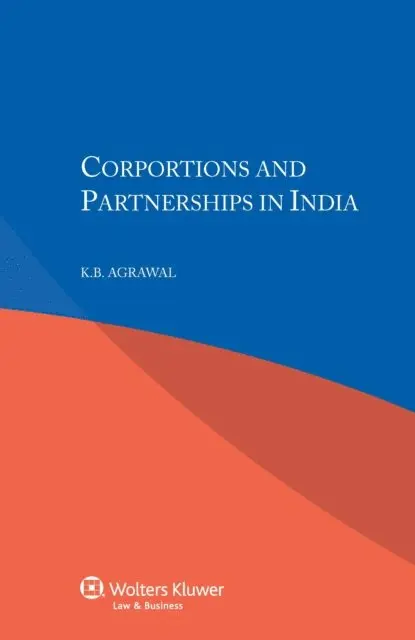
Derived from the renowned multi-volume International Encyclopaedia of Laws, this practical analysis of the law of business formations in India provides quick and easy guidance on a variety of corporate and partnership considerations such as mergers, rights and duties of interested parties, stock exchange rules, labour laws, and takeovers. Lawyers who handle transnational business will appreciate the explanation of local variations in terminology and the distinctive concepts that determine practice and procedure.
A general introduction covering historical background, definitions, sources of law, and the effect of international private law is followed by a discussion of such aspects as types of formation, capital, shares, management, control, liquidation, mergers, takeovers, holding companies, subsidiaries, and taxation. Big companies, various types of smaller entities, and partnerships are all covered in turn. These details are presented in such a way that readers who are unfamiliar with specific terms and concepts in varying contexts will fully grasp their meaning and significance.
Thorough yet practical, this convenient volume puts the information necessary for corporations to compete effectively at the user’s fingertips. An important and practical tool for business executives and their legal counsel interested in engaging in an international partnership or embarking on corporate expansion, this book will prove a valuable time-saving tool for business and legal professionals alike. Lawyers representing parties with interests in India will welcome this very useful guide, and academics and researchers will appreciate its value in the study of comparative business law.
1 636 kr
Läs direkt efter köp
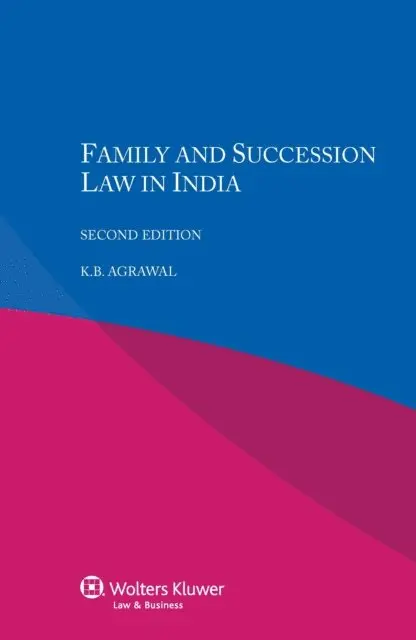
Derived from the renowned multi-volume International Encyclopaedia of Laws, this concise exposition and analysis of the essential elements of law with regard to family relations, marital property, and succession to estates in India covers the legal rules and customs pertaining to the intertwined civic status of persons, the family, and property.
After an informative general introduction, the book proceeds to an in-depth discussion of the sources and instruments of family and succession law, the authorities that adjudicate and administer the laws, and issues surrounding the person as a legal entity and the legal disposition of property among family members. Such matters as nationality, domicile, and residence; marriage, divorce, and cohabitation; adoption and guardianship; succession and inter vivos arrangements; and the acquisition and administration of estates are all treated to a degree of depth that will prove useful in nearly any situation likely to arise in legal practice.
The book is primarily designed to assist lawyers who find themselves having to apply rules of international private law or otherwise handling cases connected with India. It will also be of great value to students and practitioners as a quick guide and easy-to-use practical resource in the field, and especially to academicians and researchers engaged in comparative studies by providing the necessary, basic material of family and succession law.
1 325 kr
Läs direkt efter köp
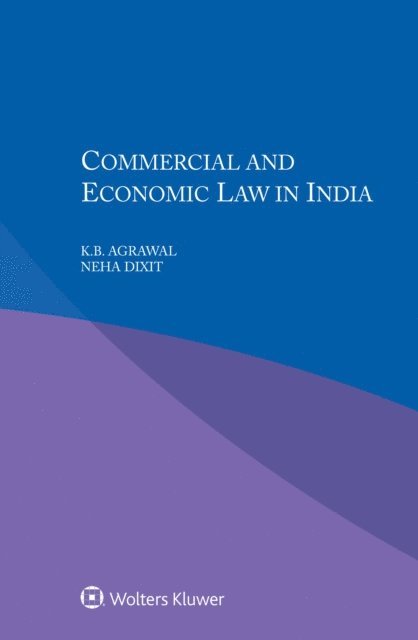
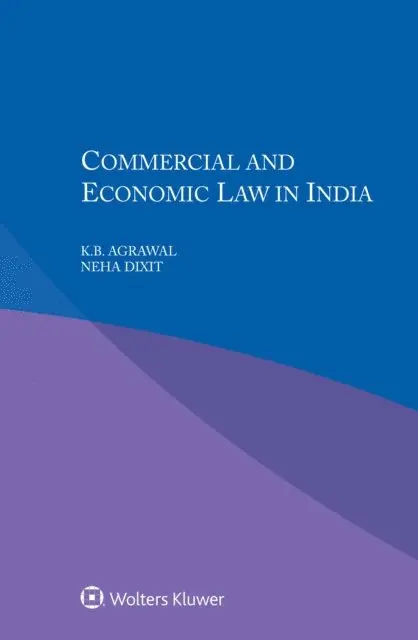
Derived from the renowned multi-volume International Encyclopaedia of Laws, this practical analysis of the law covering merchants’ status and obligations – including the laws governing state intervention in economic activities – in India provides quick and easy guidance on such commercial and economic matters as business assets, negotiable instruments, commercial securities, and regulation of the conditions of commercial transactions. Lawyers who handle transnational business will appreciate the explanation of local variations in terminology and the distinctive concepts that determine practice and procedure.
Starting with a general description of the specifically applicable concepts and sources of commercial law, the book goes on to discuss such factors as obligations of economic operators and institutions, goodwill, broker/client relations, commercial property rights, and bankruptcy. Discussion of economic law covers the laws governing establishment, supervision of economic activities, competition law, and government taxation incentives. These details are presented in such a way that readers who are unfamiliar with specific terms and concepts in varying contexts will fully grasp their meaning and significance.
Thorough yet practical, this convenient volume is a valuable tool for business executives and their legal counsel with international interests. Lawyers representing parties with interests in India will welcome this very useful guide, and academics and researchers will appreciate its value in the study of comparative commercial and economic law.
1 325 kr
Läs direkt efter köp
Derived from the renowned multi-volume International Encyclopaedia of Laws, this practical analysis of the law covering merchants’ status and obligations – including the laws governing state intervention in economic activities – in India provides quick and easy guidance on such commercial and economic matters as business assets, negotiable instruments, commercial securities, and regulation of the conditions of commercial transactions. Lawyers who handle transnational business will appreciate the explanation of local variations in terminology and the distinctive concepts that determine practice and procedure.
Starting with a general description of the specifically applicable concepts and sources of commercial law, the book goes on to discuss such factors as obligations of economic operators and institutions, goodwill, broker/client relations, commercial property rights, and bankruptcy. Discussion of economic law covers the laws governing establishment, supervision of economic activities, competition law, and government taxation incentives. These details are presented in such a way that readers who are unfamiliar with specific terms and concepts in varying contexts will fully grasp their meaning and significance.
Thorough yet practical, this convenient volume is a valuable tool for business executives and their legal counsel with international interests. Lawyers representing parties with interests in India will welcome this very useful guide, and academics and researchers will appreciate its value in the study of comparative commercial and economic law.