Keith Ray - Böcker
Visar alla böcker från författaren Keith Ray. Handla med fri frakt och snabb leverans.
6 produkter
6 produkter
629 kr
Skickas inom 5-8 vardagar
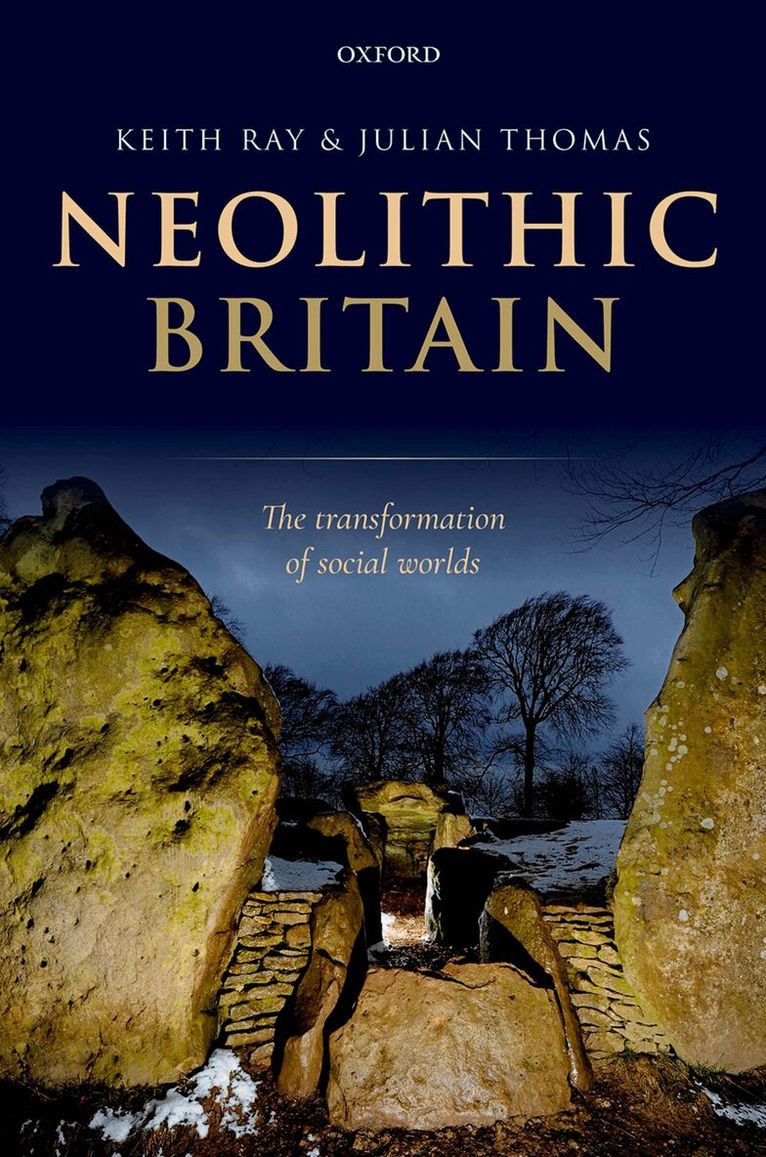
The Neolithic in Britain was a period of fundamental change: human communities were transformed, collectively owning domesticated plants and animals, and inhabiting a richer world of material things: timber houses and halls, pottery vessels, polished flint and stone axes, and massive monuments of earth and stone. Equally important was the development of a suite of new social practices, and an emphasis on descent, continuity and inheritance. These innovations set in train social processes that culminated with the construction of Stonehenge, the most remarkable surviving structure from prehistoric Europe.Neolithic Britain provides an up to date, concise introduction to the period of British prehistory from c. 4000-2200 BCE. Written on the basis of a new appreciation of the chronology of the period, the result reflects both on the way that archaeologists write narratives of the Neolithic, and how Neolithic people constructed histories of their own. Incorporating new insights from the extraordinary pace of archaeological discoveries in recent years, a world emerges which is unfamiliar, complex and challenging, and yet played a decisive role in forging the landscape of contemporary Britain.Important recent developments have resulted in a dual realisation: firstly, highly focused research into individual site chronologies can indicate precise and particular time narratives; and secondly, this new awareness of time implies original insights about the fabric of Neolithic society, embracing matters of inheritance, kinship and social ties, and the 'descent' of cultural practices.Moreover, our understanding of Neolithic society has been radically affected by individual discoveries and investigative projects, whether in the Stonehenge area, on mainland Orkney, or in less well-known localities across the British Isles. The new perspective provided in this volume stems from a greater awareness of the ways in which unfolding events and transformations in societies depend upon the changing relations between individuals and groups, mediated by objects and architecture.This concise panorama into Neolithic Britain offers new conclusions and an academically-stimulating but accessible overview. It covers key material and social developments, and reflects on the nature of cultural practices, tradition, genealogy, and society across nearly two millennia.
317 kr
Skickas inom 7-10 vardagar
The Neolithic in Britain was a period of fundamental change: human communities were transformed, collectively owning domesticated plants and animals, and inhabiting a richer world of material things: timber houses and halls, pottery vessels, polished flint and stone axes, and massive monuments of earth and stone. Equally important was the development of a suite of new social practices, with an emphasis on descent, continuity and inheritance. These innovations set in train social processes that culminated with the construction of Stonehenge, the most remarkable surviving structure from prehistoric Europe. Neolithic Britain provides an up-to-date, concise introduction to the period of British prehistory from c. 4000-2200 BCE. Written on the basis of a new appreciation of the chronology of the period, the result reflects both on the way that archaeologists write narratives of the Neolithic, and how Neolithic people constructed histories of their own. Incorporating new insights from the extraordinary pace of archaeological discoveries in recent years, a world emerges which is unfamiliar, complex and challenging, and yet played a decisive role in forging the landscape of contemporary Britain. Important recent developments have resulted in a dual realisation: firstly, highly focused research into individual site chronologies can indicate precise and particular time narratives; and secondly, this new awareness of time implies original insights about the fabric of Neolithic society, embracing matters of inheritance, kinship and social ties, and the 'descent' of cultural practices. Moreover, our understanding of Neolithic society has been radically affected by individual discoveries and investigative projects, whether in the Stonehenge area, on mainland Orkney, or in less well-known localities across the British Isles. The new perspective provided in this volume stems from a greater awareness of the ways in which unfolding events and transformations in societies depend upon the changing relations between individuals and groups, mediated by objects and architecture. This concise panorama into Neolithic Britain offers new conclusions and an academically-stimulating but accessible overview. It covers key material and social developments, and reflects on the nature of cultural practices, tradition, genealogy, and society across nearly two millennia.
129 kr
Tillfälligt slut
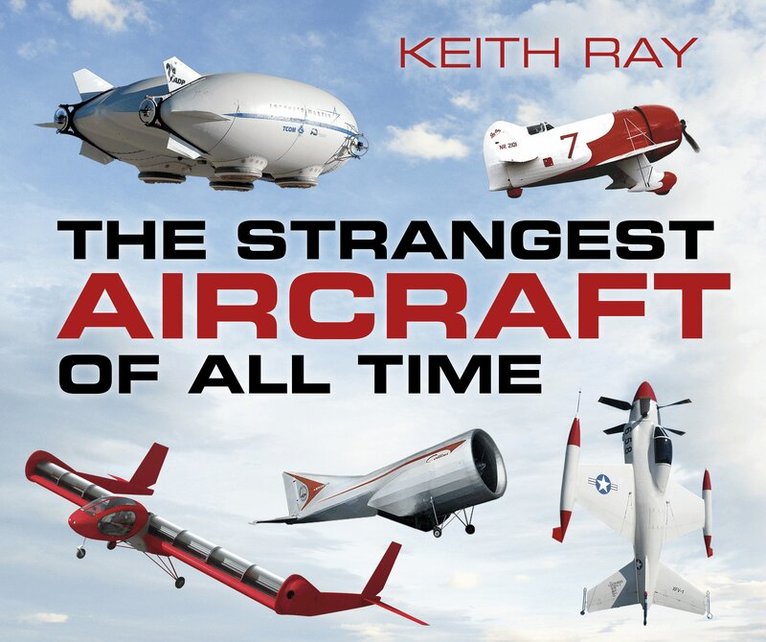
If your idea of a ‘strange’ aircraft is the pre-war DH Dragon Rapide, a bloated Boeing Super Guppy or a BA Airbus with an ‘ethnic’ tail design, then think again. What about Horatio Phillips’ Multiplane with its 200 separate wings? Or the Hughes H-4 Hercules, the plane with the longest wingspan ever, which was made entirely from plywood? And who could forget the Caspian Sea Monster – a ten-engine, 550,000kg giant designed to fly at 500kph at a mindboggling altitude of just 4m? Exploring the strangest aircraft ever conceived, Keith Ray reveals the madness of many a designer and marketing guru in this highly entertaining homage to some of the aviation world’s more bizarre aircraft.
157 kr
Skickas
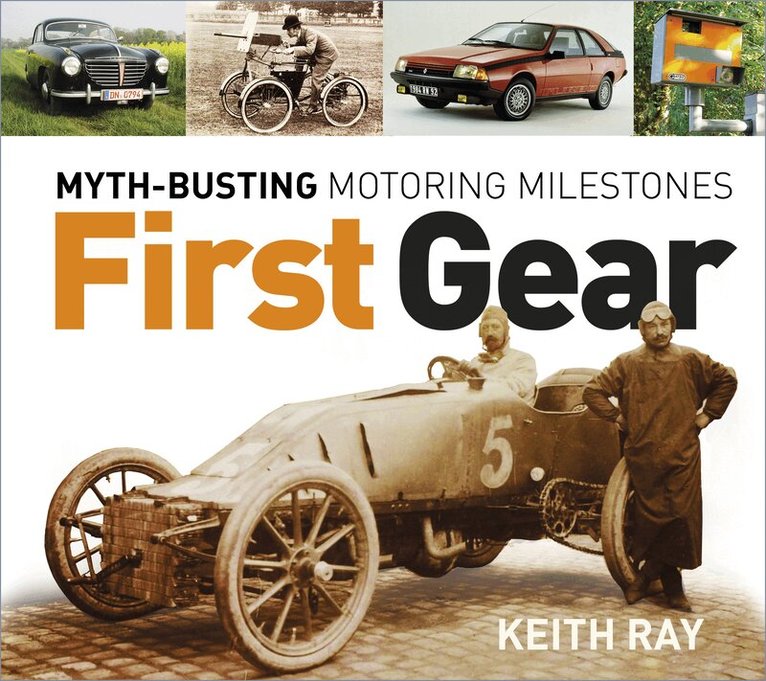
What was the first real ‘automobile’? And what actually constitutes an automobile, anyway? Such questions are not easy to answer, but Keith Ray has embraced the challenge and compiled a myth-busting book packed with fascinating facts. Ranging from the ‘firsts’ in motoring technology such as the disc brake, fuel injection and four-wheel drive, through the legislation that brought in the driving test, speed limit and first conviction, all the way to the first roundabout, dual carriageway, motorway, motoring organisation and fatality, Ray not only reveals what happened first but rights historic wrongs along the way. The V8 engine did not originate in America, as most people believe, and Rudolf Diesel certainly did not invent the diesel engine. Packed with photographs, First Gear is the perfect gift for any motoring enthusiast.
133 kr
Tillfälligt slut
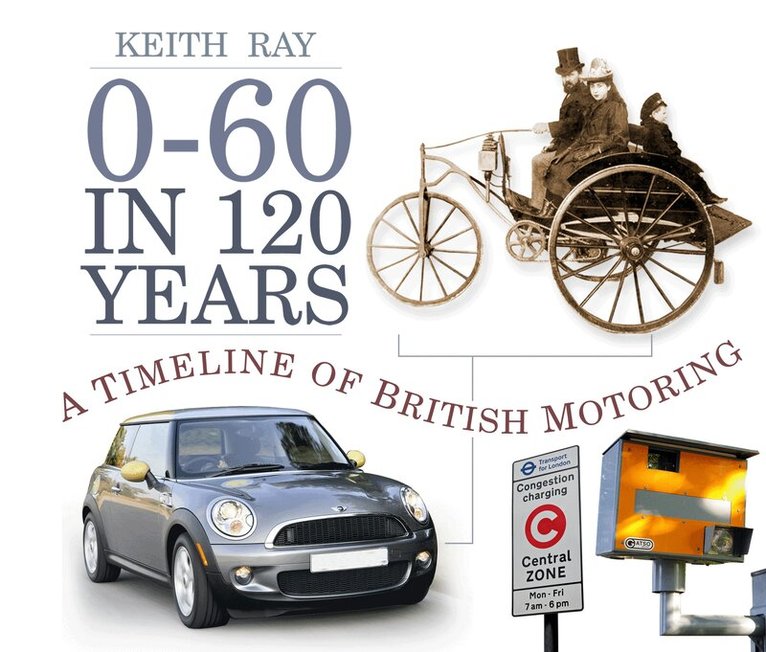
Looking back over the past 120 years of British motoring, there have been milestones, setbacks and world-class engagements. Motoring in Britain held the world stage on numerous occasions in terms of car design, innovation and outstanding sporting achievement. Here Keith Ray explores every aspect of the motoring world, from its humble beginnings to the vital importance it has today in all of our lives, chronicling every interesting event in the industry’s history. Discover how those first cars had to be driven behind someone carrying a red flag; how many policemen it took to change a traffic light; when the first traffic warden appeared and much more. With fascinating facts and figures, this book contains everything the car enthusiast would ever want to know about the British motoring industry.
Straight Eight Engine
Powering the Premium Automobiles of the Twenties and Thirties
Inbunden, Engelska, 2020
1 169 kr
Skickas
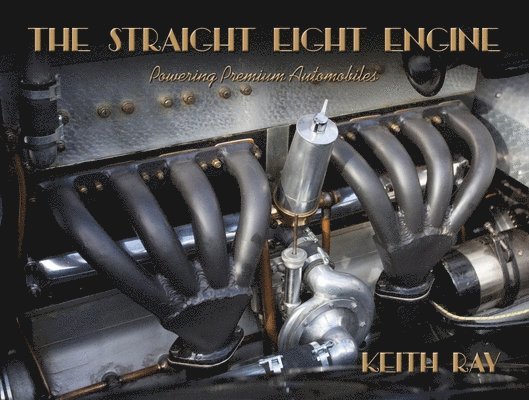
The straight eight engine, also known as the inline eight engine, was the driving force behind some of the most fascinating luxury vehicles of the first half of the twentieth century. From its introduction in the 1920s through its demise in the 1950s, the straight eight graced a number of upmarket vehicles from makers like Pontiac, Packard, and Daimler, and even appeared under the hood of the hyper-exclusive Rolls-Royce Phantom IV, of which only eighteen models were produced. Although it was eventually replaced by the V8 engine, the straight eight engine can be found in some of the most valuable and sought-after vehicles of all time. Keith Ray's The Straight Eight Engine is the first volume to be published about this extraordinary mechanism. Featuring four hundred images, the book is a lush tribute to an automotive component likely to never be equaled for smoothness and refinement.