Kenneth Prewitt – författare
330 kr
Skickas
489 kr
Läs direkt efter köp
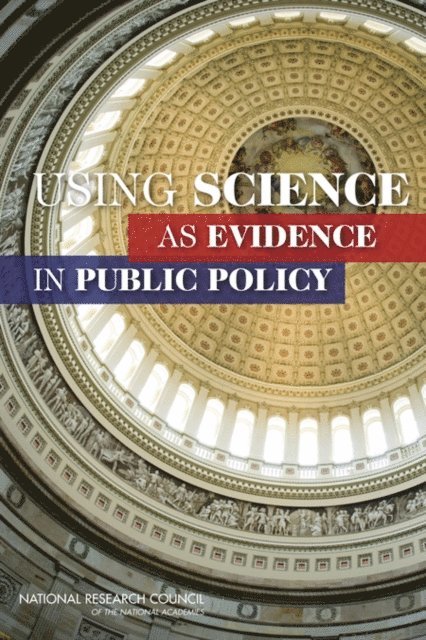
Using Science as Evidence in Public Policy encourages scientists to think differently about the use of scientific evidence in policy making. This report investigates why scientific evidence is important to policy making and argues that an extensive body of research on knowledge utilization has not led to any widely accepted explanation of what it means to use science in public policy. Using Science as Evidence in Public Policy identifies the gaps in our understanding and develops a framework for a new field of research to fill those gaps.For social scientists in a number of specialized fields, whether established scholars or Ph.D. students, Using Science as Evidence in Public Policy shows how to bring their expertise to bear on the study of using science to inform public policy. More generally, this report will be of special interest to scientists who want to see their research used in policy making, offering guidance on what is required beyond producing quality research, beyond translating results into more understandable terms, and beyond brokering the results through intermediaries, such as think tanks, lobbyists, and advocacy groups. For administrators and faculty in public policy programs and schools, Using Science as Evidence in Public Policy identifies critical elements of instruction that will better equip graduates to promote the use of science in policy making.
714 kr
Läs direkt efter köp
People''s bonds, associations and networks - as well as the civil, political, and institutional characteristics of the society in which they live - can be powerful drivers affecting the quality of life among a community''s, a city''s, or a nation''s inhabitants and their ability to achieve both individual and societal goals. Civic engagement, social cohesion, and other dimensions of social capital affect social, economic and health outcomes for individuals and communities. Can these be measured, and can federal surveys contribute toward this end? Can this information be collected elsewhere, and if so, how should it be collected?
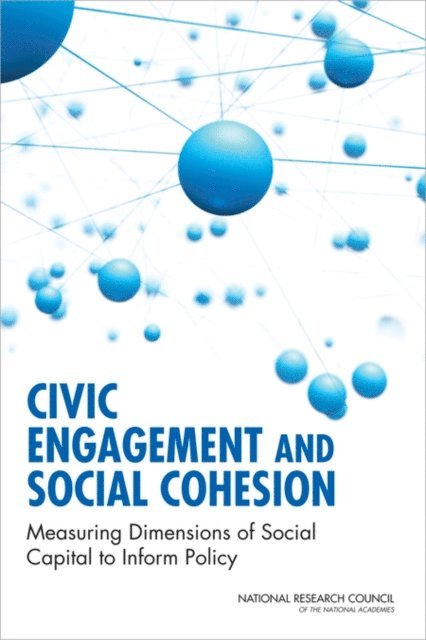
Civic Engagement and Social Cohesion identifies measurement approaches that can lead to improved understanding of civic engagement, social cohesion, and social capital - and their potential role in explaining the functioning of society. With the needs of data users in mind, this report examines conceptual frameworks developed in the literature to determine promising measures and measurement methods for informing public policy discourse. The report identifies working definitions of key terms; advises on the feasibility and specifications of indicators relevant to analyses of social, economic, and health domains; and assesses the strength of the evidence regarding the relationship between these indicators and observed trends in crime, employment, and resilience to shocks such as natural disasters. Civic Engagement and Social Cohesion weighs the relative merits of surveys, administrative records, and non-government data sources, and considers the appropriate role of the federal statistical system. This report makes recommendations to improve the measurement of civic health through population surveys conducted by the government and identifies priority areas for research, development, and implementation.
399 kr
Skickas inom 5-8 vardagar
240 kr
Skickas inom 5-8 vardagar
294 kr
Läs direkt efter köp
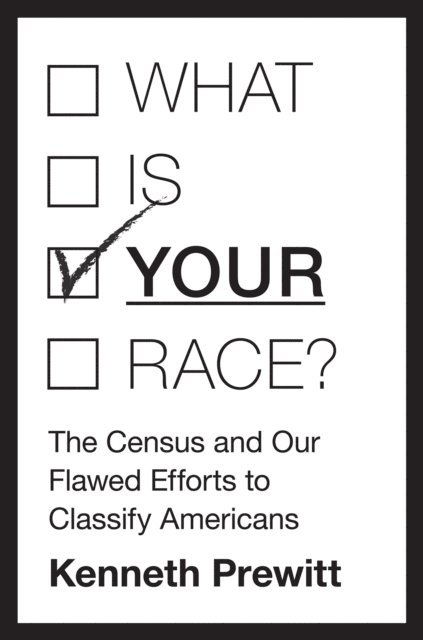
A historical overview of the census race question—and a bold proposal for eliminating itAmerica is preoccupied with race statistics—perhaps more than any other nation. Do these statistics illuminate social reality and produce coherent social policy, or cloud that reality and confuse social policy? Does America still have a color line? Who is on which side? Does it have a different "race" line—the nativity line—separating the native born from the foreign born? You might expect to answer these and similar questions with the government''s "statistical races." Not likely, observes Kenneth Prewitt, who shows why the way we count by race is flawed.Prewitt calls for radical change. The nation needs to move beyond a race classification whose origins are in discredited eighteenth-century race-is-biology science, a classification that once defined Japanese and Chinese as separate races, but now combines them as a statistical "Asian race." One that once tried to divide the "white race" into "good whites" and "bad whites," and that today cannot distinguish descendants of Africans brought in chains four hundred years ago from children of Ethiopian parents who eagerly immigrated twenty years ago. Contrary to common sense, the classification says there are only two ethnicities in America—Hispanics and non-Hispanics. But if the old classification is cast aside, is there something better?What Is Your Race? clearly lays out the steps that can take the nation from where it is to where it needs to be. It''s not an overnight task—particularly the explosive step of dropping today''s race question from the census—but Prewitt argues persuasively that radical change is technically and politically achievable, and morally necessary.
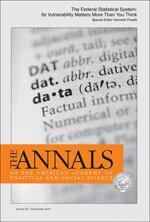
The Federal Statistical System: Its Vulnerability Matters More Than You Think
1 235 kr
Skickas inom 3-6 vardagar
How do federal statistics strengthen our nation's science as well as its policy?
From demographers requiring vital statistics to economists relying on national accounts, from political scientists using voting data to sociologists requiring race/ethnicity statistics, from public health researchers needing epidemiology data to those working on the history of the United States and drawing on statistical records, the need for official statistics is great. And yet it is not widely recognized that federal statistics provide a vital contribution to the nation's scientific infrastructure, as well as serving as an information provider to the policy process.
What is the role of the federal statistical system in our scientific knowledge of American society? Would the social knowledge relevant to public policies have reached current levels of maturity in the absence of public statistics? Except by the scientific community that actually uses them, federal statistical programs are typically not thought of in scientific terms but as adjuncts to important government functions.
In this latest volume of The ANNALS, leading academics, along with key federal officials, including the president's science advisor, the chief statistician of the U.S., the director of the Office of Management and Budget (OMB), the presidents of the National Academies, and the director of the Census Bureau address the argument that the statistics that the federal statistical system produces should be understood as constituting a scientific infrastructure for the empirical social sciences. Further, they see the current federal statistical system as "the best hope for bringing strong science to bear on new data sources" and "the best place to navigate unforeseen challenges in preserving the independence of statistical information from political interference."
This unique collection of essays conceptualizes the U.S. Federal Statistical System—its role, reach, achievements, and vulnerabilities. The authors explore challenging issues such as privacy and confidentiality protections, data quality, and maintaining representativeness. Their intriguing discussion also takes up:
· the move from a census and survey data system to a system that increasingly incorporates administrative and digital data;
· the nation's scientific leadership's role as advocates for statistical programs;
· the problems with the scientific methodology—sample surveys—on which these statistics rest; and
· strengthening the network of statistical agencies and programs.
Recommendations are offered, ranging from how to better organize the system, how to protect statistics from political interference, how to strengthen their role in science and in the policy process, and how to prepare for the challenges of a "new information order."
If federal statistics are the knowledge base from which policy problems and solutions emerge, it is imperative that we pay attention to the lessons they offer. Never before has this topic received this level of attention from such an array of contributors. A must read for all social scientists and policy-makers.
477 kr
Tillfälligt slut
The Federal Statistical System: Its Vulnerability Matters More Than You Think
1 558 kr
Tillfälligt slut
How do federal statistics strengthen our nation's science as well as its policy?
From demographers requiring vital statistics to economists relying on national accounts, from political scientists using voting data to sociologists requiring race/ethnicity statistics, from public health researchers needing epidemiology data to those working on the history of the United States and drawing on statistical records, the need for official statistics is great. And yet it is not widely recognized that federal statistics provide a vital contribution to the nation's scientific infrastructure, as well as serving as an information provider to the policy process.
What is the role of the federal statistical system in our scientific knowledge of American society? Would the social knowledge relevant to public policies have reached current levels of maturity in the absence of public statistics? Except by the scientific community that actually uses them, federal statistical programs are typically not thought of in scientific terms but as adjuncts to important government functions.
In this latest volume of The ANNALS, leading academics, along with key federal officials, including the president's science advisor, the chief statistician of the U.S., the director of the Office of Management and Budget (OMB), the presidents of the National Academies, and the director of the Census Bureau address the argument that the statistics that the federal statistical system produces should be understood as constituting a scientific infrastructure for the empirical social sciences. Further, they see the current federal statistical system as "the best hope for bringing strong science to bear on new data sources" and "the best place to navigate unforeseen challenges in preserving the independence of statistical information from political interference."
This unique collection of essays conceptualizes the U.S. Federal Statistical System—its role, reach, achievements, and vulnerabilities. The authors explore challenging issues such as privacy and confidentiality protections, data quality, and maintaining representativeness. Their intriguing discussion also takes up:
· the move from a census and survey data system to a system that increasingly incorporates administrative and digital data;
· the nation's scientific leadership's role as advocates for statistical programs;
· the problems with the scientific methodology—sample surveys—on which these statistics rest; and
· strengthening the network of statistical agencies and programs.
Recommendations are offered, ranging from how to better organize the system, how to protect statistics from political interference, how to strengthen their role in science and in the policy process, and how to prepare for the challenges of a "new information order."
If federal statistics are the knowledge base from which policy problems and solutions emerge, it is imperative that we pay attention to the lessons they offer. Never before has this topic received this level of attention from such an array of contributors. A must read for all social scientists and policy-makers.