Kenneth Pye – författare
Visar alla böcker från författaren Kenneth Pye. Handla med fri frakt och snabb leverans.
6 produkter
6 produkter
Häftad, Engelska, 2005
630 kr
Skickas inom 7-10 vardagar
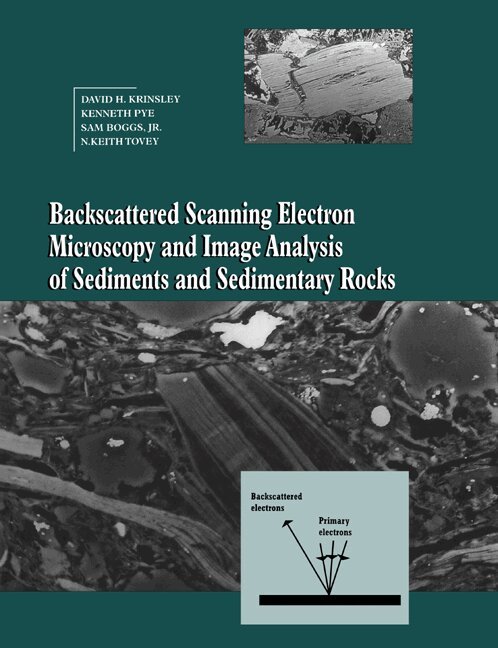
Backscattered Scanning Electron Microscopy (BSE) reveals the minerals, textures, and fabrics of sediments and rocks in much greater detail than is possible with conventional optical microscopy. Backscattered Scanning Electron Microscopy provides a concise summary of the BSE technique. This comprehensive guide uses abundant images to illustrate the type of information BSE yields and the application of the technique to the study of sediments and sedimentary rocks. The authors review the use of this petrographic technique on all the major sedimentary rock types, including sediment grains, sandstones, shales, carbonate rocks, rock varnish, and glauconite. They also describe image analysis techniques that allow quantification of backscattered scanning electron microscope images and illustrate the potential applications of these methods. Heavily illustrated and lucidly written, this book will provide researchers and graduate students with the most current research on this important geological tool.
E-bok
Engelska, 20072 606 kr
Läs direkt efter köp
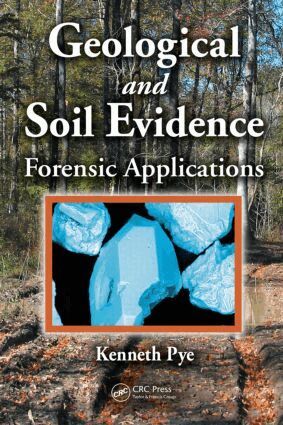
The forensic potential of geological and soil evidence has been recognized for more than a century, but recently these types of evidence are used much more widely as an investigative intelligence tool and as evidence in court. There is, however, still a poor understanding of the potential value and the limitations of geological and soil evidence among the forensic science and wider legal communities.Geological and Soil Evidence: Forensic Applications provides an authoritative introduction to the nature and properties of geological and soil materials that may be used as trace evidence and the techniques used to analyze and evaluate them. It emphasizes the use of geoscience in forensic analyses, including geophysical, meteorological, and geomorphological data. This inclusive book covers material types and analytical strategies used in examining both the common components of geological evidence, such as rocks, dusts, minerals, spores, and microfossils, as well as anthropogenic particles like pottery and brick. It instructs on particle characterization based on physical, chemical, and mineralogical traits such as color, shape, density, and elemental and isotopic composition. It also explains sampling and handling procedures particular to criminalistics and introduces analysis, evaluation, and decision-making practices based on statistical significance and the weighing of different types of evidence. Discussions of basic principles are supported and enhanced with numerous case studies that tie methods of analysis to specific forensic applications. Examples are drawn from the author's own experience as well as the wider scientific literature.Accessible enough for readers with limited scientific knowledge and informative enough for scientists interested in forensic applications, Geological and Soil Evidence: Forensic Applications is a comprehensive reference for the current knowledge of forensic geology and soil science.
E-bok
PDF, Engelska, 20072 606 kr
Läs direkt efter köp
The forensic potential of geological and soil evidence has been recognized for more than a century, but recently these types of evidence are used much more widely as an investigative intelligence tool and as evidence in court. There is, however, still a poor understanding of the potential value and the limitations of geological and soil evidence am
E-bok
PDF, Engelska, 2009727 kr
Läs direkt efter köp
Studies of aeolian sediments, both ancient and modern, have exhibited a number of important conceptual advances in recent years. In particular, there has been a move away from descriptions of sediments, bedforms and sedimentary environments toward a new emphasis on the dynamics of aeolian depositional systems at different temporal and spatial scales, and their response to external changes in sea levels, regional and global climates and tectonics. This Special Publication contains a selection of papers that were presented at the Symposium "Aeolian Sediments: Ancient and Modern" held in 1990. It also includes a number of contributions from authors who were not able to attend the meeting, but whose work reflects important aspects of contemporary research in aeolian sedimentology. State-of-the-art research papers in aeolian sedimentology International, expert authorship Of relevance to modern concerns about global climate change
If you are a member of the International Association of Sedimentologists, for purchasing details, please see: http://www.iasnet.org/publications/details.asp?code=SP16
E-bok
PDF, Engelska, 2015756 kr
Läs direkt efter köp
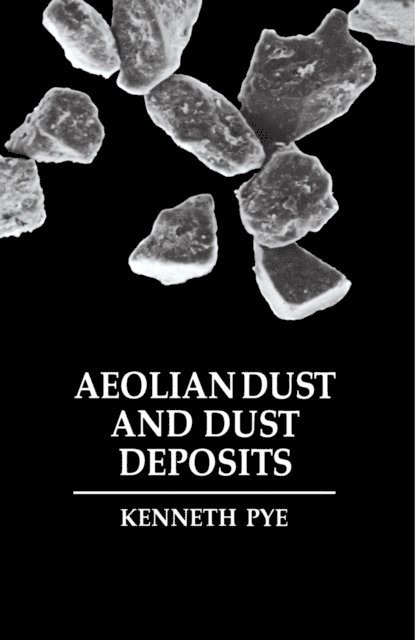
Aeolian Dust and Dust Deposits explores the entrainment, dispersion, and deposition of aeolian dust and dust deposits, with emphasis on transport and deposition of dust derived by deflation of surface sediments and soils. Topics covered range from the mechanisms of fine-particle formation to dust sources, sinks, and rates of deposition. Dust-transporting wind systems are also discussed, along with the grain size, mineralogy, and chemical composition of aeolian dust. Comprised of nine chapters, this book begins with an overview of the general nature and significance of windborne dust as well as the importance of aeolian dust and loess. The next chapter deals with the mechanisms underlying the formation of fine particles, including glacial grinding, frost and salt weathering, and fluvial comminution. The reader is then introduced to dust entrainment, transport, and deposition, together with dust sources, sinks, and rates of deposition. Subsequent chapters focus on the implications of dust deflation, transport, and deposition; dust deposition in the oceans; and loess distribution and the thickness and morphology of loess deposits. This monograph is written primarily for research workers and advanced students in sedimentology, geomorphology, and Quaternary studies, but is also likely to be of value to soil scientists, meteorologists, planetary geologists, engineers, and others concerned with environmental management.
Inbunden, Engelska, 2007
1 459 kr
Tillfälligt slut
The forensic potential of geological and soil evidence has been recognized for more than a century, but recently these types of evidence are used much more widely as an investigative intelligence tool and as evidence in court. There is, however, still a poor understanding of the potential value and the limitations of geological and soil evidence among the forensic science and wider legal communities.Geological and Soil Evidence: Forensic Applications provides an authoritative introduction to the nature and properties of geological and soil materials that may be used as trace evidence and the techniques used to analyze and evaluate them. It emphasizes the use of geoscience in forensic analyses, including geophysical, meteorological, and geomorphological data. This inclusive book covers material types and analytical strategies used in examining both the common components of geological evidence, such as rocks, dusts, minerals, spores, and microfossils, as well as anthropogenic particles like pottery and brick. It instructs on particle characterization based on physical, chemical, and mineralogical traits such as color, shape, density, and elemental and isotopic composition. It also explains sampling and handling procedures particular to criminalistics and introduces analysis, evaluation, and decision-making practices based on statistical significance and the weighing of different types of evidence. Discussions of basic principles are supported and enhanced with numerous case studies that tie methods of analysis to specific forensic applications. Examples are drawn from the author's own experience as well as the wider scientific literature.Accessible enough for readers with limited scientific knowledge and informative enough for scientists interested in forensic applications, Geological and Soil Evidence: Forensic Applications is a comprehensive reference for the current knowledge of forensic geology and soil science.