Kerstin Dautenhahn – författare
Visar alla böcker från författaren Kerstin Dautenhahn. Handla med fri frakt och snabb leverans.
8 produkter
8 produkter
Häftad, Engelska, 2002
893 kr
Skickas inom 5-8 vardagar
E-bok
PDF, Engelska, 20062 290 kr
Läs direkt efter köp
Socially situated planning provides one mechanism for improving the social awareness ofagents. Obviously this work isin the preliminary stages and many of the limitation and the relationship to other work could not be addressed in such a short chapter. The chief limitation, of course, is the strong commitment to de?ning social reasoning solely atthe meta-level, which restricts the subtlety of social behavior. Nonetheless, our experience in some real-world military simulation applications suggest that the approach, even in its preliminary state, is adequate to model some social interactions, and certainly extends the sta- of-the art found in traditional training simulation systems. Acknowledgments This research was funded by the Army Research Institute under contract TAPC-ARI-BR References [1] J. Gratch. Emile: Marshalling passions in training and education. In Proceedings of the Fourth International Conference on Autonomous Agents, pages 325–332, New York, 2000. ACM Press. [2] J. Gratch and R. Hill. Continous planning and collaboration for command and control in joint synthetic battlespaces. In Proceedings of the 8th Conference on Computer Generated Forces and Behavioral Representation, Orlando, FL, 1999. [3] B. Grosz and S. Kraus. Collaborative plans for complex group action. Arti?cial Intelli gence, 86(2):269–357, 1996. [4] A. Ortony, G. L. Clore, and A. Collins. The Cognitive Structure of Emotions. Cambridge University Press, 1988. [5] R.W.PewandA.S.Mavor,editors. Modeling Human and Organizational Behavior. National Academy Press, Washington D.C., 1998.
Häftad, Engelska, 2009
752 kr
Skickas inom 7-10 vardagar
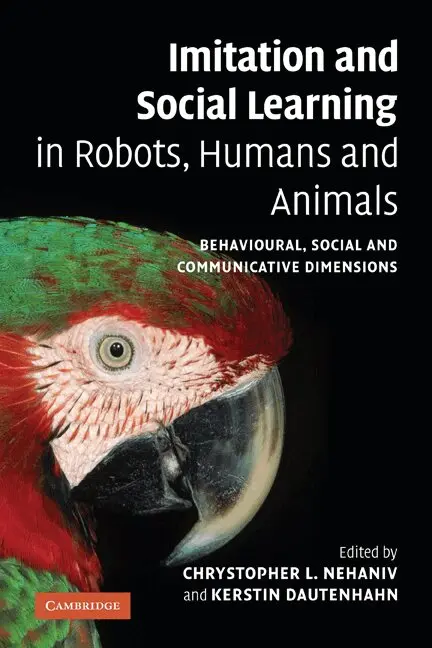
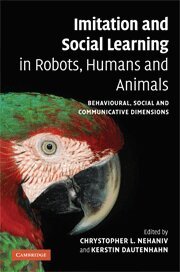
Mechanisms of imitation and social matching play a fundamental role in development, communication, interaction, learning and culture. Their investigation in different agents (animals, humans and robots) has significantly influenced our understanding of the nature and origins of social intelligence. Whilst such issues have traditionally been studied in areas such as psychology, biology and ethnology, it has become increasingly recognised that a 'constructive approach' towards imitation and social learning via the synthesis of artificial agents can provide important insights into mechanisms and create artefacts that can be instructed and taught by imitation, demonstration, and social interaction rather than by explicit programming. This book studies increasingly sophisticated models and mechanisms of social matching behaviour and marks an important step towards the development of an interdisciplinary research field, consolidating and providing a valuable reference for the increasing number of researchers in the field of imitation and social learning in robots, humans and animals.
Del 3 - Multiagent Systems, Artificial Societies, and Simulated Organizations
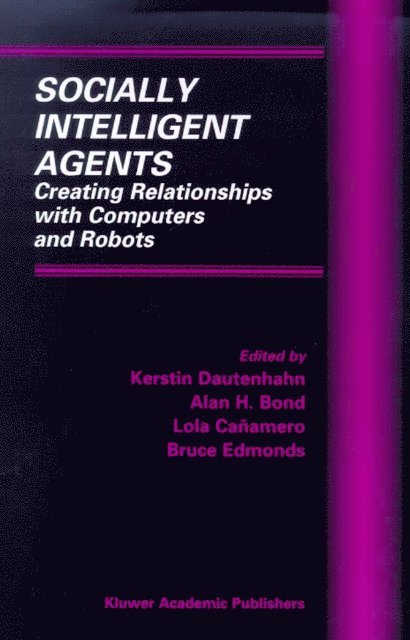
Socially Intelligent Agents
Creating Relationships with Computers and Robots
Inbunden, Engelska, 2002
1 782 kr
Skickas inom 10-15 vardagar
Socially situated planning provides one mechanism for improving the social awareness ofagents. Obviously this work isin the preliminary stages and many of the limitation and the relationship to other work could not be addressed in such a short chapter. The chief limitation, of course, is the strong commitment to de?ning social reasoning solely atthe meta-level, which restricts the subtlety of social behavior. Nonetheless, our experience in some real-world military simulation applications suggest that the approach, even in its preliminary state, is adequate to model some social interactions, and certainly extends the sta- of-the art found in traditional training simulation systems. Acknowledgments This research was funded by the Army Research Institute under contract TAPC-ARI-BR References [1] J. Gratch. Emile: Marshalling passions in training and education. In Proceedings of the Fourth International Conference on Autonomous Agents, pages 325–332, New York, 2000. ACM Press. [2] J. Gratch and R. Hill. Continous planning and collaboration for command and control in joint synthetic battlespaces. In Proceedings of the 8th Conference on Computer Generated Forces and Behavioral Representation, Orlando, FL, 1999. [3] B. Grosz and S. Kraus. Collaborative plans for complex group action. Arti?cial Intelli gence, 86(2):269–357, 1996. [4] A. Ortony, G. L. Clore, and A. Collins. The Cognitive Structure of Emotions. Cambridge University Press, 1988. [5] R.W.PewandA.S.Mavor,editors. Modeling Human and Organizational Behavior. National Academy Press, Washington D.C., 1998.
Del 3 - Multiagent Systems, Artificial Societies, and Simulated Organizations
Socially Intelligent Agents
Creating Relationships with Computers and Robots
Häftad, Engelska, 2013
1 781 kr
Skickas inom 10-15 vardagar
Socially situated planning provides one mechanism for improving the social awareness ofagents. Obviously this work isin the preliminary stages and many of the limitation and the relationship to other work could not be addressed in such a short chapter. The chief limitation, of course, is the strong commitment to de?ning social reasoning solely atthe meta-level, which restricts the subtlety of social behavior. Nonetheless, our experience in some real-world military simulation applications suggest that the approach, even in its preliminary state, is adequate to model some social interactions, and certainly extends the sta- of-the art found in traditional training simulation systems. Acknowledgments This research was funded by the Army Research Institute under contract TAPC-ARI-BR References [1] J. Gratch. Emile: Marshalling passions in training and education. In Proceedings of the Fourth International Conference on Autonomous Agents, pages 325–332, New York, 2000. ACM Press. [2] J. Gratch and R. Hill. Continous planning and collaboration for command and control in joint synthetic battlespaces. In Proceedings of the 8th Conference on Computer Generated Forces and Behavioral Representation, Orlando, FL, 1999. [3] B. Grosz and S. Kraus. Collaborative plans for complex group action. Arti?cial Intelli gence, 86(2):269–357, 1996. [4] A. Ortony, G. L. Clore, and A. Collins. The Cognitive Structure of Emotions. Cambridge University Press, 1988. [5] R.W.PewandA.S.Mavor,editors. Modeling Human and Organizational Behavior. National Academy Press, Washington D.C., 1998.
Häftad, Engelska, 2001
1 116 kr
Skickas inom 10-15 vardagar
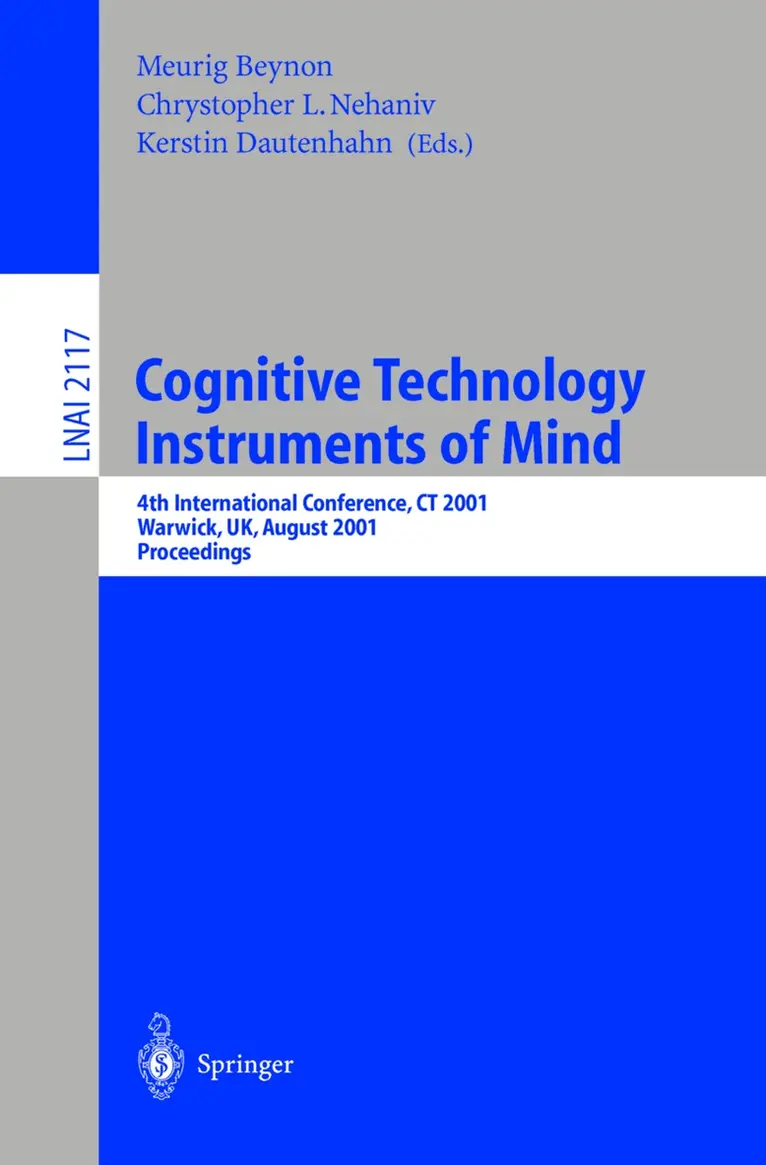
Cognitive Technology: Instruments of Mind Cognitive Technology is the study of the impact of technology on human cog- tion, the externalization of technology from the human mind, and the pragmatics of tools. It promotes the view that human beings should develop methods to p- dict, analyse, and optimize aspects of human-tool relationship in a manner that respects human wholeness. In particular the development of new tools such as virtual environments, new computer devices, and software tools has been too little concerned with the impacts these technologies will have on human cog- tive and social capacities. Our tools change what we are and how we relate to the world around us. They need to be developed in a manner that both extends human capabilities while ensuring an appropriate cognitive t between organism and instrument. The principal theme of the CT 2001 conference and volume is declared in its title: Instruments of Mind. Cognitive Technology is concerned with the interaction between two worlds: that of the mind and that of the machine. In science and engineering, this - teraction is often explored by posing the question: how can technology be best tailored to human cognition? But as the history of technological developments has consistently shown, cognition is also fashioned by technology. Technologies as diverse as writing, electricity generation, and the silicon chip all illustrate the profound and dynamic impact of technology upon ourselves and our conceptions of the world.
E-bok
PDF, Engelska, 20031 377 kr
Läs direkt efter köp
Cognitive Technology: Instruments of Mind Cognitive Technology is the study of the impact of technology on human cog- tion, the externalization of technology from the human mind, and the pragmatics of tools. It promotes the view that human beings should develop methods to p- dict, analyse, and optimize aspects of human-tool relationship in a manner that respects human wholeness. In particular the development of new tools such as virtual environments, new computer devices, and software tools has been too little concerned with the impacts these technologies will have on human cog- tive and social capacities. Our tools change what we are and how we relate to the world around us. They need to be developed in a manner that both extends human capabilities while ensuring an appropriate cognitive t between organism and instrument. The principal theme of the CT 2001 conference and volume is declared in its title: Instruments of Mind. Cognitive Technology is concerned with the interaction between two worlds: that of the mind and that of the machine. In science and engineering, this - teraction is often explored by posing the question: how can technology be best tailored to human cognition? But as the history of technological developments has consistently shown, cognition is also fashioned by technology. Technologies as diverse as writing, electricity generation, and the silicon chip all illustrate the profound and dynamic impact of technology upon ourselves and our conceptions of the world.
Inbunden, Engelska, 2007
1 222 kr
Tillfälligt slut
Mechanisms of imitation and social matching play a fundamental role in development, communication, interaction, learning and culture. Their investigation in different agents (animals, humans and robots) has significantly influenced our understanding of the nature and origins of social intelligence. Whilst such issues have traditionally been studied in areas such as psychology, biology and ethnology, it has become increasingly recognised that a 'constructive approach' towards imitation and social learning via the synthesis of artificial agents can provide important insights into mechanisms and create artefacts that can be instructed and taught by imitation, demonstration, and social interaction rather than by explicit programming. This book studies increasingly sophisticated models and mechanisms of social matching behaviour and marks an important step towards the development of an interdisciplinary research field, consolidating and providing a valuable reference for the increasing number of researchers in the field of imitation and social learning in robots, humans and animals.