Kevin Coe – författare
Visar alla böcker från författaren Kevin Coe. Handla med fri frakt och snabb leverans.
5 produkter
5 produkter
Inbunden, Engelska, 2007
805 kr
Skickas inom 5-8 vardagar
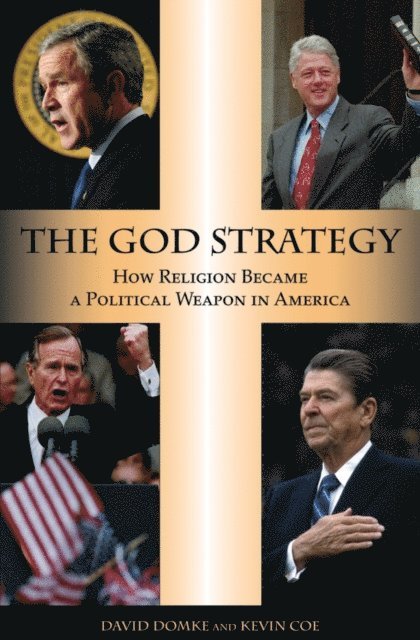
In The God Strategy, David Domke and Kevin Coe offer a timely and dynamic study of the rise of religion in American politics, examining the public messages of political leaders over the past seventy-five years--from the 1932 election of Franklin Roosevelt to the early stages of the 2008 presidential race. They conclude that U.S. politics today is defined by a calculated, deliberate, and partisan use of faith that is unprecedented in modern politics. Sectarian influences and expressions of faith have always been part of American politics, the authors observe, but a profound change occurred beginning with the election of Ronald Reagan in 1980. What has developed since is a no-holds-barred religious politics that seeks to attract voters, identify and attack enemies, and solidify power. Domke and Coe identify a set of religious signals sent by both Republicans and Democrats in speeches, party platforms, proclamations, visits to audiences of faith, and even celebrations of Christmas. Sometimes these signals are intended for the eyes and ears of all Americans, and other times they are distinctly targeted to specific segments of the population. It's an approach that has been remarkably successful, utilized first and most extensively by the Republican Party to capture unprecedented power and then adopted by the Democratic Party, most notably by Bill Clinton in the 1990s and by a wide range of Democrats in the 2006 elections. "For U.S. politicians today, having faith isn't enough; it must be displayed, carefully and publicly. This is a stark transformation in recent decades," write Domke and Coe. With innovative, accessible research and analytical verve, they document how this has occurred, who has done it and why, and what it means for the American experiment in democracy.
Inbunden, Engelska, 2021
1 249 kr
Skickas inom 5-8 vardagar
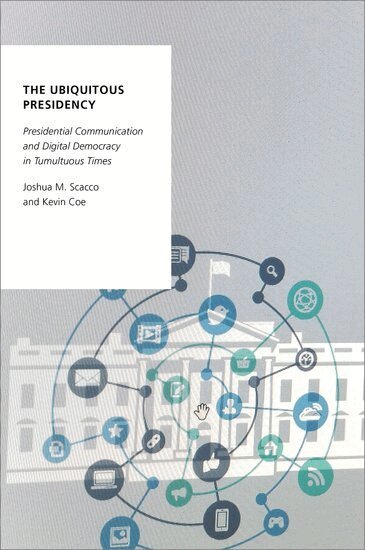
American democracy is in a period of striking tumult. The clash of a rapidly changing socio-technological environment and the traditional presidency has led to an upheaval in the scope and standards of executive leadership. Yet research on the presidency, although abundant, has been slow to adjust to changing realities associated with digital technologies, diverse audiences, and new elite practices. Meanwhile, journalists and the public continue to encounter and shape emerging presidential efforts in deeply consequential ways. Joshua Scacco and Kevin Coe bring needed insight to this complex situation by offering the first comprehensive framework for understanding contemporary presidential communication in relation to the current socio-technological environment. They call this framework the "ubiquitous presidency." Scacco and Coe argue that presidents harness new opportunities in the media environment to create a nearly constant and highly visible presence in political and nonpolitical arenas. They do this by trying to achieve longstanding presidential goals, namely visibility, adaptation, and control. However, in an environment where accessibility, personalization, and pluralism are omnipresent considerations, the strategies presidents use to achieve these goals are very different from what we once knew. Using this novel framework as a conceptual anchor, The Ubiquitous Presidency undertakes one of the most expansive analyses of presidential communication to date. Scacco and Coe employ a wide variety of approaches--ranging from surveys and survey-experiments, to large-scale automated content and network analyses, to qualitative textual analysis--to uncover new aspects of the intricate relationship between the president, news media, and the public. Focusing on the presidency since Ronald Reagan, and devoting particular attention to the cases of Barack Obama and Donald Trump, the book uncovers remarkable shifts in communication that test the institution of the presidency and, consequently, democratic governance itself.
Häftad, Engelska, 2021
361 kr
Skickas inom 5-8 vardagar
American democracy is in a period of striking tumult. The clash of a rapidly changing socio-technological environment and the traditional presidency has led to an upheaval in the scope and standards of executive leadership. Yet research on the presidency, although abundant, has been slow to adjust to changing realities associated with digital technologies, diverse audiences, and new elite practices. Meanwhile, journalists and the public continue to encounter and shape emerging presidential efforts in deeply consequential ways. Joshua Scacco and Kevin Coe bring needed insight to this complex situation by offering the first comprehensive framework for understanding contemporary presidential communication in relation to the current socio-technological environment. They call this framework the "ubiquitous presidency." Scacco and Coe argue that presidents harness new opportunities in the media environment to create a nearly constant and highly visible presence in political and nonpolitical arenas. They do this by trying to achieve longstanding presidential goals, namely visibility, adaptation, and control. However, in an environment where accessibility, personalization, and pluralism are omnipresent considerations, the strategies presidents use to achieve these goals are very different from what we once knew. Using this novel framework as a conceptual anchor, The Ubiquitous Presidency undertakes one of the most expansive analyses of presidential communication to date. Scacco and Coe employ a wide variety of approaches--ranging from surveys and survey-experiments, to large-scale automated content and network analyses, to qualitative textual analysis--to uncover new aspects of the intricate relationship between the president, news media, and the public. Focusing on the presidency since Ronald Reagan, and devoting particular attention to the cases of Barack Obama and Donald Trump, the book uncovers remarkable shifts in communication that test the institution of the presidency and, consequently, democratic governance itself.
Häftad, Engelska, 2010
305 kr
Skickas inom 5-8 vardagar
This volume offers a timely and dynamic study of the rise of religion in American politics, examining the public messages of political leaders over the past seventy-five years. The authors show that U.S. politics today is defined by a calculated, deliberate, and partisan use of faith that is unprecedented in modern politics. Beginning with the election of Ronald Reagan in 1980, America has seen a no-holds-barred religious politics that seeks to attract voters, identify and attack enemies, and solidify power. Domke and Coe identify a set of religious signals sent by both Republicans and Democrats in speeches, party platforms, proclamations, visits to audiences of faith, and even celebrations of Christmas. The updated edition of this ground-breaking book includes a new preface, an updated analysis of the last Bush administration, as well as a new final chapter on the Jeremiah Wright controversy, the candidacies of Mike Huckabee and Sarah Palin, and Barack Obama's victory.
Inbunden, Engelska, 2026
1 939 kr
Skickas inom 5-8 vardagar
In this informative and accessible book, experienced educators provide insights into teaching political communication effectively. Reflecting on contemporary challenges such as attacks on education, extremism, and new technologies, this book helps educators prepare the next generation to thoughtfully and ethically engage with the political sphere.More than 40 contributing authors present crucial pedagogical reflections, practical insights, and approaches across a wide range of contexts, providing educators with a toolkit to navigate the challenges of teaching political communication in this political climate. Across two parts, Teaching Political Communication first explores foundational political issues to lay a foundation for navigating politics in the classroom, then focuses on practical applications to aid teaching and learning. This includes the use of collaborative inquiry, experiential learning, public speaking, simulations, digital technology, and much more.This is an essential resource for those teaching higher education courses in political communication, and politics and public policy more broadly. It is also an enlightening read for students and academics interested in research methods, teaching methods, international relations, and sociology.