Kevin Colls – författare
Visar alla böcker från författaren . Handla med fri frakt och snabb leverans.
5 produkter
5 produkter
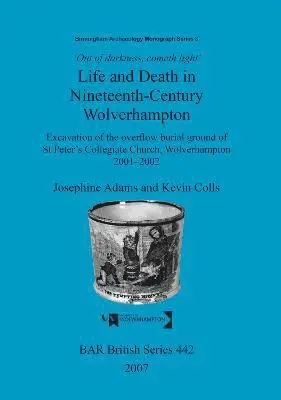
Häftad, Engelska, 2007
440 kr
Skickas inom 3-6 vardagar
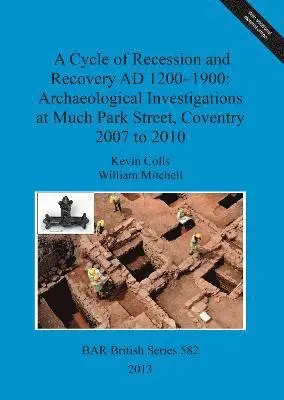
Del 582 - BAR British Series
Cycle of Recession and Recovery AD 1200-1900: Archaeological Investigations at Much Park Street Coventry 2007 to 2010
2013
1 520 kr
Skickas inom 5-8 vardagar
Häftad, Engelska, 2016
415 kr
Skickas inom 5-8 vardagar
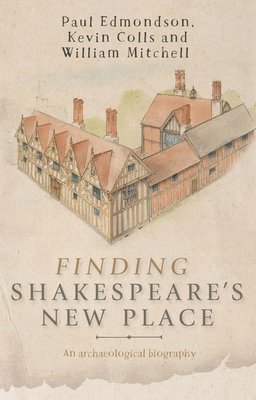
This ground-breaking book provides an abundance of fresh insights into Shakespeare's life in relation to his lost family home, New Place. The findings of a major archaeological excavation encourage us to think again about what New Place meant to Shakespeare and, in so doing, challenge some of the long-held assumptions of Shakespearian biography. New Place was the largest house in the borough and the only one with a courtyard. Shakespeare was only ever an intermittent lodger in London. His impressive home gave Shakespeare significant social status and was crucial to his relationship with Stratford-upon-Avon.Archaeology helps to inform biography in this innovative and refreshing study which presents an overview of the site from prehistoric times through to a richly nuanced reconstruction of New Place when Shakespeare and his family lived there, and beyond. This attractively illustrated book is for anyone with a passion for archaeology or Shakespeare.
Inbunden, Engelska, 2022
1 298 kr
Skickas inom 5-8 vardagar
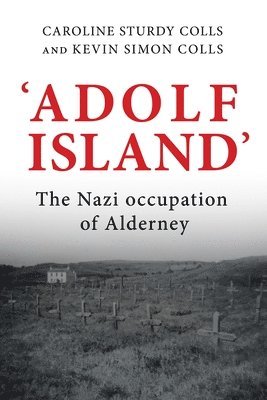
‘Adolf Island’ offers new forensic, archaeological and spatial perspectives on the Nazi forced and slave labour programme that was initiated on the Channel Island of Alderney during its occupation in the Second World War. Drawing on extensive archival research and the results of the first in-field investigations of the ‘crime scenes’ since 1945, the book identifies and characterises the network of concentration and labour camps, fortifications, burial sites and other material traces connected to the occupation, providing new insights into the identities and experiences of the men and women who lived, worked and died within this landscape. Moving beyond previous studies focused on military aspects of occupation, the book argues that Alderney was intrinsically linked to wider systems of Nazi forced and slave labour.
E-bok
Engelska, 2021123 kr
Läs direkt efter köp
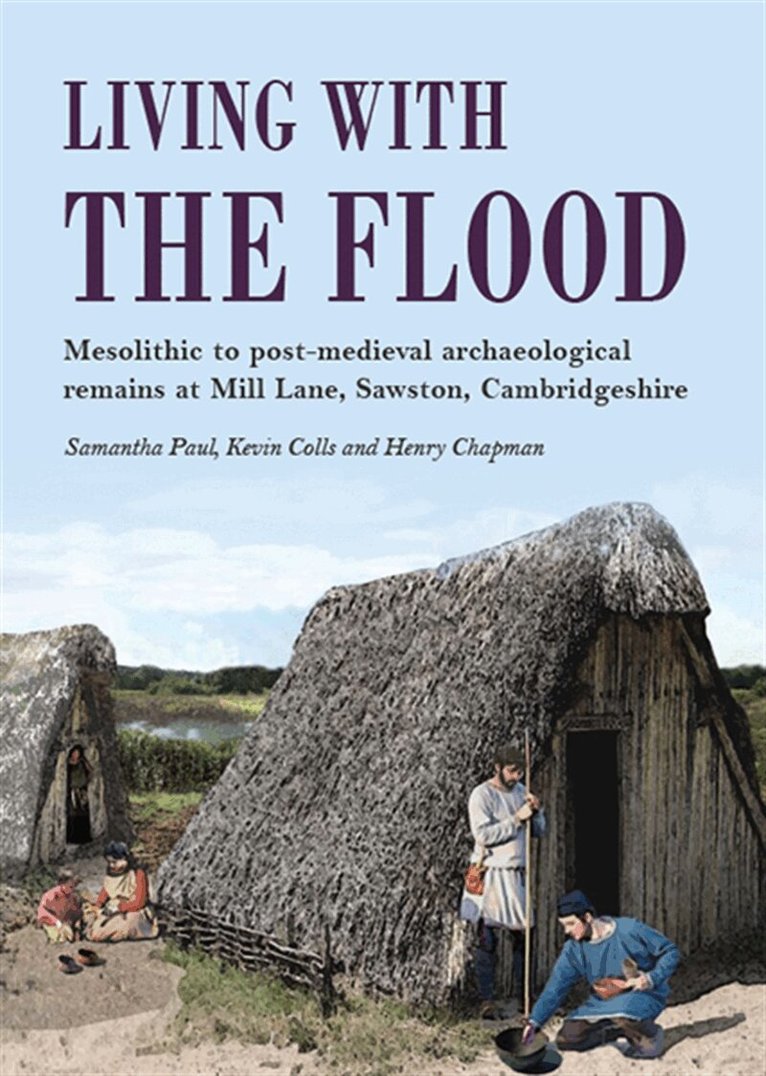
The site at Mill Lane, Sawston, represents millennia of human activity within a dynamic and changing landscape setting. River valleys have been a focus for human activity since the early Holocene and, in addition to providing abundant archaeological evidence for this activity, the proximity to water also highlights the potential for the preservation of both archaeological remains and palaeoenvironmental source material. However, human activity within river valleys also commonly bridges areas of both wetland and dryland; ecological zones which are often approached using quite different archaeological methods and which present considerable differences in levels of archaeological visibility and preservation. The site at Mill Lane offered an uncommon opportunity to explore the interface between these two types of environment.Here we present the results of the study of a wetland/dryland interface on the edge of palaeochannels of the River Cam in Cambridgeshire. Through the integrated archaeological and palaeoenvironmental analysis of a site on the western edge of Sawston, a detailed picture of life on the edge of the floodplain from the late glacial to the post-medieval periods has been developed. At the heart of this is the relationship between people and their changing environment, which reveals a shifting pattern of ritual, occupation and more transitory activity as the riparian landscape in a wooded setting became a wetland within a more openly grazed environment. The presence of potential built structures dating to the early Neolithic, the early Bronze Age and the early Anglo-Saxon periods provides some sense of continuity, although the nature of these structures and the environmental context within which they were constructed was very different.The site at Mill Lane, Sawston, represents millennia of human activity within a dynamic and changing landscape setting. River valleys have been a focus for human activity since the early Holocene and, in addition to providing abundant archaeological evidence for this activity, the proximity to water also highlights the potential for the preservation of both archaeological remains and palaeoenvironmental source material. However, human activity within river valleys also commonly bridges areas of both wetland and dryland; ecological zones which are often approached using quite different archaeological methods and which present considerable differences in levels of archaeological visibility and preservation. The site at Mill Lane offered an uncommon opportunity to explore the interface between these two types of environment.Here we present the results of the study of a wetland/dryland interface on the edge of palaeochannels of the River Cam in Cambridgeshire. Through the integrated archaeological and palaeoenvironmental analysis of a site on the western edge of Sawston, a detailed picture of life on the edge of the floodplain from the late glacial to the post-medieval periods has been developed. At the heart of this is the relationship between people and their changing environment, which reveals a shifting pattern of ritual, occupation and more transitory activity as the riparian landscape in a wooded setting became a wetland within a more openly grazed environment. The presence of potential built structures dating to the early Neolithic, the early Bronze Age and the early Anglo-Saxon periods provides some sense of continuity, although the nature of these structures and the environmental context within which they were constructed was very different.The site at Mill Lane, Sawston, represents millennia of human activity within a dynamic and changing landscape setting. River valleys have been a focus for human activity since the early Holocene and, in addition to providing abundant archaeological evidence for this activity, the proximity to water also highlights the potential for the preservation of both archaeological remains and palaeoenvironmental source material.