Kevin N. Lala - Böcker
Visar alla böcker från författaren Kevin N. Lala. Handla med fri frakt och snabb leverans.
8 produkter
8 produkter
482 kr
Skickas inom 5-8 vardagar
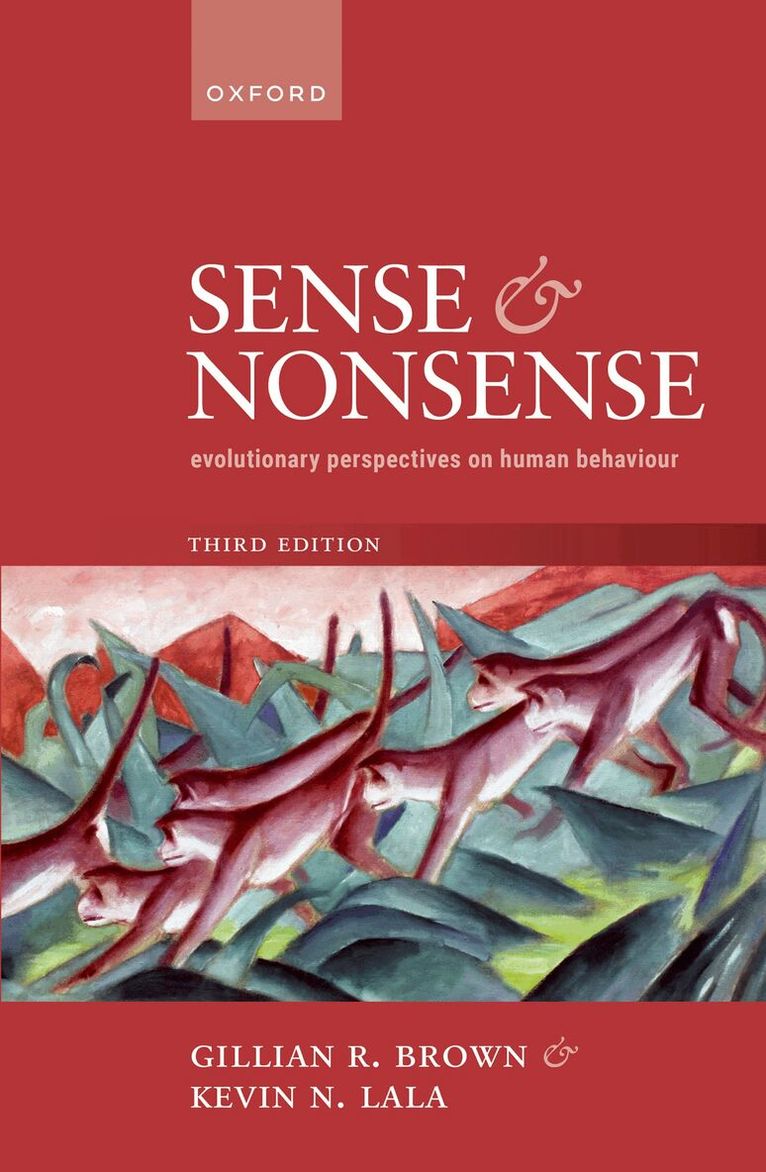
Evolutionary theory is one of the most wide-ranging and inspiring scientific ideas, and it offers a battery of methods that can be used to interpret human behaviour. However, researchers disagree about the best ways to use evolution to explore humanity, and a number of schools of thought have emerged.Sense and Nonsense, third edition, provides an introduction to the ideas, methods and findings of five such schools, namely sociobiology, human behavioural ecology, evolutionary psychology, cultural evolution and gene-culture coevolution. In this revised and updated edition of their successful monograph, Brown and Lala provide a balanced and rigorous analysis that scrutinises both the evolutionary arguments and the allegations of the critics, carefully guiding the reader through the mire of confusing terminology, claim, and counter-claim, and polemical statements.This readable and informative introductory book will be of use to undergraduate and postgraduate students (for example in psychology, anthropology and zoology), as well as experts on one approach who would like to know more about the other perspectives and lay-persons interested in evolutionary explanations of human behaviour. Having completed the book, the reader will feel better placed to assess the legitimacy of claims made about human behaviour under the name of evolution and to make judgements as to what is sense and what is nonsense.
785 kr
Skickas inom 7-10 vardagar
The seemingly innocent observation that the activities of organisms bring about changes in environments is so obvious that it seems an unlikely focus for a new line of thinking about evolution. Yet niche construction--as this process of organism-driven environmental modification is known--has hidden complexities. By transforming biotic and abiotic sources of natural selection in external environments, niche construction generates feedback in evolution on a scale hitherto underestimated--and in a manner that transforms the evolutionary dynamic. It also plays a critical role in ecology, supporting ecosystem engineering and influencing the flow of energy and nutrients through ecosystems. Despite this, niche construction has been given short shrift in theoretical biology, in part because it cannot be fully understood within the framework of standard evolutionary theory. Wedding evolution and ecology, this book extends evolutionary theory by formally including niche construction and ecological inheritance as additional evolutionary processes. The authors support their historic move with empirical data, theoretical population genetics, and conceptual models.They also describe new research methods capable of testing the theory. They demonstrate how their theory can resolve long-standing problems in ecology, particularly by advancing the sorely needed synthesis of ecology and evolution, and how it offers an evolutionary basis for the human sciences. Already hailed as a pioneering work by some of the world's most influential biologists, this is a rare, potentially field-changing contribution to the biological sciences.
777 kr
Tillfälligt slut
Many animals, including humans, acquire valuable skills and knowledge by copying others. Scientists refer to this as social learning. It is one of the most exciting and rapidly developing areas of behavioral research and sits at the interface of many academic disciplines, including biology, experimental psychology, economics, and cognitive neuroscience. Social Learning provides a comprehensive, practical guide to the research methods of this important emerging field. William Hoppitt and Kevin Laland define the mechanisms thought to underlie social learning and demonstrate how to distinguish them experimentally in the laboratory. They present techniques for detecting and quantifying social learning in nature, including statistical modeling of the spatial distribution of behavior traits. They also describe the latest theory and empirical findings on social learning strategies, and introduce readers to mathematical methods and models used in the study of cultural evolution. This book is an indispensable tool for researchers and an essential primer for students.* Provides a comprehensive, practical guide to social learning research * Combines theoretical and empirical approaches * Describes techniques for the laboratory and the field * Covers social learning mechanisms and strategies, statistical modeling techniques for field data, mathematical modeling of cultural evolution, and more
533 kr
Skickas inom 7-10 vardagar
Many animals, including humans, acquire valuable skills and knowledge by copying others. Scientists refer to this as social learning. It is one of the most exciting and rapidly developing areas of behavioral research and sits at the interface of many academic disciplines, including biology, experimental psychology, economics, and cognitive neuroscience. Social Learning provides a comprehensive, practical guide to the research methods of this important emerging field. William Hoppitt and Kevin Laland define the mechanisms thought to underlie social learning and demonstrate how to distinguish them experimentally in the laboratory. They present techniques for detecting and quantifying social learning in nature, including statistical modeling of the spatial distribution of behavior traits. They also describe the latest theory and empirical findings on social learning strategies, and introduce readers to mathematical methods and models used in the study of cultural evolution. This book is an indispensable tool for researchers and an essential primer for students.* Provides a comprehensive, practical guide to social learning research * Combines theoretical and empirical approaches * Describes techniques for the laboratory and the field * Covers social learning mechanisms and strategies, statistical modeling techniques for field data, mathematical modeling of cultural evolution, and more
384 kr
Skickas inom 7-10 vardagar
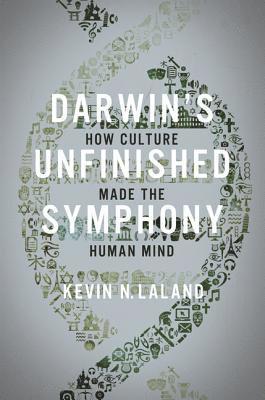
How culture transformed human evolution Humans possess an extraordinary capacity for cultural production, from the arts and language to science and technology. How did the human mind--and the uniquely human ability to devise and transmit culture--evolve from its roots in animal behavior? Darwin's Unfinished Symphony presents a captivating new theory of human cognitive evolution. This compelling and accessible book reveals how culture is not just the magnificent end product of an evolutionary process that produced a species unlike all others--it is also the key driving force behind that process. Kevin Laland shows how the learned and socially transmitted activities of our ancestors shaped our intellects through accelerating cycles of evolutionary feedback. The truly unique characteristics of our species--such as our intelligence, language, teaching, and cooperation--are not adaptive responses to predators, disease, or other external conditions. Rather, humans are creatures of their own making. Drawing on his own groundbreaking research, and bringing it to life with vivid natural history, Laland explains how animals imitate, innovate, and have remarkable traditions of their own.He traces our rise from scavenger apes in prehistory to modern humans able to design iPhones, dance the tango, and send astronauts into space. This book tells the story of the painstaking fieldwork, the key experiments, the false leads, and the stunning scientific breakthroughs that led to this new understanding of how culture transformed human evolution. It is the story of how Darwin's intellectual descendants picked up where he left off and took up the challenge of providing a scientific account of the evolution of the human mind.
303 kr
Humans possess an extraordinary capacity for culture, from the arts and language to science and technology. But how did the human mind—and the uniquely human ability to devise and transmit culture—evolve from its roots in animal behavior? Darwin’s Unfinished Symphony presents a captivating new theory of human cognitive evolution. This compelling and accessible book reveals how culture is not just the magnificent end product of an evolutionary process that produced a species unlike all others—it is also the key driving force behind that process. Kevin N. Lala tells the story of the painstaking fieldwork, the key experiments, the false leads, and the stunning scientific breakthroughs that led to this new understanding of how culture transformed human evolution. It is the story of how Darwin’s intellectual descendants picked up where he left off and took up the challenge of providing a scientific account of the evolution of the human mind.
361 kr
Skickas inom 7-10 vardagar
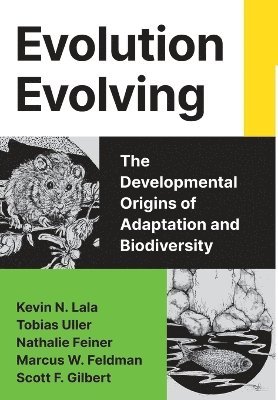
A new account of the central role developmental processes play in evolutionA new scientific view of evolution is emerging—one that challenges and expands our understanding of how evolution works. Recent research demonstrates that organisms differ greatly in how effective they are at evolving. Whether and how each organism adapts and diversifies depends critically on the mechanistic details of how that organism operates—its development, physiology, and behavior. That is because the evolutionary process itself has evolved over time, and continues to evolve. The scientific understanding of evolution is evolving too, with groundbreaking new ways of explaining evolutionary change. In this book, a group of leading biologists draw on the latest findings in evolutionary genetics and evo-devo, as well as novel insights from studies of epigenetics, symbiosis, and inheritance, to examine the central role that developmental processes play in evolution.Written in an accessible style, and illustrated with fascinating examples of natural history, the book presents recent scientific discoveries that expand evolutionary biology beyond the classical view of gene transmission guided by natural selection. Without undermining the central importance of natural selection and other Darwinian foundations, new developmental insights indicate that all organisms possess their own characteristic sets of evolutionary mechanisms. The authors argue that a consideration of developmental phenomena is needed for evolutionary biologists to generate better explanations for adaptation and biodiversity. This book provides a new vision of adaptive evolution.
312 kr
Kommande
A new account of the central role developmental processes play in evolutionA new scientific view of evolution is emerging—one that challenges and expands our understanding of how evolution works. Recent research demonstrates that organisms differ greatly in how effective they are at evolving. Whether and how each organism adapts and diversifies depends critically on the mechanistic details of how that organism operates—its development, physiology, and behavior. That is because the evolutionary process itself has evolved over time, and continues to evolve. The scientific understanding of evolution is evolving too, with groundbreaking new ways of explaining evolutionary change. In this book, a group of leading biologists draw on the latest findings in evolutionary genetics and evo-devo, as well as novel insights from studies of epigenetics, symbiosis, and inheritance, to examine the central role that developmental processes play in evolution.Written in an accessible style, and illustrated with fascinating examples of natural history, the book presents recent scientific discoveries that expand evolutionary biology beyond the classical view of gene transmission guided by natural selection. Without undermining the central importance of natural selection and other Darwinian foundations, new developmental insights indicate that all organisms possess their own characteristic sets of evolutionary mechanisms. The authors argue that a consideration of developmental phenomena is needed for evolutionary biologists to generate better explanations for adaptation and biodiversity. This book provides a new vision of adaptive evolution.