Khosrow Bozorgi - Böcker
Visar alla böcker från författaren Khosrow Bozorgi. Handla med fri frakt och snabb leverans.
2 produkter
2 produkter
Medieval Courtyard Design
Converging Urban Morphologies from Europe to the Middle East
Inbunden, Engelska, 2025
2 150 kr
Skickas inom 10-15 vardagar
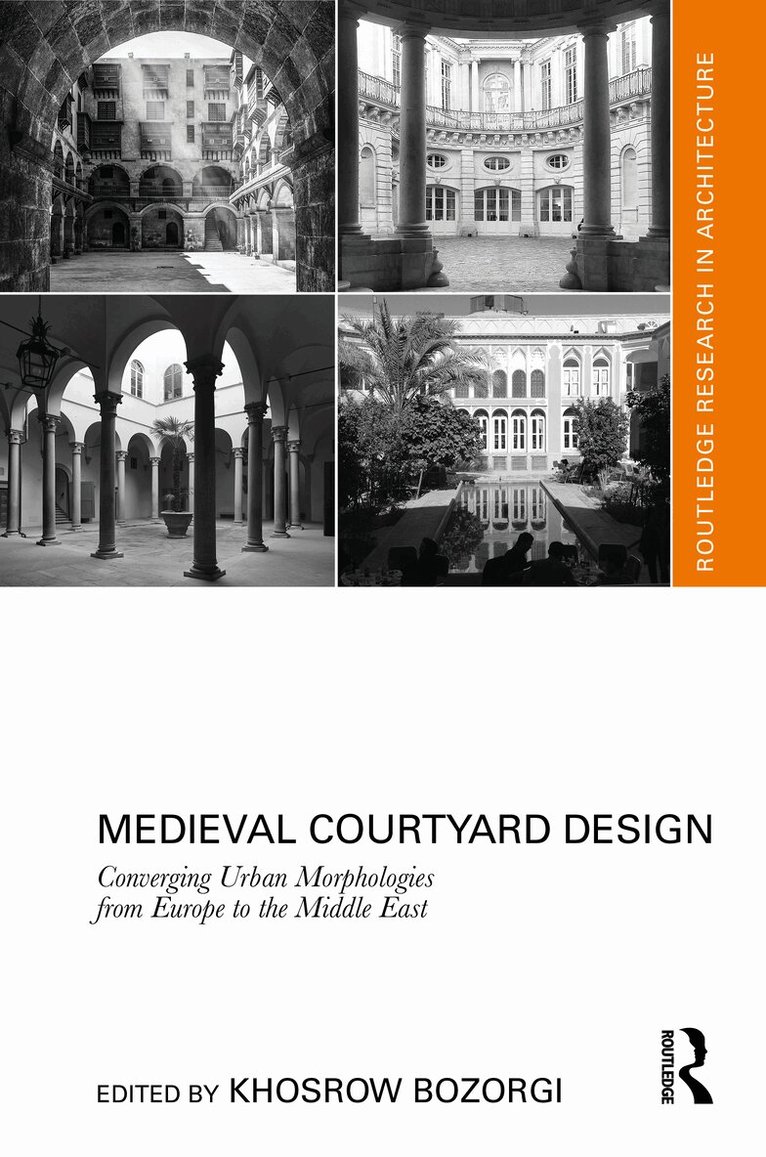
This groundbreaking study examines courtyard architecture across Paris, Florence, Siena, Granada, and Yazd to reveal how the deliberate creation of emptiness—the “bounded void”—functions as architecture’s primary generative principle. Moving beyond conventional object-based analysis, the book demonstrates that architecture’s essence lies not in built form but in calibrated absence.Through rigorous comparative analysis, readers discover how courtyards operate as environmental mediators, social organizers, and cosmological instruments across diverse cultures. The study reveals striking morphological convergences that emerge through parallel evolution rather than stylistic diffusion. Drawing on spatial cognition research, urban morphology, and phenomenological analysis, the book establishes void-focused methodology as a new theoretical framework. This paradigm shift from analyzing solid to void transforms our understanding of both historical and contemporary spatial practice, uncovering universal principles that transcend geographic and temporal boundaries.Essential for architectural theorists questioning disciplinary orthodoxies, historians seeking alternatives to period-style categorization, and researchers investigating architecture’s cognitive dimensions. The work provides both radical historiographical revision and practical insights for contemporary designers who engage with density, sustainability, and social space.
1 314 kr
Skickas inom 10-15 vardagar
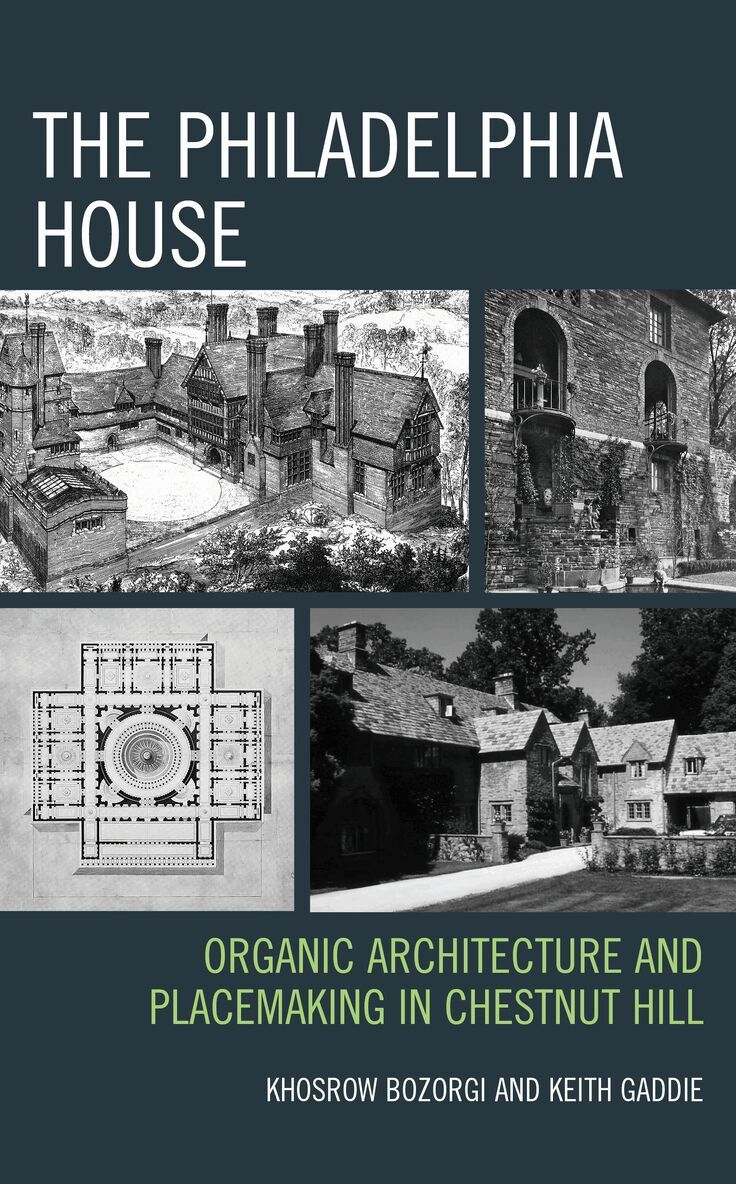
At the very beginning of the interwar period, a small collection of formally trained architects created a distinctive residential type which can undoubtedly be recognized as a Philadelphia landmark. They surpassed the conventional pseudo-classic or neo-Gothic eclectic solution by a unique adaptation of the principles and criteria of design to suit the expression of the exclusive cultural tradition of the clients and to respond to the natural environment. The works of three Philadelphia architectural firms -- Mellor, Meigs and Howe, McGoodwin, and Willing and Sims -- are analyzed to explore this proposition, using six houses constructed between 1917 and 1928 as a basis. These homes and others located in the historic Chestnut Hill neighborhood are aesthetically pleasing. But they also represent a break with the past, the emergence of a new ‘type’ which is among the architectural design innovations of the last century generally conceived as ‘organic’ architecture. This work, which contains over 200 photographs and drawings, considers the houses, the training and development of the architects, the creation and development of Chestnut Hill itself, and the larger, distinct culture of Philadelphia in contributing to the emergence of this distinctive and lasting style.