Kiel Moe – författare
Visar alla böcker från författaren Kiel Moe. Handla med fri frakt och snabb leverans.
15 produkter
Building Systems
Design Technology and Society
Inbunden, 2012
3147 kr
Lägg i varukorg
We can no longer view building components as artifacts (a brick or a boiler) or as autonomous systems (air conditioning or prefabrication). Rather these components and systems are part of much larger systems of which architects are one agent. This book will help architects more broadly envision …
Building Systems
Design Technology and Society
Häftad, 2012
814 kr
Lägg i varukorg
We can no longer view building components as artifacts (a brick or a boiler) or as autonomous systems (air conditioning or prefabrication). Rather these components and systems are part of much larger systems of which architects are one agent. This book will help architects more broadly envision …
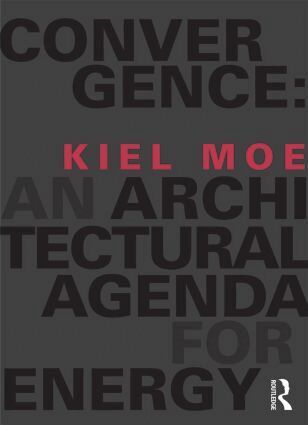
Convergence: An Architectural Agenda for Energy
Av Kiel Moe
Inbunden, 2013
3147 kr
Lägg i varukorg
Convergence is based on the thermodynamic premise that architecture should maximize its ecological and architectural power. No matter how paradoxical it might initially seem, architects should maximize energy intake, maximize energy use, and maximize energy feedback and reinforcement. This presumes …
Convergence: An Architectural Agenda for Energy
Av Kiel Moe
Häftad, 2013
844 kr
Lägg i varukorg
Convergence is based on the thermodynamic premise that architecture should maximize its ecological and architectural power. No matter how paradoxical it might initially seem, architects should maximize energy intake, maximize energy use, and maximize energy feedback and reinforcement. This presumes …
Convergence: An Architectural Agenda for Energy
Av Kiel Moe
E-bok, 2013
977 kr
Lägg i varukorg
Convergence is based on the thermodynamic premise that architecture should maximize its ecological and architectural power. No matter how paradoxical it might initially seem, architects should maximize energy intake, maximize energy use, and maximize energy feedback and reinforcement. This presumes …
Convergence: An Architectural Agenda for Energy
Av Kiel Moe
E-bok, 2013
977 kr
Lägg i varukorg
Convergence is based on the thermodynamic premise that architecture should maximize its ecological and architectural power. No matter how paradoxical it might initially seem, architects should maximize energy intake, maximize energy use, and maximize energy feedback and reinforcement. This presumes …
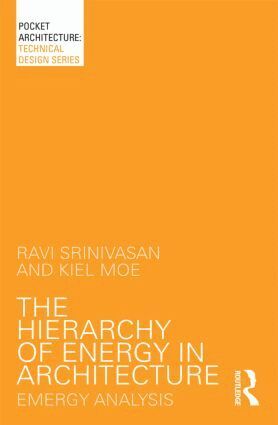
Hierarchy of Energy in Architecture
Emergy Analysis
Inbunden, 2015
2578 kr
Lägg i varukorg
The laws of thermodynamics—and their implications for architecture—have not been fully integrated into architectural design. Architecture and building science too often remain constrained by linear concepts and methodologies regarding energy that occlude significant quantities and qualities of …
Hierarchy of Energy in Architecture
Emergy Analysis
Häftad, 2015
575 kr
Lägg i varukorg
The laws of thermodynamics—and their implications for architecture—have not been fully integrated into architectural design. Architecture and building science too often remain constrained by linear concepts and methodologies regarding energy that occlude significant quantities and qualities of …
Hierarchy of Energy in Architecture
Emergy Analysis
E-bok, 2015
663 kr
Lägg i varukorg
The laws of thermodynamics—and their implications for architecture—have not been fully integrated into architectural design. Architecture and building science too often remain constrained by linear concepts and methodologies regarding energy that occlude significant quantities and qualities of …
Hierarchy of Energy in Architecture
Emergy Analysis
E-bok, 2015
678 kr
Lägg i varukorg
The laws of thermodynamics—and their implications for architecture—have not been fully integrated into architectural design. Architecture and building science too often remain constrained by linear concepts and methodologies regarding energy that occlude significant quantities and qualities of …
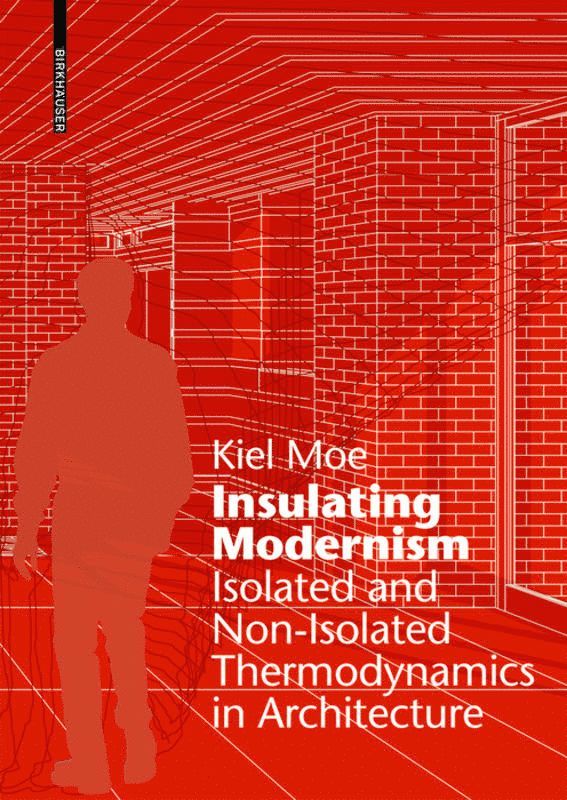
Insulating Modernism
Isolated and Non-isolated Thermodynamics in Architecture
Av Kiel Moe
Inbunden, 2014
880 kr
Tillfälligt slut
What is the best way to consider energy in buildings? For over a century, the building industry has largely focused on ideas of insulation and isolation for its energetic practices. A growing movement of designers claim that other concepts and practices are required for the non-isolated energy …