Kieran Williams - Böcker
Visar alla böcker från författaren Kieran Williams. Handla med fri frakt och snabb leverans.
2 produkter
2 produkter
577 kr
Skickas inom 7-10 vardagar
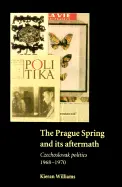
The Prague Spring of 1968 was among the most important episodes in post-war European politics. In this book Kieran Williams analyses the attempt at reform socialism under Alexander Dubcek using materials and sources which have become available in the wake of the 1989 revolution. Drawing on declassified documents from party archives, the author readdresses important questions surrounding the Prague Spring: Why did liberalization occur? What was it intended to achieve? Why did the Soviet Union intervene with force? What was the political outcome of the invasion? What part did the reformers play in ending the experiment in reform socialism? What was the role of the security police under Dubcek? The book will provide new information for specialists as well as introductory analysis and narrative for students of East European politics and history and Soviet foreign policy.
203 kr
Skickas inom 7-10 vardagar
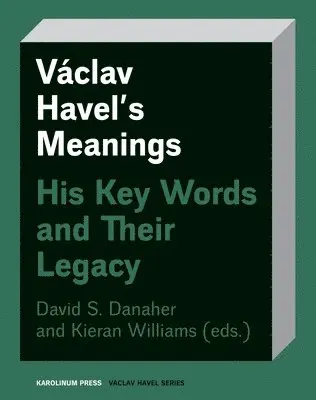
A close read of the rich collections of texts left behind by Václav Havel, one of the most important Czech thinkers and leaders of the twentieth century. No one in Czech politics or culture could match the international stature of Václav Havel at the time of his death in 2011. In the years since his passing, his legacy has only grown, as developments in the Czech Republic and elsewhere around the world continue to show the importance of his work and writing against a range of political and social ills, from autocratic brutality to messianic populism.This book looks squarely at the heart of Havel’s legacy: the rich corpus of texts he left behind. It analyzes the meanings of key concepts in Havel’s core vocabulary: truth, power, civilsociety, home, appeal, indifference, hotspot, theatre, prison, and responsibility. Where do these concepts appear in Havel’s oeuvre? What part do they play in his larger intellectual project? How might we understand Havel’s focus on these concepts as a centerpiece of his contribution to contemporary thought? How does Havel’s particular perspective on the meaning of these concepts speak to us in the here and now? The ten contributors use a variety of methodological tools to examine the meaning of these concepts, drawing on a diversity of disciplines: political science and political philosophy, historical and cultural analysis, discourse/textual analysis, and linguistic-corpus analysis.