Kimberly Ann Elliott – författare
Visar alla böcker från författaren Kimberly Ann Elliott. Handla med fri frakt och snabb leverans.
9 produkter
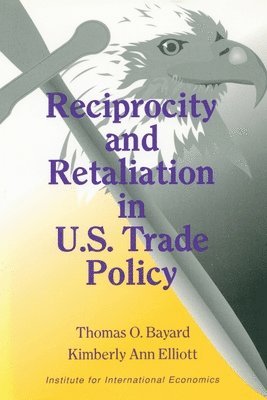
Reciprocity and Retaliation in U.S. Trade Policy
Av Thomas Bayard, Kimberly Ann Elliott
Häftad, 1994
228 kr
Lägg i varukorg
Measuring the Costs of Protection in the United States
Av Gary Clyde Hufbauer, Kimberly Ann Elliott
Häftad, 1994
325 kr
Lägg i varukorg
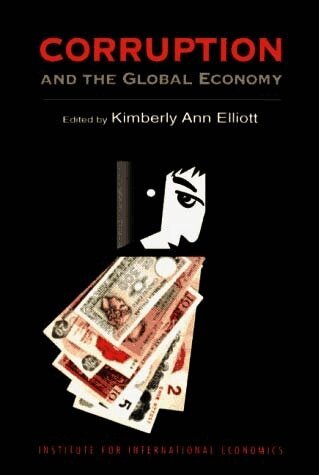
Corruption and the Global Economy
Av Kimberly Ann Elliott, Kimberly Ann Elliott
Häftad, 1997
478 kr
Lägg i varukorg
Corruption and the Global Economy
E-bok, 1997
137 kr
Lägg i varukorg
The recently-adopted OECD convention outlawing bribery of foreign public officials is welcome evidence of how much progress has been made in the battle against corruption. The financial crisis in East Asia is an indication of how much remains to be done. Corruption is by no means a new issue but it …
Can Labor Standards Improve Under Globalization?
Av Kimberly Ann Elliott, Richard Freeman
Häftad, 2003
221 kr
Lägg i varukorg
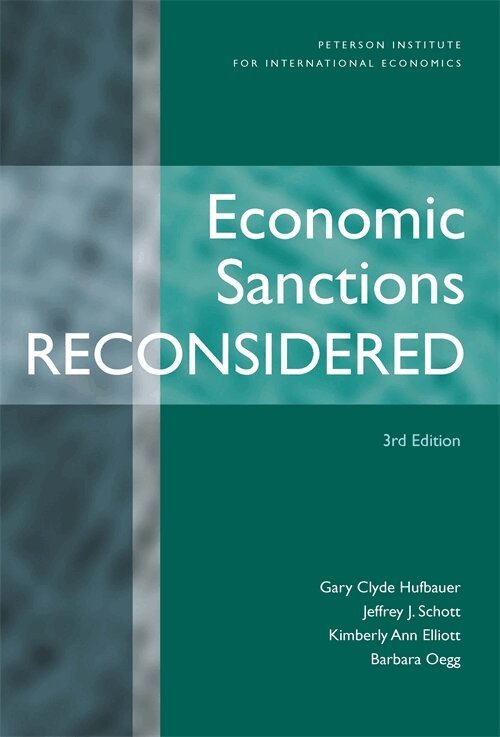
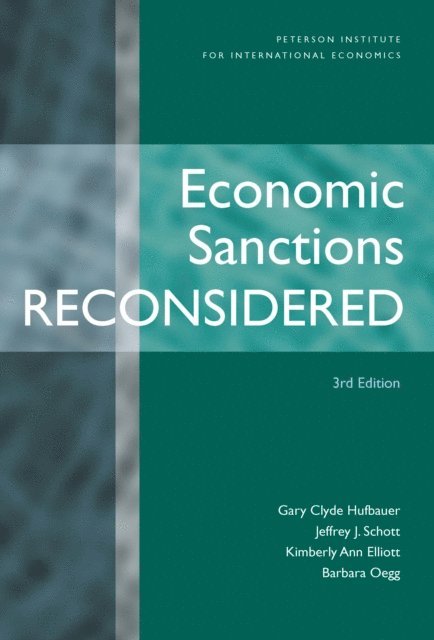
Economic Sanctions Reconsidered
Av Gary Clyde Hufbauer, Jeffrey Schott m. fl.
Häftad, 2009
494 kr
Lägg i varukorg
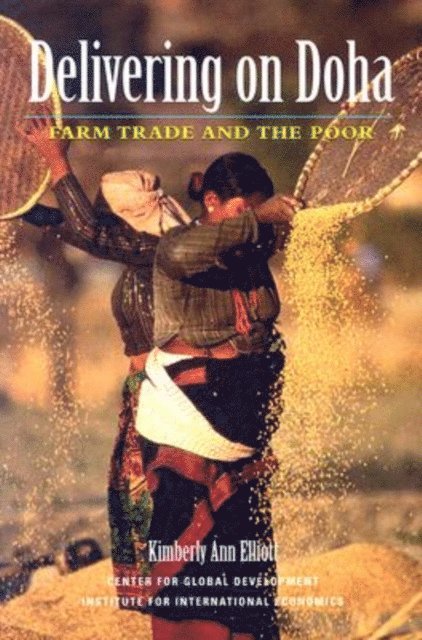
Delivering on Doha
Farm Trade and the Poor
E-bok, 2006
133 kr
Lägg i varukorg
Agricultural market liberalization is essential in achieving a successful Doha Round agreement because these are the most protected markets remaining in most rich countries. But the implications for developing countries, especially the poorest, are more complex than the current debate suggests. …
Economic Sanctions Reconsidered
Av Barbara Oegg, Kimberly Ann Elliott m. fl.
E-bok, 2009
129 kr
Lägg i varukorg
Economic sanctions continue to play an important role in the response to terrorism, nuclear proliferation, military conflicts, and other foreign policy crises. But poor design and implementation of sanctions policies often mean that they fall short of their desired effects. This landmark study, …