Kirk Essary – författare
Visar alla böcker från författaren Kirk Essary. Handla med fri frakt och snabb leverans.
11 produkter
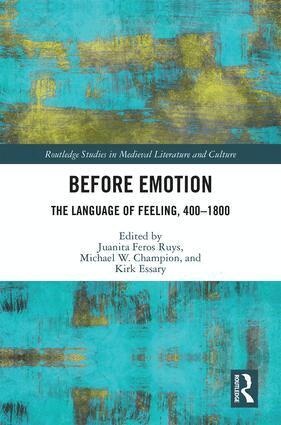
Before Emotion: The Language of Feeling, 400-1800
Av Juanita Ruys, Michael Champion m. fl.
Inbunden, 2019
3146 kr
Lägg i varukorg
Before Emotion: The Language of Feeling, 400-1800 advances current interdisciplinary research in the history of emotions through in-depth studies of the European language of emotion from late antiquity to the modern period. Focusing specifically on the premodern cognates of ‘affect’ or ‘affection’ …
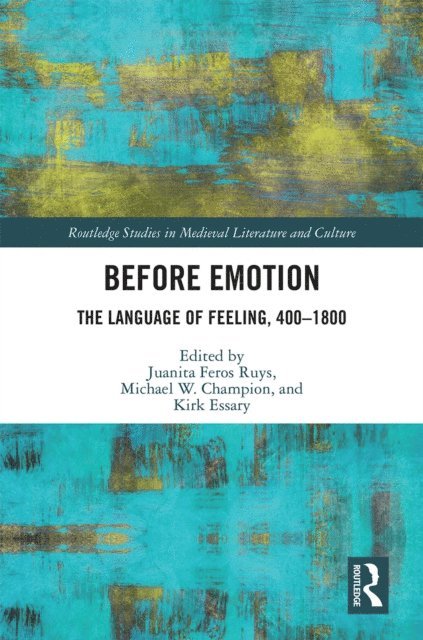
Before Emotion: The Language of Feeling, 400-1800
Av Kirk Essary, Michael Champion m. fl.
E-bok, 2019
928 kr
Lägg i varukorg
Before Emotion: The Language of Feeling, 400-1800 advances current interdisciplinary research in the history of emotions through in-depth studies of the European language of emotion from late antiquity to the modern period. Focusing specifically on the premodern cognates of ‘affect’ or ‘affection’ …
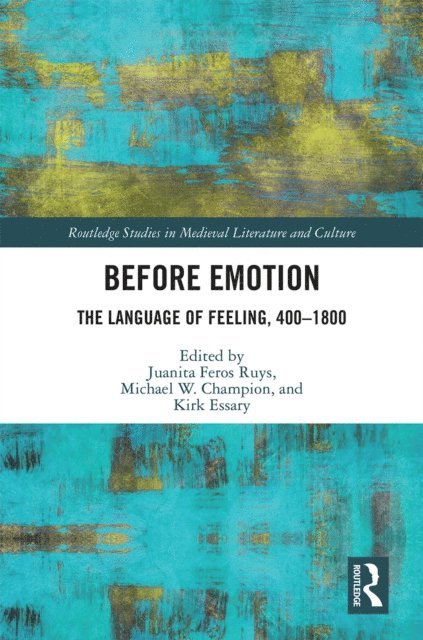
Before Emotion: The Language of Feeling, 400-1800
Av Kirk Essary, Michael Champion m. fl.
E-bok, 2019
956 kr
Lägg i varukorg
Before Emotion: The Language of Feeling, 400-1800 advances current interdisciplinary research in the history of emotions through in-depth studies of the European language of emotion from late antiquity to the modern period. Focusing specifically on the premodern cognates of ‘affect’ or ‘affection’ …
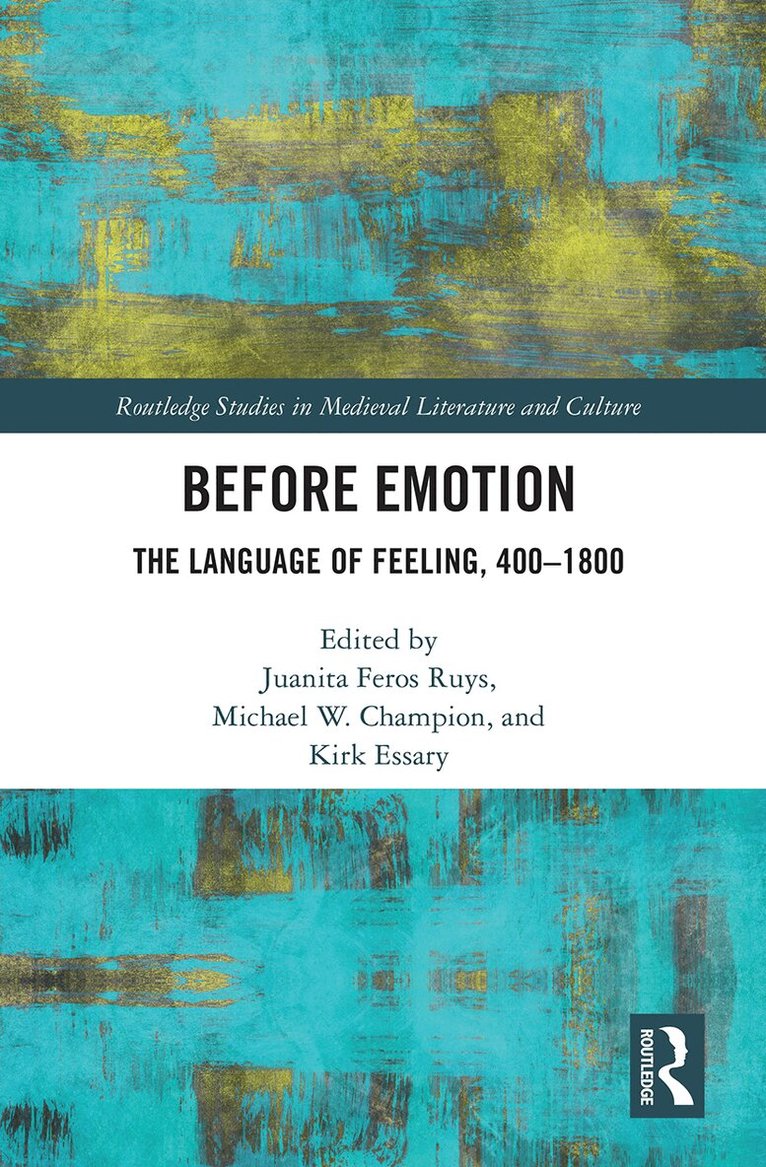
Before Emotion: The Language of Feeling, 400-1800
Av Juanita Ruys, Michael Champion m. fl.
Häftad, 2021
809 kr
Lägg i varukorg
Before Emotion: The Language of Feeling, 400-1800 advances current interdisciplinary research in the history of emotions through in-depth studies of the European language of emotion from late antiquity to the modern period. Focusing specifically on the premodern cognates of ‘affect’ or ‘affection’ …
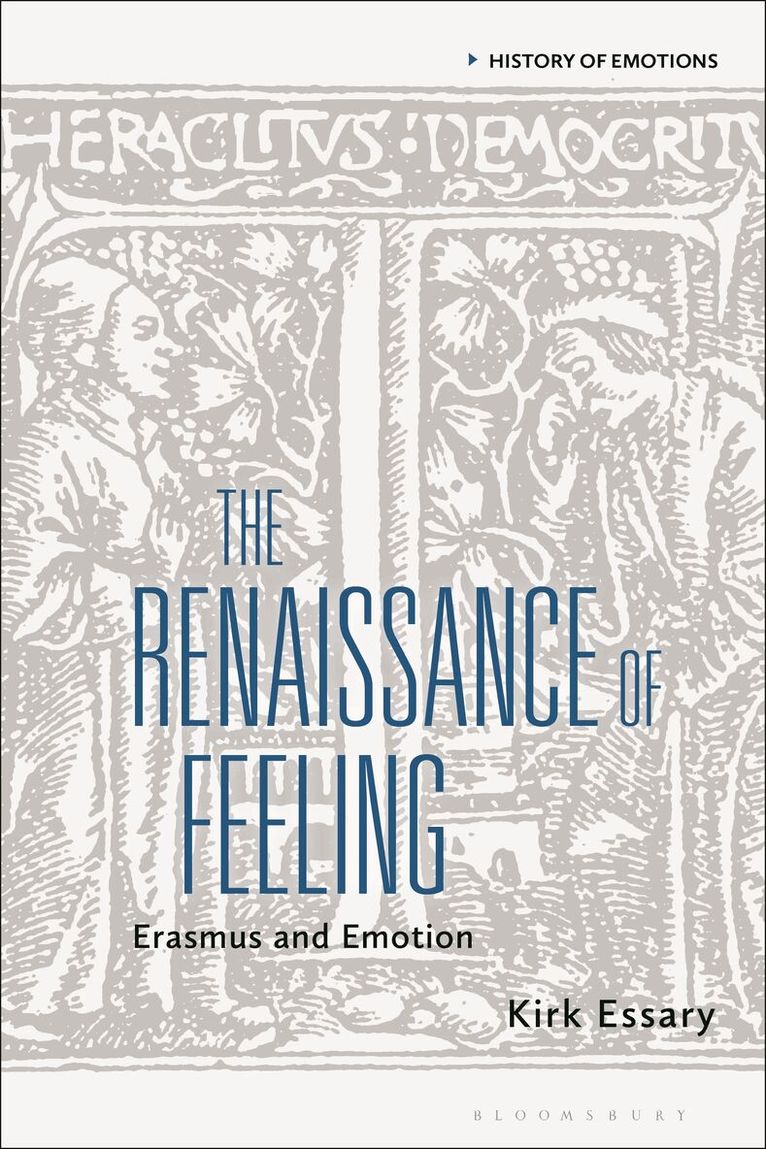
Renaissance of Feeling
Erasmus and Emotion
Av Kirk Essary, Peter N. Stearns
Inbunden, 2024
1275 kr
Lägg i varukorg
Offering a re-reading of Erasmus's works, this book shows that emotion and affectivity were central to his writings. It argues that Erasmus's conception of emotion was highly complex and richly diverse by tracing how the Dutch humanist writes about emotion not only from different …
Renaissance of Feeling
Erasmus and Emotion
Av Kirk Essary
E-bok, 2024
442 kr
Lägg i varukorg
Offering a re-reading of Erasmus''s works, this book shows that emotion and affectivity were central to his writings. It argues that Erasmus''s conception of emotion was highly complex and richly diverse by tracing how the Dutch humanist writes about emotion not only from different …
Renaissance of Feeling
Erasmus and Emotion
Av Kirk Essary
E-bok, 2024
442 kr
Lägg i varukorg
Offering a re-reading of Erasmus''s works, this book shows that emotion and affectivity were central to his writings. It argues that Erasmus''s conception of emotion was highly complex and richly diverse by tracing how the Dutch humanist writes about emotion not only from different …
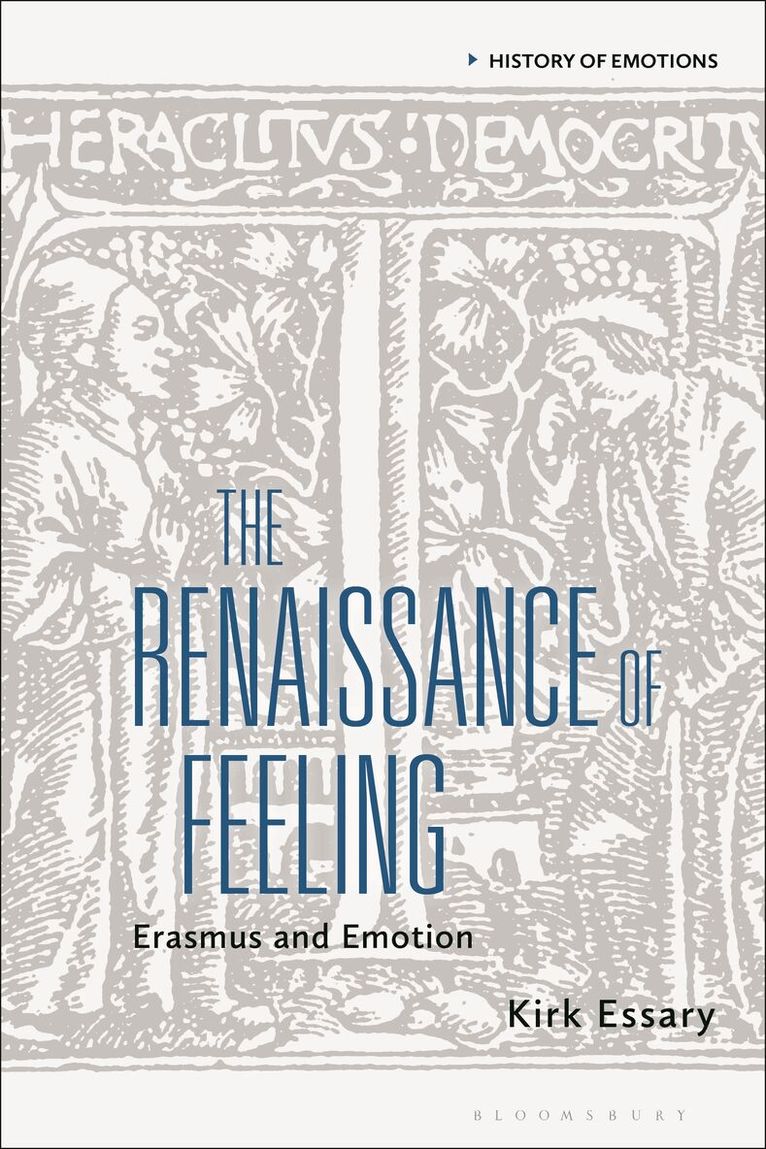
Renaissance of Feeling
Erasmus and Emotion
Av Kirk Essary, Peter N. Stearns
Häftad, 2025
415 kr
Lägg i varukorg
Offering a re-reading of Erasmus's works, this book shows that emotion and affectivity were central to his writings. It argues that Erasmus's conception of emotion was highly complex and richly diverse by tracing how the Dutch humanist writes about emotion not only from different …
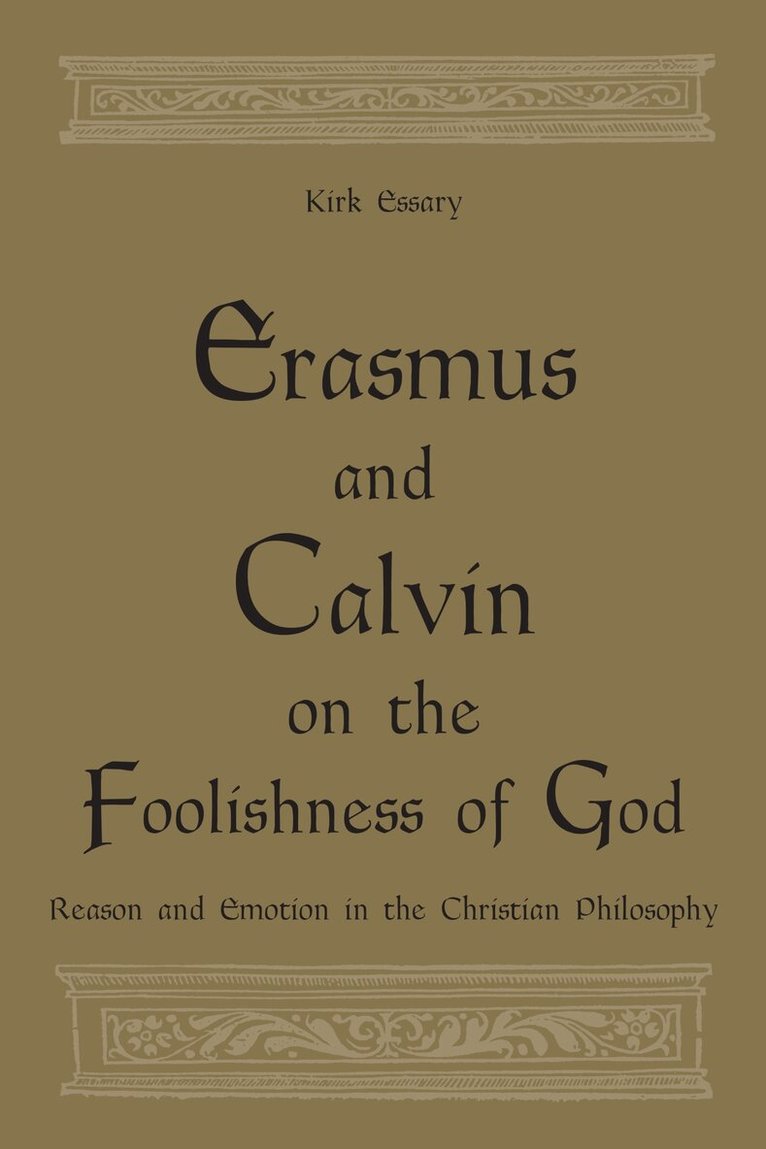
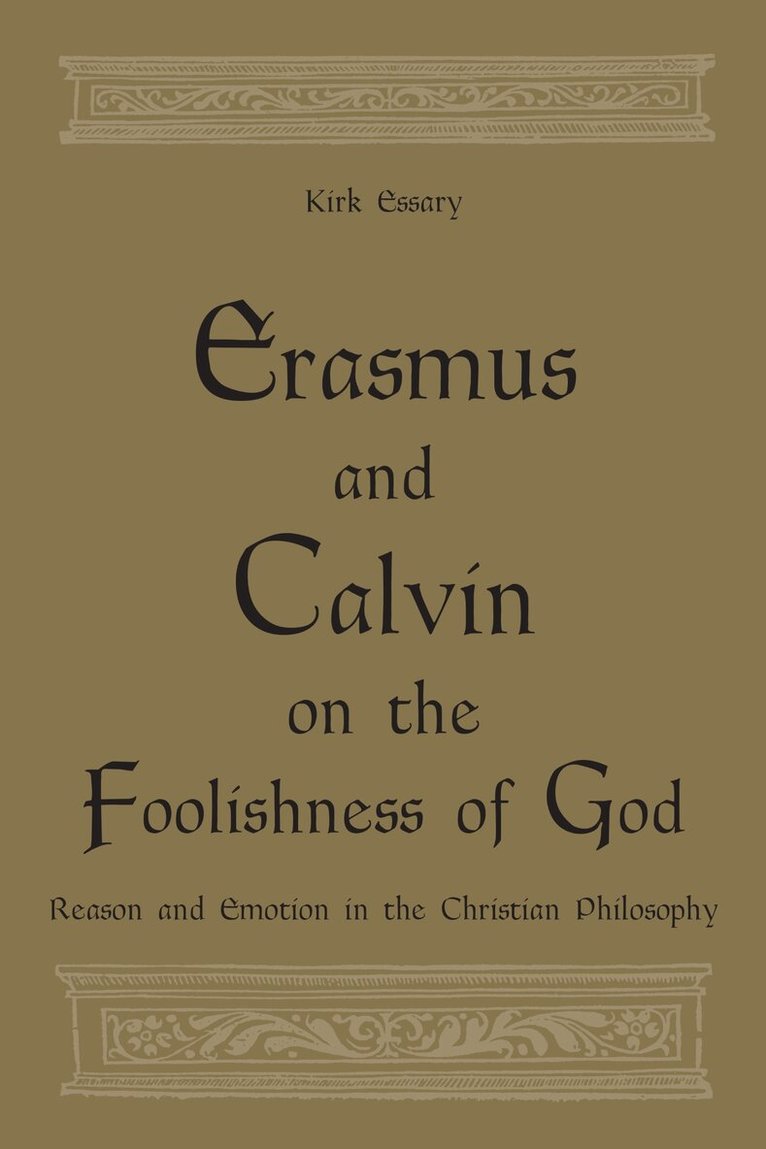
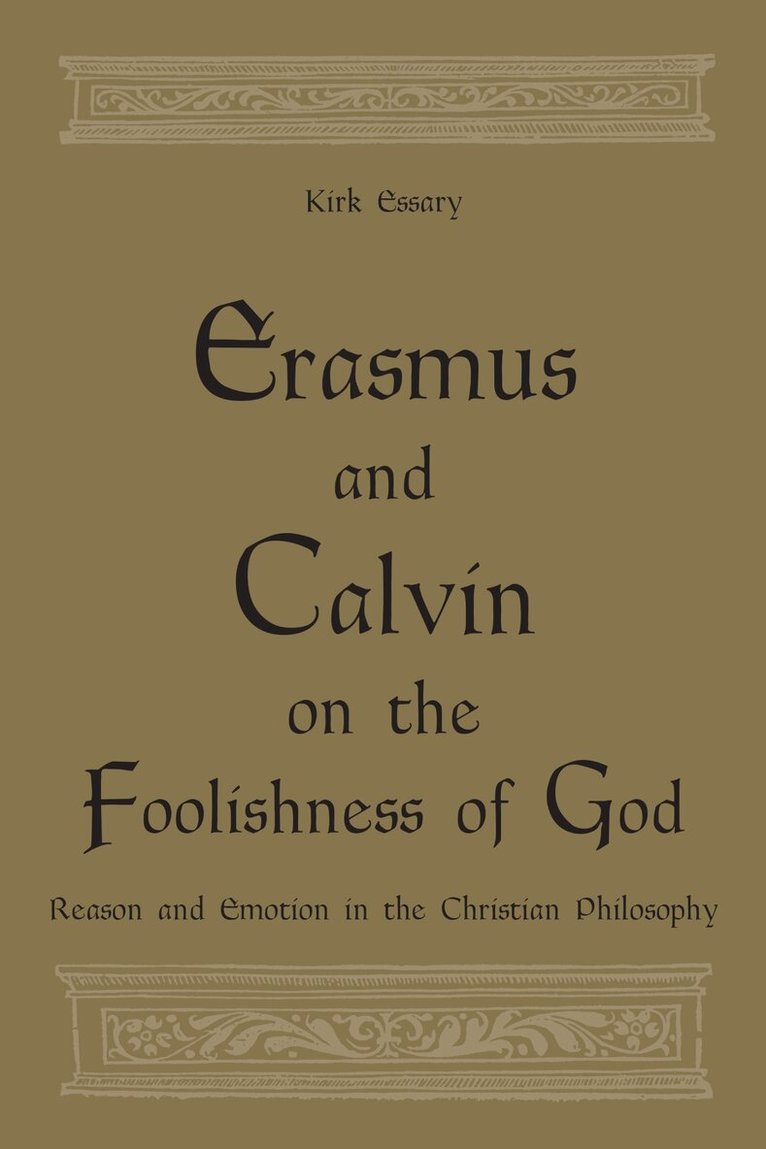
Erasmus and Calvin on the Foolishness of God
Reason and Emotion in the Christian Philosophy
Av Kirk Essary
Inbunden, 2017
844 kr
Lägg i varukorg
What did Paul mean when he wrote that the foolishness of God is wiser than human wisdom? Through close analysis of the sixteenth-century reception of Paul's discourses of folly, this book examines the role of the New Testament in the development of what Erasmus and John Calvin refer to as the …
Erasmus and Calvin on the Foolishness of God
Reason and Emotion in the Christian Philosophy
Av Kirk Essary
E-bok, 2017
978 kr
Lägg i varukorg
What did Paul mean when he wrote that the foolishness of God is wiser than human wisdom? Through close analysis of the sixteenth-century reception of Paul''s discourses of folly, this book examines the role of the New Testament in the development of what Erasmus and John Calvin refer to as the …
Erasmus and Calvin on the Foolishness of God
Reason and Emotion in the Christian Philosophy
Av Kirk Essary
E-bok, 2017
1076 kr
Lägg i varukorg
What did Paul mean when he wrote that the foolishness of God is wiser than human wisdom? Through close analysis of the sixteenth-century reception of Paul''s discourses of folly, this book examines the role of the New Testament in the development of what Erasmus and John Calvin refer to as the …