Kirsty Hooper – författare
Visar alla böcker från författaren Kirsty Hooper. Handla med fri frakt och snabb leverans.
6 produkter
6 produkter
Inbunden, Engelska, 2008
1 812 kr
Skickas inom 3-6 vardagar
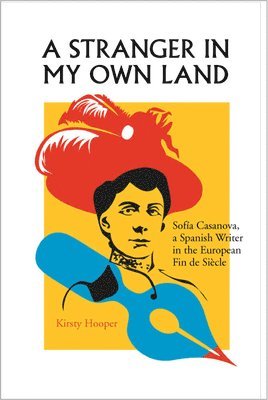
This is the first in-depth analysis of the works of the Galician-Spanish expatriate writer Sofia Casanova (1861-1958), a transnational poet, novelist, journalist, playwright, campaigner, translator, historian and intellectual, and one of the first Spanish women to support herself as a professional writer. Casanova, born in Galicia in rural northwest Spain, married a Pole and spent over seventy years traveling between Spain and Poland. A challenging writer and thinker who witnessed the First World War, the Russian Revolution and the rise of Franco at first hand, moved in the highest political and intellectual circles on both sides of Europe and blazed a trail as one of Spain's first female foreign correspondents, her remarkable achievements were gradually sidelined at home in increasingly reactionary Spain until, by the time of her death, she was remembered only as a perfectly patriotic wife and mother and icon of Francoist femininity.This study addresses the scandalous disappearance of Casanova and her female contemporaries from accounts of the emergence of the modern Spanish nation. Arguing that women's perceived silence during this critical period in the formation of modern Iberian identities has significant repercussions even today, it takes her works as a case study for modeling a radical rethinking of the way we teach and research the crucial years around the turn of the twentieth century.The first study of Casanova's radical and compelling, but now forgotten, early narrative, it explores the Galician, Polish and Spanish context of her work, arguing that her transnational career demonstrates the inadequacies of existing models of national literary history. At the same time, recognizing Casanova's innovative and strategic use of literary genres and techniques traditionally denominated as 'feminine' (and therefore excluded from discussions of 'serious' national literature), it provides a model for re-evaluating the vast cultural store of popular and sentimental literature as a key part of the debates about the transition to modernity, in Spain and beyond.
Häftad, Engelska, 2008
672 kr
Skickas inom 5-8 vardagar
This is the first in-depth analysis of the works of the Galician-Spanish expatriate writer Sofia Casanova (1861-1958), a transnational poet, novelist, journalist, playwright, campaigner, translator, historian and intellectual, and one of the first Spanish women to support herself as a professional writer. Casanova, born in Galicia in rural northwest Spain, married a Pole and spent over seventy years traveling between Spain and Poland. A challenging writer and thinker who witnessed the First World War, the Russian Revolution and the rise of Franco at first hand, moved in the highest political and intellectual circles on both sides of Europe and blazed a trail as one of Spain's first female foreign correspondents, her remarkable achievements were gradually sidelined at home in increasingly reactionary Spain until, by the time of her death, she was remembered only as a perfectly patriotic wife and mother and icon of Francoist femininity.This study addresses the scandalous disappearance of Casanova and her female contemporaries from accounts of the emergence of the modern Spanish nation. Arguing that women's perceived silence during this critical period in the formation of modern Iberian identities has significant repercussions even today, it takes her works as a case study for modeling a radical rethinking of the way we teach and research the crucial years around the turn of the twentieth century.The first study of Casanova's radical and compelling, but now forgotten, early narrative, it explores the Galician, Polish and Spanish context of her work, arguing that her transnational career demonstrates the inadequacies of existing models of national literary history. At the same time, recognizing Casanova's innovative and strategic use of literary genres and techniques traditionally denominated as 'feminine' (and therefore excluded from discussions of 'serious' national literature), it provides a model for re-evaluating the vast cultural store of popular and sentimental literature as a key part of the debates about the transition to modernity, in Spain and beyond.
Inbunden, Engelska, 2011
1 890 kr
Skickas inom 3-6 vardagar
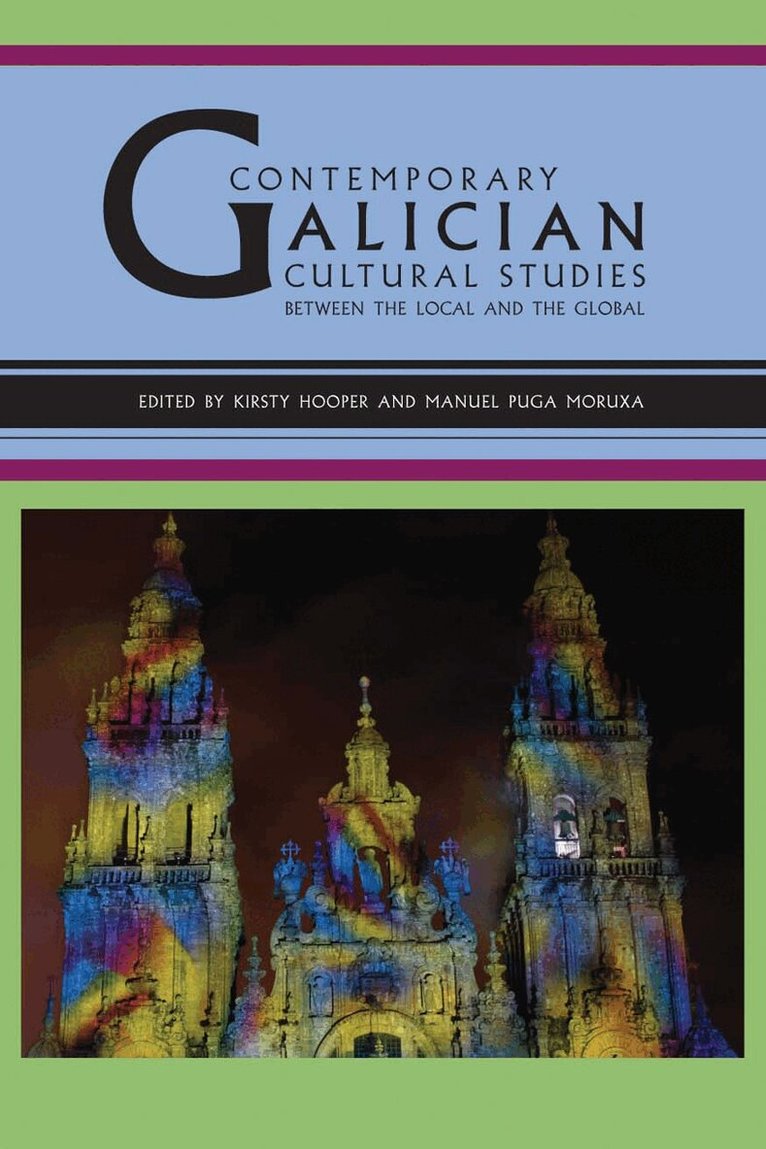
Galicia occupies an ambiguous position, at the crossroads between land and sea, the Atlantic north and the Mediterranean south, Spanish and Portuguese. For two centuries, its nationhood was ignored or disputed and its people migrated in great numbers to the Americas. What it means to be Galician, therefore, is a central question--particularly now, given Galicia’s new autonomy and today’s trends of globalization and pluralism.In this first English-language collection of analyses of Galician culture and identity, many aspects of galeguidade--Galicianness--are explored. Among them are the nineteenth-century Rexurdimento and Rosalía de Castro’s championing of and conflict with Galician nationalism, the status of Galician as a separate language, the attractions and problems of television series that express a utopian nostalgia, the continuing importance of Galician-language poetry and folk music, and challenges to Galician tradition by the postmodern avant-gardes after 1975.
Inbunden, Engelska, 2020
1 993 kr
Skickas inom 5-8 vardagar
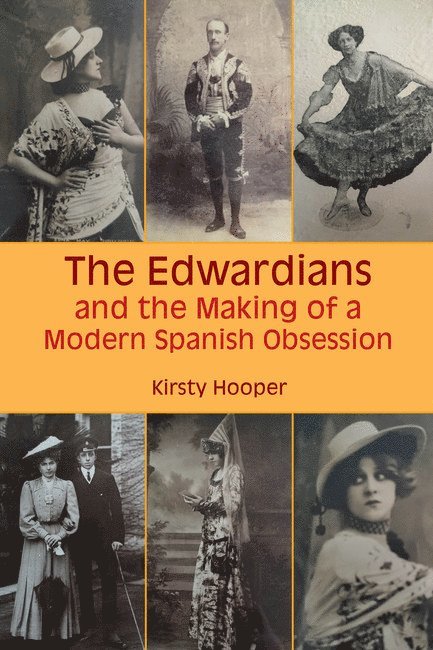
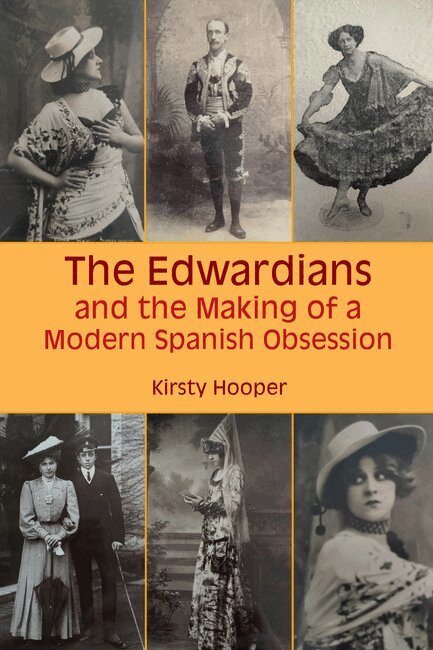
What did the Edwardians know about Spain, and what was that knowledge worth? The Edwardians and the Making of a Modern Spanish Obsession draws on a vast store of largely unstudied primary source material to investigate Spain’s place in the turn-of-the-century British popular imagination. Set against a background of unprecedented emotional, economic and industrial investment in Spain, the book traces the extraordinary transformation that took place in British knowledge about the country and its diverse regions, languages and cultures between the tercentenary of the Spanish Armada in 1888 and the outbreak of World War I twenty-six years later.This empirically-grounded cultural and material history reveals how, for almost three decades, Anglo-Spanish connections, their history and culture were more visible, more colourfully represented, and more enthusiastically discussed in Britain’s newspapers, concert halls, council meetings and schoolrooms, than ever before. It shows how the expansion of education, travel, and publishing created unprecedented opportunities for ordinary British people not only to visit the country, but to see the work of Spanish and Spanish-inspired artists and performers in British galleries, theatres and exhibitions. It explores the work of novelists, travel writers, journalists, scholars, artists and performers to argue that the Edwardian knowledge of Spain was more extensive, more complex and more diverse than we have imagined.
Häftad, Engelska, 2023
538 kr
Skickas inom 5-8 vardagar
What did the Edwardians know about Spain, and what was that knowledge worth? The Edwardians and the Making of a Modern Spanish Obsession draws on a vast store of largely unstudied primary source material to investigate Spain’s place in the turn-of-the-century British popular imagination. Set against a background of unprecedented emotional, economic and industrial investment in Spain, the book traces the extraordinary transformation that took place in British knowledge about the country and its diverse regions, languages and cultures between the tercentenary of the Spanish Armada in 1888 and the outbreak of World War I twenty-six years later.This empirically-grounded cultural and material history reveals how, for almost three decades, Anglo-Spanish connections, their history and culture were more visible, more colourfully represented, and more enthusiastically discussed in Britain’s newspapers, concert halls, council meetings and schoolrooms, than ever before. It shows how the expansion of education, travel, and publishing created unprecedented opportunities for ordinary British people not only to visit the country, but to see the work of Spanish and Spanish-inspired artists and performers in British galleries, theatres and exhibitions. It explores the work of novelists, travel writers, journalists, scholars, artists and performers to argue that the Edwardian knowledge of Spain was more extensive, more complex and more diverse than we have imagined.
Del 11 - Hispanic Studies: Culture and Ideas
Reading Iberia
Theory/History/Identity
Häftad, Engelska, 2007
779 kr
Skickas inom 5-8 vardagar