Klaus-Dieter Mathes – författare
Visar alla böcker från författaren Klaus-Dieter Mathes. Handla med fri frakt och snabb leverans.
8 produkter
8 produkter
Inbunden, Engelska, 2024
607 kr
Skickas
E-bok
Engelska, 2021273 kr
Läs direkt efter köp
E-bok
Engelska, 2013198 kr
Läs direkt efter köp
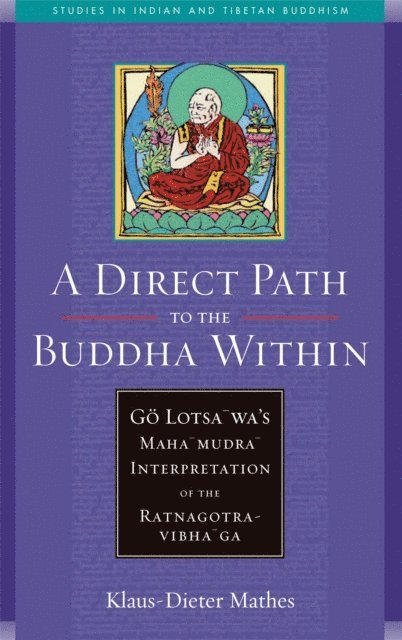
Maitreya''s Ratnagotravibhaga, also known as the Uttaratantra, is the main Indian treatise on buddha nature, a concept that is heavily debated in Tibetan Buddhist philosophy. In A Direct Path to the Buddha Within, Klaus-Dieter Mathes looks at a pivotal Tibetan commentary on this text by Go Lotsawa Zhonu Pal, best known as the author of the Blue Annals. Go Lotsawa, whose teachers spanned the spectrum of Tibetan schools, developed a highly nuanced understanding of buddha nature, tying it in with mainstream Mahayana thought while avoiding contested aspects of the so-called empty-of-other (zhentong) approach. In addition to translating key portions of Go Lotsawa''s commentary, Mathes provides an in-depth historical context, evaluating Go''s position against those of other Kagyu, Nyingma, and Jonang masters and examining how Go Lotsawa''s view affects his understanding of the buddha qualities, the concept of emptiness, and the practice of mahamudra.
Häftad, Engelska, 2020
620 kr
Skickas inom 3-6 vardagar
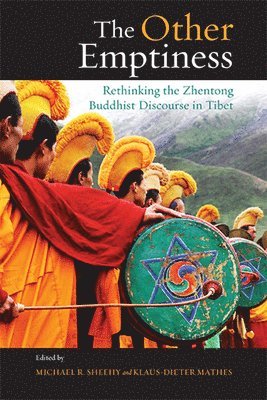
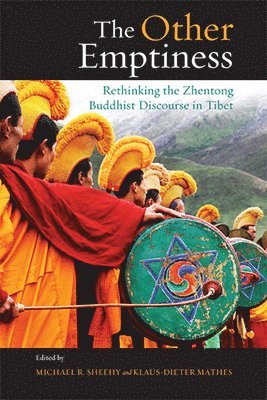
Presents a new vision of the Buddhist history and philosophy of emptiness in Tibet.This book brings together perspectives of leading international Tibetan studies scholars on the subject of zhentong or "other-emptiness." Defined as the emptiness of everything other than the continuous luminous awareness that is one's own enlightened nature, this distinctive philosophical and contemplative presentation of emptiness is quite different from rangtong-emptiness that lacks independent existence, which has had a strong influence on the dissemination of Buddhist philosophy in the West. Important topics are addressed, including the history, literature, and philosophy of emptiness that have contributed to zhentong thinking in Tibet from the thirteenth century until today. The contributors examine a wide range of views on zhentong from each of the major orders of Tibetan Buddhism, highlighting the key Tibetan thinkers in the zhentong philosophical tradition. Also discussed are the early formulations of buddhanature, interpretations of cosmic time, polemical debates about emptiness in Tibet, the zhentong view of contemplation, and creative innovations of thought in Tibetan Buddhism. Highly accessible and informative, this book can be used as a scholarly resource as well as a textbook for teaching graduate and undergraduate courses on Buddhist philosophy.
Häftad, Engelska, 2021
277 kr
Skickas
E-bok
Engelska, 2024531 kr
Läs direkt efter köp
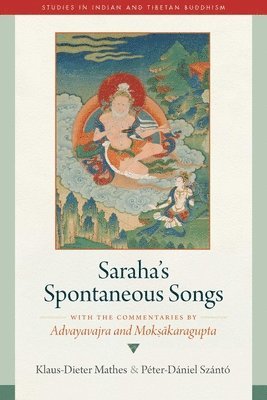
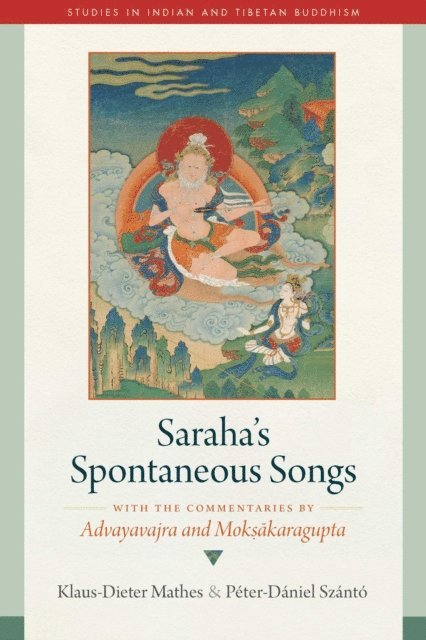
The first volume in over six decades to bring to light new original material on Saraha’s Treasury of Spontaneous Songs (Dohakosa).“Completely abandon thought and no-thought, and abide in the natural way of a small child.” —Saraha To find liberation and realize the true nature of reality, the Indian Buddhist master Saraha says we must leave behind any conceptual assessment of reality, since no model of it has ever been known to withstand critical analysis. Saraha’s spontaneous songs, or dohas, represent the Buddhist art of expressing the inexpressible. The most important collection of Saraha’s songs is the Dohakosagiti, better known in Tibet as the Songs for the People, and the Tibetan Mahamudra tradition, especially within the Kagyü school, has done the most to preserve the lineage of Saraha’s instructions to the present day. But Saraha was also widely cited in Indian sources starting around the eleventh century, and one Indic commentary, by the Newar scholar Advayavajra, still exists in Sanskrit. In addition, we have independent root texts of Saraha’s songs in the vernacular Apabhramsa in which they were recorded. These Indian texts, together with their Tibetan translations, are here presented in masterful new critical editions along with the Tibetan translation of the commentary no longer extant in Sanskrit by Moksakaragupta. Finally, both commentaries are rendered in elegant English, and the authors offer a brisk, comprehensive introduction. Saraha’s Spontaneous Songs provides the reader with everything needed for a serious study of one of the most important works in the Indian Buddhist canon.
E-bok
PDF, Engelska, 20211 684 kr
Läs direkt efter köp
The volume brings together nine contributions presenting cutting-edge research on ris med. The relatively high degree of political autonomy in the A mdo and Khams regions paved the way for the Rnying ma, Sa skya, Bka' brgyud, Jo nang, and Bon traditions to closely collaborate with each other in a spirit of mutual respect and non-partiality (ris med), while enjoying protection and support from local rulers. The contributors examine degrees of tolerance ranging from hierarchical inclusivism to genuine pluralism, inter-tradition relations and collaborations, religio-political entanglements, and the positions, writings and actions of the key figures of ris med. Thus, they bring to light that ris med cannot be reduced to its historical, political, religious or sociological facet, but is always a conglomerate of all of them. Groundbreaking research by leading international Tibetan studies scholars Filippo Brambilla, Gabriele Coura, Douglas Duckworth, Adam C. Krug, Klaus-Dieter Mathes, Giacomella Orofino, Rachel H. Pang, Adam S. Pearcey, and Frederic Richard.
Inbunden, Engelska, 2019
1 101 kr
Tillfälligt slut
Presents a new vision of the Buddhist history and philosophy of emptiness in Tibet.This book brings together perspectives of leading international Tibetan studies scholars on the subject of zhentong or "other-emptiness." Defined as the emptiness of everything other than the continuous luminous awareness that is one's own enlightened nature, this distinctive philosophical and contemplative presentation of emptiness is quite different from rangtong-emptiness that lacks independent existence, which has had a strong influence on the dissemination of Buddhist philosophy in the West. Important topics are addressed, including the history, literature, and philosophy of emptiness that have contributed to zhentong thinking in Tibet from the thirteenth century until today. The contributors examine a wide range of views on zhentong from each of the major orders of Tibetan Buddhism, highlighting the key Tibetan thinkers in the zhentong philosophical tradition. Also discussed are the early formulations of buddhanature, interpretations of cosmic time, polemical debates about emptiness in Tibet, the zhentong view of contemplation, and creative innovations of thought in Tibetan Buddhism. Highly accessible and informative, this book can be used as a scholarly resource as well as a textbook for teaching graduate and undergraduate courses on Buddhist philosophy.