Péter-Dániel Szántó – författare
Visar alla böcker från författaren Péter-Dániel Szántó. Handla med fri frakt och snabb leverans.
4 produkter
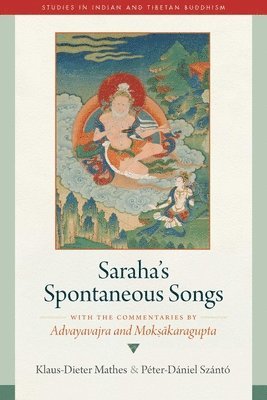
Saraha's Spontaneous Songs
With the Commentaries by Advayavajra and Moksakaragupta
Av Klaus-Dieter Mathes, Péter-Dániel Szántó
Inbunden, 2024
628 kr
Lägg i varukorg
Saraha’s Spontaneous Songs provides the reader with everything needed for a serious study of one of the most important works in the Indian Buddhist canon. “Completely abandon thought and no-thought, and abide in the natural way of a small child.” —Saraha To find liberation and realize the true …
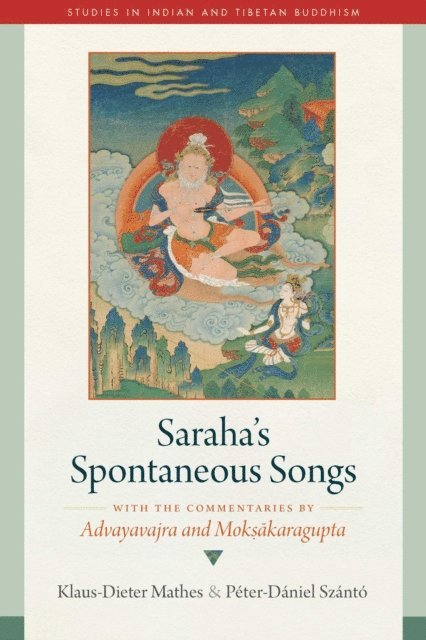
Saraha's Spontaneous Songs
With the Commentaries by Advayavajra and Moksakaragupta
Av Peter-Daniel Szanto, Klaus-Dieter Mathes
E-bok, 2024
613 kr
Lägg i varukorg
The first volume in over six decades to bring to light new original material on Saraha’s Treasury of Spontaneous Songs ( Dohakosa ). “Completely abandon thought and no-thought, and abide in the natural way of a small child.” —Saraha To find liberation and realize the true nature of reality, the …
Puspika: Tracing Ancient India Through Texts and Traditions
Contributions to Current Research in Indology, Volume 1
Av Nina Mirnig, Peter-Daniel Szanto m. fl.
E-bok, 2021
127 kr
Lägg i varukorg
It is perhaps commonplace to say that India is one of the world's richest and most enticing cultures. One thousand years have passed since Albiruni, arguably the first "Indologist", wrote his outsider's account of the subcontinent and two hundred years have passed since the inception of Western …
Puspika: Tracing Ancient India Through Texts and Traditions
Contributions to Current Research in Indology
Av Nina Mirnig, Peter-Daniel Szanto m. fl.
Häftad, 2013
734 kr
Tillfälligt slut
It is perhaps commonplace to say that India is one of the world's richest and most enticing cultures. One thousand years have passed since Albiruni, arguably the first "Indologist", wrote his outsider's account of the subcontinent and two hundred years have passed since the inception of Western …