Klaus-Peter Adam - Böcker
Visar alla böcker från författaren Klaus-Peter Adam. Handla med fri frakt och snabb leverans.
6 produkter
6 produkter
1 486 kr
Skickas inom 5-8 vardagar
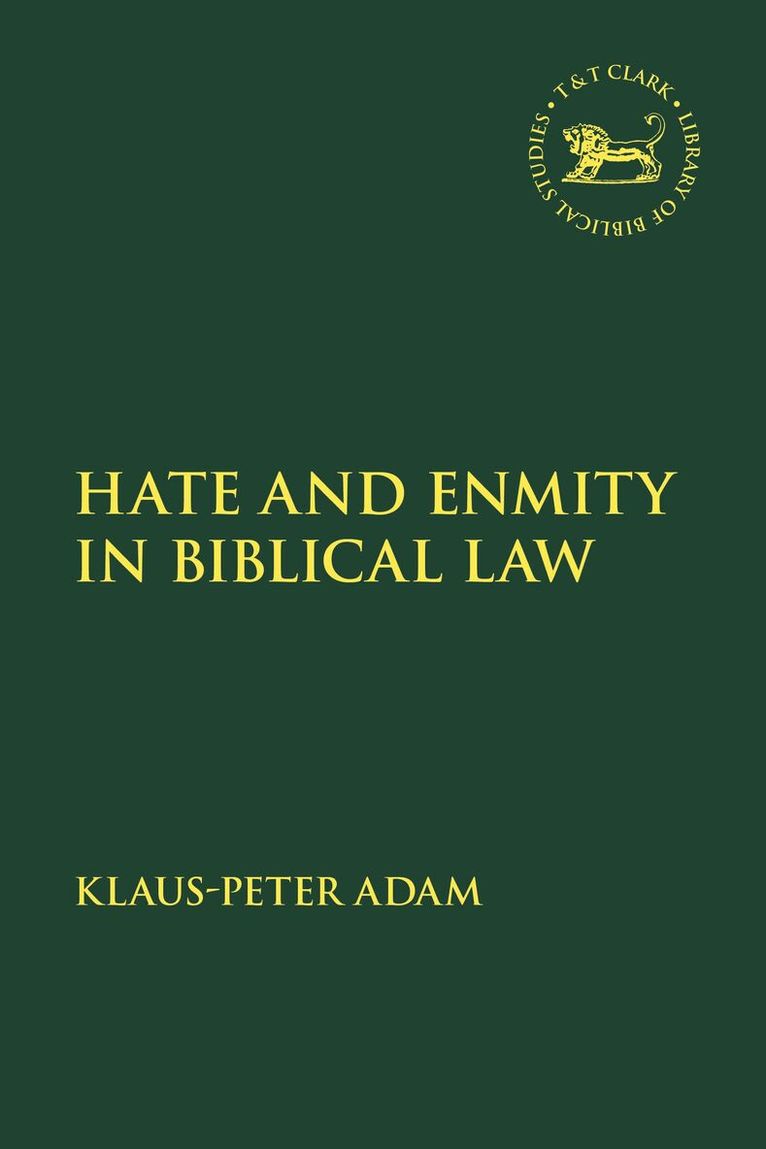
Enmity between individuals was an ubiquitious phenomenon in the ancient world. Using the method of legal anthropology this book examines patterns of hate-driven feuding in kinship-based and segmentary societies and applies these insights to biblical law. It defines the fundamental categories of enmity, love, revenge, honor and shame in the context of feuding and it illustrates certain legal actions, such giving false witness, and shows how they are expressions of hateful relationships. Adam proposes that we should understand hate between individuals as a legal construct that becomes visible when lived out as private enmity, a social status that exhibits distinct hallmarks. In kinship-based societies, private hate/enmity was publicly declared and, consequently, was publicly known in one’s own kin and beyond. Private enmity was acted out in feud-like patterns, with a flexibility that allowed opponents to choose between various measures to hurt their opponent. Acting out hate was reciprocal, and it typically escalated and swiftly expanded into one party’s attempt to kill the other and to trigger a blood feud. Finally, private enmity was “transitive” in the sense that opponents at enmity naturally expected solidarity from kin and friends. Adam uses textual analysis to illustrate how the legal construct of hate informs biblical law from the Covenant Code, to Deuteronomic and Priestly Legislation, including the Holiness Code. He also demonstrates how hate forms the backdrop of conflict settlement. Ultimately, by ways of tracing back through the category of private hate and enmity, this book unpacks the meaning of the quintessential command to “Love your neighbor!”
479 kr
Skickas inom 5-8 vardagar
Enmity between individuals was an ubiquitious phenomenon in the ancient world. Using the method of legal anthropology this book examines patterns of hate-driven feuding in kinship-based and segmentary societies and applies these insights to biblical law. It defines the fundamental categories of enmity, love, revenge, honor and shame in the context of feuding and it illustrates certain legal actions, such giving false witness, and shows how they are expressions of hateful relationships.Adam proposes that we should understand hate between individuals as a legal construct that becomes visible when lived out as private enmity, a social status that exhibits distinct hallmarks. In kinship-based societies, private hate/enmity was publicly declared and, consequently, was publicly known in one’s own kin and beyond. Private enmity was acted out in feud-like patterns, with a flexibility that allowed opponents to choose between various measures to hurt their opponent. Acting out hate was reciprocal, and it typically escalated and swiftly expanded into one party’s attempt to kill the other and to trigger a blood feud. Finally, private enmity was “transitive” in the sense that opponents at enmity naturally expected solidarity from kin and friends.Adam uses textual analysis to illustrate how the legal construct of hate informs biblical law from the Covenant Code, to Deuteronomic and Priestly Legislation, including the Holiness Code. He also demonstrates how hate forms the backdrop of conflict settlement. Ultimately, by ways of tracing back through the category of private hate and enmity, this book unpacks the meaning of the quintessential command to “Love your neighbor!”
355 kr
Skickas inom 5-8 vardagar
Del 373 - Beihefte zur Zeitschrift fur die Alttestamentliche Wissenschaft
Historiographie in der Antike
Inbunden, Tyska, 2008
2 195 kr
Skickas inom 5-8 vardagar
Del 51 - Forschungen zum Alten Testament
Saul und David in der judäischen Geschichtsschreibung
Studien zu 1 Samuel 16 - 2 Samuel 5
Inbunden, Tyska, 2007
1 745 kr
Tillfälligt slut
In den Erzählungen der Samuelbücher stehen Saul und David einander nicht nur als Einzelfiguren gegenüber, sondern repräsentieren auch ihre jeweiligen Reiche Israel und Juda. Das durchgängige Kompositionsmerkmal des Figurenkontrastes spiegelt deshalb auch den israelitisch-judäischen Gegensatz. Klaus-Peter Adam widmet sich der Figurenkonstellation und Handlungsabfolge der Erzählungen und ordnet Motive und Themen in die Geschichtsschreibung der Samuel- und der Königebücher ein. Ihre Bezüge zur übrigen Überlieferung von den Königen Judas und Israels liegen besonders in der judäischen Perspektive begründet, die sich bereits in den Quellen der Königebücher nachweisen lässt. Wie in diesen Quellen der israelitisch-judäischen Königsgeschichte erweisen sich Bündnisse und Aufstände auch als entscheidende geschichtliche Ereignisse der narrativen Entfaltungen um die Figuren Saul und David. Die Eigenarten dieser Erzählungen, ihre Konzeption als paradigmatische Vorgeschichte zur späteren Königsabfolge und ihr Überlieferungswachstum werden im Vergleich mit anderen Werken antiker Geschichtsschreibung bestimmt.
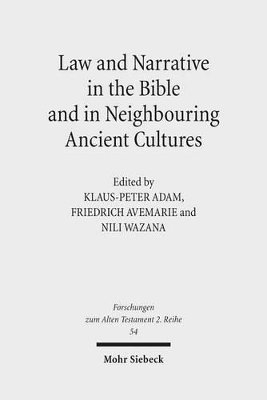
Del 54 - Forschungen zum Alten Testament 2. Reihe
Law and Narrative in the Bible and in Neighbouring Ancient Cultures
Häftad, Engelska, 2012
1 636 kr
Skickas inom 5-8 vardagar
Recht ist nicht nur Gegenstand von Rechtssätzen, sondern ist oft auch zentraler Gegenstand literarischer Texte: Bestehende Rechtsverhältnisse können den historischen oder fiktiven Rahmen eines Dramas oder einer Erzählhandlung bestimmen. Erzählungen können darauf abzielen, Rechtsnormen einzuführen, zu propagieren, zu problematisieren oder gar anzuprangern und sie sind konstitutiver Bestandteil von Strategien zur Durchsetzung konkreter rechtlich begründeter Forderungen. Die Autoren der Beiträge des vorliegenden Bandes wählen aus den Feldern des Verfassungs- und Verwaltungsrechts, des Verfahrensrechts, des Familien- und Erbrechts, sowie Eigentum, Schadensersatz, Strafe, Privilegierung, Versorgung. Sie untersuchen literarische Texte und Gebrauchstexte aus der Bibel, dem alten Orient, dem frühen Judentum und der klassischen Antike.