Kondakindi Venkateswar Reddy - Böcker
Visar alla böcker från författaren Kondakindi Venkateswar Reddy. Handla med fri frakt och snabb leverans.
6 produkter
6 produkter
1 900 kr
Skickas inom 10-15 vardagar
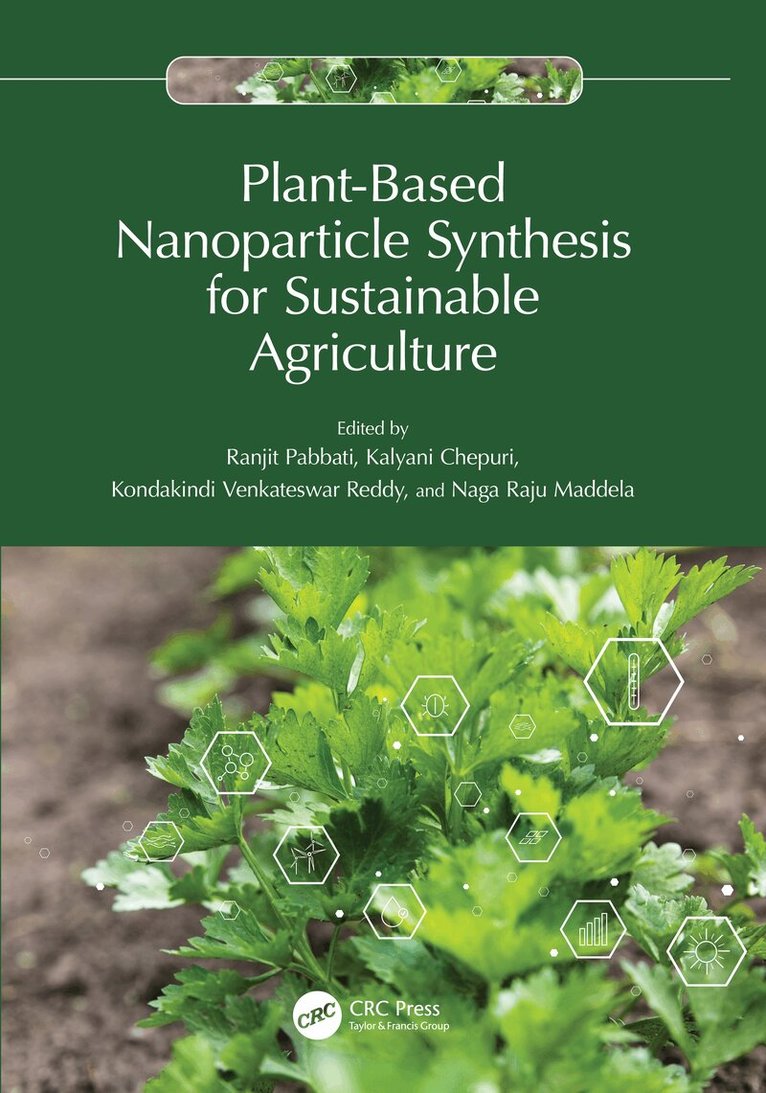
The use of nanotechnology in agriculture has created many concerns related to toxicity and environmental implications. Green synthesis techniques for producing nanomaterials utilizing plants, microorganisms, and other natural resources have been developed in response to the demand for green chemistry and nanotechnology. This book provides in-depth information on the plant-based synthesis of nanoparticles and how it promotes sustainable agriculture. It critically reviews nanomaterials synthesized from plants and their potential applications, including nanoscale insecticides, herbicides, fungicides, fertilizers, and sensors, which can help to study and manage plant health and soil fertility.The features of this volume include:A comprehensive resource on plant-based nanoparticle synthesis and its usage in gene transformation;Strategies and limitations of plants that are genetically engineered using nanotechnology;Explanation of the design and use of nanofertilizers and nonopesticides for environmental sustainability;Discussions around the toxicity levels of nanoparticles in plants;Aids for professionals and scholars to learn advanced techniques to monitor soil and plant systems using nanotechnology.This is an excellent reference for researchers, academics, students, and professionals in nanotechnology, biochemistry, biomedical sciences, biotechnology, environmental engineering, agricultural sciences, and plant sciences.
Nanotechnology and Emerging Contaminants in Drinking Water
Advanced Solutions for Purification
Inbunden, Engelska, 2026
2 185 kr
Kommande
This book delves into the cutting-edge application of nanotechnology for the detection, removal, and degradation of emerging contaminants in drinking water. It covers a wide range of nanomaterials detailing their synthesis, functionalization, and deployment in water treatment processes. It presents case studies and pilot projects that demonstrate the scalability of these technologies, providing valuable insights into the challenges and opportunities associated with integrating nanomaterials into existing water infrastructure.Features:Discusses the concept of emerging contaminants in drinking water, such as pharmaceuticals, personal care products, and microplasticsProvides an overview of traditional water treatment methods and their limitations in removing these contaminantsExamines nanomaterials as a promising solution for capturing and degrading contaminants at the molecular level in drinking waterEstablishes strong connections between theoretical mechanisms and nanotechnology applicationsPresents the current state of nanomaterial-based water treatment technologies in real-world applications, including industrial and municipal water treatment plantsThis book is aimed at graduate students and researchers in environmental and chemical engineering, and water treatment.
1 588 kr
Skickas inom 10-15 vardagar
This contributed volume gives a state-of-the-art overview of microplastics and nanoplastics (MPs and NPs) in soils and their relationship with growing plants.
634 kr
Skickas inom 5-8 vardagar
1 588 kr
Skickas inom 10-15 vardagar
This contributed volume gives a state-of-the-art overview of microplastics and nanoplastics (MPs and NPs) in soils and their relationship with growing plants.
Emerging Contaminants in the Environment
Occurrence, Detection and Biodegradation
Inbunden, Engelska, 2026
2 115 kr
Skickas inom 10-15 vardagar
Emerging contaminants (ECs) have become a critical environmental concern as evidence of their toxicity continues to grow. Once overlooked, these pollutants pose serious risks to water, soil, ecosystems, and ultimately human health. This contributed volume provides a comprehensive examination of ECs, beginning with their classification, changing nature, and environmental pathways. It then addresses the ecological risks documented in terrestrial, aquatic, and atmospheric systems, highlighting the challenges of assessing their long-term effects. The final section surveys current and emerging remediation strategies, including microbial bioremediation, biosorbent-based adsorption, and advanced oxidation processes. The book offers valuable insights for researchers, practitioners, and students engaged with environmental science and pollution control.