Konrad Wiese – författare
Visar alla böcker från författaren Konrad Wiese. Handla med fri frakt och snabb leverans.
6 produkter
6 produkter
Inbunden, Engelska, 2002
2 176 kr
Skickas inom 10-15 vardagar
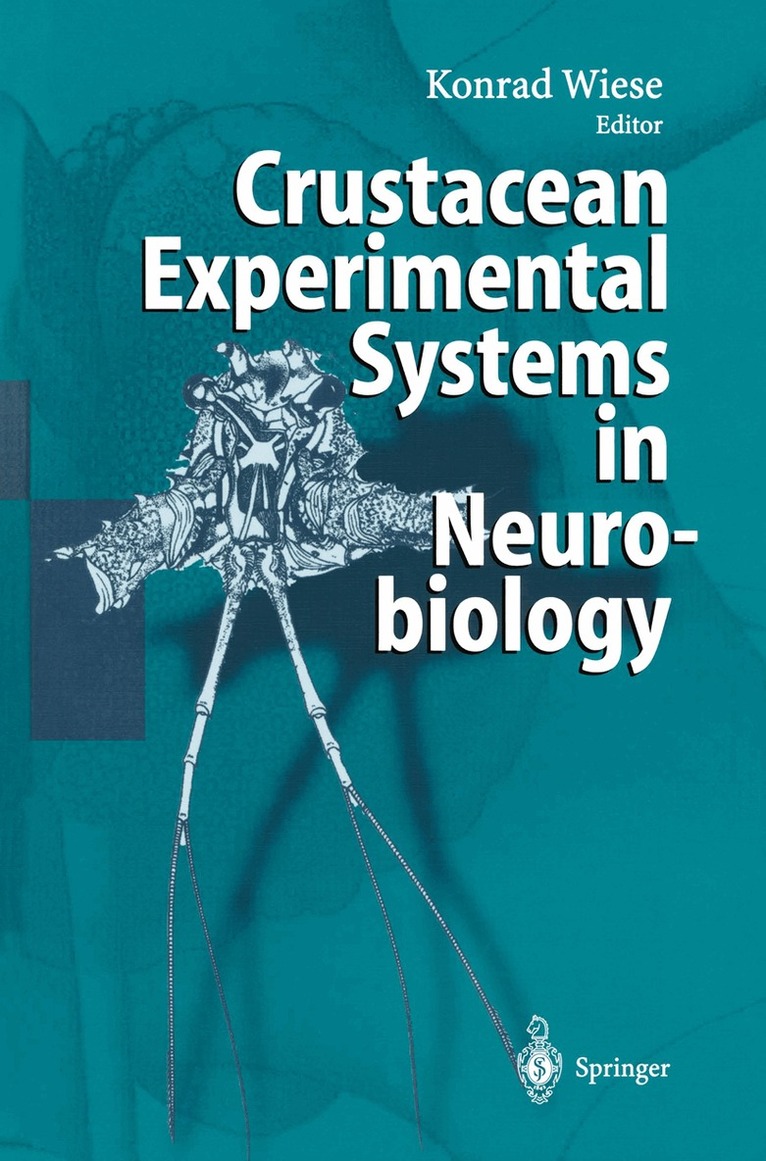
This book contains excellent reviews on significant topics in crustacean neurobiology, introductory texts for classroom usage, examples for exciting original research, an account of a new research strategy and a new concept for teaching the principles of neuroscience, all written by renowned scientists from all over the world. In short, exciting reading for every neurobiologist.
Inbunden, Engelska, 2001
3 260 kr
Skickas inom 10-15 vardagar
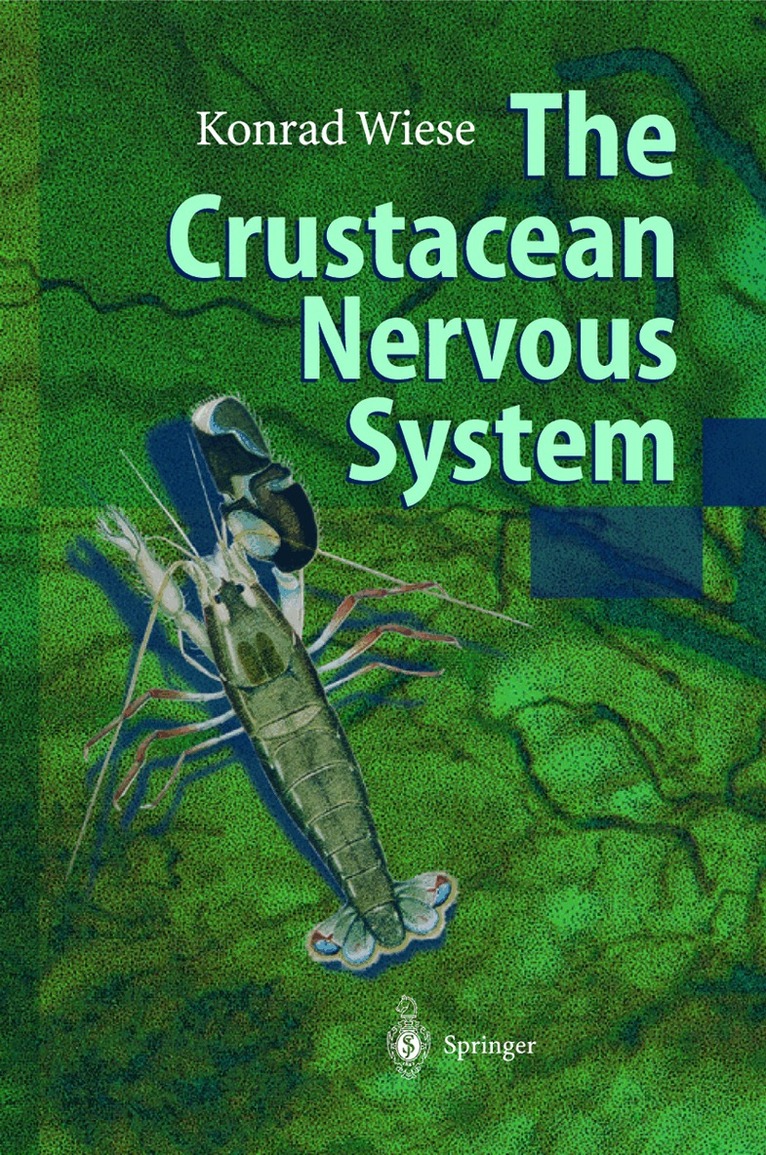
Crustacean preparations have been successfully used for more than 50 years to investigate the principles which enable nerve cells and neural circuitry to perform in a wide variety of functions. The proud record of information of general significance obtained from crayfish and lobster nervous systems testifies that the use of an experimental system precisely matching theoretical and experimental requirements ofa measurement is an essential part of the success. In some respects, the secondarily diversified vertebrate and mammalian nervous systems pose severe obstacles to experimentation and measurement, whereas the crustacean nervous system recommends itself by being composed of individual neurons of unique morphology and physiology, which can be used repeatedly in several preparations. Moreover, a restricted number of invariantly displayed behaviors enable the experimenter to correlate neuron activity with parts of the behavior easier. Experts use these advantages to focus on a well-defined neuron and mechanism and to take a convincing measurement within a minimum amount oftime. In this book distinguished neurobiologists, the leading experts in the field, have joined efforts to present research using crustacean experimental systems. Thus they have contributed comprehensive information regarding a nervous system other than that ofvertebrates and mammalians, that ofcrustaceans. The accumulated knowledge on the crustacean nervous system shows that it is clearly divergent in evolution but functions in a similar way to neuronal circuitry found in the vertebrate system and can be used to interpret it.
Häftad, Engelska, 2010
3 260 kr
Skickas inom 10-15 vardagar
Crustacean preparations have been successfully used for more than 50 years to investigate the principles which enable nerve cells and neural circuitry to perform in a wide variety of functions. The proud record of information of general significance obtained from crayfish and lobster nervous systems testifies that the use of an experimental system precisely matching theoretical and experimental requirements ofa measurement is an essential part of the success. In some respects, the secondarily diversified vertebrate and mammalian nervous systems pose severe obstacles to experimentation and measurement, whereas the crustacean nervous system recommends itself by being composed of individual neurons of unique morphology and physiology, which can be used repeatedly in several preparations. Moreover, a restricted number of invariantly displayed behaviors enable the experimenter to correlate neuron activity with parts of the behavior easier. Experts use these advantages to focus on a well-defined neuron and mechanism and to take a convincing measurement within a minimum amount oftime. In this book distinguished neurobiologists, the leading experts in the field, have joined efforts to present research using crustacean experimental systems. Thus they have contributed comprehensive information regarding a nervous system other than that ofvertebrates and mammalians, that ofcrustaceans. The accumulated knowledge on the crustacean nervous system shows that it is clearly divergent in evolution but functions in a similar way to neuronal circuitry found in the vertebrate system and can be used to interpret it.
E-bok
PDF, Engelska, 20122 680 kr
Läs direkt efter köp
This book represents Part 2 of a venture started by distinguished neuroscientists to visualize and advertise the experimentally advantageous preparations of the crustacean nervous system. The advantage is a combination of ease of dissection of key structures and the possibility of repeatedly accessing identified individual cells to measure the detailed response of the system to the experimentally imposed stimulus program. Of course, the neurosciences have to focus their research on the nervous system of mammals and man in order to understand the principles of function and their regulation if malfunctions occur. This is in line with efforts to investigate nervous systems throughout the animal kingdom. The specific potential of the encountered systems for exploratory research into hitherto unexplained functions of the brain may very well be a key to new insights. The simply organized nervous system of crustaceans performs tasks of vital importance imposed on the organism. Hence this system consists of a complete set of neural circuitry open for inspection and measurement by systematic investigation. The first volume, The Crustacean Nervous System, contains exhaustive reports on experimental work from all sectors of neuroscience using crayfish and lobsters. This second volume, Crustacean Experimental Systems in Neurobiology", contains excellent reviews on significant topics in neurobiology. Each section is introduced by short texts written by the section editors of the Crustacean Nervous System. More, prominent authors explain their approach to understanding the brain using a selection of experiments involving visual orientation, neuromuscular systems and identification of principles of neural processing.
Häftad, Engelska, 2012
2 501 kr
Skickas inom 10-15 vardagar
This book represents Part 2 of a venture started by distinguished neuroscientists to visualize and advertise the experimentally advantageous preparations of the crustacean nervous system. The advantage is a combination of ease of dissection of key structures and the possibility of repeatedly accessing identified individual cells to measure the detailed response of the system to the experimentally imposed stimulus program. Of course, the neurosciences have to focus their research on the nervous system of mammals and man in order to understand the principles of function and their regulation if malfunctions occur. This is in line with efforts to investigate nervous systems throughout the animal kingdom. The specific potential of the encountered systems for exploratory research into hitherto unexplained functions of the brain may very well be a key to new insights. The simply organized nervous system of crustaceans performs tasks of vital importance imposed on the organism. Hence this system consists of a complete set of neural circuitry open for inspection and measurement by systematic investigation. The first volume, The Crustacean Nervous System, contains exhaustive reports on experimental work from all sectors of neuroscience using crayfish and lobsters. This second volume, Crustacean Experimental Systems in Neurobiology", contains excellent reviews on significant topics in neurobiology. Each section is introduced by short texts written by the section editors of the Crustacean Nervous System. More, prominent authors explain their approach to understanding the brain using a selection of experiments involving visual orientation, neuromuscular systems and identification of principles of neural processing.
E-bok
PDF, Engelska, 20133 809 kr
Läs direkt efter köp
Crustacean preparations have been successfully used for more than 50 years to investigate the principles which enable nerve cells and neural circuitry to perform in a wide variety of functions. The proud record of information of general significance obtained from crayfish and lobster nervous systems testifies that the use of an experimental system precisely matching theoretical and experimental requirements ofa measurement is an essential part of the success. In some respects, the secondarily diversified vertebrate and mammalian nervous systems pose severe obstacles to experimentation and measurement, whereas the crustacean nervous system recommends itself by being composed of individual neurons of unique morphology and physiology, which can be used repeatedly in several preparations. Moreover, a restricted number of invariantly displayed behaviors enable the experimenter to correlate neuron activity with parts of the behavior easier. Experts use these advantages to focus on a well-defined neuron and mechanism and to take a convincing measurement within a minimum amount oftime. In this book distinguished neurobiologists, the leading experts in the field, have joined efforts to present research using crustacean experimental systems. Thus they have contributed comprehensive information regarding a nervous system other than that ofvertebrates and mammalians, that ofcrustaceans. The accumulated knowledge on the crustacean nervous system shows that it is clearly divergent in evolution but functions in a similar way to neuronal circuitry found in the vertebrate system and can be used to interpret it.