Kristine Hoglund – författare
2 617 kr
Skickas inom 10-15 vardagar
712 kr
Skickas inom 10-15 vardagar
757 kr
Läs direkt efter köp
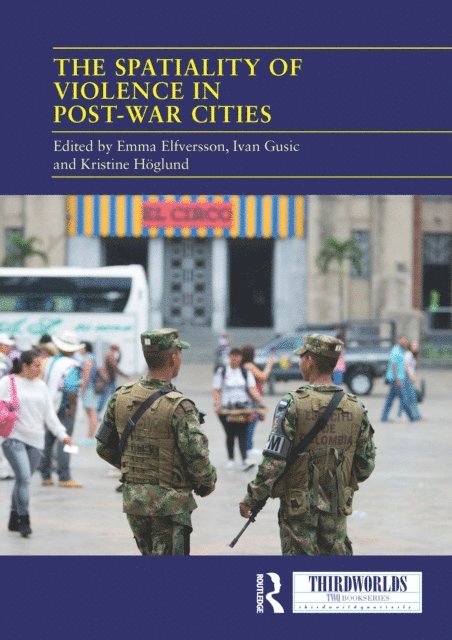
The Spatiality of Violence in Post-war Cities analyses violence in post-war cities from different perspectives and in different parts of the world, with a shared attention to space and how it affects violent dynamics.
The world is urbanising rapidly and cities are increasingly held as the most important arenas for sustainable development. Cities emerging from war are no exception, but across the globe, many post-war cities are ravaged by residual or renewed violence, which threatens progress towards peace and stability. This volume addresses why such violence happens, where and how it manifests, and how it can be prevented. It includes contributions that are informed by both post-war logics and urban particularities, that take intra-city dynamics into account, and that adopt a spatial analysis of the city. They focus on cases around the world, including Medellín (Colombia), Johannesburg (South Africa) and Mitrovica (Kosovo). The volume makes a threefold contribution to the research agenda on violence in post-war cities. First, the contributions nuance our understanding of the causes and forms of the uneven spatial distribution of violence, insecurities, and trauma within and across post-war cities. Second, the collection demonstrates how urban planning and the built environment shape and generate different forms of violence in post-war cities. Third, the contributions explore the challenges, opportunities, and potential unintended consequences of conflict resolution in violent urban settings.
Providing novel insights into the causes and dynamics of violence in post-war cities, and challenges and opportunities for violence reduction, The Spatiality of Violence in Post-war Cities will be of great interest to scholars of peace, violence, conflict and its resolution, urban studies, built environment and planning.
The chapters were originally published as a special issue of Third World Thematics.
730 kr
Läs direkt efter köp
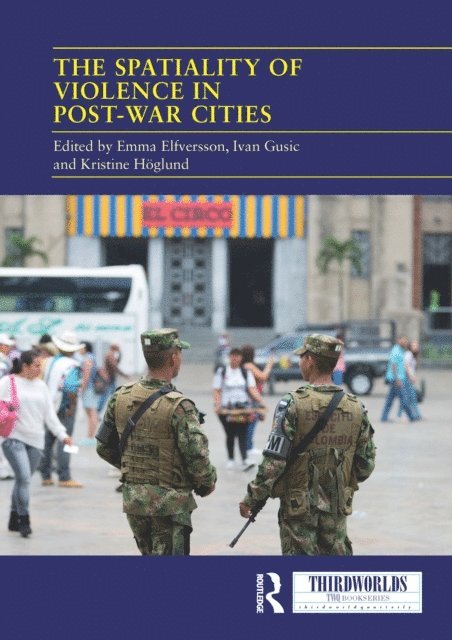
The Spatiality of Violence in Post-war Cities analyses violence in post-war cities from different perspectives and in different parts of the world, with a shared attention to space and how it affects violent dynamics.
The world is urbanising rapidly and cities are increasingly held as the most important arenas for sustainable development. Cities emerging from war are no exception, but across the globe, many post-war cities are ravaged by residual or renewed violence, which threatens progress towards peace and stability. This volume addresses why such violence happens, where and how it manifests, and how it can be prevented. It includes contributions that are informed by both post-war logics and urban particularities, that take intra-city dynamics into account, and that adopt a spatial analysis of the city. They focus on cases around the world, including Medellín (Colombia), Johannesburg (South Africa) and Mitrovica (Kosovo). The volume makes a threefold contribution to the research agenda on violence in post-war cities. First, the contributions nuance our understanding of the causes and forms of the uneven spatial distribution of violence, insecurities, and trauma within and across post-war cities. Second, the collection demonstrates how urban planning and the built environment shape and generate different forms of violence in post-war cities. Third, the contributions explore the challenges, opportunities, and potential unintended consequences of conflict resolution in violent urban settings.
Providing novel insights into the causes and dynamics of violence in post-war cities, and challenges and opportunities for violence reduction, The Spatiality of Violence in Post-war Cities will be of great interest to scholars of peace, violence, conflict and its resolution, urban studies, built environment and planning.
The chapters were originally published as a special issue of Third World Thematics.
811 kr
Läs direkt efter köp
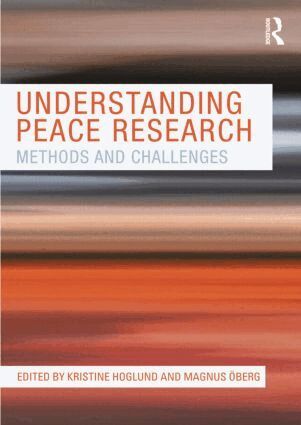
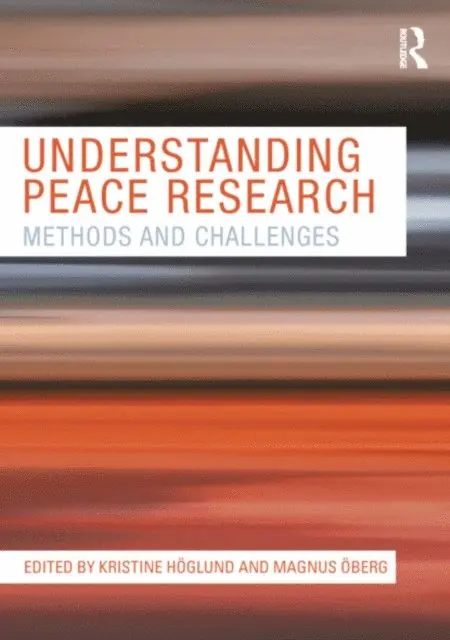
This textbook provides a comprehensive overview of different methods and sources of information-gathering for peace and conflict students and researchers, as well as the challenges presented by such work.
Research on conflict-ridden societies carries special challenges for the collection and evaluation of information about the conflict and its actors. First, due to the nature of information emerging, incentives to misrepresent and propaganda is common. News coverage is sometimes poor and reporting is often incomplete, selective and biased. Second, the sensitivity of the topic and the questions posed in peace and conflict research means that access to and the security of informants can be a problem.
Peace and conflict research as a discipline encompasses a number of different approaches for obtaining empirical information which serve as a basis for analyzing various research topics. This book provides a comprehensive overview of different methods and sources of information-gathering for students and researchers, as well as the challenges presented by such work. It offers:
tools for evaluating sources and information
suggestions on where different types of information can be found
advice on using different types of sources, including news reports and written narratives
practical guidelines for constructing large-scale datasets
insights and guidelines for comparative fieldwork, in-depth interviews, focus groups, and surveys
reflection and discussion on important ethical concerns in peace research
This book will be of much interest for students and researchers of peace and conflict studies, conflict resolution, war and conflict studies, development studies, security studies and IR, as well as for NGO workers/researchers.
Kristine Höglund is Associate Professor at the Department of Peace and Conflict Research, Uppsala University. She has a PhD in Peace and Conflict Research from Uppsala University Sweden (2004). She is author of Peacemaking in the Shadow of Violence.
Magnus Öberg is Associate Professor at the Department of Peace and Conflict Research, Uppsala University, and Associate Editor of the Journal of Peace Research (since 2006). He has a PhD in Peace and Conflict Research from Uppsala University (2003) and is co-editor of Resources, Governance, and Civil Conflict (Routledge, 2008).
811 kr
Läs direkt efter köp
This textbook provides a comprehensive overview of different methods and sources of information-gathering for peace and conflict students and researchers, as well as the challenges presented by such work.
Research on conflict-ridden societies carries special challenges for the collection and evaluation of information about the conflict and its actors. First, due to the nature of information emerging, incentives to misrepresent and propaganda is common. News coverage is sometimes poor and reporting is often incomplete, selective and biased. Second, the sensitivity of the topic and the questions posed in peace and conflict research means that access to and the security of informants can be a problem.
Peace and conflict research as a discipline encompasses a number of different approaches for obtaining empirical information which serve as a basis for analyzing various research topics. This book provides a comprehensive overview of different methods and sources of information-gathering for students and researchers, as well as the challenges presented by such work. It offers:
tools for evaluating sources and information
suggestions on where different types of information can be found
advice on using different types of sources, including news reports and written narratives
practical guidelines for constructing large-scale datasets
insights and guidelines for comparative fieldwork, in-depth interviews, focus groups, and surveys
reflection and discussion on important ethical concerns in peace research
This book will be of much interest for students and researchers of peace and conflict studies, conflict resolution, war and conflict studies, development studies, security studies and IR, as well as for NGO workers/researchers.
Kristine Höglund is Associate Professor at the Department of Peace and Conflict Research, Uppsala University. She has a PhD in Peace and Conflict Research from Uppsala University Sweden (2004). She is author of Peacemaking in the Shadow of Violence.
Magnus Öberg is Associate Professor at the Department of Peace and Conflict Research, Uppsala University, and Associate Editor of the Journal of Peace Research (since 2006). He has a PhD in Peace and Conflict Research from Uppsala University (2003) and is co-editor of Resources, Governance, and Civil Conflict (Routledge, 2008).
824 kr
Läs direkt efter köp
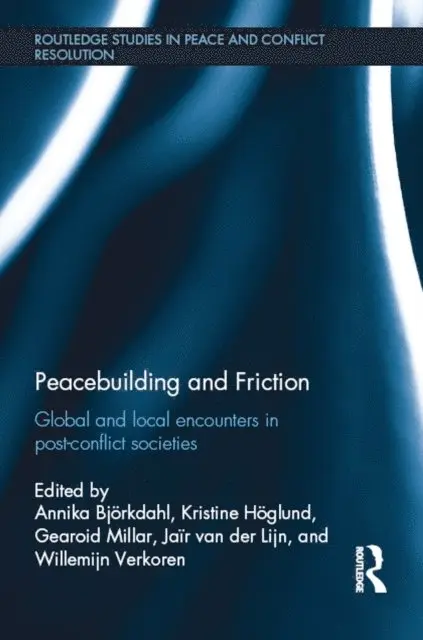
This book aims to understand the processes and outcomes that arise from frictional encounters in peacebuilding, when global and local forces meet.
Building a sustainable peace after violent conflict is a process that entails competing ideas, political contestation and transformation of power relations. This volume develops the concept of ‘friction’ to better analyse the interplay between global ideas, actors, and practices, and their local counterparts. The chapters examine efforts undertaken to promote sustainable peace in a variety of locations, such as Cambodia, Sri Lanka, Afghanistan, and Sierra Leone. These case analyses provide a nuanced understanding not simply of local processes, or of the hybrid or mixed agencies, ideas, and processes that are generated, but of the complex interactions that unfold between all of these elements in the context of peacebuilding intervention. The analyses demonstrate how the ambivalent relationship between global and local actors leads to unintended and sometimes counterproductive results of peacebuilding interventions. The approach of this book, with its focus on friction as a conceptual tool, advances the peacebuilding research agenda and adds to two ongoing debates in the peacebuilding field; the debate on hybridity, and the debate on local agency and local ownership. In analysing frictional encounters this volume prepares the ground for a better understanding of the mixed impact peace initiatives have on post-conflict societies.
This book will be of much interest to students of peacebuilding, conflict resolution, security studies, and international relations in general.
795 kr
Läs direkt efter köp
This book aims to understand the processes and outcomes that arise from frictional encounters in peacebuilding, when global and local forces meet.
Building a sustainable peace after violent conflict is a process that entails competing ideas, political contestation and transformation of power relations. This volume develops the concept of ‘friction’ to better analyse the interplay between global ideas, actors, and practices, and their local counterparts. The chapters examine efforts undertaken to promote sustainable peace in a variety of locations, such as Cambodia, Sri Lanka, Afghanistan, and Sierra Leone. These case analyses provide a nuanced understanding not simply of local processes, or of the hybrid or mixed agencies, ideas, and processes that are generated, but of the complex interactions that unfold between all of these elements in the context of peacebuilding intervention. The analyses demonstrate how the ambivalent relationship between global and local actors leads to unintended and sometimes counterproductive results of peacebuilding interventions. The approach of this book, with its focus on friction as a conceptual tool, advances the peacebuilding research agenda and adds to two ongoing debates in the peacebuilding field; the debate on hybridity, and the debate on local agency and local ownership. In analysing frictional encounters this volume prepares the ground for a better understanding of the mixed impact peace initiatives have on post-conflict societies.
This book will be of much interest to students of peacebuilding, conflict resolution, security studies, and international relations in general.