Kshitij Sharma – författare
Visar alla böcker från författaren Kshitij Sharma. Handla med fri frakt och snabb leverans.
3 produkter
3 produkter
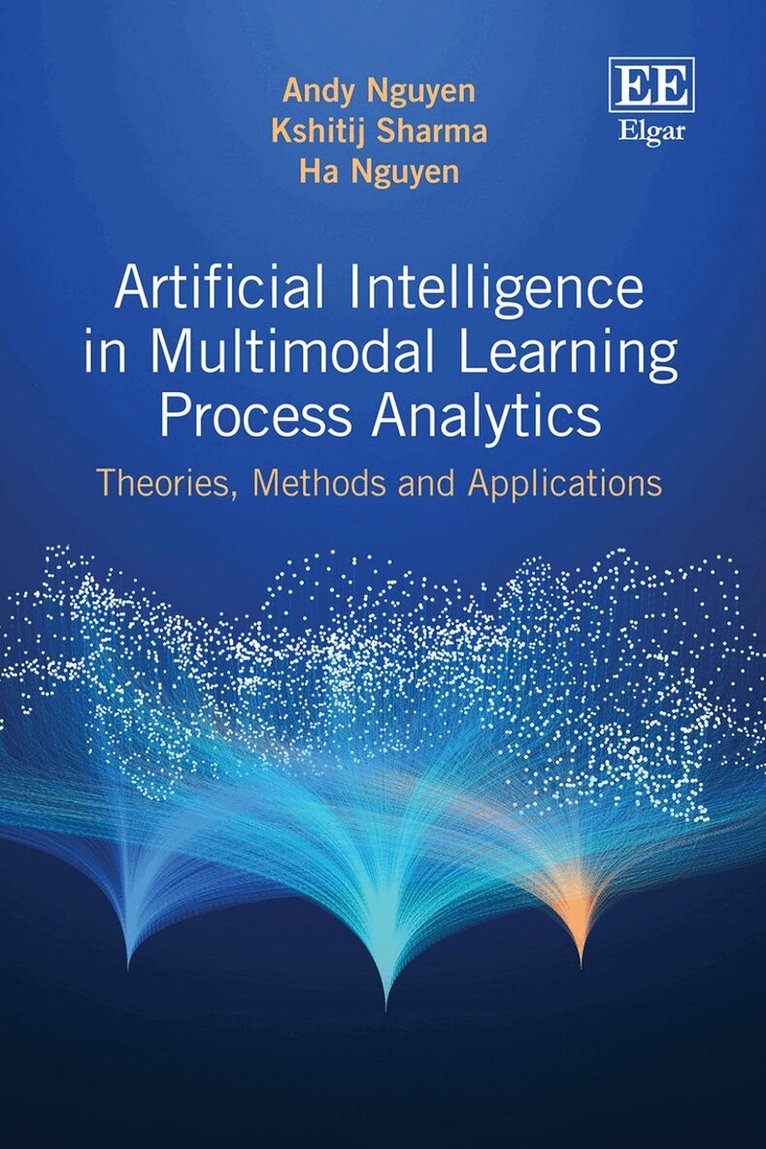
Artificial Intelligence in Multimodal Learning Process Analytics
Theories, Methods and Applications
Inbunden, Engelska, 2026
1 519 kr
Skickas inom 5-8 vardagar
In this cutting-edge book, Andy Nguyen, Kshitij Sharma and Ha Nguyen explain how AI can improve our understanding of how people learn. The authors demonstrate how, by analysing multimodal data from different channels, including eye gazes, physiological data and self-reports, AI can provide a clearer picture of what learners think, feel, and do, going far beyond traditional tests or surveys.The authors introduce both classical and deep learning methods for collecting and analyzing data, with a particular focus on multimodal learning process analytics. They explore how large language models and generative AI tools can facilitate human-AI collaboration, while addressing ethical and privacy issues such as fairness, transparency and inclusivity. Integrating theoretical, methodological, and practical perspectives, authors demonstrate how using AI responsibly and thoughtfully can create more inclusive, adaptive and evidence-based learning environments.Artificial Intelligence in Multimodal Learning Process Analytics is a vital reference for scholars and students of learning sciences and pedagogy, particularly those focusing on educational technology, learning analytics and human-computer interaction. It is also highly beneficial for educators and educational policymakers interested in how AI can support learning.
1 894 kr
Skickas inom 10-15 vardagar
This handbook is the first book ever covering the area of Multimodal Learning Analytics (MMLA). The field of MMLA is an emerging domain of Learning Analytics and plays an important role in expanding the Learning Analytics goal of understanding and improving learning in all the different environments where it occurs. The challenge for research and practice in this field is how to develop theories about the analysis of human behaviors during diverse learning processes and to create useful tools that could augment the capabilities of learners and instructors in a way that is ethical and sustainable. Behind this area, the CrossMMLA research community exchanges ideas on how we can analyze evidence from multimodal and multisystem data and how we can extract meaning from this increasingly fluid and complex data coming from different kinds of transformative learning situations and how to best feed back the results of these analyses to achieve positive transformative actions on those learning processes.This handbook also describes how MMLA uses the advances in machine learning and affordable sensor technologies to act as a virtual observer/analyst of learning activities. The book describes how this “virtual nature” allows MMLA to provide new insights into learning processes that happen across multiple contexts between stakeholders, devices and resources. Using such technologies in combination with machine learning, Learning Analytics researchers can now perform text, speech, handwriting, sketches, gesture, affective, or eye-gaze analysis, improve the accuracy of their predictions and learned models and provide automated feedback to enable learner self-reflection. However, with this increased complexity in data, new challenges also arise. Conducting the data gathering, pre-processing, analysis, annotation and sense-making, in a way that is meaningful for learning scientists and other stakeholders (e.g., students or teachers), still pose challenges in this emergent field. This handbook aims to serve as a unique resource for state of the art methods and processes.Chapter 11 of this book is available open access under a CC BY 4.0 license at link.springer.com.
1 894 kr
Skickas inom 10-15 vardagar
This handbook is the first book ever covering the area of Multimodal Learning Analytics (MMLA). The field of MMLA is an emerging domain of Learning Analytics and plays an important role in expanding the Learning Analytics goal of understanding and improving learning in all the different environments where it occurs. The challenge for research and practice in this field is how to develop theories about the analysis of human behaviors during diverse learning processes and to create useful tools that could augment the capabilities of learners and instructors in a way that is ethical and sustainable. Behind this area, the CrossMMLA research community exchanges ideas on how we can analyze evidence from multimodal and multisystem data and how we can extract meaning from this increasingly fluid and complex data coming from different kinds of transformative learning situations and how to best feed back the results of these analyses to achieve positive transformative actions on those learning processes.This handbook also describes how MMLA uses the advances in machine learning and affordable sensor technologies to act as a virtual observer/analyst of learning activities. The book describes how this “virtual nature” allows MMLA to provide new insights into learning processes that happen across multiple contexts between stakeholders, devices and resources. Using such technologies in combination with machine learning, Learning Analytics researchers can now perform text, speech, handwriting, sketches, gesture, affective, or eye-gaze analysis, improve the accuracy of their predictions and learned models and provide automated feedback to enable learner self-reflection. However, with this increased complexity in data, new challenges also arise. Conducting the data gathering, pre-processing, analysis, annotation and sense-making, in a way that is meaningful for learning scientists and other stakeholders (e.g., students or teachers), still pose challenges in this emergent field. This handbook aims to serve as a unique resource for state of the art methods and processes.Chapter 11 of this book is available open access under a CC BY 4.0 license at link.springer.com.