Kunal Biswas – författare
Visar alla böcker från författaren Kunal Biswas. Handla med fri frakt och snabb leverans.
9 produkter
Carbon-Based Nanomaterials in Biosystems
Biophysical Interface at Lower Dimensions
Av Kunal Biswas, Yugal Kishore Mohanta m. fl.
Häftad, 2024
1727 kr
Lägg i varukorg
Carbon-Based Nanomaterials in Biosystems: Biophysical interface at Lower Dimensions provides a thoroughly comprehensive overview of all major aspects of carbon-based nanomaterials, their biophysical response, and biotechnological applications. The book articulates the underlying physics, chemistry, …
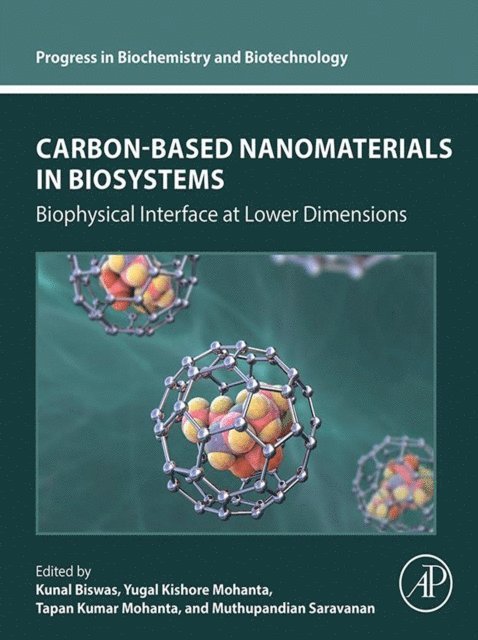
Carbon-Based Nanomaterials in Biosystems
Biophysical Interface at Lower Dimensions
Av Muthupandian Saravanan, Tapan Kumar Mohanta m. fl.
E-bok, 2024
2457 kr
Lägg i varukorg
Carbon-Based Nanomaterials in Biosystems: Biophysical interface at Lower Dimensions provides a thoroughly comprehensive overview of all major aspects of carbon-based nanomaterials, their biophysical response, and biotechnological application. The book articulates the underlying physics, chemistry, …
Nanomaterials in Aquatic Ecosystems
Sustainable Applications, Risks, and Innovations
Häftad, 2027
2573 kr
Kommande
Nanomaterials in Aquatic Ecosystems: Sustainable Applications, Risks, and Innovations reviews the interactions of nanomaterials with aquatic species and ecosystems, covering their synthesis, applications, environmental impacts, and regulatory frameworks. The book begins with foundational concepts, …
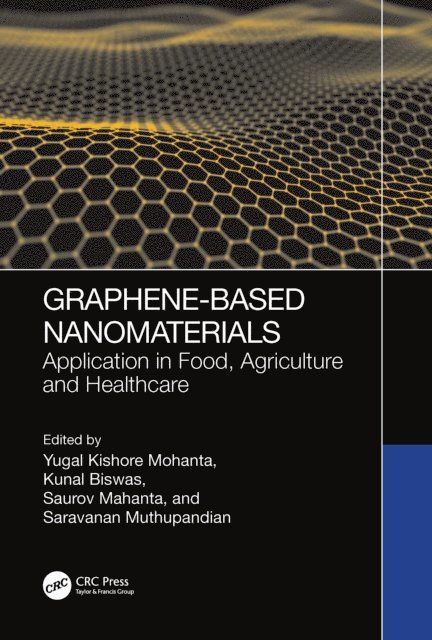
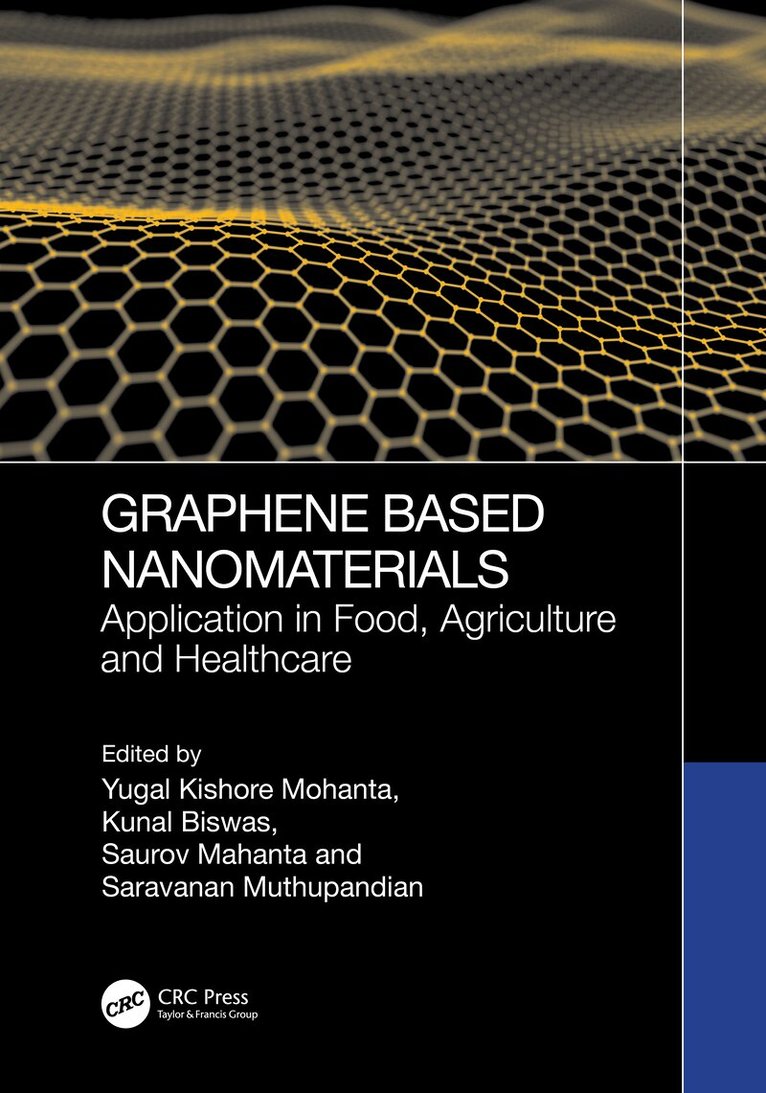
Graphene-Based Nanomaterials
Application in Food, Agriculture and Healthcare
Av Saravanan Muthupandian, Saurov Mahanta m. fl.
E-bok, 2024
1030 kr
Lägg i varukorg
The book presents a comprehensive overview of the historical, current, and prospective application realms of nanobiotechnological research pertaining to graphene, a carbon-based nanomaterial, and its diverse forms in the fields of food and agriculture, as well as health sciences and technology. …
Graphene-Based Nanomaterials
Application in Food, Agriculture and Healthcare
Av Saravanan Muthupandian, Saurov Mahanta m. fl.
E-bok, 2024
1052 kr
Lägg i varukorg
The book presents a comprehensive overview of the historical, current, and prospective application realms of nanobiotechnological research pertaining to graphene, a carbon-based nanomaterial, and its diverse forms in the fields of food and agriculture, as well as health sciences and technology. …
Graphene-Based Nanomaterials
Application in Food, Agriculture and Healthcare
Av Yugal Kishore Mohanta, Kunal Biswas m. fl.
Inbunden, 2024
2516 kr
Lägg i varukorg
The book presents a comprehensive overview of the historical, current, and prospective application realms of nanobiotechnological research pertaining to graphene, a carbon-based nanomaterial, and its diverse forms in the fields of food and agriculture, as well as health sciences and technology. …
Graphene-Based Nanomaterials
Application in Food, Agriculture and Healthcare
Av Yugal Kishore Mohanta, Kunal Biswas m. fl.
Häftad, 2026
848 kr
Lägg i varukorg
The book presents a comprehensive overview of the historical, current, and prospective application realms of nanobiotechnological research pertaining to graphene, a carbon-based nanomaterial, and its diverse forms in the fields of food and agriculture, as well as health sciences and technology. …
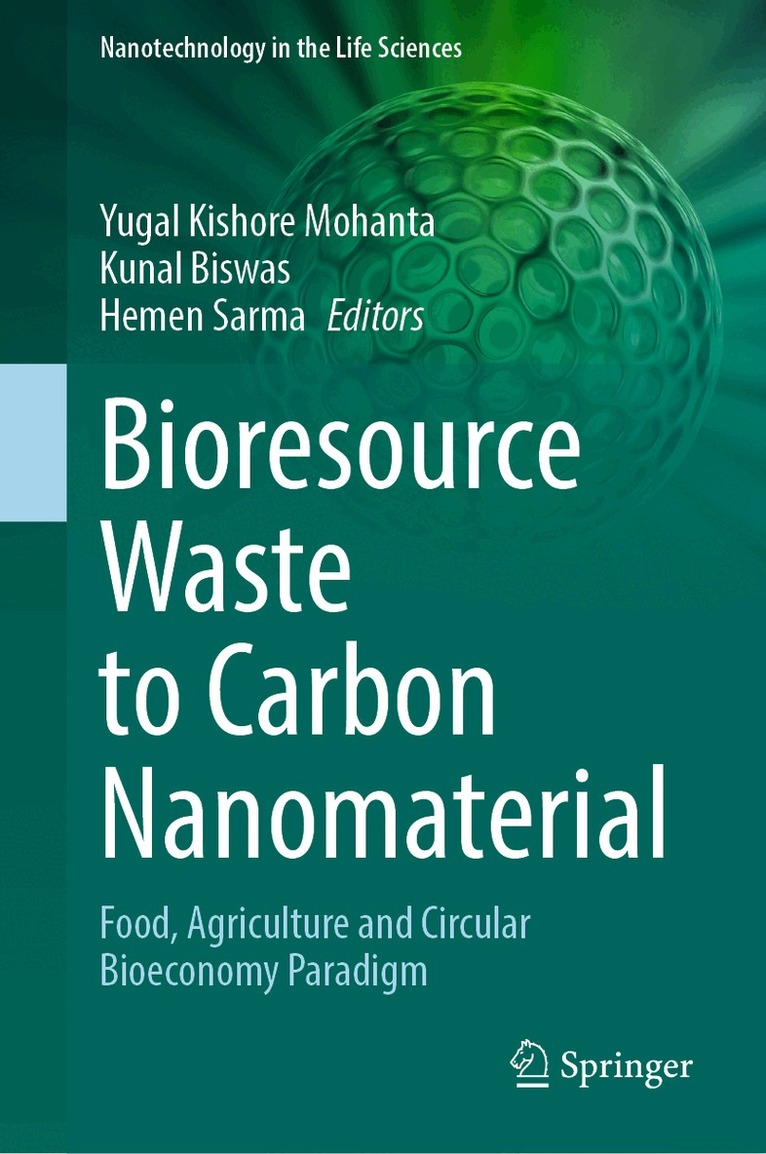
Bioresource Waste to Carbon Nanomaterial
Food, Agriculture and Circular Bioeconomy Paradigm
Av Yugal Kishore Mohanta, Kunal Biswas m. fl.
Inbunden, 2026
1956 kr
Lägg i varukorg
This book explores strategies for transforming bio-resource waste into valuable carbon nanomaterials, contributing to the advancement of a circular bioeconomy. By bridging the domains of nanotechnology, waste valorization and sustainability, this volume highlights biosynthetic approaches for …
Bioresource Waste to Carbon Nanomaterial
Food, Agriculture and Circular Bioeconomy Paradigm
Av Hemen Sarma, Kunal Biswas m. fl.
E-bok, 2026
2543 kr
Lägg i varukorg
This book explores strategies for transforming bio-resource waste into valuable carbon nanomaterials, contributing to the advancement of a circular bioeconomy. By bridging the domains of nanotechnology, waste valorization and sustainability, this volume highlights biosynthetic approaches for …