L. Corazza – författare
Visar alla böcker från författaren L. Corazza. Handla med fri frakt och snabb leverans.
3 produkter
3 produkter
Inbunden, Engelska, 2002
1 091 kr
Skickas inom 10-15 vardagar
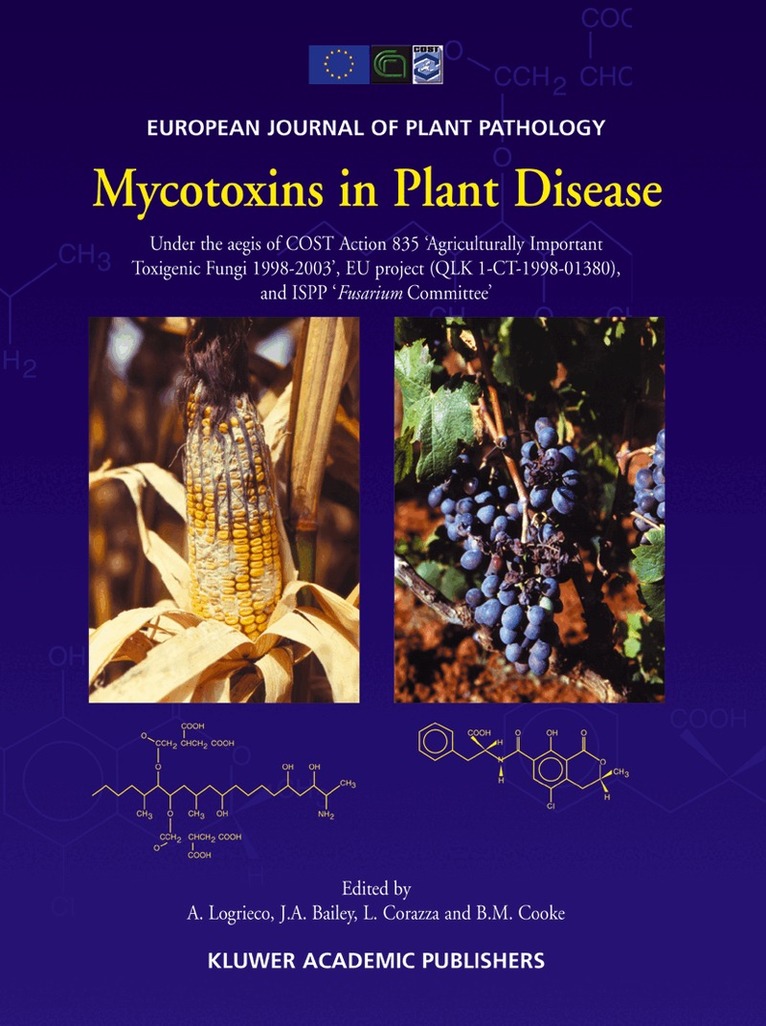
The accumulation of mycotoxins in plants and plant products is one of the most important consequences of plant diseases, especially those caused by species of Fusarium, Aspergillus and Penicillium. It has been estimated that 25 per cent of world food crops, including many basic food crops, are affected by mycotoxins. The toxins are responsible for various toxicities in animals and humans, including carcinogenic and teratogenic effects, and digestive, blood and nerve disorders. There is thus an urgent need to understand the nature of the toxigenic fungi that are widespread on economically important plant products and the role of these toxic secondary metabolites in the development of disease, that is as virulence or pathogenicity factors, in order to minimize the accumulation of these products in a range of food products. This volume has gathered together specialist reports compiled through EU-COST Action 835: Agriculturally Important Toxigenic Fungi. The contents should be of interest to scientists involved in the occurrence and nature of mycotoxins, their importance in the development of disease and the molecular nature of plant-pathogen interactions.The information will also be useful to those responsible for determining the levels of mycotoxins in human and animal food and deciding upon regulatory limitations on the levels of mycotoxins in agricultural products.
E-bok
PDF, Engelska, 20131 367 kr
Läs direkt efter köp
There is an urgent need to expand our knowledge of both the nature of the toxigenic fungi that are widespread on economically-important plants and the effect of their toxic secondary metabolites on human health. Informa tion about the production of mycotoxins by plant pathogens, particularly by species of Fusarium, Aspergillus and Penicillium, their occurrence in infected plants, as well as their role in the plant-pathogen interaction, for example as virulence/pathogenicity factors, is a pre-requisite for preventing plant disease and hence for reducing the Ievels of mycotoxin contamination. Fusarium infections in cereals and other crops are a particular problern world-wide and recent epidemics on wheat in Europe, the USA and Canada have again focused attention on this problem. Fur thermore, species ofAspergillus and Penicillium and their related mycotoxins, particularly Ochratoxin A, represent another consistent problern on cereals and grapes, especially in Europe where 40% of the global grape crop is grown. The aim of this publication is to gather together specialist updated reviews based on papers originally presented during a Workshop of EU Cost Action 835 entitled ''Agriculturally Important Taxigenie Fungi'', held in Rome, 7-8 October 1999 at the Plant Pathology Research Institute. We hope the diversity of the contents will stimulate discussion, encourage the sharing of information and result in cross-fertilization of ideas needed for the solution of the present problems. This special issue will be of particular value to interdisciplinary scientists and especially mycologists, mycotoxicologists, plant pathologists and those concerned about the quality of food and food products.
Häftad, Engelska, 2014
1 091 kr
Skickas inom 10-15 vardagar
There is an urgent need to expand our knowledge of both the nature of the toxigenic fungi that are widespread on economically-important plants and the effect of their toxic secondary metabolites on human health. Informa tion about the production of mycotoxins by plant pathogens, particularly by species of Fusarium, Aspergillus and Penicillium, their occurrence in infected plants, as well as their role in the plant-pathogen interaction, for example as virulence/pathogenicity factors, is a pre-requisite for preventing plant disease and hence for reducing the Ievels of mycotoxin contamination. Fusarium infections in cereals and other crops are a particular problern world-wide and recent epidemics on wheat in Europe, the USA and Canada have again focused attention on this problem. Fur thermore, species ofAspergillus and Penicillium and their related mycotoxins, particularly Ochratoxin A, represent another consistent problern on cereals and grapes, especially in Europe where 40% of the global grape crop is grown. The aim of this publication is to gather together specialist updated reviews based on papers originally presented during a Workshop of EU Cost Action 835 entitled 'Agriculturally Important Taxigenie Fungi', held in Rome, 7-8 October 1999 at the Plant Pathology Research Institute. We hope the diversity of the contents will stimulate discussion, encourage the sharing of information and result in cross-fertilization of ideas needed for the solution of the present problems. This special issue will be of particular value to interdisciplinary scientists and especially mycologists, mycotoxicologists, plant pathologists and those concerned about the quality of food and food products.