L. Gordon – författare
Visar alla böcker från författaren L. Gordon. Handla med fri frakt och snabb leverans.
18 produkter
18 produkter
E-bok
PDF, Engelska, 2016344 kr
Läs direkt efter köp
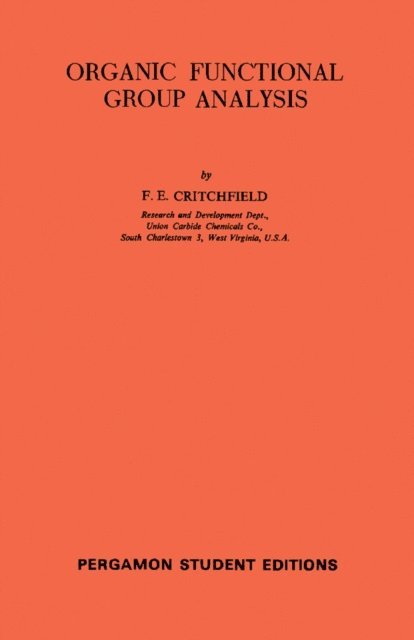
Organic Functional Group Analysis deals with versatile and reliable chemical methods for the analysis of most of the more common organic functional groups. The minimum number of methods required to solve the maximum number of problems is presented. The scope and known limitations of each method are discussed so that analytical chemists can decide whether the method under consideration can be applied to their particular problem. The methods are either titrimetric or colorimetric in nature. This volume is comprised of 11 chapters and begins with an overview of the analytical methods used for organic functional groups, including both titrimetric and colorimetric methods. The discussion then turns to the properties of acids and bases; selection of the best acid-base method for a particular purpose; and some of the more useful acid-base methods. Subsequent chapters explore methods for the determination of nitrogen compounds such as amines and amides; carbonyl compounds and derivatives; hydroxyl compounds such as tertiary alcohols; unsaturated compounds; 1,2-epoxy compounds; esters and peroxides; carboxylic acid anhydrides; and sulfur compounds. This book is intended for analytical chemists.
E-bok
PDF, Engelska, 2013344 kr
Läs direkt efter köp
Analytical Chemistry of the Actinide Elements presents a number of pertinent techniques for the analysis of actinides and provides sufficient information to guide the analyst in modifying procedures to meet special situations. The book begins with an introductory chapter on the discovery of elements 89-103, their oxidation state, and their electronic configuration. Information is provided on the safe handling of radioactive materials (all actinides are radioactive). The use of nuclear techniques in determining trace concentrations of actinides has led to the inclusion of chapters dealing with nuclear instrumentation and nuclear methods. Topics discussed include the preliminary treatment of samples; separations; emission spectroscopy and mass spectrometry; electrochemical, x-ray, and fluorimetric methods; isotopic analysis of uranium and some other actinides; and non-instrumental methods. Thus, the analytical chemist, if he is not already familiar with these techniques, is indoctrinated in a basic amount of nucleonics, to aid him in analyzing unusual materials with unusual techniques.
E-bok
PDF, Engelska, 2013756 kr
Läs direkt efter köp
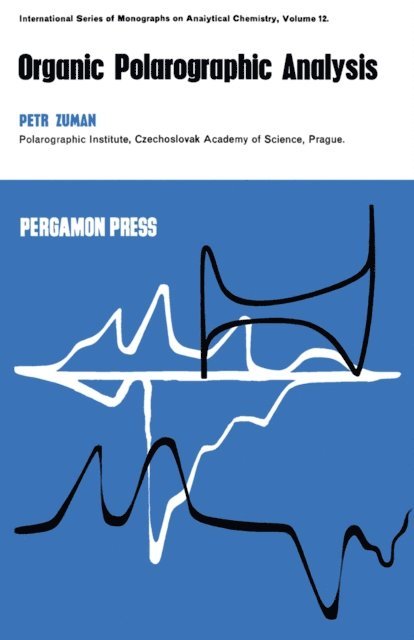
Organic Polarographic Analysis deals with the applications of polarography in the analysis of organic compounds. The principles, techniques, and apparatus of organic polarography are discussed, and some selected examples of the applications of organic polarography in various fields of applied chemistry are presented. The direct methods in which the sample is simply dissolved in a suitable supporting electrolyte are also considered. This book consists of 11 chapters and opens with an overview of the basic principles of the polarographic method of analysis, as well as the different types of polarographic limiting currents and of electrode processes. The reader is then introduced to the instruments used in polarography, including the polarograph, dropping and reference electrodes, and electrolysis vessels. Experimental techniques in organic polarography are also described, along with some of its practical applications in fields such as pharmacy, medicine, and biochemistry. Subsequent chapters explore polarographic methods used in the analysis of organic substances, including direct and indirect methods of analysis; separation techniques; and the use of polarography in organic synthesis and isolation of natural products. This monograph is written primarily for organic and analytical chemists.
E-bok
PDF, Engelska, 2013756 kr
Läs direkt efter köp
Trace Analysis of Semiconductor Materials is a guidebook concerned with procedures of ultra-trace analysis. This book discusses six distinct techniques of trace analysis. These techniques are the most common and can be applied to various problems compared to other methods. Each of the four chapters basically includes an introduction to the principles and general statements. The theoretical basis for the technique involved is then briefly discussed. Practical applications of the techniques and the different instrumentations are explained. Then, the applications to trace analysis as pertaining to semiconductor materials are discussed. Chapter 1 discusses radiochemical practice, the analysis of semiconductor materials, separation techniques, several qualitative radiochemical schemes, radiochemical purification procedures, and several earlier reported studies. Chapter 2 covers emission spectroscopy, including its potential for future applications. Discussions in Chapter 3 explain the benefits of each of the four mass spectrometric methods, namely, the isotope dilution method, complete thermal vaporization, vacuum spark technique, and the ion bombardment method. Chapter 4 focuses on the absorption, fluorescence, and polarographic methods used in general trace analysis, including examples of semiconductor material applications and other problems that result when certain impurities are introduced into the test sample. This monograph will be useful for researchers in ultra-trace analysis, nuclear physics, and analytical chemistry.
E-bok
PDF, Engelska, 2013344 kr
Läs direkt efter köp
International Series of Monographs in Analytical Chemistry, Volume 37: Microanalysis by the Ring-Oven Technique, Second Edition focuses on the ring-oven method. The book first offers information on the characteristics and uses of ring-oven, gas generator, pipette, glass holder, and other accessories. The text focuses on qualitative analysis, including the systematic schemes for the analysis of metal ions; separations and reactions for acid radicals; and reactions for metal ions. The selection discusses spot colorimetry with the ring-oven method. Concerns include determination of iron and other metals, amplification reactions, removal of interfering ions, and determination of anions. The radiochemical applications of ring-oven method, including determination of inactive substances, identification of radionucleides, and separation procedures, are explained. The text also discusses the combination of ring-oven method with electrography, thin-layer chromatography, and solvent extraction. The book is a valuable source of information for readers interested in the ring-oven method.
E-bok
PDF, Engelska, 2013344 kr
Läs direkt efter köp
International Series of Monographs on Analytical Chemistry, Volume 13: Controlled-Potential Analysis provides information pertinent to controlled-potential analysis involving the measurement of the quantity of electricity passed in the course of electrolysis. This book discusses the practical problems to be regarded in controlled-potential techniques, including the accurate maintenance of the desired potential. Organized into four chapters, this volume begins with an overview of the controlled-potential electrolysis methods that are particularly valuable to problems of chemical analysis as they provide a measure of concentration and a qualitative identification from the value and magnitude of the potential. This text then examines the classification of coulometric methods according to whether the total applied voltage of the working electrode is being controlled during electrolysis. Other chapters consider the basic function of a potentiostat to maintain the potential of a given electrode at a constant value. Chemists and analytical chemists will find this book extremely useful.
E-bok
PDF, Engelska, 2016756 kr
Läs direkt efter köp
Oscillometry and Conductometry deals with oscillometry and conductometry and covers topics ranging from the conductivity and dielectric constant of a solution and their determination, to instruments used in carrying out conductometric and oscillometric measurements. Acid-base titrations and titrations based on precipitation, complex formation, and redox reactions are also discussed. A number of applications of conductometry and oscillometry are considered. This volume is comprised of 18 chapters and begins with an overview of the fundamentals of electrical conductivity, its theoretical interpretation, and how it is affected by temperature. The relation between ionic interaction and conductivity of solutions is also described, with emphasis on the Wien effect and the Debye effect. The theoretical fundamentals of the determination of conductivity using direct and alternating currents are then outlined. Subsequent chapters explore the principles and the devices used in determining dielectric constants; conductometric and oscillometric instruments; the titration of acids and bases; and acid-base titrations in aqueous and non-aqueous media. The final section is devoted to applications of conductometry and oscillometry, including kinetic studies and chromatographic analysis. This monograph will be of interest to analytical chemists.
Nuclear Techniques in Analytical Chemistry
International Series of Monographs on Analytical Chemistry
E-bok
PDF, Engelska, 2013344 kr
Läs direkt efter köp
Nuclear Techniques in Analytical Chemistry discusses highly sensitive nuclear techniques that determine the micro- and macro-amounts or trace elements of materials. With the increasingly frequent demand for the chemical determination of trace amounts of elements in materials, the analytical chemist had to search for more sensitive methods of analysis. This book accustoms analytical chemists with nuclear techniques that possess the desired sensitivity and applicability at trace levels. The topics covered include safe handling of radioactivity; measurement of natural radioactivity; and neutron activation analysis. The positive ion and gamma ray activation analysis; isotope dilution and tracer investigations of analytical techniques; and geo- and cosmochronology and miscellaneous nuclear techniques are also elaborated in this text. This publication is intended for analytical chemists, but is also valuable to students intending to acquire knowledge on nuclear techniques and analytical methods in chemistry.
E-bok
PDF, Engelska, 2016756 kr
Läs direkt efter köp
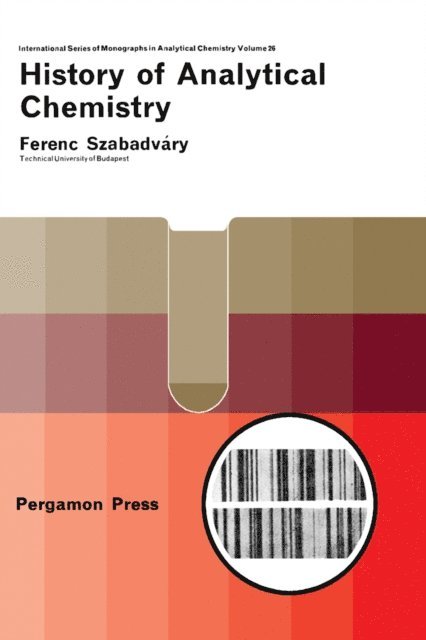
History of Analytical Chemistry is a systematic account of the historical development of analytical chemistry spanning about 4,000 years. Many scientists who have helped to develop the methods of analytical chemistry are mentioned. Various methods of analysis are discussed, including electrogravimetry, optical methods, electrometric analysis, radiochemical analysis, and chromatography. This volume is comprised of 14 chapters and begins with an overview of analytical chemistry in ancient Greece, the origin of chemistry, and the earliest knowledge of analysis. The next chapter focuses on analytical chemistry during the Middle Ages, with emphasis on alchemy. Analytical knowledge during the period of iatrochemistry and the development of analytical chemistry during the phlogiston period are then examined. Subsequent chapters deal with the development of the fundamental laws of chemistry, including the principle of the indestructibility of matter; analytical chemistry during the period of Berzelius; and developments in qualitative and gravimetric analysis. Elementary organic analysis is also considered, along with the development of the theory of analytical chemistry. This book will be helpful to chemists as well as students and researchers in the field of analytical chemistry.
E-bok
PDF, Engelska, 2013344 kr
Läs direkt efter köp
Analytical Chemistry, Second Edition, Volume 6: Atomic-Absorption Spectrophotometry focuses on the use of atomic absorption spectrophotometry as an analytical technique. This book discusses the developments in the analytical fields of atomic-absorption spectrophotometry. Organized into seven chapters, this edition starts with an overview of the fundamental principles underlying atomic-absorption spectra. This book then describes the use of high-temperature fuel-rich flames that allow the determination of some elements that were not previously capable of being determined by atomic-absorption spectrophotometry. Other chapters explore the advantages of improved instrumentation and consider the atomic-absorption procedures that have been applied to a wide variety of samples from agricultural and biological materials. This book discusses as well the determination of specified elements by a direct examination of the sample solution. The final chapter provides a list of instruments that are commercially available, with emphasis on their characteristics. This book is a valuable resource for analysts, physicists, and chemists.
E-bok
PDF, Engelska, 2013756 kr
Läs direkt efter köp
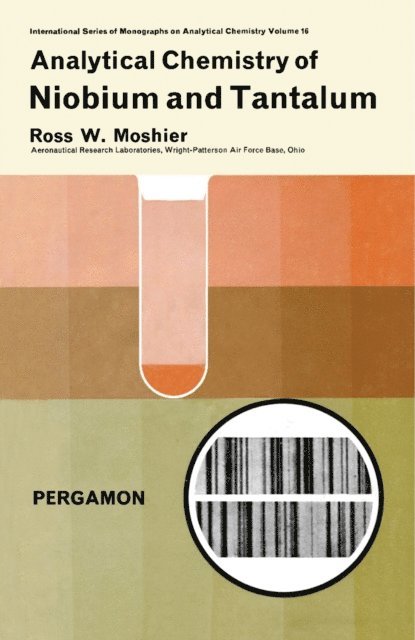
Analytical Chemistry of Niobium and Tantalum details the methods in understanding the chemistry of niobium and tantalum, which includes separation, identification, and quantification. The text first discusses the general topics about niobium and tantalum, such as history, metallurgical properties, and applications. Next, the selection covers the properties of niobium and tantalum and their compounds. The subsequent chapters tackle the various analytical chemistry processes that can be applied to niobium and tantalum, such as spectrographic determination; titrimetric methods; and colorimetric determinations. The book will be of great use to chemists, chemical engineers, and metallurgists.
E-bok
PDF, Engelska, 2013344 kr
Läs direkt efter köp
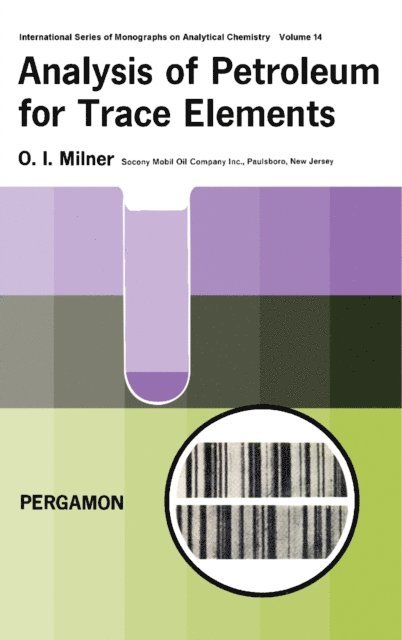
Analysis of Petroleum for Trace Elements details the methods for detecting the elements that are natural in various forms in petroleum. The book covers research and control applications, along with various types of petroleum stocks and products. The selection first covers the occurrence and importance of traces of non-hydrocarbon constituents, and then proceeds to tackling the principles and practices. The subsequent chapters cover the analytical and recommended method for analysis of a specific element, such as copper, iron, lead, and sulfur. The book will be of great use to scientists, engineers, and technicians involved in the oil industry.
E-bok
PDF, Engelska, 2013344 kr
Läs direkt efter köp
Analysis of Ancient Metals provides a guide to the identification and analysis of ancient metals and alloys. The title details the various analytical methods and procedures in dealing with different metals and alloys. The text first discusses the heterogeneity of ancient metals and the sampling problem, and then proceeds to covering preliminary observations and measurements, qualitative tests, and choice of quantitative method. The next series of chapters details the methods and procedures in the analysis of gold, silver, copper, iron, and steel, as well as various nonferrous metals. The last chapter discusses the concerns in reporting the findings. The book will be of great interest to materials engineers and metallurgists. Archeologists and museologists will also greatly benefit from the text.
E-bok
PDF, Engelska, 2013756 kr
Läs direkt efter köp
International Series of Monographs in Analytical Chemistry, Volume 22: Newer Redox Titrants focuses on the processes, reactions, methodologies, and approaches involved in the study of redox titrants. The publication first offers information on potassium permanganate in alkaline solution and compounds of trivalent manganese, including standard solutions, indicator, and review of determinations. The text then ponders on compounds of trivalent copper and potassium hexacyanoferrate. The book ponders on hypohalites (hypochlorite and hypobromite), chloramine-T, and bromine, as well as standard solutions, indicator, and review of determinations. The publication also takes a look at iodine monochloride, periodic acid and its salts, lead (IV) acetate, compounds of pentavalent vanadium, and iron (III) salts. The compounds of trivalent cobalt, hydrogen peroxide, chromium (II) salts, tin (II) chloride, sodium arsenite, and compounds of monovalent copper are also elaborated. ? The publication is a reliable reference for readers interested in newer redox titrants.
E-bok
PDF, Engelska, 2013756 kr
Läs direkt efter köp
Gravimetric Analysis, Part III describes the experimental procedures for the gravimetric analysis of various compounds. This book is composed of 13 chapters that also present sample preparation protocols. The first four chapters survey the steps for halogen compound determination. The succeeding chapters provide the procedures for gravimetric determination of cyanide, thiocyanate ions, sulfur, nitrogen, phosphorus, carbon, silicon, and boron. The final chapter considers other aspects of gravimetric experiments, including apparatus cleaning, reagents, and numerical calculation of the result. This book will prove useful to analytical and inorganic chemists, teachers, and students in the allied fields.
E-bok
PDF, Engelska, 2013979 kr
Läs direkt efter köp
Analytical Chemistry, Volume 7: Gravimetric Analysis, Part II describes the experimental procedures for the gravimetric analysis of Groups I to V cations. This book is composed of 43 chapters that also present sample preparation, separation, and precipitation protocols. The first six chapters include Group I cations, such as silver, lead, mercury, copper, bismuth, and cadmium, followed by chapters on Group II cations, including arsenic, antimony, tin, germanium, gold, platinum, selenium, and tellurium. The subsequent chapters explore the gravimetric determination of Group III cations, namely, aluminum, iron, chromium, nickel, cobalt, zinc, manganese, titanium, zirconium, hafnium, thorium, scandium, niobium and tantalum, molybdenum, tungsten, vanadium, uranium, thallium, indium, gallium, and beryllium. The remaining chapters are devoted to analysis of various forms of Groups IV and V cations. This book will prove useful to analytical and inorganic chemists, teachers, and students in the allied fields.
Inbunden, Engelska, 2024
498 kr
Skickas inom 5-8 vardagar
Häftad, Engelska, 2024
205 kr
Tillfälligt slut