L. Karl Branting – författare
Visar alla böcker från författaren L. Karl Branting. Handla med fri frakt och snabb leverans.
14 produkter
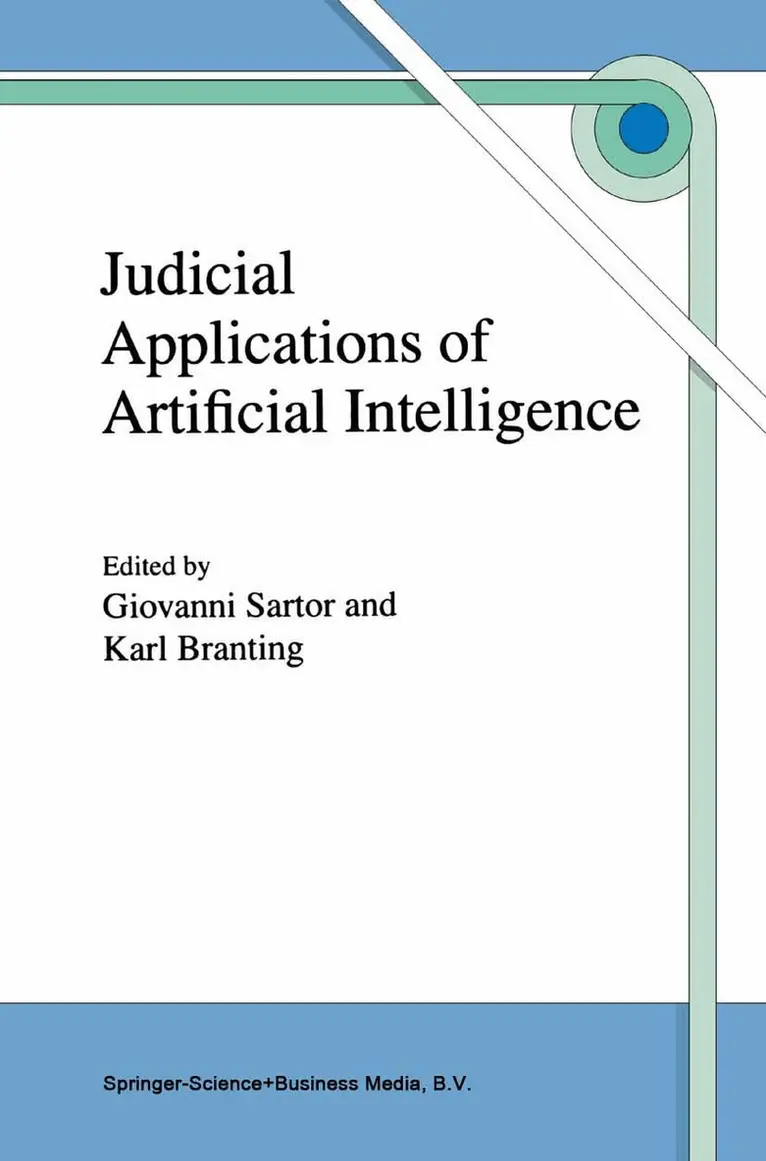
Judicial Applications of Artificial Intelligence
Av Giovanni Sartor, L. Karl Branting
Inbunden, 1998
1002 kr
Lägg i varukorg
The judiciary is in the early stages of a transformation in which AI (Artificial Intelligence) technology will help to make the judicial process faster, cheaper, and more predictable without compromising the integrity of judges' discretionary reasoning. Judicial decision-making is an area of …
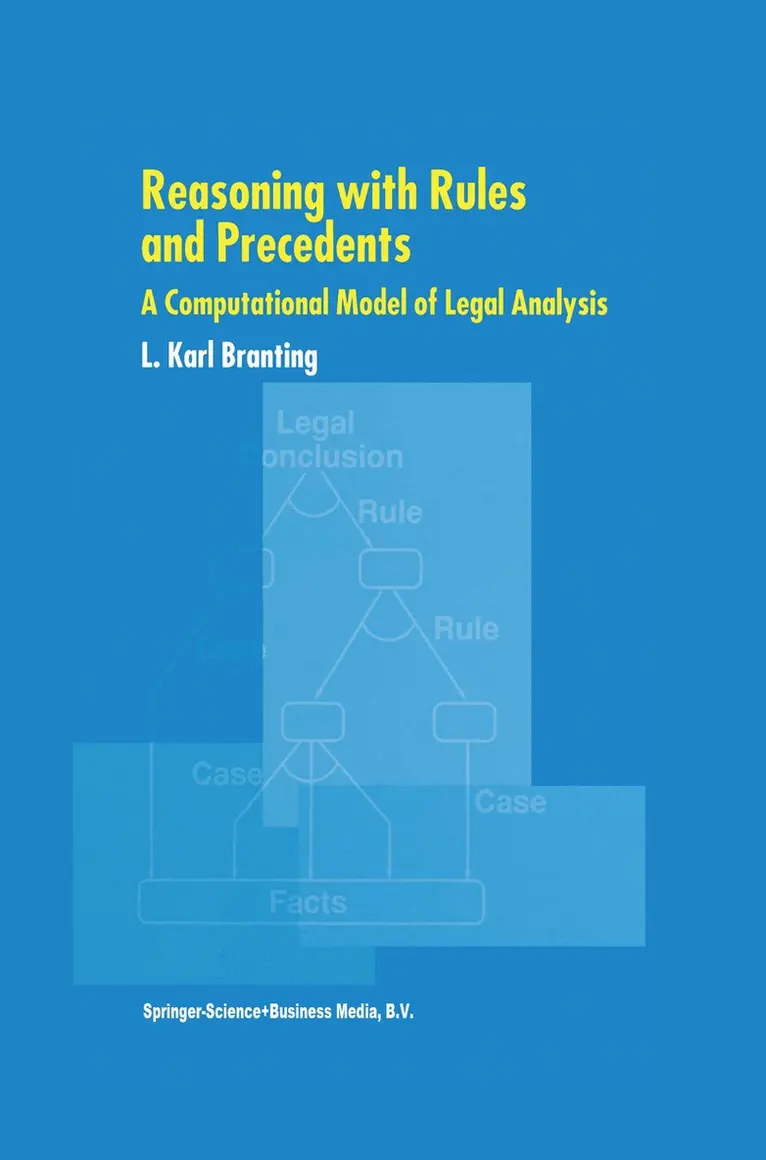
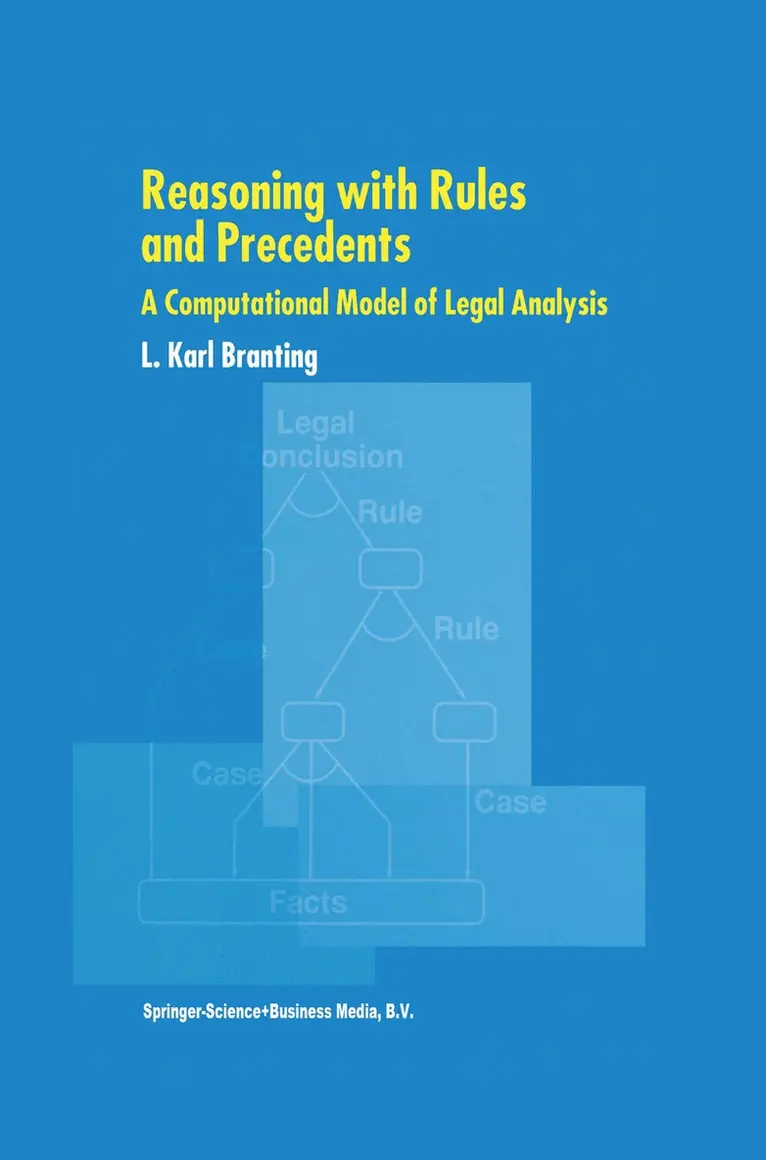
Reasoning with Rules and Precedents
A Computational Model of Legal Analysis
Inbunden, 1999
1002 kr
Lägg i varukorg
Few areas of human expertise are so well understood that they can be completely reduced to general principles. Similarly, there are few domains in which experience is so extensive that every new problem precisely matches a previous problem whose solution is known. When neither rules nor examples …
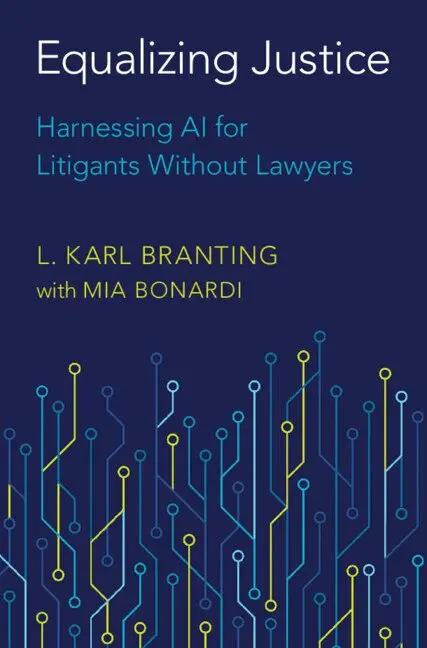
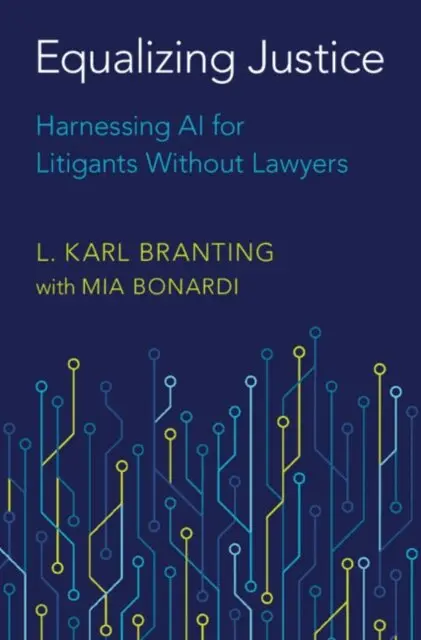
Equalizing Justice
Harnessing AI for Litigants Without Lawyers
Inbunden, 2026
1738 kr
Lägg i varukorg
Millions of individuals worldwide struggle to understand and assert their legal rights without legal representation. Equalizing Justice examines how AI and other technologies can address this access to justice crisis by providing unrepresented litigants with knowledge and skills traditionally …
Equalizing Justice
Harnessing AI for Litigants Without Lawyers
Häftad, 2026
583 kr
Lägg i varukorg
Millions of individuals worldwide struggle to understand and assert their legal rights without legal representation. Equalizing Justice examines how AI and other technologies can address this access to justice crisis by providing unrepresented litigants with knowledge and skills traditionally …
Case-Based Reasoning Research and Development
Third International Conference on Case-Based Reasoning, ICCBR-99, Seeon Monastery, Germany, July 27-30, 1999, Proceedings
Av L. Karl Branting, Ralph Bergmann m. fl.
E-bok, 2003
1470 kr
Lägg i varukorg
The biennial International Conference on Case-Based Reasoning (ICCBR) - ries, which began in Sesimbra, Portugal, in 1995, was intended to provide an international forum for the best fundamental and applied research in case-based reasoning (CBR). It was hoped that such a forum would encourage the g- …
Case-Based Reasoning Research and Development
Third International Conference on Case-Based Reasoning, ICCBR-99, Seeon Monastery, Germany, July 27-30, 1999, Proceedings
Av Klaus-Dieter Althoff, Ralph Bergmann m. fl.
Häftad, 1999
1126 kr
Lägg i varukorg
The biennial International Conference on Case-Based Reasoning (ICCBR) - ries, which began in Sesimbra, Portugal, in 1995, was intended to provide an international forum for the best fundamental and applied research in case-based reasoning (CBR). It was hoped that such a forum would encourage the g- …
Judicial Applications of Artificial Intelligence
Av Giovanni Sartor, L. Karl Branting
Häftad, 2010
1093 kr
Lägg i varukorg
The judiciary is in the early stages of a transformation in which AI (Artificial Intelligence) technology will help to make the judicial process faster, cheaper, and more predictable without compromising the integrity of judges' discretionary reasoning. Judicial decision-making is an area of …
Reasoning with Rules and Precedents
A Computational Model of Legal Analysis
Häftad, 2010
1002 kr
Lägg i varukorg
Few areas of human expertise are so well understood that they can be completely reduced to general principles. Similarly, there are few domains in which experience is so extensive that every new problem precisely matches a previous problem whose solution is known. When neither rules nor examples …
Judicial Applications of Artificial Intelligence
Av L. Karl Branting, Giovanni Sartor
E-bok, 2013
1459 kr
Lägg i varukorg
The judiciary is in the early stages of a transformation in which AI (Artificial Intelligence) technology will help to make the judicial process faster, cheaper, and more predictable without compromising the integrity of judges'' discretionary reasoning. Judicial decision-making is an area of …
Judicial Applications of Artificial Intelligence
Av Giovanni Sartor, L. Karl Branting
2014
667 kr
Lägg i varukorg
Reasoning with Rules and Precedents
A Computational Model of Legal Analysis
E-bok, 2013
1342 kr
Lägg i varukorg
Few areas of human expertise are so well understood that they can be completely reduced to general principles. Similarly, there are few domains in which experience is so extensive that every new problem precisely matches a previous problem whose solution is known. When neither rules nor examples …
Reasoning with Rules and Precedents : A Computational Model of Legal Analysis
2013
667 kr
Lägg i varukorg