L. Ye - Böcker
Visar alla böcker från författaren L. Ye. Handla med fri frakt och snabb leverans.
4 produkter
4 produkter
1 578 kr
Skickas inom 10-15 vardagar
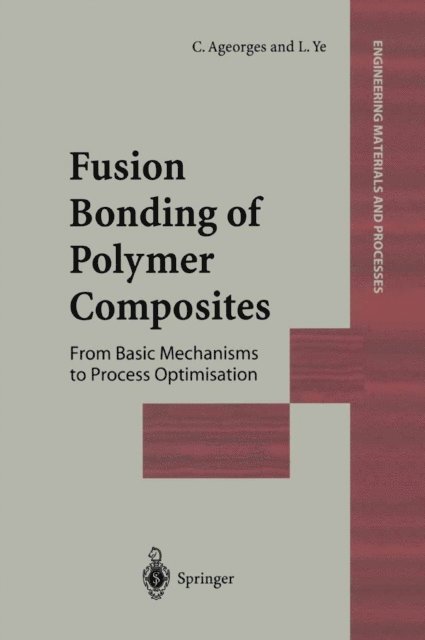
Fusion bonding is one of the three methods available for joining composite and dissimilar materials. While the other two, mechanical fastening and adhesion bonding, have been the subject of wide coverage both in textbooks and monographs, fusion bonding is covered here substantially for the first time. Fusion bonding offers a number of advantages over traditional joining techniques and it is anticipated that its use will increase dramatically in the future because of the rise in the use of thermoplastic matrix composites and the growing necessity for recyclability of engineering assemblies. Fusion Bonding of Polymer Composites provides an in-depth understanding of the physical mechanisms involved in the fusion bonding process, covering such topics as:- heat transfer in fusion bonding;- modelling thermal degradation;- consolidation mechanisms;- crystallisation kinetics;- processing-microstructure-property relationship;- full-scale fusion bonding;- fusion bonding of thermosetting composite/thermoplastic composite and metal/thermoplastic joints.The book focuses on one practical case study using the resistance welding process. This example exposes the reader to the development of processing windows for a novel manufacturing process including the use of experimental test programmes and modelling strategies.
1 578 kr
Skickas inom 10-15 vardagar
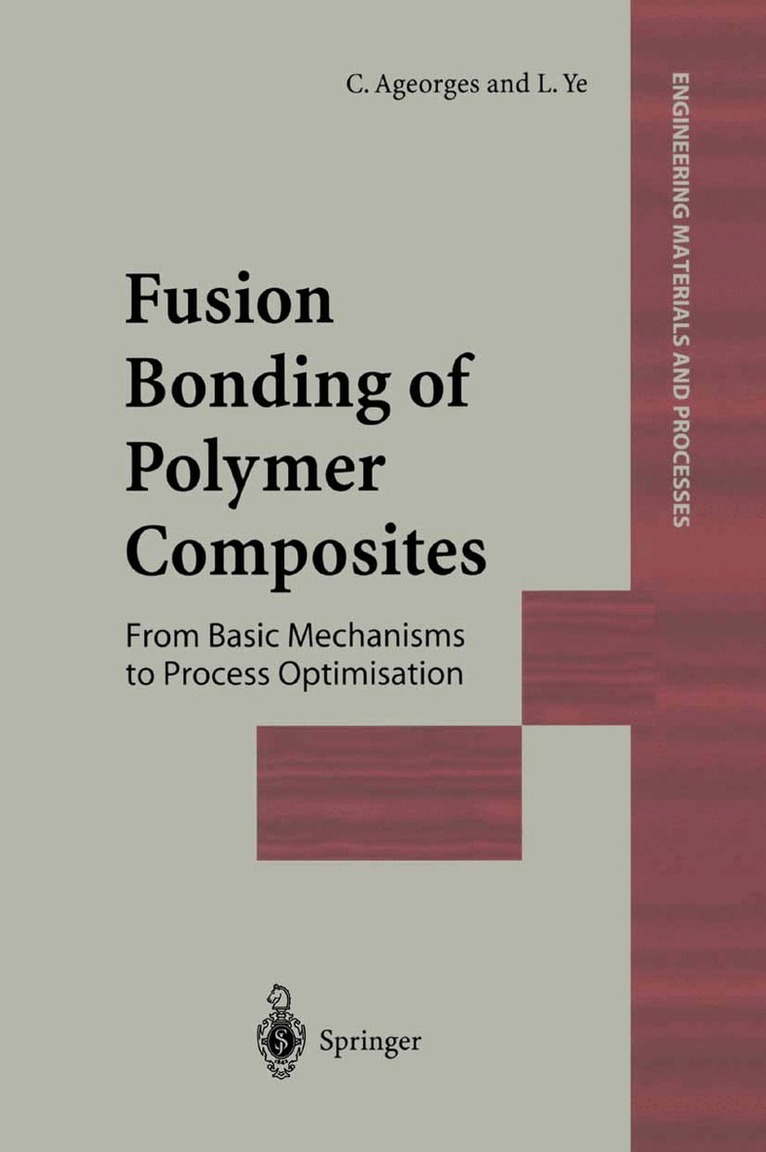
Fusion bonding is one of the three methods available for joining composite and dissimilar materials. While the other two, mechanical fastening and adhesion bonding, have been the subject of wide coverage both in textbooks and monographs, fusion bonding is covered here substantially for the first time. Fusion bonding offers a number of advantages over traditional joining techniques and it is anticipated that its use will increase dramatically in the future because of the rise in the use of thermoplastic matrix composites and the growing necessity for recyclability of engineering assemblies. Fusion Bonding of Polymer Composites provides an in-depth understanding of the physical mechanisms involved in the fusion bonding process, covering such topics as:- heat transfer in fusion bonding;- modelling thermal degradation;- consolidation mechanisms;- crystallisation kinetics;- processing-microstructure-property relationship;- full-scale fusion bonding;- fusion bonding of thermosetting composite/thermoplastic composite and metal/thermoplastic joints.The book focuses on one practical case study using the resistance welding process.This example exposes the reader to the development of processing windows for a novel manufacturing process including the use of experimental test programmes and modelling strategies.
Composite Technologies for 2020
Proceedings of the Fourth Asian-Australasian Conference on Composite Materials (Accm 4)
Inbunden, Engelska, 2004
3 910 kr
Skickas inom 7-10 vardagar
The Asian-Australasian Association for Composite Materials (AACM) has been playing a leading role in the field of composite science and technology since its inception in 1997. AACM aims to encourage the interchange of knowledge in all aspects of composite materials both in the scientific and engineering communities. Following the success of the first three ACCM conferences ACCM 4 was held in Sydney, Australia, in July 2004. Composite technologies for 2020 provides current state-of-the-art achievements and recent advances in composite science and technologies bringing together leading experts and innovators in the field. Nearly 200 selected papers, classified under 18 different categories ranging from general manufacturing and processing techniques to the latest and hottest topics such as nano-composites and eco-bio composites. Together they represent an authorative documentation of current advances in the field of composite materials.
1 837 kr
Skickas inom 7-10 vardagar
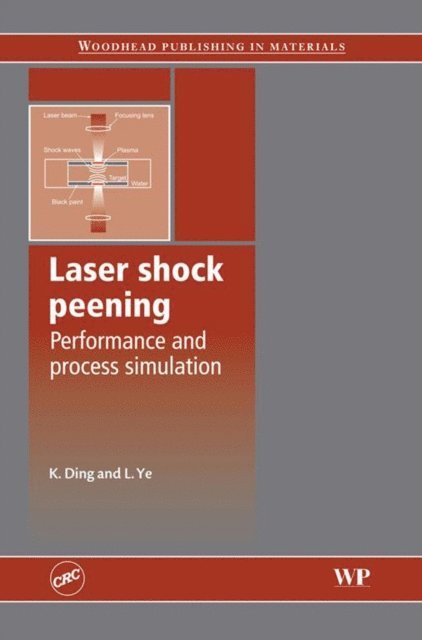
Laser shock peening (LSP) is a relatively new surface treatment for metallic materials. LSP is a process to induce compressive residual stresses using shock waves generated by laser pulses. LSP can greatly improve the resistance of a material to crack initiation and propagation brought on by cyclic loading and fatigue. This pioneering book was the first of its kind to consolidate scattered knowledge into one comprehensive volume. It describes the mechanisms of LSP and its substantial role in improving fatigue performance in terms of modification of microstructure, surface morphology, hardness and strength. In particular it describes numerical simulation techniques and procedures which can be adopted by engineers and research scientists to design, evaluate and optimise LSP processes in practical applications.Provides for the first time, a comprehensive coverage of this important areaWritten by two world renowned experts