Laboratory Assessments Board – författare
Visar alla böcker från författaren Laboratory Assessments Board. Handla med fri frakt och snabb leverans.
111 produkter
2018-2020 Assessment of the Army Research Office
Av 2018 Panel on Review of Extramural Basic Research at the Army Research Laboratory, 2019 Panel on Review of Extramural Basic Research at the Army Research Laboratory m. fl.
E-bok, 2021
693 kr
Lägg i varukorg
The mission of the Army Research Office (ARO), as part of the U.S. Army Futures Command—U.S. Army Combat Capabilities Development Command—Army Research Laboratory (ARL), is to execute the Army''s extramural basic research program in the following scientific disciplines: chemical sciences, computing …
2019-2020 Assessment of the Army Research Laboratory
Av Army Research Laboratory Technical Assessment Board, Laboratory Assessments Board m. fl.
E-bok, 2021
606 kr
Lägg i varukorg
The National Academies of Sciences, Engineering, and Medicine''s Army Research Laboratory Technical Assessment Board (ARLTAB) provides biennial assessments of the scientific and technical quality of the Army Research Laboratory (ARL). These assessments include the development of findings and …
Assessment of the National Institute of Standards and Technology Chemical Science and Technology Laboratory
Fiscal Year 2007
Av National Research Council, Division on Engineering and Physical Sciences m. fl.
Häftad, 2007
435 kr
Lägg i varukorg
The report on the CSTL presents an assessment of the Laba (TM)s five divisions, coveringa "where appropriatea "how well each division addresses national priorities, its impact and level of innovation, its technical merit, and its infrastructure. The report notes that the CSTL is meeting its …
Assessment of the National Institute of Standards and Technology Chemical Science and Technology Laboratory
Fiscal Year 2007
Av Panel on Chemical Science and Technology, Laboratory Assessments Board m. fl.
E-bok, 2007
200 kr
Lägg i varukorg
The report on the CSTL presents an assessment of the Lab''s five divisions, covering—where appropriate—how well each division addresses national priorities, its impact and level of innovation, its technical merit, and its infrastructure. The report notes that the CSTL is meeting its obligations and …
Assessment of the National Institute of Standards and Technology Center for Neutron Research
Fiscal Year 2007
Av Panel on Neutron Research, Laboratory Assessments Board m. fl.
E-bok, 2007
200 kr
Lägg i varukorg
The book on the NCNR presents a general assessment of the Lab, followed by assessments of its facilities and personnel, its role as a user facility, and its science and technology. The book notes that the NCNR provides a high flux of neutrons to an evolving suite of high-quality instruments, has a …
Assessment of the National Institute of Standards and Technology Electronics and Electrical Engineering Laboratory
Fiscal Year 2007
Av Panel on Electronics and Electrical Engineering, Laboratory Assessments Board m. fl.
E-bok, 2007
200 kr
Lägg i varukorg
The report on the EEEL presents an assessment of the Lab''s four divisions. The assessment is based on four criteria: alignment with national priorities, motivation of its programs, technical merit, and technical program quality. The report also provides a look at three additional concerns: …
Assessment of the National Institute of Standards and Technology Information Technology Laboratory
Fiscal Year 2007
Av National Research Council, Division on Engineering and Physical Sciences m. fl.
Häftad, 2007
438 kr
Lägg i varukorg
The report on the ITL presents a general assessment of the laboratory including a look at its research strategies, opportunities, planning for growth, research culture, and computing infrastructure; and provides assessments of the laboratorya (TM)s six divisions. The report notes that the work of …
Assessment of the National Institute of Standards and Technology Information Technology Laboratory
Fiscal Year 2007
Av Panel on Information Technology, Laboratory Assessments Board m. fl.
E-bok, 2007
200 kr
Lägg i varukorg
The report on the ITL presents a general assessment of the laboratory including a look at its research strategies, opportunities, planning for growth, research culture, and computing infrastructure; and provides assessments of the laboratory''s six divisions. The report notes that the work of the …
Assessment of the National Institute of Standards and Technology Center for Neutron Research
Fiscal Year 2008
Av Panel on Neutron Research, Laboratory Assessments Board m. fl.
E-bok, 2008
200 kr
Lägg i varukorg
The National Institute of Standards and Technology [NIST] Center for Neutron Research (NCNR) is a national user facility whose mission is to ensure the availability of neutron measurement capabilities in order to meet the needs of U.S. researchers from industry, academia, and government agencies. A …
Assessment of the National Institute of Standards and Technology Materials Science and Engineering Laboratory
Fiscal Year 2008
Av Panel on Materials Science and Engineering, Laboratory Assessments Board m. fl.
E-bok, 2008
200 kr
Lägg i varukorg
The Materials Science and Engineering Laboratory (MSEL) of the National Institute of Standards and Technology (NIST) works with industry, standards bodies, universities, and other government laboratories to improve the nation''s measurements and standards infrastructure for materials. A panel of …
Assessment of the National Institute of Standards and Technology Manufacturing Engineering Laboratory
Fiscal Year 2008
Av Panel on Manufacturing Engineering, Laboratory Assessments Board m. fl.
E-bok, 2008
200 kr
Lägg i varukorg
The mission of the Manufacturing Engineering Laboratory (MEL) of the National Institute of Standards and Technology (NIST) is to promote innovation and the competitiveness of U.S. manufacturing through measurement science, measurement services, and critical technical contributions to standards. The …
Assessment of the National Institute of Standards and Technology Building and Fire Research Laboratory
Fiscal Year 2008
Av National Research Council, Division on Engineering and Physical Sciences m. fl.
Häftad, 2008
435 kr
Lägg i varukorg
A panel of experts appointed by the National Research Council assessed the scientific and technical work of the Building and Fire Research Laboratory (BFRL) of the National Institute of Standards and Technology (NIST). The scope of the assessment included the following criteria: (1) the technical …
Assessment of the National Institute of Standards and Technology Building and Fire Research Laboratory
Fiscal Year 2008
Av Panel on Building and Fire Research, Laboratory Assessments Board m. fl.
E-bok, 2008
194 kr
Lägg i varukorg
A panel of experts appointed by the National Research Council assessed the scientific and technical work of the Building and Fire Research Laboratory (BFRL) of the National Institute of Standards and Technology (NIST). The scope of the assessment included the following criteria: (1) the technical …
Assessment of the National Institute of Standards and Technology Physics Laboratory
Fiscal Year 2008
Av Panel on Physics, Laboratory Assessments Board m. fl.
E-bok, 2008
286 kr
Lägg i varukorg
The mission of the NIST Physics Laboratory is to support U.S. industry, government, and the scientific community by providing measurement services and research for electronic, optical, and radiation technology. In this respect, the laboratory provides the foundation for the metrology of optical and …
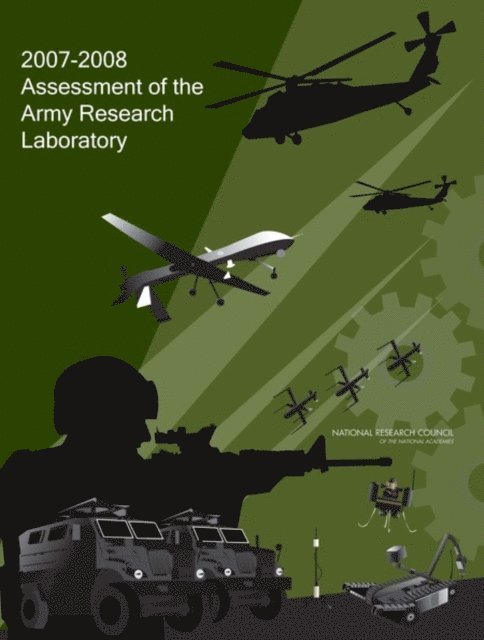
2007-2008 Assessment of the Army Research Laboratory
Av Army Research Laboratory Technical Assessment Board, Laboratory Assessments Board m. fl.
E-bok, 2009
432 kr
Lägg i varukorg
This volume is the latest in a series of biennial assessments of the scientific and technical quality of the Army Research Laboratory (ARL). The current report summarizes findings for the 2007-2008 period, during which 95 volunteer experts in fields of science and engineering participated in the …
Assessment of the National Institute of Standards and Technology Center for Neutron Research
Fiscal Year 2009
Av Panel on Neutron Research, Laboratory Assessments Board m. fl.
E-bok, 2009
200 kr
Lägg i varukorg
The National Institute of Standards and Technology [NIST] Center for Neutron Research (NCNR) is a national user facility whose mission is to ensure the availability of neutron measurement capabilities in order to meet the needs of U.S. researchers from industry, academia, and government agencies. …
Assessment of the National Institute of Standards and Technology Center for Nanoscale Science and Technology
Fiscal Year 2009
Av Panel on Nanoscale Science and Technology, Laboratory Assessments Board m. fl.
E-bok, 2009
200 kr
Lägg i varukorg
The National Institute of Standards and Technology''s (NIST''s) Center for Nanoscale Science and Technology (CNST) was founded on May 1, 2007, and remains in development with respect to projects and staffing. It aspires to be recognized both as a world leader in each of its research areas and as an …
Assessment of the National Institute of Standards and Technology Electronics and Electrical Engineering Laboratory
Fiscal Year 2009
Av Panel on Electronics and Electrical Engineering, Laboratory Assessments Board m. fl.
E-bok, 2009
194 kr
Lägg i varukorg
The National Institute of Standards and Technology (NIST), an agency of the U.S. Department of Commerce, carries out its mission of promoting U.S. innovation and industrial competitiveness by developing and applying technology, measurements, and standards across nationally and strategically …
Assessment of the National Institute of Standards and Technology Information Technology Laboratory
Fiscal Year 2009
Av Panel on Information Technology, Laboratory Assessments Board m. fl.
E-bok, 2009
195 kr
Lägg i varukorg
An Assessment of the National Institute of Standards and Technology Information Technology Laboratory evaluates The Information Technology Laboratory (ITL) of the National Institute of Standards and Technology (NIST). Six divisions of the laboratory were visited and reviewed. The scope of the …
Assessment of the National Institute of Standards and Technology Chemical Science and Technology Laboratory
Fiscal Year 2009
Av Panel on Chemical Science and Technology, Laboratory Assessments Board m. fl.
E-bok, 2009
280 kr
Lägg i varukorg
An Assessment of the National Institute of Standards and Technology Chemical Science and Technology Laboratory examines the operations of the Chemical Science and Technology Laboratory (CSTL) of the National Institute of Standards and Technology (NIST). This book assesses the CSTL, based on the …
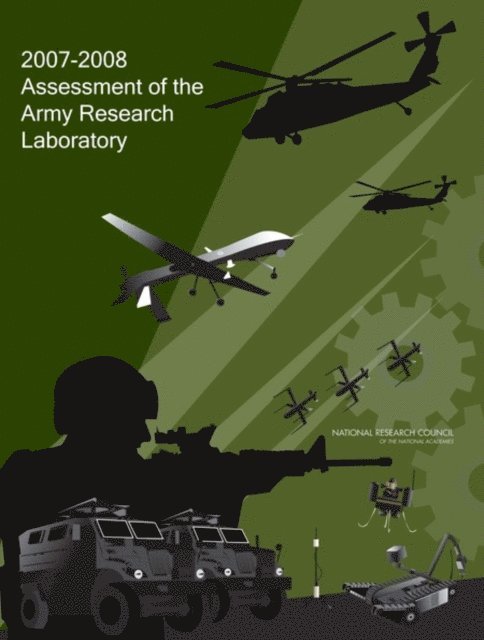
2007-2008 Assessment of the Army Research Laboratory
Av Army Research Laboratory Technical Assessment Board, Laboratory Assessments Board m. fl.
E-bok, 2009
624 kr
Lägg i varukorg
This volume is the latest in a series of biennial assessments of the scientific and technical quality of the Army Research Laboratory (ARL). The current report summarizes findings for the 2007-2008 period, during which 95 volunteer experts in fields of science and engineering participated in the …
Capabilities for the Future
An Assessment of NASA Laboratories for Basic Research
Av Committee on the Assessment of NASA Laboratory Capabilities, Laboratory Assessments Board m. fl.
E-bok, 2010
390 kr
Lägg i varukorg
Over the past 5 years or more, there has been a steady and significant decrease in NASA''s laboratory capabilities, including equipment, maintenance, and facility upgrades. This adversely affects the support of NASA''s scientists, who rely on these capabilities, as well as NASA''s ability to make …
Capabilities for the Future
An Assessment of NASA Laboratories for Basic Research
Av Committee on the Assessment of NASA Laboratory Capabilities, Laboratory Assessments Board m. fl.
E-bok, 2010
572 kr
Lägg i varukorg
Over the past 5 years or more, there has been a steady and significant decrease in NASA''s laboratory capabilities, including equipment, maintenance, and facility upgrades. This adversely affects the support of NASA''s scientists, who rely on these capabilities, as well as NASA''s ability to make …
Assessment of the National Institute of Standards and Technology Physics Laboratory
Fiscal Year 2010
Av Panel on Physics, Laboratory Assessments Board m. fl.
E-bok, 2010
278 kr
Lägg i varukorg
The mission of the National Institute of Standards and Technology (NIST) Physics Laboratory is to support U.S. industry, government, and the scientific community by providing measurement services and research for electronic, optical, and radiation technology. In this respect, the laboratory …
Assessment of the National Institute of Standards and Technology Manufacturing Engineering Laboratory
Fiscal Year 2010
Av Panel on Manufacturing Engineering, Laboratory Assessments Board m. fl.
E-bok, 2010
200 kr
Lägg i varukorg
The mission of the Manufacturing Engineering Laboratory (MEL) of the National Institute of Standards and Technology (NIST) is to promote innovation and the competitiveness of U.S. manufacturing through measurement science, measurement services, and critical technical contributions to standards. The …
Assessment of the National Institute of Standards and Technology Materials Science and Engineering Laboratory
Fiscal Year 2010
Av Panel on Materials Science and Engineering, Laboratory Assessments Board m. fl.
E-bok, 2010
195 kr
Lägg i varukorg
The Materials Science and Engineering Laboratory (MSEL) of the National Institute of Standards and Technology (NIST) works with industry, standards bodies, universities, and other government laboratories to improve the nation''s measurements and standards infrastructure for materials. A panel of …
Assessment of the National Institute of Standards and Technology Building and Fire Research Laboratory
Fiscal Year 2010
Av Panel on Building and Fire Research, Laboratory Assessments Board m. fl.
E-bok, 2010
286 kr
Lägg i varukorg
A panel of experts appointed by the National Research Council assessed the scientific and technical work of the Building and Fire Research Laboratory (BFRL) of the National Institute of Standards and Technology (NIST). The scope of the assessment included the following criteria: (1) the technical …
Assessment of the National Institute of Standards and Technology Center for Neutron Research
Fiscal Year 2010
Av Panel on Neutron Research, Laboratory Assessments Board m. fl.
E-bok, 2010
200 kr
Lägg i varukorg
The National Institute of Standards and Technology (NIST) Center for Neutron Research (NCNR) is a national user facility whose mission is to ensure the availability of neutron measurement capabilities in order to meet the needs of U.S. researchers from industry, academia, and government agencies. …
Assessment of the National Institute of Standards and Technology Physics Laboratory
Fiscal Year 2010
Av Panel on Physics, Laboratory Assessments Board m. fl.
E-bok, 2010
416 kr
Lägg i varukorg
The mission of the National Institute of Standards and Technology (NIST) Physics Laboratory is to support U.S. industry, government, and the scientific community by providing measurement services and research for electronic, optical, and radiation technology. In this respect, the laboratory …
Assessment of the National Institute of Standards and Technology Manufacturing Engineering Laboratory
Fiscal Year 2010
Av Panel on Manufacturing Engineering, Laboratory Assessments Board m. fl.
E-bok, 2010
286 kr
Lägg i varukorg
The mission of the Manufacturing Engineering Laboratory (MEL) of the National Institute of Standards and Technology (NIST) is to promote innovation and the competitiveness of U.S. manufacturing through measurement science, measurement services, and critical technical contributions to standards. The …