Lance J. Rips – författare
Visar alla böcker från författaren . Handla med fri frakt och snabb leverans.
5 produkter
5 produkter
Inbunden, Engelska, 2027
1 530 kr
Kommande
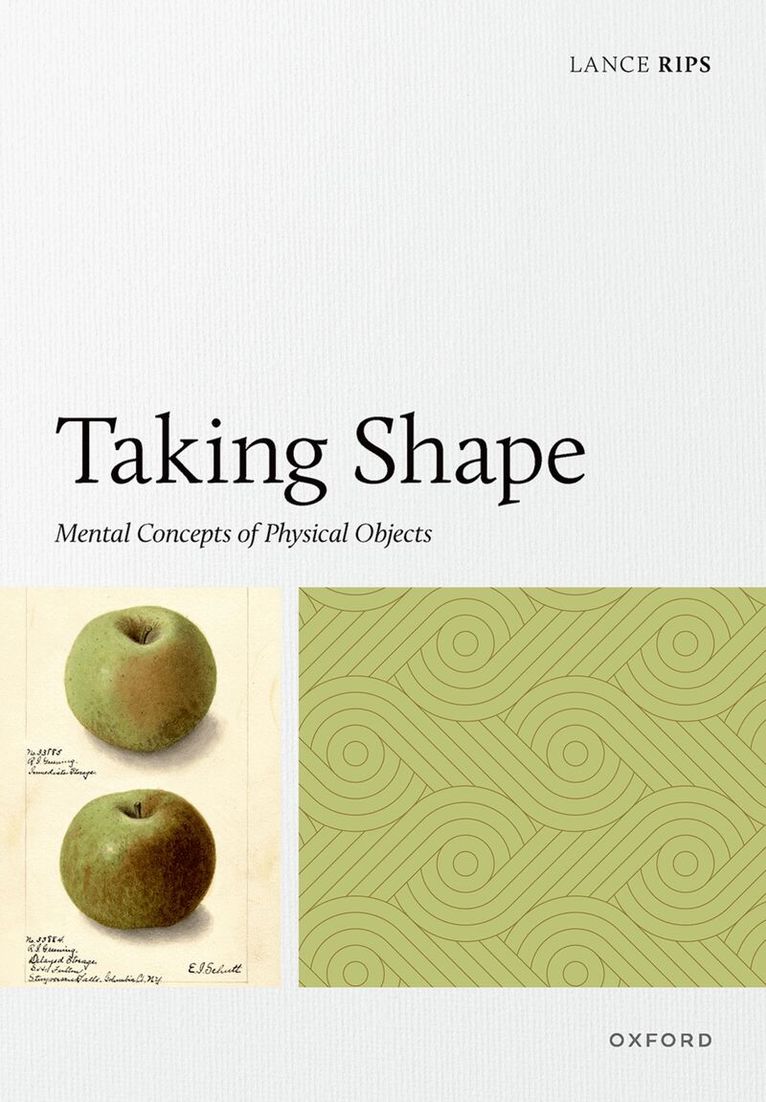
People have concepts^—^mental representations^—^of the individual physical objects that surround them: representations of their best friends, family pets, keepsakes, mementos, and countless others. We follow some of these things over long periods, including times when we do not perceive them. We believe these items are structured through the parts and substances that compose them: organisms by their body parts, artifacts by their mechanical parts. Taking Shape aims to understand the nature of these individual concepts, especially how they enable us to identify objects we have seen before and to think about their composition. Surprisingly, it is the first book in cognitive psychology that is devoted to our concepts of individual things (singular concepts), since most work on concepts has concerned concepts of whole categories, such as the category of people or pets. This book proposes that object concepts depend on attributing a causal structure to things, a set of physical forces that shape and maintain them. The theory casts a new perspective on a wide range of traditional problems in cognitive science, including object perception, recognition memory, categorization, pronoun resolution, and intuitive physics. It also draws on philosophical and linguistic theories of reference and metaphysics, attempting to capture which aspects of these theories mesh with our intuitive ones.
Häftad, Engelska, 2003
695 kr
Skickas inom 5-8 vardagar
Häftad, Engelska, 2000
757 kr
Skickas inom 7-10 vardagar
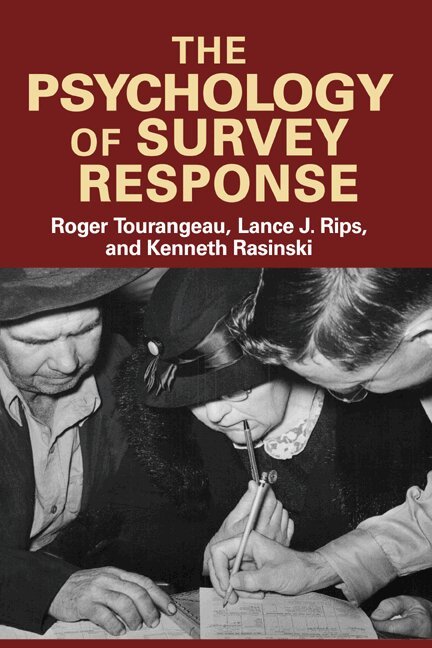
This valuable book examines the complex psychological processes involved in answering different types of survey questions. Drawing on both classic and modern research from cognitive psychology, social psychology, and survey methodology, the authors examine how survey responses are formulated and they demonstrate how seemingly unimportant features of the survey can affect the answers obtained. The book provides a comprehensive review of the sources of response errors in surveys, and it offers a coherent theory of the relation between the underlying views of the public and the results of public opinion polls. Topics include the comprehension of survey questions, the recall of relevant facts and beliefs, estimation and inferential processes people use to answer survey questions, the sources of the apparent instability of public opinion, the difficulties in getting responses into the required format, and the distortions introduced into surveys by deliberate misreporting.
Häftad, Engelska, 2008
881 kr
Skickas inom 7-10 vardagar
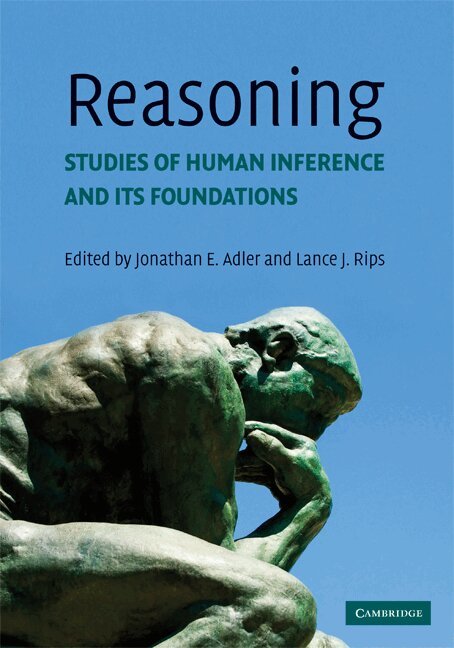
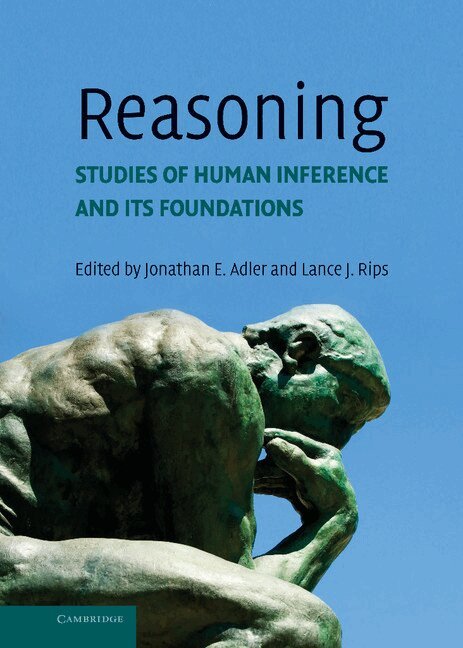
This interdisciplinary work is a collection of major essays on reasoning: deductive, inductive, abductive, belief revision, defeasible (non-monotonic), cross cultural, conversational, and argumentative. They are each oriented toward contemporary empirical studies. The book focuses on foundational issues, including paradoxes, fallacies, and debates about the nature of rationality, the traditional modes of reasoning, as well as counterfactual and causal reasoning. It also includes chapters on the interface between reasoning and other forms of thought. In general, this last set of essays represents growth points in reasoning research, drawing connections to pragmatics, cross-cultural studies, emotion and evolution.
Inbunden, Engelska, 2008
1 340 kr
Skickas inom 7-10 vardagar
This interdisciplinary work is a collection of major essays on reasoning: deductive, inductive, abductive, belief revision, defeasible (non-monotonic), cross cultural, conversational, and argumentative. They are each oriented toward contemporary empirical studies. The book focuses on foundational issues, including paradoxes, fallacies, and debates about the nature of rationality, the traditional modes of reasoning, as well as counterfactual and causal reasoning. It also includes chapters on the interface between reasoning and other forms of thought. In general, this last set of essays represents growth points in reasoning research, drawing connections to pragmatics, cross-cultural studies, emotion and evolution.