Lant Pritchett - Böcker
Visar alla böcker från författaren Lant Pritchett. Handla med fri frakt och snabb leverans.
4 produkter
4 produkter
1 060 kr
Skickas inom 5-8 vardagar
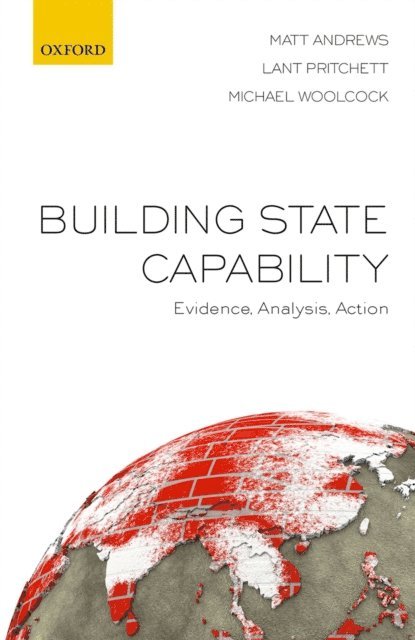
This is an open access title available under the terms of a CC BY-NC-ND 4.0 licence. It is free to read at Oxford Scholarship Online and offered as a free PDF download from OUP and selected open access locations. Governments play a major role in the development process, and constantly introduce reforms and policies to achieve developmental objectives. Many of these interventions have limited impact, however; schools get built but children don't learn, IT systems are introduced but not used, plans are written but not implemented. These achievement deficiencies reveal gaps in capabilities, and weaknesses in the process of building state capability. This book addresses these weaknesses and gaps. It starts by providing evidence of the capability shortfalls that currently exist in many countries, showing that many governments lack basic capacities even after decades of reforms and capacity building efforts. The book then analyses this evidence, identifying capability traps that hold many governments back - particularly related to isomorphic mimicry (where governments copy best practice solutions from other countries that make them look more capable even if they are not more capable) and premature load bearing (where governments adopt new mechanisms that they cannot actually make work, given weak extant capacities). The book then describes a process that governments can use to escape these capability traps. Called PDIA (problem driven iterative adaptation), this process empowers people working in governments to find and fit solutions to the problems they face. The discussion about this process is structured in a practical manner so that readers can actually apply tools and ideas to the capability challenges they face in their own contexts. These applications will help readers devise policies and reforms that have more impact than those of the past.
1 747 kr
Skickas inom 3-6 vardagar
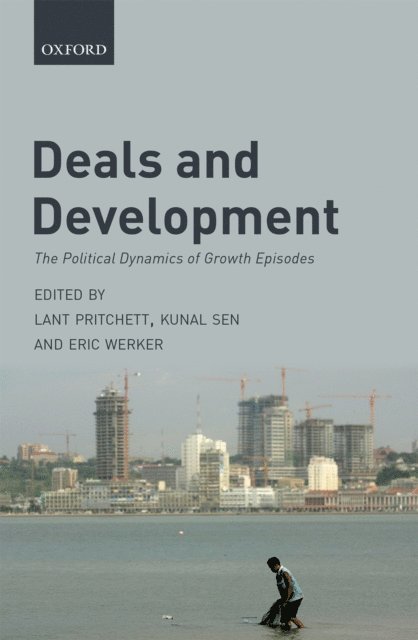
This is an open access title available under the terms of a CC BY-NC-ND 4.0 International licence. It is free to read at Oxford Scholarship Online and offered as a free PDF download from OUP and selected open access locations.When are developing countries able to initiate periods of rapid growth and why have so few of these countries been able to sustain growth over decades? Deals and Development: The Political Dynamics of Growth Episodes seeks to answer these questions and many more through a novel conceptual framework built from a political economy of business-government relations.Economic growth for most developing countries is not a linear process. Growth instead proceeds in booms and busts, yet most frameworks for thinking about economic growth are built on the faulty assumption that a country's economic performance is largely stable. Deals and Development explains how growth episodes emerge and when growth, once ignited, is maintained for a sustained period. It applies its new framework to examine the growth of countries across a range of institutional and political contexts in Africa and Asia, using the examples of Bangladesh, Cambodia, India, Malaysia, Thailand, Ghana, Liberia, Malawi, Rwanda and Uganda. Through these country analyses it demonstrates the explanatory power of its framework and the importance of feedback cycles in which economic trends interact with political behaviour to either sustain or terminate a growth episode.Offering a lens through which to analyse complex scenarios and unwieldy amounts of information, this book provides actionable levers of intervention to bring around reform and improve a country's chance at achieving transformative economic growth.
363 kr
Skickas inom 5-8 vardagar
Governments play a major role in the development process, and constantly introduce reforms and policies to achieve developmental objectives. Many of these interventions have limited impact, however; schools get built but children don't learn, IT systems are introduced but not used, plans are written but not implemented. These achievement deficiencies reveal gaps in capabilities, and weaknesses in the process of building state capability. This book addresses these weaknesses and gaps. It starts by providing evidence of the capability shortfalls that currently exist in many countries, showing that many governments lack basic capacities even after decades of reforms and capacity building efforts. The book then analyses this evidence, identifying capability traps that hold many governments back - particularly related to isomorphic mimicry (where governments copy best practice solutions from other countries that make them look more capable even if they are not more capable) and premature load bearing (where governments adopt new mechanisms that they cannot actually make work, given weak extant capacities). The book then describes a process that governments can use to escape these capability traps. Called PDIA (problem driven iterative adaptation), this process empowers people working in governments to find and fit solutions to the problems they face. The discussion about this process is structured in a practical manner so that readers can actually apply tools and ideas to the capability challenges they face in their own contexts. These applications will help readers devise policies and reforms that have more impact than those of the past.
289 kr
Skickas inom 11-20 vardagar
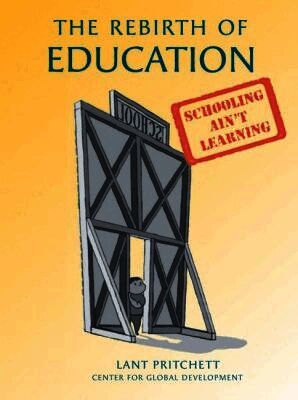
Despite great progress around the world in getting more kids into schools, too many leave without even the most basic skills. In India's rural Andhra Pradesh, for instance, only about one in twenty children in fifth grade can perform basic arithmetic. The problem is that schooling is not the same as learning. In The Rebirth of Education, Lant Pritchett uses two metaphors from nature to explain why. The first draws on Ori Brafman and Rod Beckstrom's book about the difference between centralized and decentralized organizations, The Starfish and the Spider. Schools systems tend be centralized and suffer from the limitations inherent in top-down designs. The second metaphor is the concept of isomorphic mimicry. Pritchett argues that many developing countries superficially imitate systems that were successful in other nations - much as a nonpoisonous snake mimics the look of a poisonous one. Pritchett argues that the solution is to allow functional systems to evolve locally out of an environment pressured for success. Such an ecosystem needs to be open to variety and experimentation, locally operated, and flexibly financed. The only main cost is ceding control; the reward would be the rebirth of education suited for today's world.