Lauren M. E. Goodlad - Böcker
Visar alla böcker från författaren Lauren M. E. Goodlad. Handla med fri frakt och snabb leverans.
7 produkter
7 produkter
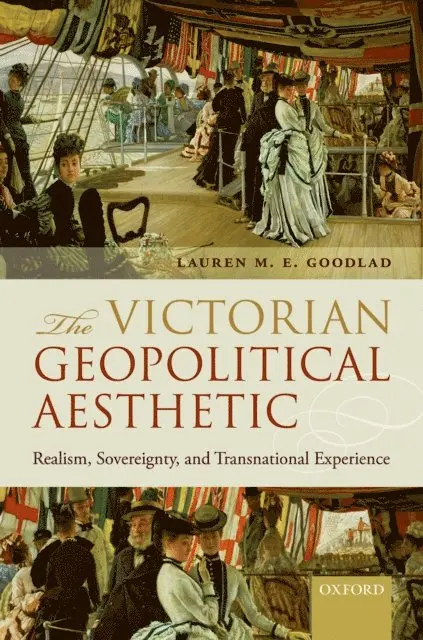
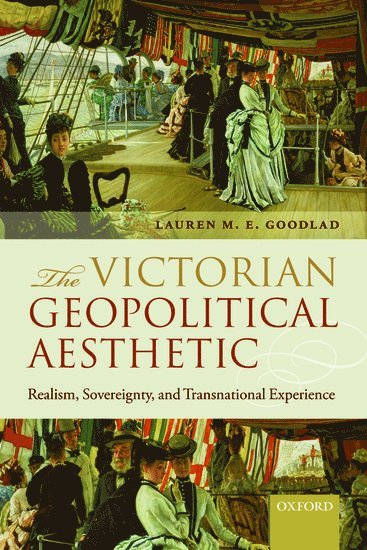
The Victorian Geopolitical Aesthetic
Realism, Sovereignty, and Transnational Experience
Inbunden, Engelska, 2015
2 221 kr
Skickas inom 5-8 vardagar
How did realist fiction alter in the effort to craft forms and genres receptive to the dynamism of an expanding empire and globalizing world? Do these nineteenth-century variations on the "geopolitical aesthetic" continue to resonate today? Crossing literary criticism, political theory, and longue durée history, The Victorian Geopolitical Aesthetic explores these questions from the standpoint of nineteenth-century novelists such as Wilkie Collins, George Eliot, Gustave Flaubert, and Anthony Trollope, as well as successors including E. M. Forster and the creators of recent television serials. By looking at the category of "sovereignty" at multiple scales and in diverse contexts, Lauren M. E. Goodlad shows that the ideological crucible for "high" realism was not a hegemonic liberalism. It was, rather, a clash of modern liberal ideals struggling to distintricate themselves from a powerful conservative vision of empire while striving to negotiate the inequalities of power which a supposedly universalistic liberalism had helped to generate. The material occasion for the Victorian era's rich realist experiments was the long transition from an informal empire of trade that could be celebrated as liberal to a neo-feudal imperialism that only Tories could warmly embrace.The book places realism's geopolitical aesthetic at the heart of recurring modern experiences of breached sovereignty, forgotten history, and subjective exile. The Coda, titled "The Way We Historicize Now", concludes the study with connections to recent debates about "surface reading", "distant reading", and the hermeneutics of suspicion.
The Victorian Geopolitical Aesthetic
Realism, Sovereignty, and Transnational Experience
Häftad, Engelska, 2017
554 kr
Skickas inom 7-10 vardagar
How did realist fiction alter in the effort to craft forms and genres receptive to the dynamism of an expanding empire and globalizing world? Do these nineteenth-century variations on the "geopolitical aesthetic" continue to resonate today? Crossing literary criticism, political theory, and longue durée history, The Victorian Geopolitical Aesthetic explores these questions from the standpoint of nineteenth-century novelists such as Wilkie Collins, George Eliot, Gustave Flaubert, and Anthony Trollope, as well as successors including E. M. Forster and the creators of recent television serials. By looking at the category of "sovereignty" at multiple scales and in diverse contexts, Lauren M. E. Goodlad shows that the ideological crucible for "high" realism was not a hegemonic liberalism. It was, rather, a clash of modern liberal ideals struggling to distintricate themselves from a powerful conservative vision of empire while striving to negotiate the inequalities of power which a supposedly universalistic liberalism had helped to generate. The material occasion for the Victorian era's rich realist experiments was the long transition from an informal empire of trade that could be celebrated as liberal to a neo-feudal imperialism that only Tories could warmly embrace.The book places realism's geopolitical aesthetic at the heart of recurring modern experiences of breached sovereignty, forgotten history, and subjective exile. The Coda, titled "The Way We Historicize Now", concludes the study with connections to recent debates about "surface reading", "distant reading", and the hermeneutics of suspicion.
Victorian Literature and the Victorian State
Character and Governance in a Liberal Society
Inbunden, Engelska, 2004
783 kr
Skickas inom 5-8 vardagar
In this manuscript, Lauren Goodlad looks at Victorian literature as the means for a post-Foucauldian study of Victorian culture, arguing that Victorian Britain was a liberal society. She explores diverse works of Victorian literature as they converged with major developments in the modernization of the British state. In so doing, she relays literature's relation to developments that have long occupied social historians including poor law, sanitary, educational, and civil service reforms, and the substitution of organized charity for the state. Each chapter takes up a contentious aspect of the Victorian state, linking debates over governance to major works by Charles Dickens, Anthony Trollope, John Stuart Mills, and others.
1 675 kr
Skickas inom 7-10 vardagar
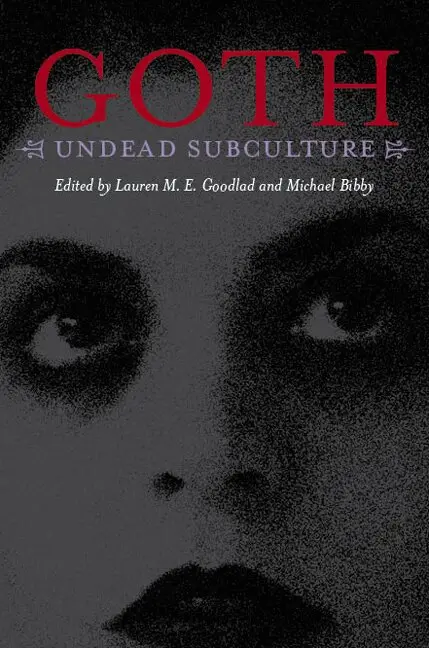
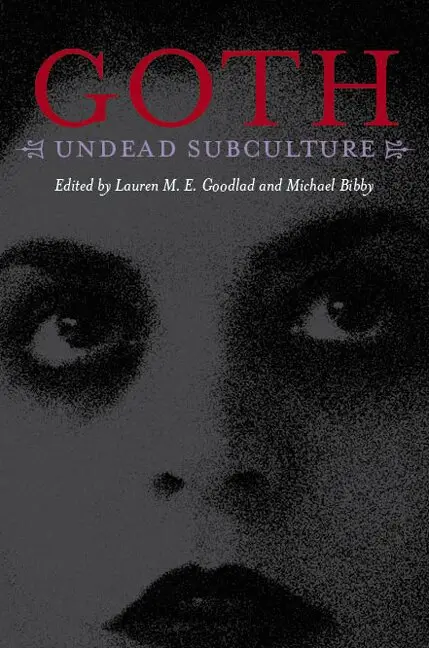
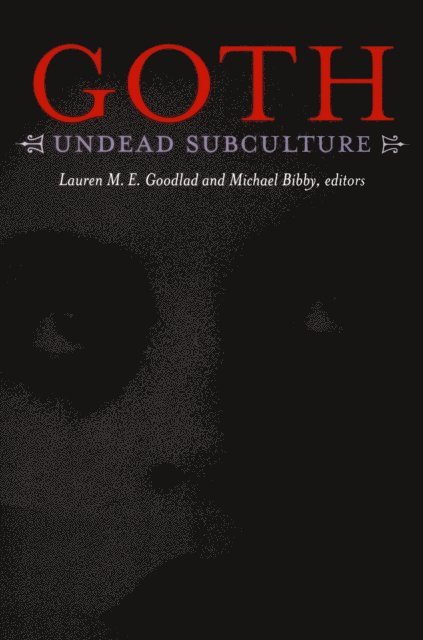
Since it first emerged from Britain’s punk-rock scene in the late 1970s, goth subculture has haunted postmodern culture and society, reinventing itself inside and against the mainstream. Goth: Undead Subculture is the first collection of scholarly essays devoted to this enduring yet little examined cultural phenomenon. Twenty-three essays from various disciplines explore the music, cinema, television, fashion, literature, aesthetics, and fandoms associated with the subculture. They examine goth’s many dimensions-including its melancholy, androgyny, spirituality, and perversity-and take readers inside locations in Los Angeles, Austin, Leeds, London, Buffalo, New York City, and Sydney. A number of the contributors are or have been participants in the subculture, and several draw on their own experiences.The volume’s editors provide a rich history of goth, describing its play of resistance and consumerism; its impact on class, race, and gender; and its distinctive features as an “undead” subculture in light of post-subculture studies and other critical approaches. The essays include an interview with the distinguished fashion historian Valerie Steele; analyses of novels by Anne Rice, Poppy Z. Brite, and Nick Cave; discussions of goths on the Internet; and readings of iconic goth texts from Bram Stoker’s Dracula to James O’Barr’s graphic novel The Crow. Other essays focus on gothic music, including seminal precursors such as Joy Division and David Bowie, and goth-influenced performers such as the Cure, Nine Inch Nails, and Marilyn Manson. Gothic sexuality is explored in multiple ways, the subjects ranging from the San Francisco queercore scene of the 1980s to the increasing influence of fetishism and fetish play. Together these essays demonstrate that while its participants are often middle-class suburbanites, goth blurs normalizing boundaries even as it appears as an everlasting shadow of late capitalism.Contributors: Heather Arnet, Michael Bibby, Jessica Burstein, Angel M. Butts, Michael du Plessis, Jason Friedman, Nancy Gagnier, Ken Gelder, Lauren M. E. Goodlad, Joshua Gunn, Trevor Holmes, Paul Hodkinson, David Lenson, Robert Markley, Mark Nowak, Anna Powell, Kristen Schilt, Rebecca Schraffenberger, David Shumway, Carol Siegel, Catherine Spooner, Lauren Stasiak, Jeffrey Andrew Weinstock
606 kr
Skickas inom 3-6 vardagar
Since it first emerged from Britain’s punk-rock scene in the late 1970s, goth subculture has haunted postmodern culture and society, reinventing itself inside and against the mainstream. Goth: Undead Subculture is the first collection of scholarly essays devoted to this enduring yet little examined cultural phenomenon. Twenty-three essays from various disciplines explore the music, cinema, television, fashion, literature, aesthetics, and fandoms associated with the subculture. They examine goth’s many dimensions-including its melancholy, androgyny, spirituality, and perversity-and take readers inside locations in Los Angeles, Austin, Leeds, London, Buffalo, New York City, and Sydney. A number of the contributors are or have been participants in the subculture, and several draw on their own experiences.The volume’s editors provide a rich history of goth, describing its play of resistance and consumerism; its impact on class, race, and gender; and its distinctive features as an “undead” subculture in light of post-subculture studies and other critical approaches. The essays include an interview with the distinguished fashion historian Valerie Steele; analyses of novels by Anne Rice, Poppy Z. Brite, and Nick Cave; discussions of goths on the Internet; and readings of iconic goth texts from Bram Stoker’s Dracula to James O’Barr’s graphic novel The Crow. Other essays focus on gothic music, including seminal precursors such as Joy Division and David Bowie, and goth-influenced performers such as the Cure, Nine Inch Nails, and Marilyn Manson. Gothic sexuality is explored in multiple ways, the subjects ranging from the San Francisco queercore scene of the 1980s to the increasing influence of fetishism and fetish play. Together these essays demonstrate that while its participants are often middle-class suburbanites, goth blurs normalizing boundaries even as it appears as an everlasting shadow of late capitalism.Contributors: Heather Arnet, Michael Bibby, Jessica Burstein, Angel M. Butts, Michael du Plessis, Jason Friedman, Nancy Gagnier, Ken Gelder, Lauren M. E. Goodlad, Joshua Gunn, Trevor Holmes, Paul Hodkinson, David Lenson, Robert Markley, Mark Nowak, Anna Powell, Kristen Schilt, Rebecca Schraffenberger, David Shumway, Carol Siegel, Catherine Spooner, Lauren Stasiak, Jeffrey Andrew Weinstock
1 375 kr
Skickas inom 7-10 vardagar
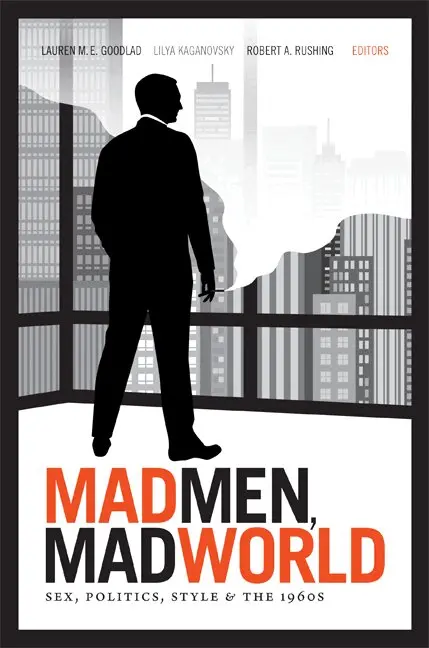
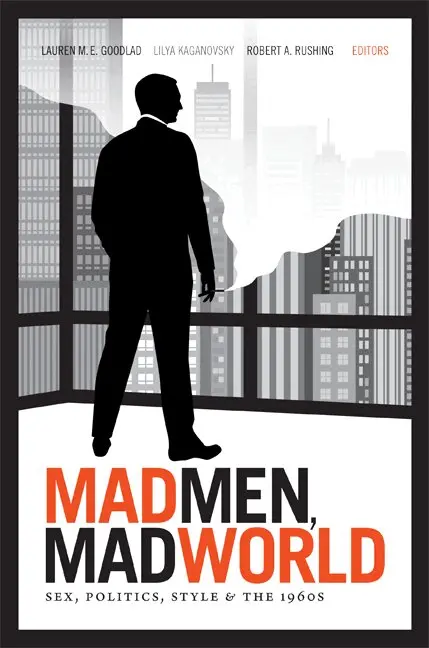
Since the show's debut in 2007, Mad Men has invited viewers to immerse themselves in the lush period settings, ruthless Madison Avenue advertising culture, and arresting characters at the center of its 1960s fictional world. Mad Men, Mad World is a comprehensive analysis of this groundbreaking TV series. Scholars from across the humanities consider the AMC drama from a fascinating array of perspectives, including fashion, history, architecture, civil rights, feminism, consumerism, art, cinema, and the serial format, as well as through theoretical frames such as critical race theory, gender, queer theory, global studies, and psychoanalysis.In the introduction, the editors explore the show's popularity; its controversial representations of race, class, and gender; its powerful influence on aesthetics and style; and its unique use of period historicism and advertising as a way of speaking to our neoliberal moment. Mad Men, Mad World also includes an interview with Phil Abraham, an award-winning Mad Men director and cinematographer. Taken together, the essays demonstrate that understanding Mad Men means engaging the show not only as a reflection of the 1960s but also as a commentary on the present day. Contributors. Michael BÉrubÉ, Alexander Doty, Lauren M. E. Goodlad, Jim Hansen, Dianne Harris, Lynne Joyrich, Lilya Kaganovsky, Clarence Lang, Caroline Levine, Kent Ono, Dana Polan, Leslie Reagan, Mabel Rosenheck, Robert A. Rushing, Irene Small, Michael Szalay, Jeremy Varon
415 kr
Skickas inom 7-10 vardagar
Since the show's debut in 2007, Mad Men has invited viewers to immerse themselves in the lush period settings, ruthless Madison Avenue advertising culture, and arresting characters at the center of its 1960s fictional world. Mad Men, Mad World is a comprehensive analysis of this groundbreaking TV series. Scholars from across the humanities consider the AMC drama from a fascinating array of perspectives, including fashion, history, architecture, civil rights, feminism, consumerism, art, cinema, and the serial format, as well as through theoretical frames such as critical race theory, gender, queer theory, global studies, and psychoanalysis.In the introduction, the editors explore the show's popularity; its controversial representations of race, class, and gender; its powerful influence on aesthetics and style; and its unique use of period historicism and advertising as a way of speaking to our neoliberal moment. Mad Men, Mad World also includes an interview with Phil Abraham, an award-winning Mad Men director and cinematographer. Taken together, the essays demonstrate that understanding Mad Men means engaging the show not only as a reflection of the 1960s but also as a commentary on the present day. Contributors. Michael BÉrubÉ, Alexander Doty, Lauren M. E. Goodlad, Jim Hansen, Dianne Harris, Lynne Joyrich, Lilya Kaganovsky, Clarence Lang, Caroline Levine, Kent Ono, Dana Polan, Leslie Reagan, Mabel Rosenheck, Robert A. Rushing, Irene Small, Michael Szalay, Jeremy Varon